.webp&w=384&q=75)

Loading, please wait...
Loading, please wait...
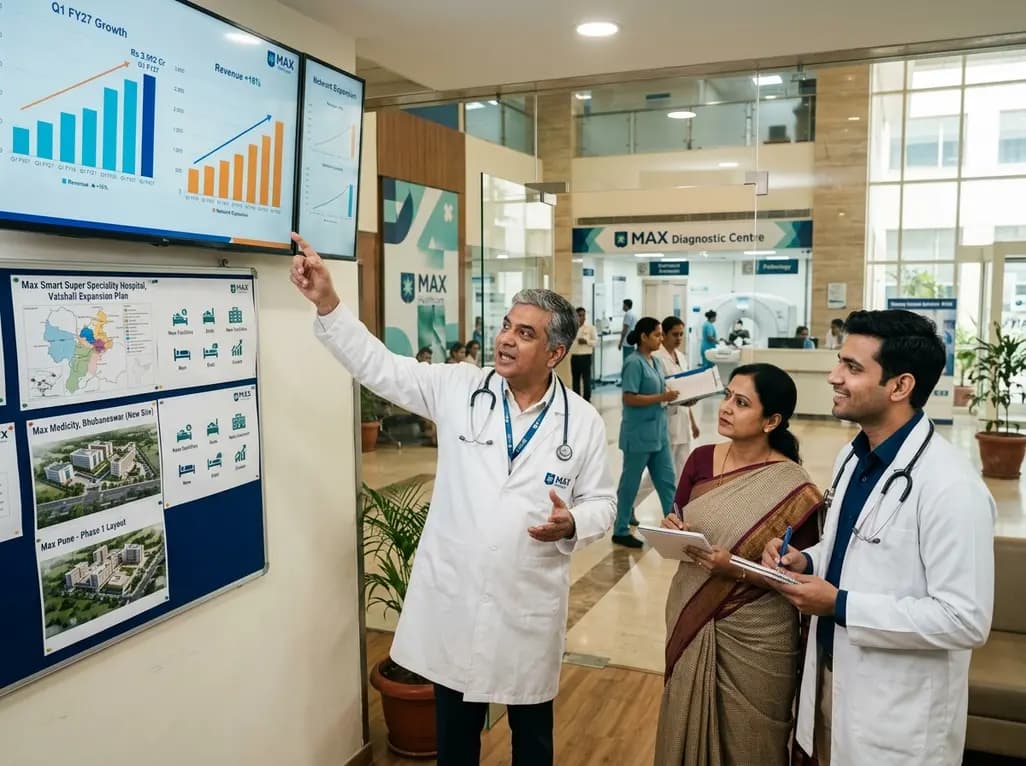
Max Healthcare reported a strong financial performance in the first quarter of FY27, showcasing a robust 16 percent year-on-year increase in gross revenue to Rs 2,982 crore. Consequently, this remarkable growth reflects the expanding operational footprint of the hospital group across key regional markets. Furthermore, network operating EBITDA reached Rs 704 crore, representing an impressive 15 percent rise compared to the corresponding period last year. Meanwhile, network profit after tax grew by 3 percent year-on-year to Rs 357 crore. The hospital management explained that higher depreciation and finance costs temporarily muted net profit growth. These financial costs directly stem from recent capital investments and brownfield expansions across primary facilities. Specifically, major capacity additions at Max Super Speciality Hospital Mohali, Nanavati-Max Hospital, and Max Smart Hospital contributed to these increased expenses. Overall EBITDA per operational bed stood at Rs 71.2 lakhs, demonstrating sustained core operational efficiency despite rapid operational scaling. Therefore, the strategic investments made by the leadership team continue to yield solid returns while setting up future revenue streams. Medical leaders and healthcare administrators across India closely observe these financial metrics, as private hospital expansion significantly impacts clinical care access and tertiary medical infrastructure nationwide.
Auxiliary healthcare services played a pivotal role in driving total top-line growth during this operational quarter. Specifically, Max Lab, the non-captive pathology business vertical of the group, recorded a gross revenue of Rs 58 crore. This represents a robust 20 percent year-on-year growth and an 11 percent sequential quarter-on-quarter increase. Consequently, the rapid outreach of diagnostic networks highlights the rising demand for standardized lab testing outside main hospital facilities. Currently, Max Lab offers more than 2,700 specialized diagnostic tests across numerous cities in India. Furthermore, the home healthcare division, operating under the brand Max@home, demonstrated impressive expansion with a 32 percent year-on-year surge in gross revenue, reaching Rs 78 crore. Sequentially, home care revenues increased by 7 percent compared to the previous quarter. Key drivers of this domestic growth included specialized physiotherapy and rehabilitation, dedicated home nursing care, trained attendant support, sample collection, and doorstep medicine delivery. As patient care models increasingly shift toward decentralized home-based recovery, these ancillary service lines provide continuous patient care beyond traditional hospital walls. Therefore, integrating home care with hospital networks ensures seamless clinical follow-up and enhances patient satisfaction across urban markets.
Mergers and strategic acquisitions remain central to the long-term corporate vision of the organization. During the quarter, the company generated free cash flow of Rs 397 crore, compared to Rs 389 crore in the same quarter last year. Subsequently, the group deployed Rs 386 crore toward strategic hospital acquisitions, specifically acquiring controlling equity in Kalinga Hospital Limited and Yerawada Properties Private Limited. On May 18, 2026, Max Healthcare successfully finalized the acquisition of a 58.28 percent controlling stake in Kalinga Hospital Limited, located in Bhubaneswar, Odisha, for approximately Rs 298 crore. Consequently, this strategic acquisition added 250 operational beds to the portfolio, marking a significant entry into eastern India. Rebranded as MSSH Bhubaneswar, the facility contributed Rs 19 crore in revenue and nearly Rs 2 crore in EBITDA during the post-acquisition period in Q1 FY27. Furthermore, the hospital maintained a 50 percent bed occupancy rate with an average revenue per occupied bed of Rs 35,000. Prior to this takeover, the Bhubaneswar unit generated approximately Rs 154 crore in revenue during FY26. Meanwhile, debt metrics reflected these capital allocations, with net debt rising to Rs 2,384 crore by the end of June 2026. Therefore, prudent debt management remains critical as capital deployment accelerates.
Capital allocation plans continue to prioritize physical infrastructure expansion through both greenfield and brownfield hospital developments. For instance, the company received preliminary municipal approvals for a proposed 450-bed greenfield hospital project in Pune, Maharashtra. The new hospital will occupy a prime parcel of land owned by Yerawada Properties Private Limited, with building blueprints currently undergoing final engineering reviews. Furthermore, the corporate board approved a major capital expenditure of Rs 425 crore for a new brownfield tower at Max Super Speciality Hospital in Vaishali. This expansion will add 202 bed capacity to the hospital's existing 387 beds. Consequently, local municipal authorities have already approved the structural building plans, and active construction work has officially commenced on site. Management projects that the new Vaishali tower will become fully operational by the fourth quarter of FY30. These clinical bed additions address the growing burden of complex non-communicable diseases and specialized surgical requirements in urban catchment areas. Moreover, brownfield expansion allows the institution to leverage existing clinical administrative infrastructure, thereby optimizing capital efficiency and operational timelines. Therefore, these targeted expansions solidify the group's market position across North and West India.
In a landmark strategic shift, the board of directors granted in-principle approval to enter the medical education sector. Consequently, the healthcare major plans to establish medical colleges across key Indian states in response to evolving regulatory frameworks. The National Medical Commission recently introduced policy changes that encourage established tertiary care hospitals to set up medical teaching institutions. Therefore, this strategic initiative aims to bridge the critical deficit of trained medical specialists, resident doctors, and skilled healthcare professionals in India. By integrating clinical care with undergraduate and postgraduate medical education, the group will build a sustainable pipeline of medical talent. Furthermore, teaching hospitals inherently foster research innovation, academic rigor, and advanced clinical protocols, which directly elevate patient outcomes. Medical educators and clinical specialists across the country welcome this regulatory alignment, as private sector participation in medical training can enhance educational standards when paired with high-volume tertiary hospitals. Moving forward, this transition into medical education represents a holistic evolutionary step from a clinical service provider to an integrated academic health center. Ultimately, this initiative will bolster clinical workforce capabilities across regional networks.
Q1: What drove the revenue growth for Max Healthcare in Q1 FY27?
Max Healthcare recorded a 16 percent year-on-year increase in gross revenue to Rs 2,982 crore in Q1 FY27. This revenue growth was primarily driven by higher operational bed occupancy, strong contributions from pathology services via Max Lab, robust expansion of home healthcare through Max@home, and the strategic acquisition of Kalinga Hospital in Bhubaneswar. These combined factors strengthened overall network performance across urban regions.
Q2: How is Max Healthcare expanding its bed capacity in eastern and western India?
Max Healthcare expanded into eastern India by acquiring a controlling stake in Kalinga Hospital in Bhubaneswar, adding 250 beds. In western India, the group received municipal approval for a 450-bed greenfield hospital in Pune. Furthermore, they approved a Rs 425 crore brownfield tower at MSSH Vaishali to add 202 beds, significantly expanding overall clinical infrastructure capacity.
Q3: Why is Max Healthcare entering the medical education sector?
Max Healthcare received board approval to establish medical colleges following revised regulatory guidelines issued by the National Medical Commission. This foray into medical education aims to address the nationwide shortage of medical specialists, integrate clinical research with tertiary patient care, and build a dedicated pipeline of highly trained doctors and healthcare professionals for its expanding hospital network.
Disclaimer: This content is for informational and educational purposes only. It does not constitute medical advice or replace professional judgment. Refer to the latest local and national guidelines for clinical practice.
References

Read summarized clinical updates, watch expert medical content, and earn CME certifications right from your smartphone.
Open your smartphone camera to scan and install.





Max Healthcare reported a 16% YoY revenue growth to Rs 2,982 crore in Q1 FY27. Key growth highlights include network expansions in Bhubaneswar and Pune, a Rs 425 crore capex for Vaishali, strong diagnostic performance, and plans to establish medical colleges following NMC regulatory changes.
last month

A rare case report reveals spontaneous bladder rupture in a patient with Osler-Weber-Rendu disease, successfully treated via laparoscopic repair. Learn the diagnostic hallmarks, pseudo-renal failure mechanisms, and surgical insights essential for emergency clinicians and surgeons.
Today
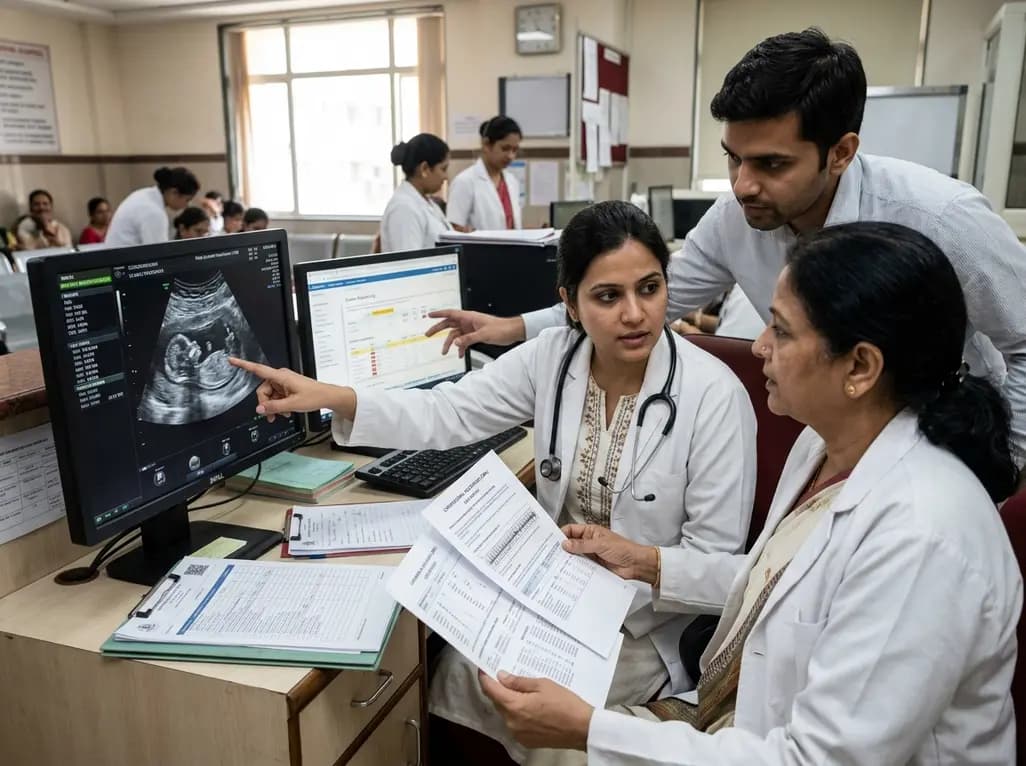
Prenatal evaluation of fetal growth restriction requires an integrated diagnostic approach. While chromosomal microarray remains fundamental, exome sequencing offers significant diagnostic yield in isolated and syndromic cases, especially when ultrasound shows skeletal anomalies or normal placental function.
Today
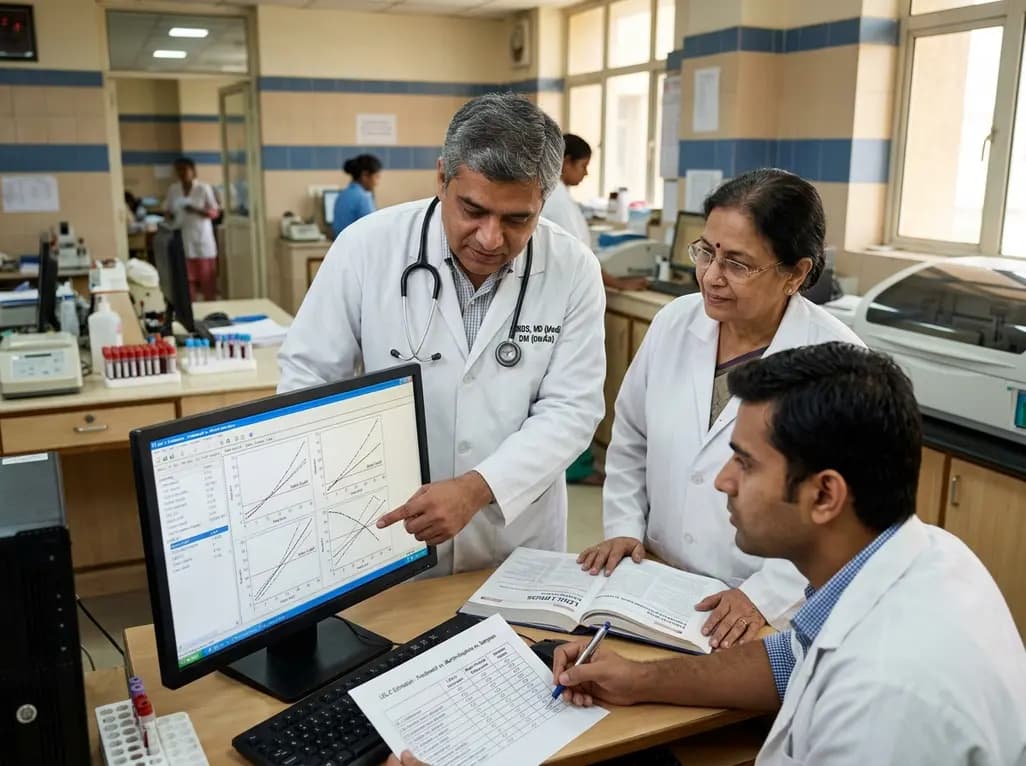
Evaluating disagreement among Friedewald, Martin-Hopkins, and Sampson LDL-C equations reveals diagnostic uncertainty at statin cutoffs. An interpretable regime-aware calibration model rescues patient misclassifications without extra testing costs.
Today
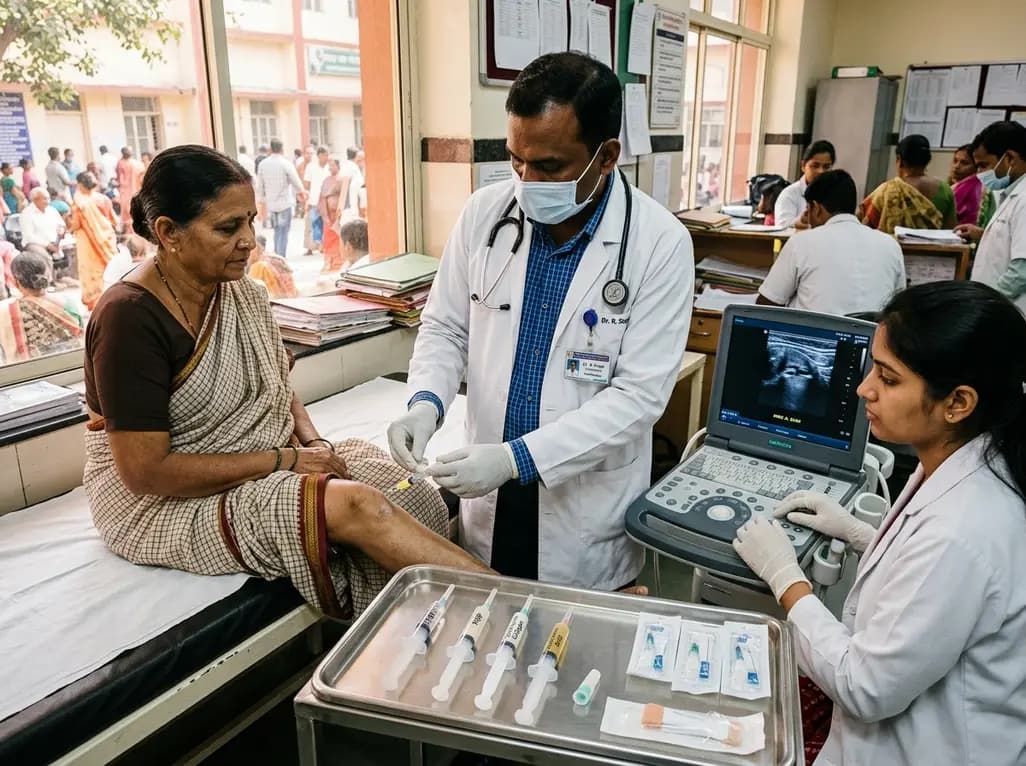
A randomized controlled trial compared ultrasound-guided intra-articular injections of PRP, hydrolyzed type I collagen, and hyaluronic acid in knee osteoarthritis. All therapies demonstrated significant improvements in WOMAC and pain scores at six months, supporting hydrolyzed collagen as a viable biological option.
Today
A study reveals that salivary cortisone correlates more strongly with serum cortisol than salivary cortisol during dynamic adrenal testing, while salivary dexamethasone accurately confirms compliance. This provides a non-invasive, precise alternative to venipuncture for diagnosing adrenal disorders.
Today
