

Loading, please wait...
Loading, please wait...

Maternal psychological health and endocrine stability during pregnancy represent pivotal determinants of offspring neurodevelopment. Consequently, obstetricians and pediatricians frequently encounter concerns regarding maternal thyroid dysfunction and co-occurring mood disorders. Both conditions show high prevalence during gestation, yet their combined effects on childhood neurobehavior remain controversial. A recent investigation within the Environmental influences on Child Health Outcomes cohort evaluated these dual exposures across early development. Specifically, investigators evaluated whether thyroid hormone variations interact with antepartum psychological distress to influence later behavior. Therefore, understanding these complex antenatal relationships enables clinicians to optimize maternal mental health care and pediatric screening.
Gestational physiology demands substantial metabolic adaptations from the maternal endocrine system. Early in gestation, the growing fetus relies entirely on maternal thyroxine transfer across the placenta for cerebral corticogenesis. Consequently, minor deficiencies in maternal hormone supply could theoretically disrupt fetal neuronal migration and synaptogenesis. In addition, maternal antenatal depression represents another potent intrauterine stressor that alters placental physiology. Depressive states elevate circulating maternal glucocorticoids and systemic inflammatory mediators. As a result, fetal brain maturation encounters potential biochemical vulnerability from both hormonal and emotional perturbations. Furthermore, maternal psychiatric distress and subclinical thyroid anomalies often share overlapping constitutional symptoms, including lethargy, fatigue, and cognitive blunting. Clinicians frequently struggle to distinguish whether depressive symptoms stem from endocrine deficits or primary mood disorders. However, traditional clinical studies often evaluated these biological factors in complete isolation without adequate controls. Therefore, multi-cohort prospective analyses offer critical clarity by investigating joint endocrinological and psychiatric pathways simultaneously. This rigorous integrative approach helps clinicians identify specific risk trajectories early in gestation.
To resolve these interrelated questions, investigators pooled extensive longitudinal prospective data from four distinct cohorts within the ECHO program. The combined study sample comprised 949 mother-child dyads with comprehensive antenatal and pediatric records. During the first half of pregnancy, researchers assessed maternal thyroid status through standardized serum assays. Specifically, laboratory protocols quantified thyroid-stimulating hormone, free thyroxine, and thyroid peroxidase autoantibodies, alongside calculating the free thyroxine to thyroid-stimulating hormone ratio. In parallel, investigators harmonized maternal depressive symptoms using validated psychometric scales into continuous antepartum symptomatology scores. Additionally, they categorized clinical history through dichotomous diagnostic indicators. Offspring behavioral and emotional functioning was systematically tracked using maternal reports on the Child Behavior Checklist. The investigators harmonized these metrics into standardized T-scores capturing both internalizing problems and externalizing behaviors. Furthermore, analysts employed multivariable linear regression models alongside random-effects meta-analytic techniques across all cohorts. Consequently, the research design ensured high internal validity and clinical generalizability across diverse demographic settings.
The investigation revealed a robust and statistically significant link between maternal antepartum depressive symptoms and adverse child behavioral outcomes. Specifically, elevated antenatal depressive symptomatology strongly predicted higher child internalizing problems across all participating cohorts. Children whose mothers experienced antenatal depression demonstrated increased risks of withdrawal, anxiety, somatic complaints, and emotional reactivity. Furthermore, maternal depressive symptoms during pregnancy exhibited an equally distinct association with child externalizing problems. These externalizing difficulties included aggressive behaviors, oppositional tendencies, and reduced impulse control during early childhood. Notably, these psychological associations remained resilient even after rigorous adjustment for key sociodemographic confounders and maternal characteristics. The meta-analytic effect estimates demonstrated consistent effect sizes across diverse cohort environments, highlighting the biological universality of this association. In contrast, a maternal pre-pregnancy history of depression without active gestational symptoms exhibited less pronounced behavioral consequences. Therefore, active antenatal psychological distress represents the critical driver shaping offspring neurobehavioral trajectories. These findings reinforce the clinical necessity of active psychiatric monitoring during routine antenatal consultations.
While maternal depressive symptoms demonstrated unequivocal associations with child behavioral problems, gestational thyroid indices showed strikingly different patterns. Specifically, researchers observed no consistent independent associations between maternal thyroid biomarkers and offspring internalizing or externalizing T-scores. Physiological variations or mild elevations in thyroid-stimulating hormone did not predict behavioral challenges in offspring. Similarly, variations in free thyroxine levels and the free thyroxine to thyroid-stimulating hormone ratio showed no meaningful clinical impact. In addition, the presence of thyroid peroxidase autoantibodies failed to correlate with adverse behavioral trajectories in children. Furthermore, statistical interaction models revealed no significant synergistic amplification between maternal thyroid dysfunction and antepartum depressive symptoms. Even among mothers experiencing concurrent thyroid variations and psychological distress, child behavioral scores tracked depressive severity rather than endocrine fluctuation. Consequently, these findings indicate that subclinical gestational thyroid variations within standard ranges do not directly mediate child behavioral morbidity. Obstetricians and pediatricians should recognize that mild thyroid variations rarely account for early emotional dysregulation in children. Thus, clinical focus must remain centered on addressing psychiatric vulnerabilities during pregnancy.
These rigorous multi-cohort insights carry immediate actionable relevance for practicing obstetricians, endocrinologists, and pediatric healthcare providers. First, clinicians must prioritize systematic universal screening for antenatal depression across all trimesters of pregnancy. Validated instruments like the Edinburgh Postnatal Depression Scale enable rapid identification of vulnerable mothers requiring timely therapeutic intervention. In addition, providing evidence-based psychiatric support, including cognitive behavioral therapy and safe pharmacotherapy, directly protects maternal and infant health. Conversely, healthcare providers should interpret maternal thyroid function panels within appropriate gestation-specific reference intervals without attributing behavioral risks prematurely. Although overt hypothyroidism mandates prompt levothyroxine replacement to protect somatic and cognitive milestones, mild isolated fluctuations do not drive behavioral morbidity. Moreover, pediatric clinicians managing children with early internalizing or externalizing symptoms should carefully obtain a detailed maternal perinatal mental health history. Multidisciplinary collaboration between obstetric teams and child mental health specialists ensures a continuum of supportive care for mother-infant dyads. Ultimately, proactively addressing maternal emotional wellbeing during pregnancy provides the most dependable avenue for preventing childhood emotional and behavioral disorders.
Antenatal maternal depression significantly elevates the risk of both internalizing and externalizing problems in offspring. Children frequently exhibit anxiety, withdrawal, emotional reactivity, or aggressive conduct. Maternal stress biology, elevated circulating cortisol, and altered placental function disrupt early fetal neural circuit maturation, creating persistent vulnerabilities in child emotional self-regulation.
Recent multi-cohort findings indicate that maternal thyroid variations, including subclinical thyroid-stimulating hormone changes or thyroid peroxidase antibodies, do not directly cause child behavioral problems. While overt untreated hypothyroidism impairs broader neurocognitive milestones, subclinical gestational variations demonstrate no meaningful independent association with childhood internalizing or externalizing behavioral symptoms.
Current clinical guidelines endorse routine antenatal depression screening using standardized tools like the Edinburgh Postnatal Depression Scale. Early detection enables timely therapeutic interventions that mitigate adverse child outcomes. Conversely, clinicians test thyroid function primarily when patients exhibit clinical symptoms, thyroid disease history, or specific high-risk metabolic conditions.
Disclaimer: This content is for informational and educational purposes only and should not be taken as professional medical advice. Always consult a qualified healthcare provider for personal health concerns. The opinions expressed here are those of the authors and do not necessarily reflect the official policy or position of any other agency, organization, employer, or company. The author is not responsible for any errors or omissions, or for the results obtained from the use of this information. Refer to the latest local and national guidelines for clinical practice.
References

Read summarized clinical updates, watch expert medical content, and earn CME certifications right from your smartphone.
Open your smartphone camera to scan and install.





A multi-cohort ECHO investigation examined maternal thyroid dysfunction and antepartum depressive symptoms to determine their impact on child behavior. While antenatal depression strongly correlated with emotional and behavioral problems, thyroid indices showed no robust independent or interactive associations.
Today

A comprehensive practical review detailing a phenotype-guided approach to the pharmacological management of POTS. Learn how to tailor off-label pharmacotherapy across neuropathic, hypovolemic, and hyperadrenergic subtypes, while navigating the complex POTS-hEDS-MCAS triad in routine practice.
Today
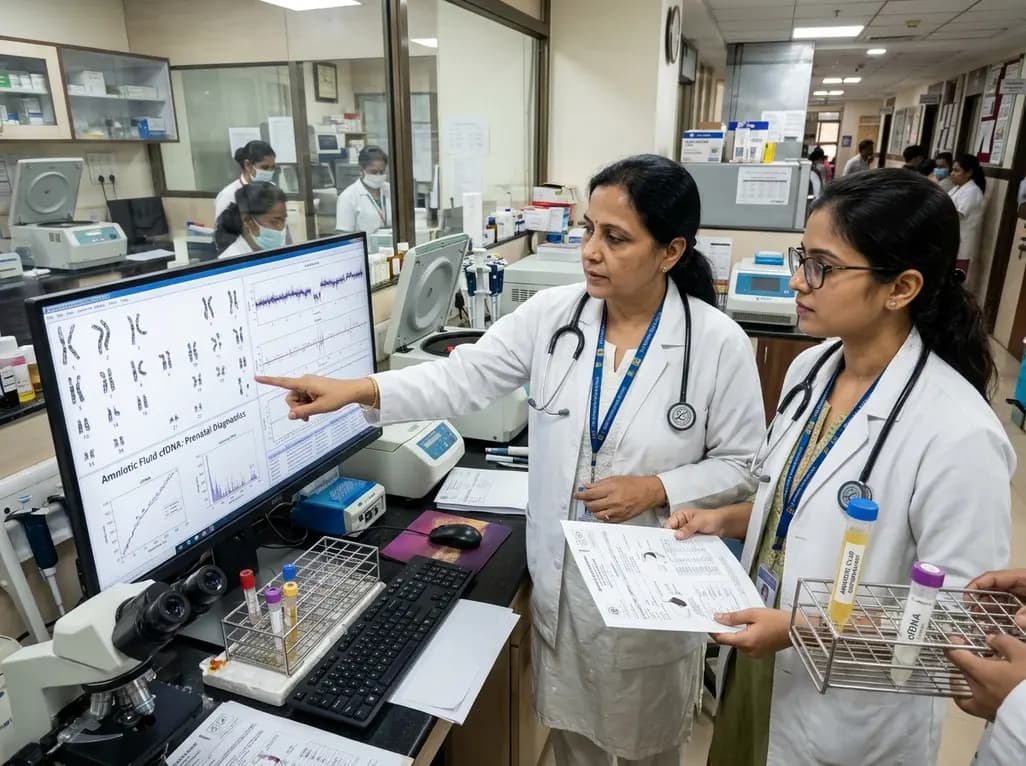
Amniotic fluid cell-free DNA offers a rapid alternative to cultured amniocytes in prenatal testing. With high yield, lack of maternal contamination, and full concordance across microarrays and exome sequencing, it dramatically cuts diagnostic turnaround time.
Today
Time-use diary research maps 24-hour physical activity and dietary habits, providing clinicians with vital insights into temporal patterns, time poverty, and lifestyle modifications essential for noncommunicable disease prevention.
Today

A systematic review of 15 studies and 574 competitive weightlifters establishes normative benchmarks for snatch drop-under kinematics, highlighting turnover speed, horizontal displacement, and trunk alignment to optimize performance and prevent overhead injuries.
Today
Investigating the patterns, barriers, and facilitators of sedentary behaviour, physical activity, and nutrition among hybrid employees working from home, with practical recommendations for clinicians managing cardiometabolic and musculoskeletal health.
Today
