.webp&w=384&q=75)

Loading, please wait...
Loading, please wait...

Maternal mortality in India remains a primary concern for healthcare providers and policy experts. Recent data published in The Lancet Obstetrics, Gynaecology, and Women's Health details the maternal health landscape for 2023. Consequently, these findings highlight the urgent need for sustained investment in obstetric care. While India has made substantial strides, the report indicates that 24,700 maternal deaths occurred in the past year. This figure translates to a maternal mortality ratio of 116 per one lakh live births.
The Global Burden of Disease (GBD) 2023 research provides a comprehensive assessment across 204 countries. However, Indian government data from the Sample Registration System (SRS) presents a more optimistic figure of 88. Despite these differing estimates, the Union Health Ministry emphasizes that India has achieved an 86% reduction in MMR since 1990. Therefore, the country is progressing toward the Sustainable Development Goal (SDG) of reducing the ratio below 70 by 2030. Additionally, global trends show that progress in reducing deaths has slowed in many regions recently. Notably, the world saw a total of 2.4 lakh maternal deaths in 2023.
Researchers identified maternal haemorrhage and hypertensive disorders as the leading causes of death globally. Furthermore, improved access to antenatal care and safe delivery services could drastically reduce these figures. Specifically, emergency obstetric care and postpartum follow-up are vital for patient safety. Meanwhile, the COVID-19 pandemic caused temporary spikes in mortality before widespread vaccination began during 2020-2021. Thus, health systems must remain resilient against emerging infectious threats to protect expectant mothers. Strengthening these systems is essential for meeting international health benchmarks.
Q1: What were the primary causes of maternal deaths in the 2023 analysis?
The report identified maternal haemorrhage and hypertensive disorders of pregnancy as the leading causes of mortality globally.
Q2: How does India's MMR compare to the Sustainable Development Goal (SDG) target?
The SDG target is an MMR below 70 per one lakh live births. While different estimates place India at 88 or 116, the country aims to reach the benchmark by 2030.
Q3: Did the COVID-19 pandemic affect maternal mortality rates?
Yes, researchers found that COVID-19 infections led to temporary increases in maternal deaths in regions with high mortality during the early pandemic years.
Disclaimer: This content is for informational and educational purposes only. It does not constitute medical advice or replace professional judgment. Refer to the latest local and national guidelines for clinical practice.
References

Read summarized clinical updates, watch expert medical content, and earn CME certifications right from your smartphone.
Open your smartphone camera to scan and install.





New analysis shows India recorded 24,700 maternal deaths in 2023. While progress is noted, meeting the SDG target of under 70 MMR remains a critical goal....
6 months ago
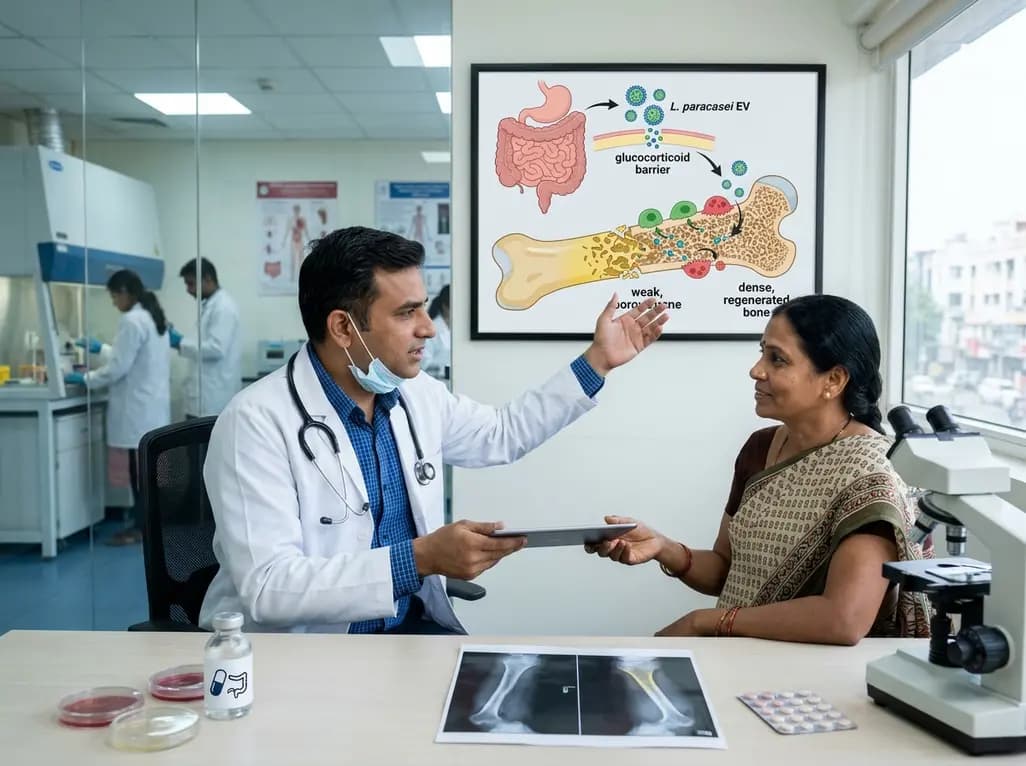
A novel oral nanoplatform using Lacticaseibacillus paracasei-derived extracellular vesicles delivers alendronate, reversing glucocorticoid-induced bone loss and restoring gut-immune-bone homeostasis.
Today

A study in JAMIA Open shows lightweight open-source reasoning LLMs achieve up to 95% sensitivity and accelerate evidence synthesis screening by nearly twentyfold, presenting a cost-effective, scalable AI solution for biomedical research and systematic reviews.
Yesterday
A landmark study details how an enterprise pediatric remote patient management model expanded from a single cardiology pilot to 16 diverse specialty programs by combining centralized digital operations with specialty clinical leadership.
Yesterday

A comparative review of tension band wiring and intramedullary screw fixation in thumb metacarpophalangeal arthrodesis, evaluating union rates, hardware complications, and clinical outcomes.
Yesterday
A real-world trial evaluating a near-infrared spectroscopy noninvasive glucose monitoring device in adults with type 2 diabetes demonstrated a combined MAD/MARD of 16.3 across 2,616 paired readings, highlighting its clinical feasibility.
Today
