

Loading, please wait...
Loading, please wait...
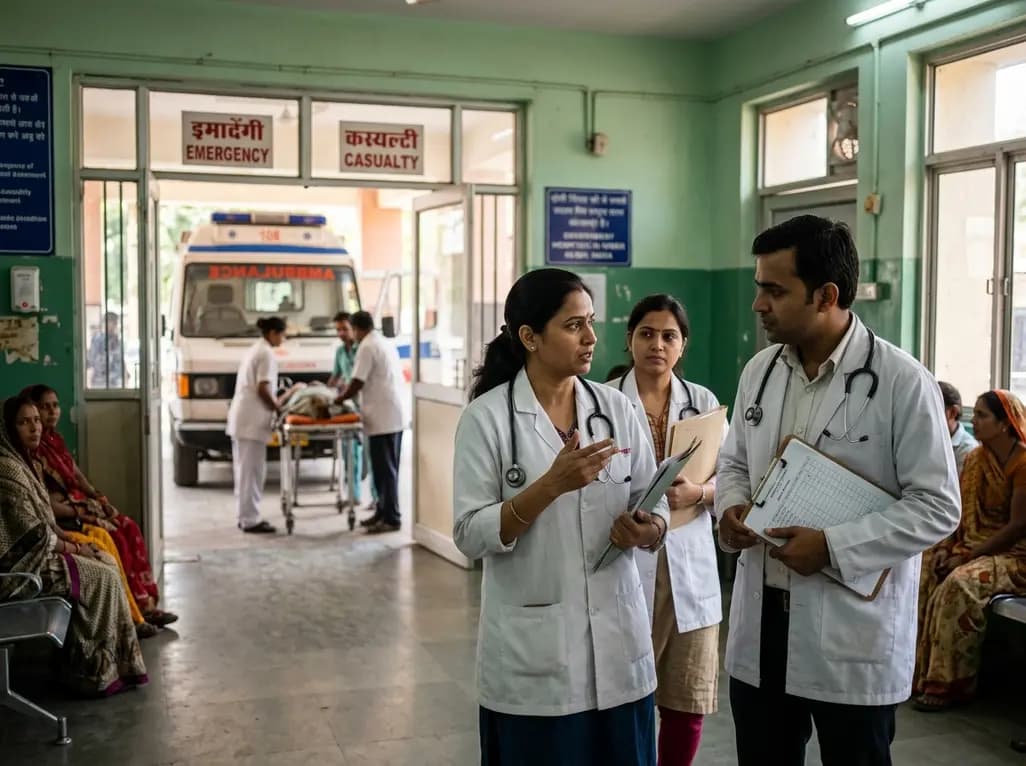
Maternal mortality remains an urgent challenge requiring continuous clinical vigilance and systemic accountability. In India, maternal healthcare in Rajasthan faces intense scrutiny following another fatal incident in Kota. Recently, the death of a forty-year-old post-caesarean patient exposed catastrophic failures within the emergency referral transport infrastructure. Specifically, health department audits revealed that vital transport networks failed to protect high-risk obstetric cases.
The recent fatality at Kota’s New Medical College involved a forty-year-old woman who underwent an emergency caesarean delivery. Following surgical intervention, the patient rapidly deteriorated and subsequently succumbed to severe acute renal failure. Postoperative acute kidney injury in obstetric patients typically stems from underlying preeclampsia, severe sepsis, or massive hemorrhage. However, patient survival hinges decisively on rapid initial resuscitation before secondary tissue damage becomes irreversible. In this tragic case, protracted pre-hospital transit delays severely hindered timely volume expansion and maternal hemodynamic stabilization across secondary centers. Furthermore, clinical reviews in Kota have documented recurrent maternal deaths and critical morbidities following obstetric procedures over recent months. Rather than addressing upstream logistics, health administrators routinely impose punitive suspensions on frontline doctors. Consequently, suspending clinical personnel fails to resolve root supply chain deficits or emergency transport breakdowns. Thus, effective maternal critical care demands seamless coordination between emergency transit services and tertiary resuscitation teams. In addition, prolonged transit intervals accelerate hypovolemic shock, transforming manageable prerenal azotemia into established cortical necrosis. Therefore, regional maternal healthcare policies must prioritize pre-hospital intervention over retrospective disciplinary measures.
An official review by the state health department exposed staggering operational breakdowns within the 104 Janani Express service. Most alarmingly, the audit revealed that only 12.6 percent of high-risk pregnant women used government ambulances. Therefore, over eighty-seven percent of vulnerable mothers relied on precarious private transport during life-threatening obstetric crises. Furthermore, the audit documented an average daily caseload of merely 0.77 patients per ambulance across Rajasthan. In fact, 114 government ambulances recorded zero transport dispatches throughout the entire audited period. This severe underutilization does not indicate declining obstetric complications in rural and peri-urban communities. Instead, widespread operational paralysis systematically prevents the emergency fleet from responding to urgent patient calls. Consequently, mothers in labor experience dangerous delays while families arrange costly and medically unequipped private commercial vehicles. Although the National Health Mission maintains six hundred Janani Express vehicles, regional functionality remains critically impaired. Meanwhile, the Rajasthan Medicare Relief Society oversees daily operations without sufficient mechanical auditing or strict performance tracking. Ultimately, these compounding operational deficits directly compromise timely access to emergency obstetric care across peripheral communities.
Pervasive logistical and communication breakdowns severely undermine the delivery of maternal healthcare in Rajasthan. Specifically, central dispatch records revealed that emergency calls to pilots of eighty-two ambulance vehicles went completely unanswered. Such acute communication failures demonstrate a complete absence of live monitoring and real-time fleet coordination. Additionally, severe resource deprivations continuously immobilize emergency response vehicles across multiple healthcare blocks. The state review established that ninety ambulance units refused patient calls due to severe fuel shortages. Furthermore, 167 vehicles reported persistent mechanical breakdowns or pending maintenance requests to the central Jaipur call center. Because routine repair authorizations face administrative bottlenecks, vital emergency vehicles remain stranded for weeks in local depots. Consequently, pregnant patients requiring rapid referral transport arrive at tertiary centers in uncompensated terminal conditions. When emergency vehicles fail to function, tertiary intensive care units cannot overcome hours of ischemic hypoxia. Therefore, state health authorities must establish automated fuel funding, mandatory vehicle inspections, and strict disciplinary oversight. In addition, transparent operational audits must replace administrative complacency to rebuild public trust in rural healthcare. Thus, fixing ambulance infrastructure represents the most urgent regulatory priority for preventing further maternal mortalities.
In maternal medicine, the classic 'three delays' framework identifies critical points where preventable deaths occur. These comprise delays in seeking medical attention, reaching an emergency health facility, and receiving appropriate hospital therapy. When public ambulances fail to arrive, the secondary transit delay expands from minutes into multiple hours. Consequently, patients facing antepartum hemorrhage, preeclampsia, or sepsis endure protracted circulatory collapse without medical stabilization. Furthermore, persistent systemic hypotension rapidly induces ischemic acute tubular necrosis within vulnerable maternal kidneys. Normal pregnancy demands increased renal perfusion to maintain elevated glomerular filtration and metabolic homeostasis. However, severe hypovolemia or unmanaged septic vasodilation causes immediate ischemic cortical injury. If inter-facility transport lacks IV fluids or blood products, transient functional azotemia progresses to irreversible organ necrosis. In addition, obstructed labor during delayed transit exponentially increases the likelihood of systemic sepsis and disseminated intravascular coagulation. Therefore, tertiary hospitals receive patients who are already in intractable multi-organ failure. Ultimately, rapid emergency medical transport functions as an active clinical intervention rather than simple passenger transit. Thus, improving transit times directly protects renal microcirculation and preserves maternal lives during obstetric crises.
Following the audit's alarming findings, the state health department issued urgent corrective directives to Chief Medical and Health Officers. Specifically, authorities mandated strict adherence to standard operating procedures governing the 104 Janani Express ambulance fleet. Districts must now relocate underperforming vehicles managing fewer than four monthly cases to rural medical institutions with high delivery volumes. Furthermore, health officials directed districts to condemn obsolete vehicles and immediately replace them with certified ambulances. National Health Mission State Mission Director Jogaram emphasized that six hundred Janani Express vehicles operate statewide. Notably, official figures show that the service transported over 1.88 million citizens between 2021 and 2025. However, cumulative provincial metrics cannot compensate for localized operational failures that precipitate maternal fatalities. To enforce accountability, the department mandated that non-compliant officials submit written explanations within three working days. Nevertheless, bureaucratic notices cannot substitute for systemic overhaul, continuous digital tracking, and guaranteed emergency fuel reserves. In addition, healthcare facilities must integrate centralized telemetry so tertiary obstetric teams prepare for arriving transfers. Ultimately, bridging administrative protocols with rigorous clinical oversight will safeguard vulnerable mothers during high-risk deliveries.
Q1: What caused the recent maternal death reported at Kota's New Medical College?
The patient, a forty-year-old woman named Reshma, died of severe acute kidney failure following an emergency caesarean section. Clinicians observed rapid physiological decompensation following the surgical delivery. Consequently, delayed referral and underlying clinical vulnerabilities exacerbated her hemodynamic instability. While local investigations are continuing, the tragedy highlights how unmanaged postpartum complications, coupled with systemic delays in critical care triage, can precipitate fatal multi-organ failure in high-risk obstetric cases across public tertiary hospitals.
Q2: Why did high-risk pregnant women underutilize the 104 Janani Express ambulance service?
An official state review revealed that only 12.6 percent of high-risk obstetric patients utilized the 104 Janani Express service. Severe operational bottlenecks crippled daily transport logistics across multiple districts. Specifically, over ninety vehicles experienced fuel shortages, while eighty-two ambulance drivers failed to answer emergency dispatch calls. In addition, one hundred sixty-seven vehicles reported mechanical breakdowns. These compounding logistical failures eroded community trust, forcing vulnerable families to rely on unsafe private transit during life-threatening obstetric emergencies.
Q3: How do transit delays contribute to acute kidney failure in postpartum patients?
Prolonged transit intervals critically delay fluid resuscitation, blood product transfusion, and sepsis management in complicated deliveries. When women experience severe preeclampsia, hemorrhage, or septic shock, protracted hypoperfusion directly deprives the renal parenchyma of oxygen. Consequently, ischemic renal tubular injury develops rapidly before specialized medical intervention occurs. Timely emergency medical transport ensures rapid clinical stabilization, reversing prerenal hypoperfusion before irreversible acute tubular necrosis or multiorgan dysfunction establishes itself in vulnerable postpartum mothers.
Disclaimer: This content is for informational and educational purposes only. It does not constitute medical advice or replace professional judgment. Refer to the latest local and national guidelines for clinical practice.
References

Read summarized clinical updates, watch expert medical content, and earn CME certifications right from your smartphone.
Open your smartphone camera to scan and install.





A recent maternal mortality case in Kota has drawn national scrutiny toward operational deficits in emergency transport networks. With low ambulance utilization among high-risk pregnant women, delayed inter-facility transfers, and preventable clinical complications, urgent systemic reforms are vital for patient safety.
Today

A quality improvement program integrating nursing education, an EMR-guided pathway, and automated retrospective surveillance significantly enhanced transfusion reaction reporting and increased TACO detection by 293%.
Today
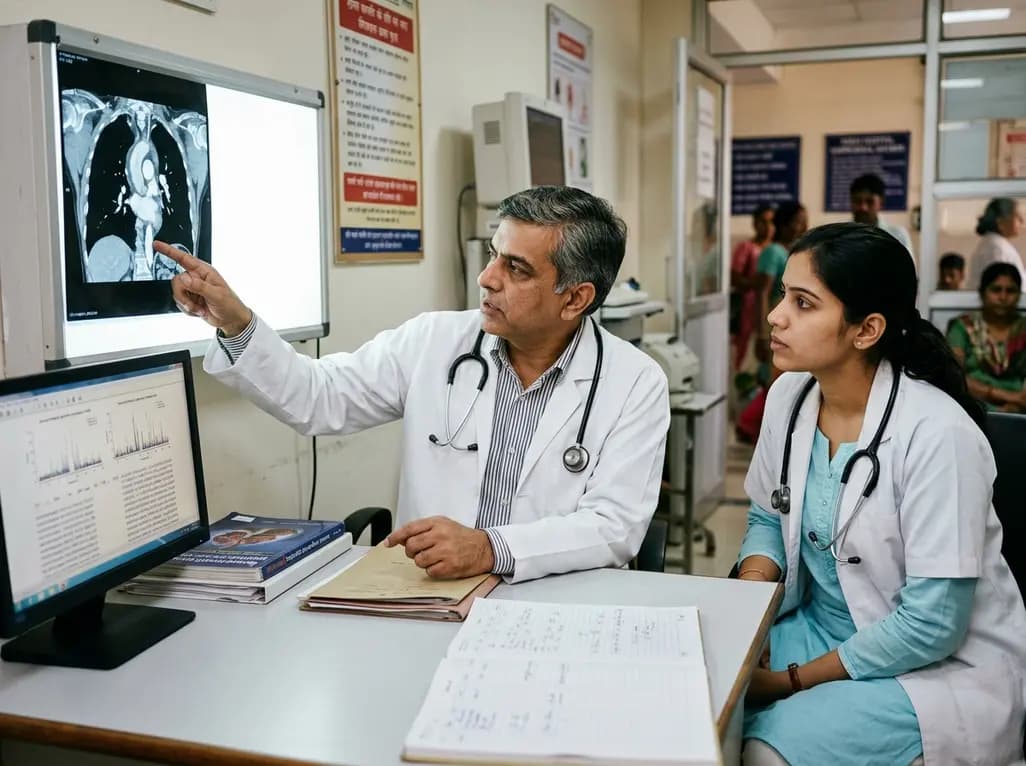
A study reveals that the MYLK c.4079G>A, p.(Gly1360Asp) variant is linked to high-penetrance heritable thoracic aortic disease and early-onset aortic dissection, showing a founder effect in Finnish cohorts. Findings emphasize early cascade screening and vigilant surveillance.
Yesterday

A novel sacrificial-template technique combines FDM polymer 3D printing and micro-arc oxidation to fabricate orientation-controlled porous titanium scaffolds. These bioactive constructs offer tailored stiffness, exceptional multidirectional load resistance, and robust osseointegration for bone defect repair.
Today
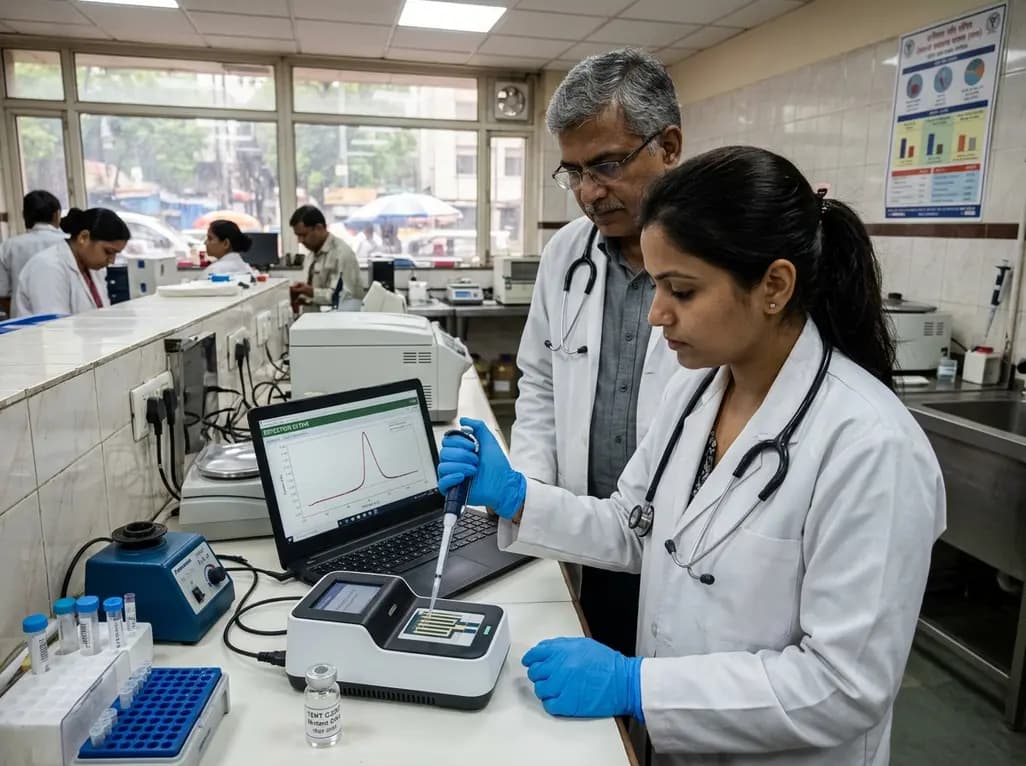
A novel label-free electrochemical biosensor utilizing magnetic nanocomposites enables ultrasensitive TERT C228T mutation detection (LOD: 0.67 pM) for rapid risk stratification in papillary thyroid cancer, offering promising point-of-care utility for endocrine oncology.
Today
