.webp&w=384&q=75)

Loading, please wait...
Loading, please wait...
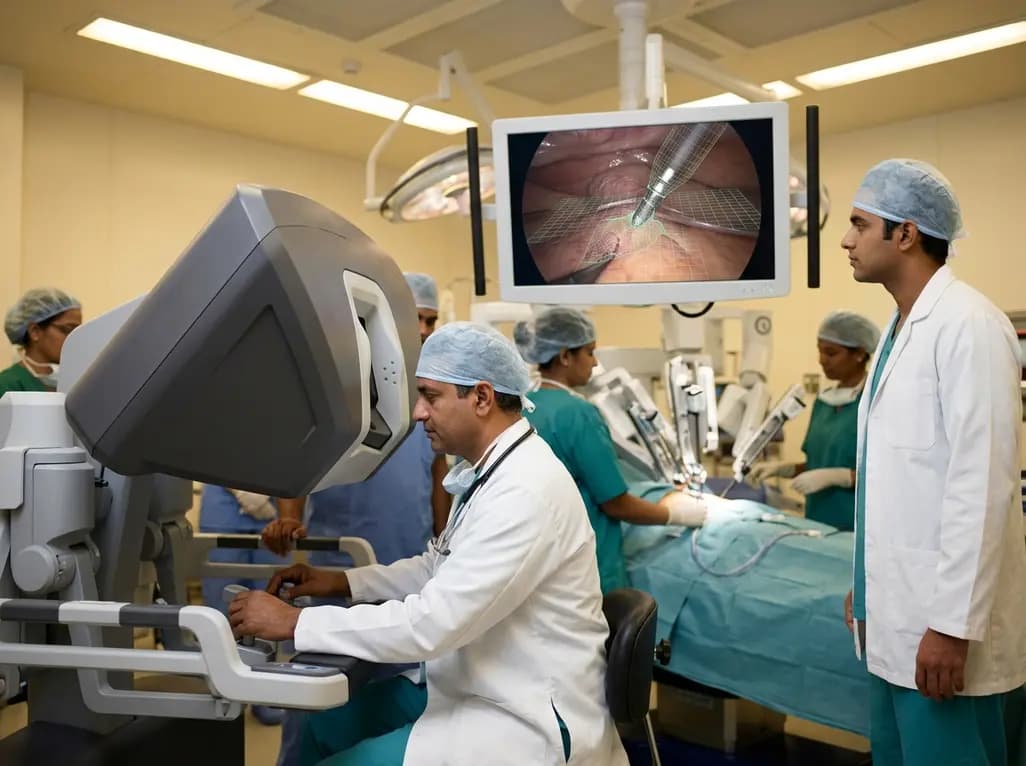
Recent advancements in surgical technology highlight the shift toward more streamlined and efficient operating environments. Marker-free robot tracking has emerged as a significant solution to the limitations of traditional marker-based systems. These conventional systems often face issues with marker occlusion in cluttered surgical fields. Consequently, researchers have developed a new framework using stereo-differentiable rendering. This technology allows for precise, real-time tracking of surgical robots without the need for physical markers.
The study evaluated the roboreg framework, extending its capabilities for online dynamic tracking. Specifically, the team implemented sequential optimization to propagate pose estimates across consecutive frames. Furthermore, they integrated CUDA stream parallelization to match high camera frame rates. As a result, the system achieves a performance of 30 frames per second (fps) for 1080p video. Moreover, the study demonstrates impressive accuracy, showing only a 1.2 cm average 3D error against reference standards. While previous methods struggled with computational costs, this new approach performs six times faster. Therefore, it provides a robust foundation for next-generation robotic surgery.
This breakthrough significantly impacts surgical safety and setup times. Because the system does not require markers, surgeons can avoid the tedious process of physical calibration. Additionally, the technology enables intelligent multi-robot interaction. Consequently, the streamlined workflow could potentially lead to better clinical outcomes in complex procedures.
Marker-free robot tracking is a technology that monitors the position and orientation of surgical robots using computer vision and rendering instead of physical markers or sensors attached to the robot.
Stereo-differentiable rendering improves surgery by providing real-time, high-resolution tracking that works even in cluttered or occluded environments. This reduces setup times and enhances safety.
The method demonstrates near-1 cm accuracy, with average 3D errors of 1.2 cm and rotational errors as low as 0.6 degrees, performing on par with traditional marker-based approaches.
Disclaimer: This content is for informational and educational purposes only. It does not constitute medical advice or a substitute for professional healthcare consultation. Refer to the latest local and national guidelines for clinical practice.
References
1. Hao Y et al. Streamlining stereo-differentiable rendering for marker-free real-time tracking of surgical robots. Int J Comput Assist Radiol Surg. 2026 Jun 10. doi: 10.1007/s11548-026-03730-z. PMID: 42268367.
2. Wang X et al. Real-time Rendering-based Surgical Instrument Tracking via Evolutionary Optimization. arXiv:2603.11404 [cs.RO]. 2026 Mar 13.
3. Smith J et al. An AI Approach to Markerless Augmented Reality in Surgical Robots. MDPI. 2025 Jul 19.

Read summarized clinical updates, watch expert medical content, and earn CME certifications right from your smartphone.
Open your smartphone camera to scan and install.





A new study demonstrates a real-time, marker-free robot tracking system using stereo-differentiable rendering. Achieving 30 fps with near-1cm accuracy, this method outperforms existing benchmarks, offering a safer and more efficient alternative to traditional marker-based tracking in complex surgical environments.
4 months ago

Discover the crucial role of glymphatic dysfunction in stroke, where perivascular clearance failure and neuroinflammation exacerbate cerebral edema and post-stroke brain injury.
Today

A prenatal case highlights severe glutaric acidemia type II presenting as bilateral hyperechoic cystic kidneys at 18 weeks. Whole-exome sequencing revealed a novel homozygous ETFDH frameshift variant, demonstrating the power of rapid genetic testing in fetal renal anomalies.
Today

Review how tailored exercise programs benefit frail older patients with heart failure. Explore pathophysiological mechanisms, individualized training prescriptions, and strategies to overcome adherence barriers in clinical practice.
Yesterday

This comparative study evaluates posterior labral tears with and without glenohumeral instability, highlighting distinct demographic patterns, MRI underestimation in stable shoulders, and successful arthroscopic repair outcomes.
Yesterday

A clinical study demonstrates that early intervention with tocilizumab, either as monotherapy or bridged with corticosteroids, achieves significant proptosis reduction and resolves active inflammation in treatment-naive thyroid eye disease.
Yesterday
