.webp&w=384&q=75)

Loading, please wait...
Loading, please wait...

Clinicians often encounter complex presentations in the emergency department that require immediate attention. Effective rheumatologic emergencies management requires a high index of clinical suspicion to prevent permanent organ damage or death. Specifically, conditions such as septic arthritis and giant cell arteritis (GCA) demand rapid diagnostic pathways. Furthermore, immunosuppressed patients may present with atypical symptoms, making the diagnostic process even more challenging. Consequently, physicians must recognize these red flags early to initiate life-saving interventions.
Early intervention is the cornerstone of success in acute rheumatology. For instance, septic arthritis is a medical emergency where joint aspiration remains the gold standard for diagnosis. Delaying this procedure can lead to irreversible cartilage destruction within hours. Moreover, giant cell arteritis requires urgent high-dose glucocorticoids to avert permanent vision loss. In cases of catastrophic antiphospholipid syndrome (CAPS), a triple-therapy approach involving anticoagulation, corticosteroids, and plasma exchange is often necessary. Additionally, macrophage activation syndrome (MAS) requires aggressive immunosuppression, frequently utilizing steroids and interleukin-1 inhibitors like anakinra.
Rheumatologic crises often manifest as multi-organ failure or acute respiratory distress. Patients with systemic lupus erythematosus may develop diffuse alveolar hemorrhage, necessitating pulse-dose methylprednisolone and cyclophosphamide. Similarly, acute kidney injury in the context of vasculitis requires prompt recognition and often involves plasma exchange. Furthermore, clinicians must remain vigilant about acute adrenal insufficiency in patients on long-term steroid therapy. Therefore, avoiding abrupt steroid withdrawal is vital during an acute illness or surgical procedure.
Joint aspiration with synovial fluid analysis is the gold standard. Clinicians should send the fluid for Gram stain, culture, and crystal analysis to differentiate from gout.
CAPS treatment typically involves a combination of therapeutic anticoagulation, high-dose corticosteroids, and either plasma exchange or intravenous immunoglobulin (IVIG).
Immediate treatment is critical because GCA can cause ischemic optic neuropathy. Starting high-dose steroids as soon as GCA is suspected can prevent irreversible blindness.
Disclaimer: This content is for informational and educational purposes only and does not constitute medical advice or a professional relationship. Always seek the advice of a qualified healthcare provider regarding any medical condition. Refer to the latest local and national guidelines for clinical practice.
References
Ritter P et al. [Management of emergencies in rheumatology]. Med Klin Intensivmed Notfmed. 2026 Apr 14. doi: 10.1007/s00063-026-01439-0. PMID: 41979866.
Shakoory B et al. The 2022 EULAR/ACR points to consider at the early stages of diagnosis and management of suspected haemophagocytic lymphohistiocytosis/macrophage activation syndrome (HLH/MAS). Ann Rheum Dis. 2023 Oct; 82(10):1271-85.
Legault K et al. Management of Catastrophic Antiphospholipid Syndrome. NIH/PMC Review. 2024 Sep 19.

Read summarized clinical updates, watch expert medical content, and earn CME certifications right from your smartphone.
Open your smartphone camera to scan and install.





An expert guide on the rapid diagnosis and acute management of life-threatening rheumatologic emergencies like septic arthritis, CAPS, and MAS....
6 months ago

Review how tailored exercise programs benefit frail older patients with heart failure. Explore pathophysiological mechanisms, individualized training prescriptions, and strategies to overcome adherence barriers in clinical practice.
Today

Recent clinical studies reveal maternal autoantibodies targeting IL-1RA as potential triggers for preterm labor, opening avenues for targeted cytokine therapies. Concurrently, new perioperative findings show inhaled cannabis increases propofol requirements during upper endoscopy compared to oral edible consumption.
Today
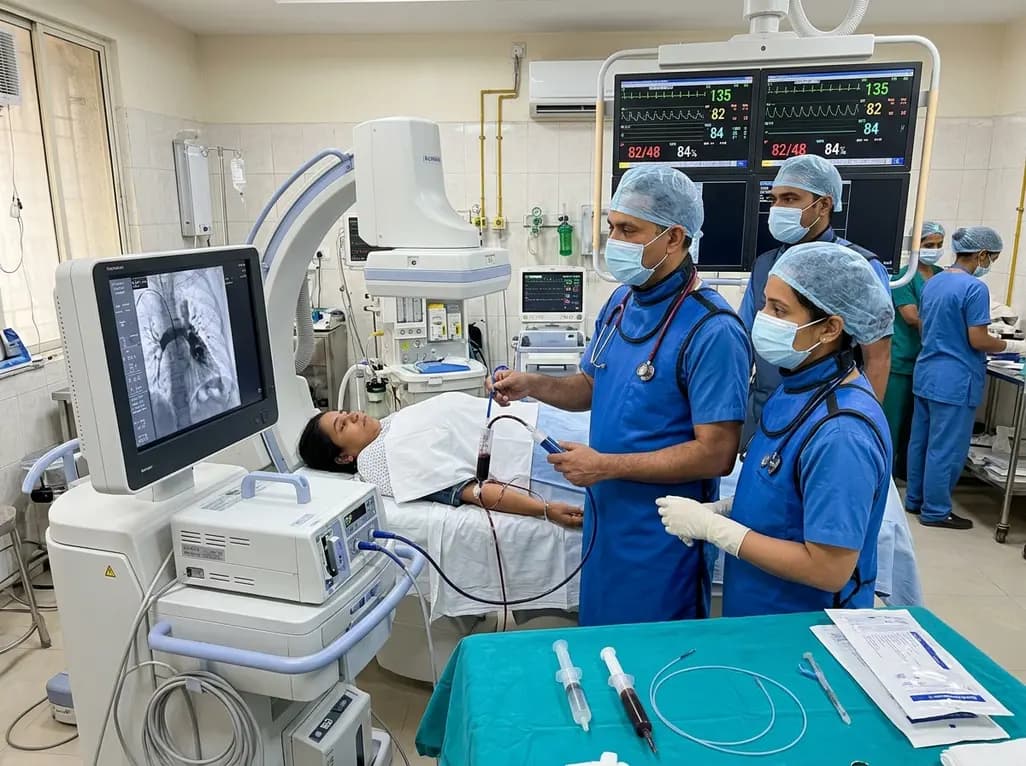
In high-risk pulmonary embolism complicated by severe anemia and active uterine bleeding, systemic thrombolysis is contraindicated. Large-bore aspiration thrombectomy provides rapid hemodynamic rescue without fibrinolysis, supported by inferior vena cava filter placement and multidisciplinary critical care.
Today

This comparative study evaluates posterior labral tears with and without glenohumeral instability, highlighting distinct demographic patterns, MRI underestimation in stable shoulders, and successful arthroscopic repair outcomes.
Today

A clinical study demonstrates that early intervention with tocilizumab, either as monotherapy or bridged with corticosteroids, achieves significant proptosis reduction and resolves active inflammation in treatment-naive thyroid eye disease.
Today
