.webp&w=384&q=75)

Loading, please wait...
Loading, please wait...

Clinicians frequently recommend male fertility supplements to manage idiopathic subfertility and elevated oxidative stress. These over-the-counter nutraceuticals combine antioxidants, vitamins, and minerals to protect developing spermatozoa from reactive oxygen species. Consequently, many couples turn to these popular commercial products before seeking complex assisted reproduction. However, solid clinical evidence supporting their therapeutic efficacy remains contentious and inconsistent.
Recent reproductive research focuses heavily on paternal epigenetics rather than conventional descriptive metrics. Beyond standard sperm counts, sperm DNA methylation plays a vital role in embryo development and successful implantation. Therefore, researchers now investigate whether oral supplements modify chromatin structures in mature sperm. A landmark prospective study by Seth Parks and colleagues evaluated a multi-element male nutritional formulation called AlphaSperm. The investigators explored whether daily supplementation impacts routine semen parameters, DNA fragmentation, or regional sperm DNA methylation across diverse patient populations. In addition, the authors examined whether patient age and baseline fertility status influenced biological responses. Ultimately, this work offers crucial insights into how nutritional therapies interact with male germ cell genetics.
To evaluate molecular responses rigorously, researchers structured a prospective, multi-institutional, within-subject clinical trial. The study enrolled three distinct patient cohorts to track biological differences across age and fertility classifications. The first cohort comprised eleven young, healthy control volunteers under twenty-five years of age. Meanwhile, the second group enrolled ten young infertile men under forty years of age. The third cohort included ten older infertile men over forty years of age.
All thirty-one participants consumed the multi-element nutritional supplement AlphaSperm daily for nine consecutive months. During this extensive period, subjects supplied serial semen samples at scheduled clinical visits. The researchers performed standard World Health Organization semen evaluations at baseline and post-treatment. Furthermore, the team assessed sperm DNA fragmentation indices alongside comprehensive array-based DNA methylation profiles. Using paired sliding-window computational analyses, the investigators calculated beta values to detect differentially methylated regions. Additionally, the team utilized the validated SpermQT clinical diagnostic tool to track functional changes throughout the intervention. Consequently, this comprehensive testing battery allowed the authors to separate macro-level semen parameters from subtle epigenetic alterations. Importantly, longitudinal tracking ensured that each subject served as his own internal control.
Many physicians prescribe antioxidant mixtures expecting rapid improvements in traditional semen parameters. However, the trial demonstrated that daily AlphaSperm supplementation produced no statistically significant changes in conventional World Health Organization metrics. Sperm concentration, overall motility percentages, and normal morphological parameters remained unchanged after nine months of therapy across all cohorts. These outcomes align closely with prior large-scale trials showing minimal physical benefits from empirical antioxidant therapy.
Similarly, the nutritional intervention did not significantly modify sperm DNA fragmentation rates in any participant group. High sperm DNA fragmentation often indicates severe oxidative damage and defective chromatin packing, which impairs fertility outcomes. Because the supplement failed to lower fragmentation levels, the data challenge assumptions that over-the-counter antioxidants routinely repair DNA strand breaks. Therefore, reproductive specialists should exercise caution when counseling patients regarding dietary interventions. While subfertile men frequently expect substantial improvements in standard laboratory reports, objective metrics typically demonstrate no meaningful change. Instead, clinicians must emphasize proven lifestyle modifications and targeted medical treatments. Consequently, providers should not rely on routine seminograms alone to gauge nutraceutical impact.
Although routine semen analysis showed no changes, molecular profiling uncovered profound epigenetic consequences. Daily supplementation with AlphaSperm induced marked regional sperm DNA hypermethylation across all patient cohorts. The researchers reported high statistical significance, with an empirical false discovery rate below 0.0001. Mean methylation changes across identified differentially methylated regions ranged between 0.1 percent and 4.3 percent following treatment.
These notable findings establish that oral micronutrients directly alter the paternal epigenome during spermatogenesis. In human spermatozoa, precise DNA methylation patterns orchestrate gene expression, maintain genomic stability, and regulate genomic imprinting. Consequently, exogenous nutritional agents can influence enzymatic methyltransferase activity within the male reproductive tract. Furthermore, these epigenetic modifications occurred independently of conventional sperm counts or motility. This separation proves that standard semen testing cannot detect intricate molecular shifts occurring in sperm chromatin. Thus, medical providers must recognize that nutritional supplements exert covert genomic actions that routine evaluations overlook completely. In addition, these observations highlight the sensitivity of paternal chromatin to dietary biochemical modulation. Ultimately, these data demonstrate that nutritional compounds actively remodel germline DNA methylation patterns.
To clarify the functional relevance of these epigenetic shifts, the authors utilized the Stanford GREAT gene ontology tool. This advanced computational platform mapped differentially methylated regions to critical biological pathways. Notably, the older infertile group exhibited significant alterations across twenty-nine distinct biological pathways following nine months of treatment. These affected pathways govern cellular metabolism, transcriptional regulation, intracellular signaling, and cellular defense mechanisms.
Importantly, supplement-induced differentially methylated regions directly involved five specific genes whose methylation patterns correlate with male infertility. In older infertile men, daily therapy caused substantial hypermethylation across these key loci. Similarly, young healthy controls developed hypermethylation in one established infertility-related gene. Although researchers must still confirm the exact physiological outcome of these modifications, the findings carry significant clinical weight. Uncontrolled epigenetic remodeling could alter embryonic gene expression and influence long-term offspring health. Therefore, clinicians must re-examine the assumption that multi-element supplements are universally benign. Instead of prescribing empirical regimens, practitioners must advocate for rigorous safety evaluations. Furthermore, targeted patient selection remains essential to prevent unintended molecular perturbations.
No, daily AlphaSperm supplementation did not improve standard semen metrics. Across all three participant cohorts, parameters including total sperm concentration, progressive motility, and normal morphology remained statistically unchanged after nine months of continuous therapy. Furthermore, the trial revealed no significant reduction in sperm DNA fragmentation indices. These findings emphasize that nutraceutical antioxidants do not predictably restore conventional semen values, highlighting the need for realistic clinical expectations.
Supplementation induced widespread regional DNA hypermethylation across all evaluated cohorts, demonstrating an empirical false discovery rate below 0.0001. Mean methylation changes across differentially methylated regions ranged from 0.1 percent to 4.3 percent. Additionally, researchers identified twenty-nine significantly altered biological pathways in older infertile men. The treatment also caused hypermethylation within five infertility-related genes, proving that oral micronutrients directly alter the molecular chromatin landscape of mature sperm cells.
Clinicians should avoid indiscriminate prescription of antioxidant supplements for male subfertility. Current medical evidence indicates that empirical supplementation rarely enhances conventional semen quality and does not consistently boost live birth rates. Moreover, nutritional formulas induce unpredictable epigenetic remodeling that could impact embryogenesis. Providers should first address underlying lifestyle risk factors, varicocele, and endocrine imbalances. Supplementation should remain targeted, modest in duration, and guided by documented deficiencies or seminal oxidative stress.
Disclaimer: This content is for informational and educational purposes only, and should not be taken as professional medical advice. Always seek the guidance of your physician or other qualified health provider with any questions you may have regarding a medical condition. The views expressed here are those of the author and do not necessarily represent the views of their employer or affiliated organizations. Refer to the latest local and national guidelines for clinical practice.
References

Read summarized clinical updates, watch expert medical content, and earn CME certifications right from your smartphone.
Open your smartphone camera to scan and install.





A multi-institutional trial revealed that daily AlphaSperm supplementation induces novel epigenetic changes and regional DNA hypermethylation in sperm without improving conventional semen parameters or DNA fragmentation, urging caution regarding empirical use.
Today
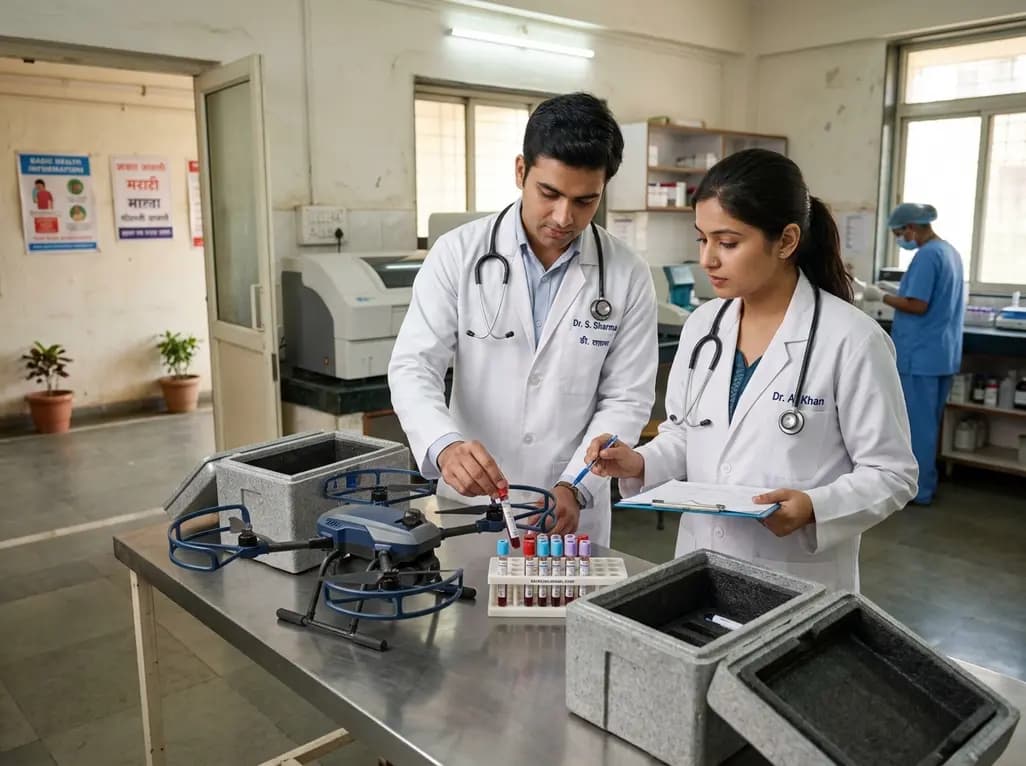
A study evaluating drone transport of blood samples across winter and summer found 31 of 32 routine biochemical analytes remained stable compared to ground transport. While plasma LDH showed minor increases, separation gel caused greater preanalytical alterations, showing aviation rules are the main barrier.
Today

A novel multiscale computational model calibrated with Bayesian algorithms demonstrates that full reverse remodeling after mitral valve regurgitation demands both mechanical correction of volume overload and neurohormonal restoration, shedding light on persistent postoperative left ventricular dysfunction.
Today

Systematic review comparing labral repair and reconstruction in primary hip arthroscopy shows comparable short- to mid-term patient-reported outcomes, with lower THA conversion after repair but superior outcomes for reconstruction in patients aged 40 and older.
Today

A preclinical study reveals that alpinetin significantly alters glimepiride pharmacokinetics by inhibiting CYP2C9. This drug-herb interaction enhances hypoglycemic potency and underscores critical safety concerns regarding severe hypoglycemia in diabetic management.
Today
