.webp&w=384&q=75)

Loading, please wait...
Loading, please wait...

Malaria remains a formidable public health challenge in high-burden regions, necessitating the evaluation of the malaria vaccine budget impact for sustainable implementation. A recent prospective analysis in Uganda examined the financial implications of introducing the RTS,S/AS01 vaccine. Researchers found that while the vaccine significantly reduces clinical cases, it requires a substantial upfront investment from the national health sector. The study estimated that treatment costs for complicated malaria in children could drop from $1.1 million to roughly $297,465 following a successful rollout.
The annual cost for a nationwide vaccine rollout was projected at $29 million. This figure represents approximately 24% of the current immunization budget in Uganda. Consequently, the total five-year malaria vaccine budget impact is estimated at $145.5 million. Furthermore, sensitivity analyses indicate that these costs fluctuate based on coverage levels. Higher coverage naturally leads to higher expenditures but offers more extensive protection. To maintain affordability, experts suggest prioritizing high-transmission districts and integrating the vaccine with existing vector control measures like insecticide-treated nets.
For medical professionals in India, the malaria vaccine budget impact is a critical consideration as the nation moves toward its 2030 elimination goal. India has already achieved a remarkable 97% reduction in malaria cases since independence. Interestingly, the R21/Matrix-M vaccine, manufactured by the Serum Institute of India, has emerged as a highly cost-effective alternative. Studies suggest R21 is nearly as cost-effective as bed nets, costing significantly less per dose than the RTS,S variant. Moreover, India is developing its domestic candidate, AdFalciVax, which may further lower logistical costs due to its stability at normal temperatures.
Implementing a new vaccine is not merely a clinical decision but a logistical and economic one. Doctors should be aware that vaccination significantly reduces the severity of malaria cases, thereby lowering the burden on pediatric intensive care units. However, achieving long-term success requires a multipronged approach. Combining immunization with traditional prevention efforts remains the most viable strategy for reducing the overall health sector budget burden while maximizing patient outcomes.
The vaccine reduces the incidence of severe malaria, which is expensive to treat. By preventing complicated cases, it saves significant funds previously allocated for hospitalization and specialized pediatric care.
Cost-effectiveness is highest in moderate to high-transmission areas. In very low-transmission districts, resources might be more efficiently used for surveillance and vector control until highly affordable vaccines like R21 are fully integrated.
Disclaimer: This content is for informational and educational purposes only and does not constitute medical advice or a professional recommendation. The financial figures and clinical projections are based on specific study models and may vary by region. Refer to the latest local and national guidelines for clinical practice.
References

Read summarized clinical updates, watch expert medical content, and earn CME certifications right from your smartphone.
Open your smartphone camera to scan and install.





New research evaluates the malaria vaccine budget impact, highlighting a potential 73% reduction in childhood treatment costs despite high rollout expenses....
7 months ago
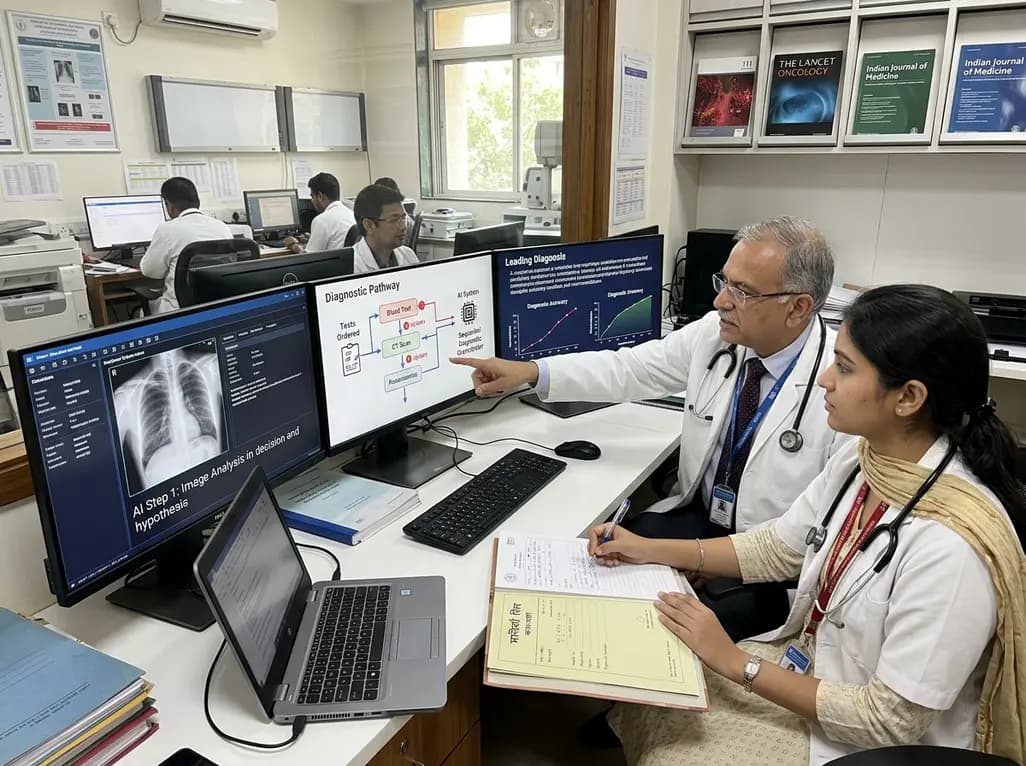
A breakthrough peer-reviewed study demonstrates that a sequential AI diagnosis system can mirror real-world clinical reasoning. By ordering stepwise tests and updating hypotheses dynamically, this multi-agent orchestrator achieved superior diagnostic accuracy while reducing investigative costs.
Today

A prenatal case highlights severe glutaric acidemia type II presenting as bilateral hyperechoic cystic kidneys at 18 weeks. Whole-exome sequencing revealed a novel homozygous ETFDH frameshift variant, demonstrating the power of rapid genetic testing in fetal renal anomalies.
Today

Review how tailored exercise programs benefit frail older patients with heart failure. Explore pathophysiological mechanisms, individualized training prescriptions, and strategies to overcome adherence barriers in clinical practice.
Yesterday

This comparative study evaluates posterior labral tears with and without glenohumeral instability, highlighting distinct demographic patterns, MRI underestimation in stable shoulders, and successful arthroscopic repair outcomes.
Yesterday

A clinical study demonstrates that early intervention with tocilizumab, either as monotherapy or bridged with corticosteroids, achieves significant proptosis reduction and resolves active inflammation in treatment-naive thyroid eye disease.
Yesterday
