.webp&w=384&q=75)

Loading, please wait...
Loading, please wait...

The Maharashtra Food and Drug Administration has officially introduced a statewide prohibition targeting high-fat, sugar, and salt products around educational institutions. Consequently, the Maharashtra HFSS food ban restricts the sale, advertisement, marketing, and free distribution of ultra-processed items within school grounds and across a strict fifty-metre perimeter. This directive applies to all government, private, aided, and residential schools operating under various educational boards. State regulatory officials announced that this intervention will reshape dietary habits for over two crore students across more than 1.8 lakh schools. Furthermore, health authorities aim to curb rising rates of early metabolic dysfunction and juvenile obesity through rigorous local enforcement and strict oversight.
The new policy strictly targets foods high in fat, sugar, and salt, which clinicians commonly designate as ultra-processed junk food. Specifically, prohibited items include carbonated soft drinks, energy beverages, packaged potato chips, deep-fried snacks, chocolates, and commercial ice creams. FDA inspectors are preparing to execute statewide checks to ensure compliance around school perimeters. Furthermore, vendors, local shops, and commercial establishments operating within fifty metres of school boundaries cannot display advertisements or distribute promotional free samples for these products. Additionally, regulators will issue formal improvement notices, seize non-compliant goods, or initiate legal prosecution against repeat offenders. Furthermore, local municipal authorities will coordinate with state food safety officers to conduct joint inspection drives across every district. School principals must actively monitor their surrounding perimeter to prevent temporary vendors from setting up unauthorized stalls during operating hours. Consequently, commercial entities must align their product offerings with state guidelines or face immediate operational suspension. Health experts emphasize that restricting easy access to sugary and salty snacks during school hours significantly reduces habitual snacking among adolescents. Therefore, this spatial boundary creates a protective environment where children encounter fewer nutritional hazards during their primary developmental years.
Educational institutions can no longer permit unmonitored food service operations within their facilities. Canteens, mid-day meal kitchens, hostel dining facilities, and external food contractors must possess a valid registration or license under the Food Safety and Standards Authority of India. Furthermore, school principals, management boards, and institutional committees bear primary accountability if food safety violations occur within school premises. Consequently, administrative leaders must ensure that every food vendor strictly complies with national safety and hygienic standards. In addition, institutions must prominently display a specialized food safety display board. This board must clearly list vendor details, served menu items, and comprehensive nutritional values. Furthermore, school administrators must appoint a designated food safety supervisor who conducts routine checks on kitchen hygiene, storage conditions, and cooking parameters. Consequently, schools that fail to maintain required regulatory licenses risk losing institutional affiliation or facing stringent administrative penalties. Healthcare professionals view this accountability framework as a vital step toward creating standardized, safe dining spaces for students. By holding institutional leaders responsible, the policy encourages proactive oversight rather than passive compliance. Therefore, administrative teams are now actively integrating food safety metrics into their daily operational protocols across Maharashtra.
Pediatricians and endocrinologists consistently warn against excessive consumption of high-fat, salt, and sugar items among young children. Chronic intake of ultra-processed foods directly contributes to childhood obesity, early insulin resistance, dyslipidemia, and elevated blood pressure. Furthermore, pediatric cardiologists observe an increasing incidence of non-alcoholic fatty liver disease and subclinical vascular changes in adolescents who consume excess refined sugars. Saturated fats and high sodium content disrupt metabolic homeostasis, impairing glycemic control and predisposing youth to type 2 diabetes. Additionally, dietary patterns rich in simple sugars lead to frequent glycemic spikes, which negatively affect cognitive focus and classroom performance. High sodium intake also alters renal physiology, raising systemic arterial pressure even in younger age groups. Furthermore, early exposure to hyper-palatable processed foods conditions taste preferences, making natural foods like vegetables less appealing. Consequently, clinical educators emphasize that early dietary interventions effectively prevent long-term cardiovascular and metabolic complications. Restricting HFSS availability in school environments reduces daily caloric overload and protects pancreatic beta-cell function during crucial developmental stages. Therefore, physicians strongly support public policy measures that restrict access to energy-dense, nutrient-poor foodstuffs during early childhood and adolescence.
Beyond restricting junk food, the state regulatory order explicitly advises schools to offer wholesome, nutrient-dense meal options. FDA guidelines encourage institutional canteens to serve fresh fruits, seasonal vegetables, pulses, whole grains, milk, and traditional regional preparations. Furthermore, schools must designate a dedicated health and wellness ambassador to serve as the primary nodal officer for nutritional guidance. This officer coordinates student awareness activities, promotes balanced eating habits, and liaises with regional health departments. In addition, educational facilities must guarantee uninterrupted access to clean, potable drinking water. Water testing must occur regularly to prevent waterborne infections among students. Clean sanitation facilities near dining areas encourage routine hand hygiene before meals. Preparation areas, storage rooms, and serving facilities must maintain strict sanitation standards, temperature control, vector management, and hygienic waste disposal. Furthermore, school authorities should organize periodic educational workshops for parents and students regarding dietary health. Consequently, families receive consistent guidance about avoiding processed foods both at school and inside the home. Clinical nutritionists recommend that school canteens replace fried snacks with baked legumes, fruit bowls, and milk-based beverages. Therefore, integrating structured health surveillance with nutritious meal planning ensures that children develop healthy eating habits that persist into adulthood.
The recent administrative order aligns with the Safe Food and Balanced Diets for Children in School Regulations established in 2020. Public health strategists recognize that school-based environmental controls represent one of the most effective interventions against non-communicable diseases. Furthermore, India faces a dual burden of malnutrition, where undernutrition coexists alongside escalating rates of childhood obesity and juvenile metabolic syndrome. Consequently, regulatory restrictions on HFSS advertising and sales create a supportive macro-environment for pediatric health. Furthermore, state health departments are leveraging digital platforms to collect public feedback regarding food hygiene and non-compliance. These digital monitoring portals allow parents and community members to report illegal junk food sales near educational institutions. As a result, regulatory agencies can swiftly assign field inspectors to investigate reported violations within twenty-four hours. In addition, medical associations advocate for expanding similar environmental restrictions to public parks and sports facilities frequented by youth. Public health specialists argue that policy-driven environmental modifications yield superior health outcomes compared to individual dietary advice alone. Furthermore, ongoing collaboration between educational boards and public health departments ensures continuous policy evaluation. This long-term monitoring assesses changes in pediatric body mass index and metabolic health indicators over time. Therefore, Maharashtra's comprehensive enforcement model offers a viable blueprint for other state governments seeking to combat early-onset chronic lifestyle diseases.
Q1: What specific items are prohibited under the Maharashtra HFSS food ban?
The ban covers high in fat, salt, and sugar (HFSS) products, including soft drinks, energy drinks, packaged potato chips, deep-fried snacks, chocolates, and commercial ice creams. It prohibits their sale, advertising, marketing, and free distribution within school grounds and a fifty-metre radius surrounding the educational establishment. These restrictions apply to all government, private, and residential schools across Maharashtra to safeguard pediatric nutritional health.
Q2: Who holds legal responsibility for enforcing food safety compliance in schools?
School principals, management committees, and institutional heads are held directly responsible for food safety violations within school premises. Canteens, mid-day meal providers, and hostel kitchens must maintain valid FSSAI licenses or registrations. Furthermore, schools must display a food safety board, appoint a food safety supervisor, and designate a health and wellness ambassador to oversee daily compliance and nutritional standards.
Q3: How do HFSS foods harm children's long-term health and academic focus?
Excessive HFSS food intake causes rapid blood glucose spikes followed by energy crashes, impairing concentration and classroom learning. Clinically, routine consumption leads to childhood obesity, early insulin resistance, dyslipidemia, fatty liver disease, and hypertension. By limiting access to energy-dense, nutrient-poor foods during school hours, students develop better metabolic health, reduced cardiovascular risk, and sustained cognitive energy throughout the school day.
Disclaimer: This content is for informational and educational purposes only. It does not constitute medical advice or replace professional judgment. Refer to the latest local and national guidelines for clinical practice.
References

Read summarized clinical updates, watch expert medical content, and earn CME certifications right from your smartphone.
Open your smartphone camera to scan and install.





Maharashtra FDA has banned HFSS food sales, advertising, and distribution within a 50-metre radius of schools statewide. Mandating FSSAI licensing and wellness officers, the directive aims to combat childhood obesity and enforce strict nutritional standards across two crore students in over 1.8 lakh schools.
last month
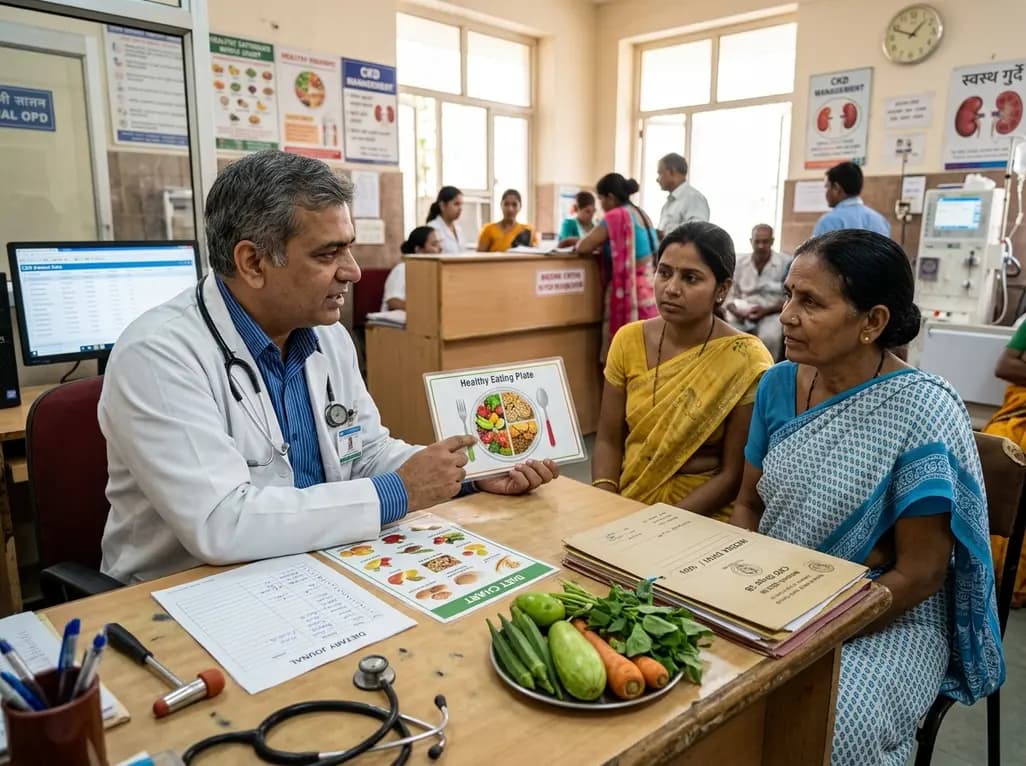
A large NHANES cohort study reveals that higher Healthy Eating Index scores significantly reduce all-cause mortality risk in CKD patients by 45%. This analysis highlights the importance of comprehensive diet quality and medical nutrition therapy in renal care to optimize long-term clinical survival.
Today

A prospective cohort study demonstrates that poor adolescent sleep quality, especially long sleep latency and reduced efficiency, increases dysmenorrhea severity in young adulthood. Addressing adolescent rest patterns offers a critical preventive avenue for clinicians.
Today

A meta-analysis of 13 propensity score-matched studies shows ViV-TAVR delivers lower early mortality and reduced bleeding compared to redo-SAVR for degenerated bioprosthetic aortic valves, though long-term hemodynamics warrant careful anatomical and patient-centered evaluation.
Today

Endoscopic posterior cervical fusion combines minimally invasive decompression, joint preparation, and rigid screw-rod fixation for atlantoaxial pathologies. Early clinical findings demonstrate solid bony union, excellent symptom relief, and minimal soft-tissue morbidity without significant vascular compromise.
Today
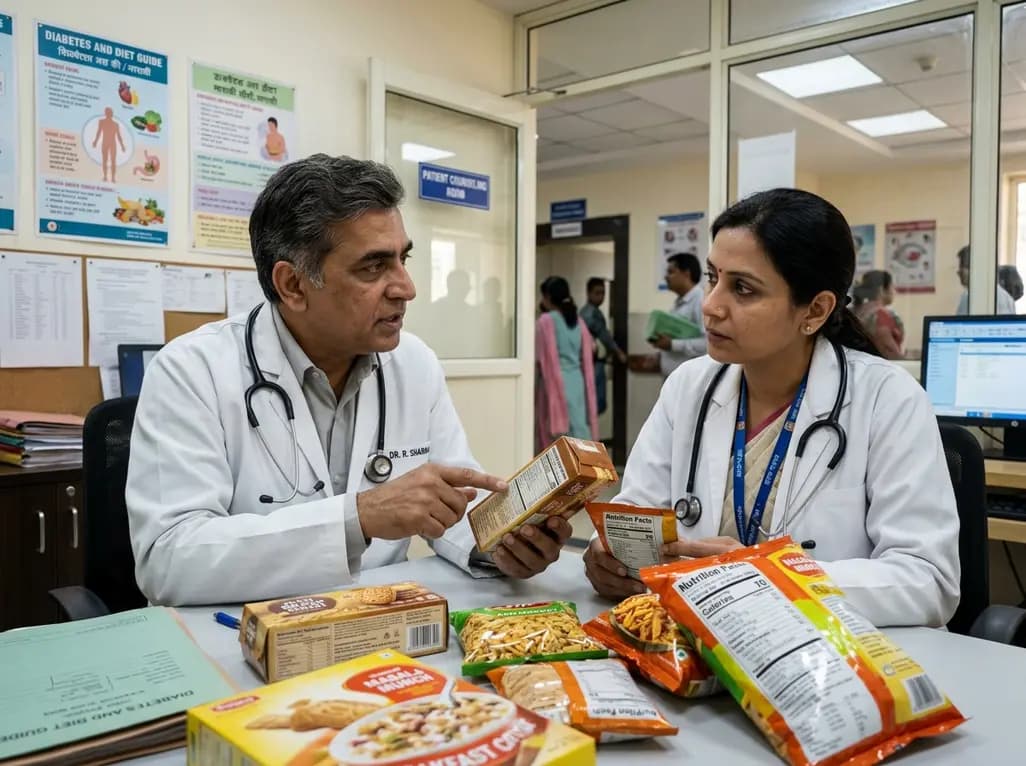
The All-India Food Processors' Association has approached the Supreme Court to oppose FSSAI's proposed per-100g benchmark for front-of-pack warning labels, advocating instead for a per-serving threshold. We explore the regulatory showdown, nutritional evidence, and implications for clinical lifestyle counseling.
Today
