.webp&w=384&q=75)

Loading, please wait...
Loading, please wait...
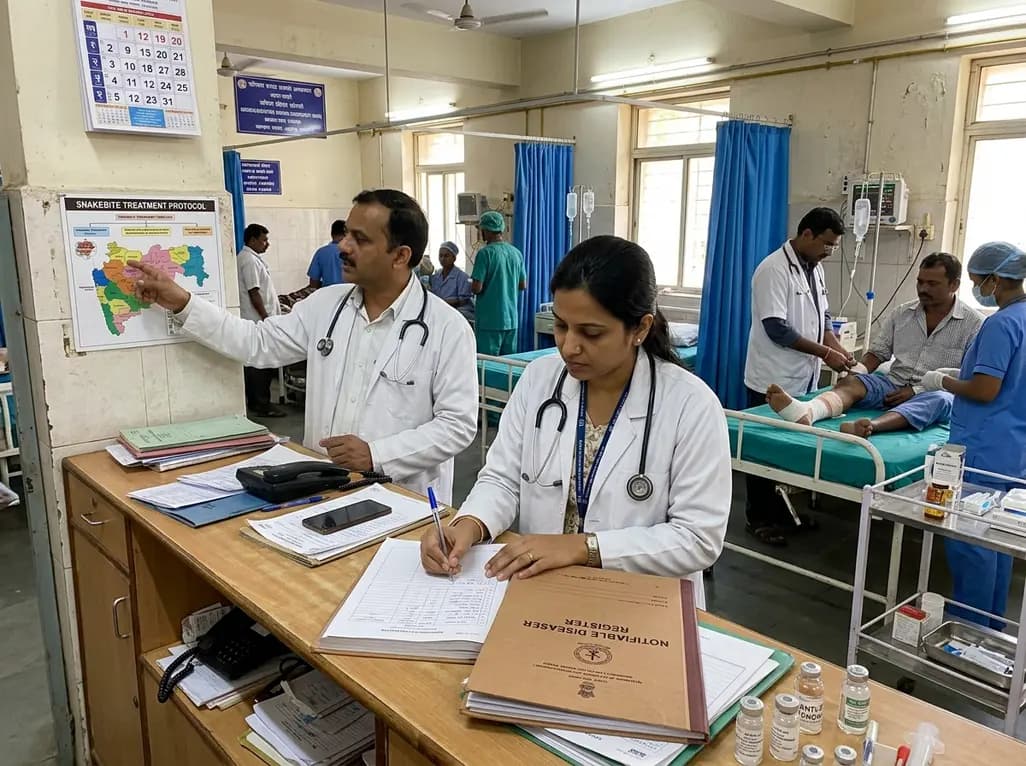
In a decisive move to combat preventable mortality in rural regions, the Maharashtra public health department has officially declared snakebite a notifiable disease across the state. Consequently, all private and public healthcare facilities must immediately report every suspected, probable, and confirmed snakebite encounter. This landmark policy establishes rigorous reporting pipelines while standardizing emergency interventions across all administrative levels. Furthermore, state authorities seek to eliminate severe treatment gaps through disciplined data tracking and proactive antivenom allocation. By enforcing systematic notification, the government aims to strengthen peripheral health infrastructure and ensure rapid medical care for vulnerable agricultural communities.
The new government notification imposes strict reporting obligations on hospitals, medical colleges, and private practitioners throughout Maharashtra. Clinicians must now promptly notify the designated district health officer or civil surgeon regarding any bite presentation. Healthcare teams must log these clinical encounters into centralized digital platforms, including the Integrated Disease Surveillance Programme and the Health Management Information System. In addition, facilities can utilize the digital district health information platform to transmit real-time patient metrics. Under this structured framework, the state hospital director operates as the apex nodal officer overseeing regional compliance. Meanwhile, district health officers supervise peripheral primary health centres and community clinics to maintain reporting accuracy. In municipal corporation zones, medical health officers actively direct urban surveillance activities. Therefore, this coordinated administrative architecture guarantees that every envenoming episode enters the public health record without delay. Ultimately, structured documentation facilitates rapid escalation whenever local clinical facilities encounter high patient influxes or life-threatening systemic emergencies.
Historically, snakebite documentation across India suffered from massive underreporting and fragmented epidemiological records. Many victims residing in remote tribal communities could not reach tertiary facilities in time. Instead, rural families frequently sought help from informal village practitioners, which obscured accurate mortality figures. Consequently, health authorities could not map high-risk geographical pockets or identify vulnerable tribal settlements. The official declaration of snakebite as a notifiable disease directly rectifies these systemic data blind spots. Robust epidemiological registries now enable public health leaders to recognize seasonal surge patterns during monsoon periods. Moreover, administrators can identify specific agrarian belts that require specialized clinical deployment before peak transmission seasons begin. Accurate field data also highlights geographic zones that experience disproportionate mortality rates. As a result, state leaders can allocate specialized medical personnel and emergency transport vehicles directly to underserved tribal belts. By closing historical data disparities, this regulatory transformation empowers health authorities to build proactive, community-centred prevention programs.
Venomous snakebites present complex clinical emergencies that demand immediate diagnostic vigilance from primary care physicians. Envenoming syndromes generally fall into neurotoxic, hemotoxic, or cytotoxic categories depending on the biting species. Neurotoxic bites, predominantly from cobras and kraits, rapidly trigger descending paralysis, bilateral ptosis, and acute respiratory failure. Conversely, hemotoxic envenomation from vipers leads to severe coagulopathy, spontaneous mucosal bleeding, and acute kidney injury. Therefore, medical officers must conduct serial twenty-minute whole blood clotting tests at the bedside. This simple clotting evaluation provides immediate confirmation of systemic hemotoxicity without requiring sophisticated laboratory equipment. In addition, attending clinicians must continuously monitor oxygen saturation, pulse rates, blood pressure, and urine volume. Peripheral tissue swelling, regional lymphadenopathy, and intense local pain also offer essential diagnostic clues regarding venom absorption. Clinicians must never delay initial triage while awaiting extensive laboratory confirmations. Consequently, rapid clinical syndromic staging ensures prompt therapeutic decision-making during the critical golden hour of trauma management.
Polyvalent anti-snake venom remains the definitive, life-saving pharmacotherapy for systemic snakebite envenomation. Under Maharashtra's updated regulatory mandate, every hospital must maintain real-time transparent ledgers tracking antivenom procurement, daily consumption, and reserve stock. This real-time inventory tracking enables district administrators to anticipate localized shortages and rapidly redistribute vials to peripheral health posts. Clinicians should administer anti-snake venom strictly when clear systemic or severe local indications emerge. The standard initial dose typically ranges from ten vials infused intravenously in normal saline over one hour. Attending medical teams must prepare prophylactic adrenaline, antihistamines, and hydrocortisone at the bedside to treat potential anaphylactic reactions swiftly. Moreover, doctors must avoid unwarranted prophylactic doses in dry bites to conserve valuable regional supplies. If coagulopathy persists or neuromuscular weakness worsens after initial infusion, clinicians must administer repeat doses according to established protocols. Thus, transparent inventory management paired with evidence-based dosing protocols prevents avoidable fatalities and preserves scarce therapeutic resources.
Severe snakebite complications require aggressive supportive therapy alongside targeted antivenom administration. When patients develop progressive neurotoxic paralysis, immediate airway protection takes absolute clinical priority. Clinicians must perform endotracheal intubation and institute mechanical ventilation before irreversible respiratory arrest occurs. Furthermore, clinicians treating suspected elapid envenomation may administer neostigmine with atropine to improve neuromuscular transmission in cobra bites. In hemotoxic envenomation, severe acute kidney injury frequently requires early renal replacement therapy. Medical teams must carefully balance intravenous fluid resuscitation to prevent pulmonary edema in oliguric patients. Additionally, surgical debridement or fasciotomy must remain strictly restricted to confirmed compartment syndrome cases after correcting coagulopathy. Primary healthcare providers must organize rapid emergency transport using well-equipped ambulances whenever patients exhibit refractory shock or multisystem failure. Consequently, seamless coordination between peripheral primary clinics and advanced tertiary critical care units ensures optimal patient survival during catastrophic presentations.
Q1: What are the primary reporting requirements under the new Maharashtra mandate?
Under the new government notification, all private and public healthcare facilities must report suspected, probable, and confirmed snakebite cases immediately. Healthcare personnel must submit clinical details and patient outcomes to the district civil surgeon or district health officer. Additionally, staff must record this data on designated platforms like the Health Management Information System and the Integrated Disease Surveillance Programme to ensure complete disease tracking.
Q2: When should clinicians initiate anti-snake venom therapy in snakebite patients?
Clinicians must initiate anti-snake venom only when objective signs of systemic or severe local envenoming appear. Systemic signs include neurotoxicity like ptosis, spontaneous systemic bleeding, hypotension, or an abnormal bedside twenty-minute whole blood clotting test. Rapidly extending local swelling over half the bitten limb also justifies immediate antivenom administration. Attending providers must avoid administering antivenom in non-envenomed dry bites.
Q3: How does real-time antivenom inventory monitoring improve emergency care delivery?
Real-time stock monitoring mandates that hospitals maintain transparent records of anti-snake venom procurement, usage, and remaining vials. This system allows district health officers to identify supply shortages early and redistribute antivenom to high-incidence rural areas. Consequently, peripheral health centres avoid stock-outs, ensuring that critical bite victims receive timely, life-saving antivenom without facing catastrophic referral delays.
Disclaimer: This content is for informational and educational purposes only. It does not constitute medical advice or replace professional judgment. Refer to the latest local and national guidelines for clinical practice.
References

Read summarized clinical updates, watch expert medical content, and earn CME certifications right from your smartphone.
Open your smartphone camera to scan and install.





Maharashtra has officially mandated reporting for all snakebite cases across government and private healthcare facilities. This regulatory move aims to enhance epidemiological tracking, optimize anti-snake venom availability, reduce treatment delays, and improve clinical outcomes across the state.
last month
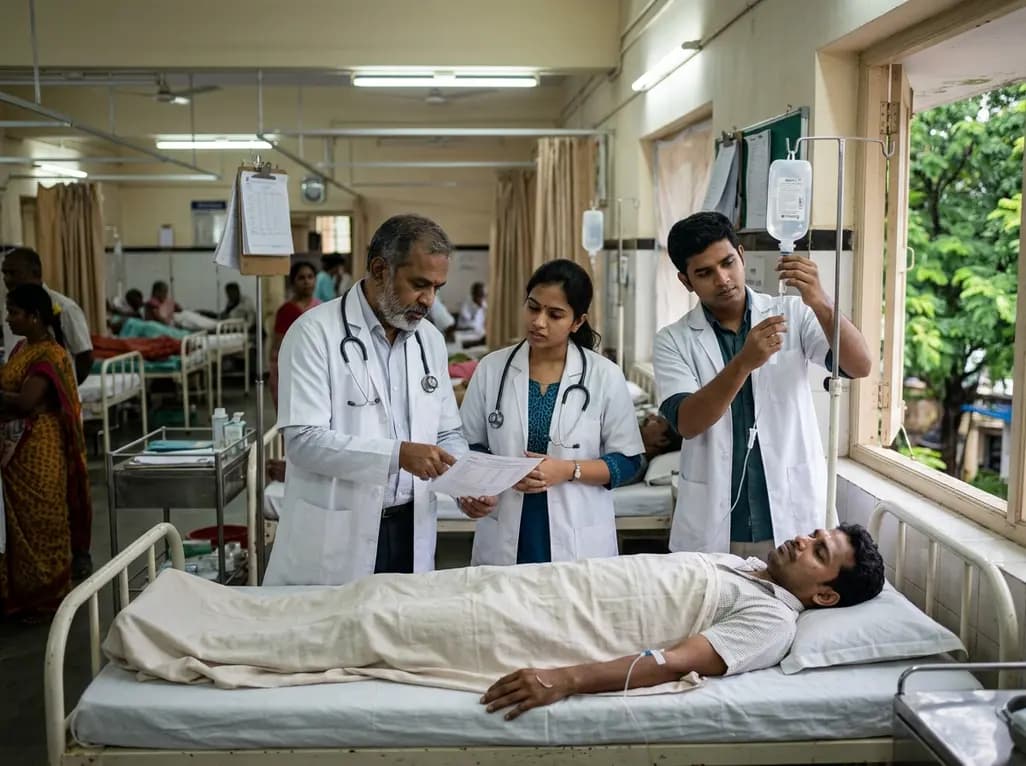
With post-monsoon dengue surges threatening South Asian health systems, physicians must refine triage and management. This guide covers vital warning signs, plasma leakage detection, crystalloid titration, and vector containment strategies to prevent mortality during seasonal arboviral epidemics.
Today

Findings from Project Viva indicate that sustained postpartum weight retention, rather than excessive gestational weight gain alone, directly worsens women's mid-life cardiovascular health, degrading blood pressure and glycemic parameters decades after delivery.
Today
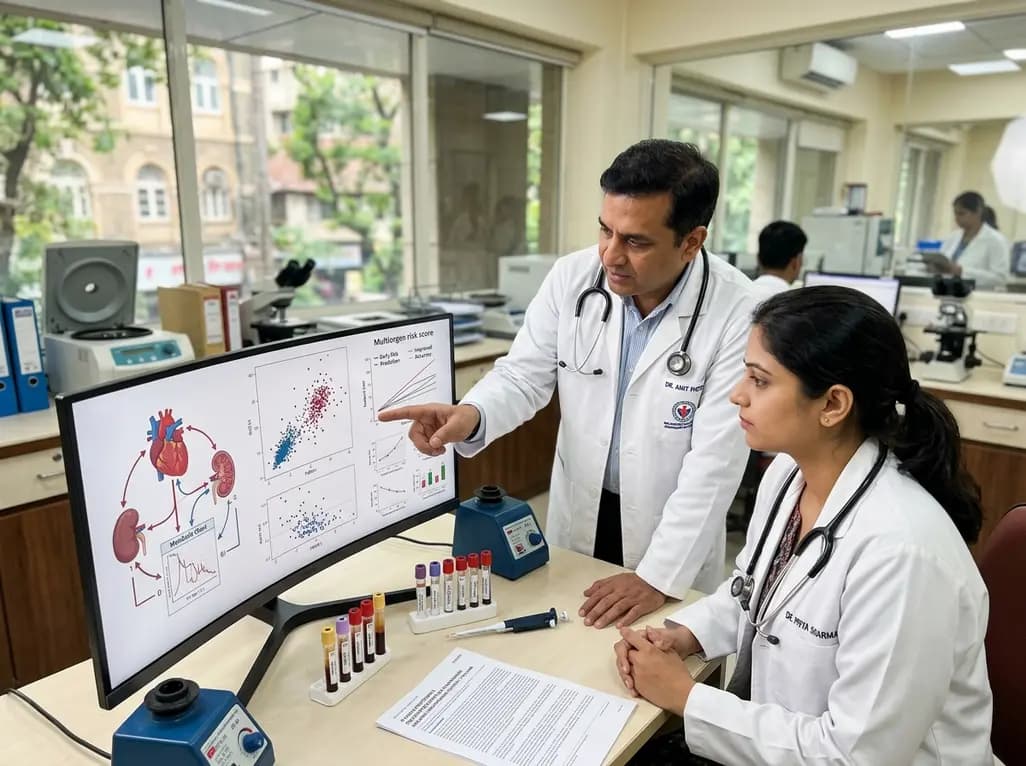
A large UK Biobank study reveals that plasma proteomic signatures capture preclinical organ damage and improve multiorgan risk prediction across early CKM syndrome stages 0 to 2 beyond traditional PREVENT clinical models.
Today
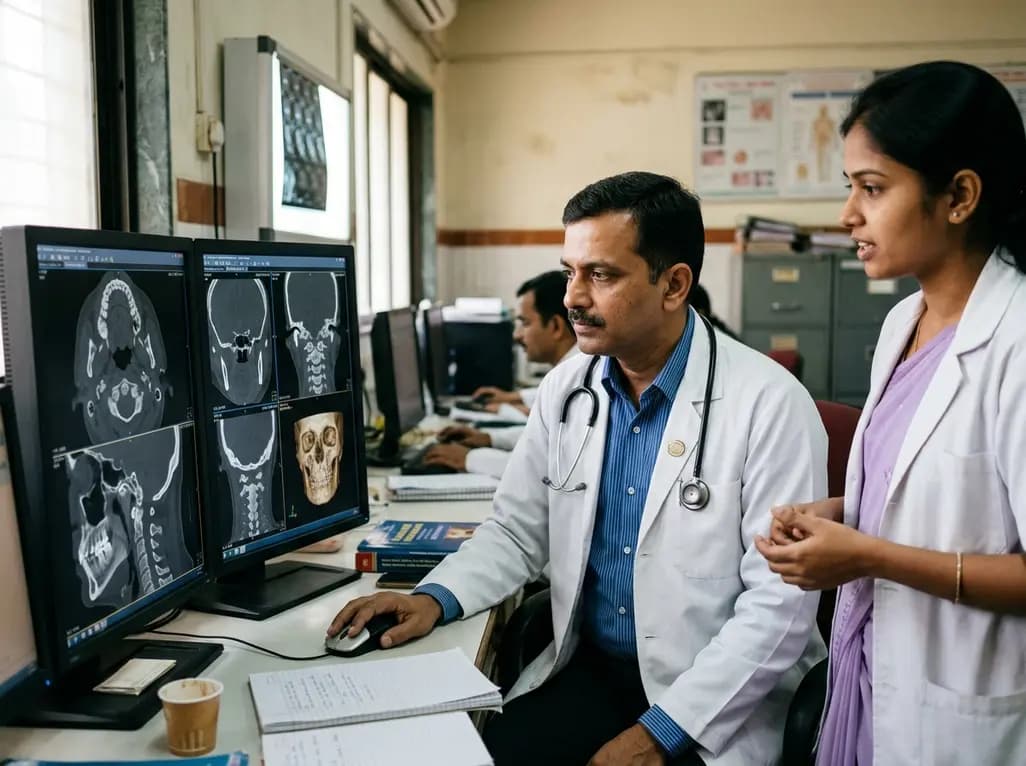
A retrospective CBCT study reveals that superior TMJ space asymmetry correlates moderately with occipital condyle-atlas-axis asymmetry in unilateral TMJ osteoarthritis, highlighting an imaging correlate between jaw biomechanics and upper cervical alignment rather than a standalone diagnostic marker.
Today

A Bayesian multilevel meta-analysis reveals that aerobic training combined with moderate carbohydrate restriction modestly lowers HbA1c in type 2 diabetes. However, sparse data and very low certainty leave incremental benefits over exercise or diet alone unproven, highlighting the need for individualized care.
Today
