.webp&w=384&q=75)

Loading, please wait...
Loading, please wait...

The Maharashtra CM Relief Fund has significantly expanded its reach, providing a lifeline to thousands of patients across the state. In the financial year 2025-2026, the government disbursed over Rs 333 crore in collective financial assistance. This initiative targets needy individuals who are ineligible for other state or central health schemes. Consequently, the fund serves as a crucial safety net for the state's most vulnerable populations during medical emergencies.
Between April 1, 2025, and March 31, 2026, precisely 40,776 patients received vital financial aid for their treatments. The state government highlighted that digital reforms have streamlined the entire application process. Furthermore, the establishment of district-level cells and paperless systems has enhanced transparency. Therefore, beneficiaries now receive timely help through the quicker disposal of their medical claims compared to previous years.
Financial support currently covers 20 serious medical conditions, including complex organ transplants. Specifically, the fund assists with heart, liver, kidney, and bone marrow transplants. Additionally, it provides for pediatric cochlear implants, cancer surgeries, and intensive dialysis treatments. A recent partnership with the Tata Memorial Centre specifically focuses on easing the burden for pediatric cancer patients. Needy individuals can access more information via the official toll-free helpline to begin their application process.
Q1: What major ailments are covered by the fund?
The fund provides assistance for 20 serious conditions, including various cancers, organ transplants, neurological disorders, and neonatal conditions.
Q2: How has the application process changed recently?
The system is now paperless and operates through district-level cells, ensuring faster disposal of applications and increased transparency for patients.
Q3: Who is eligible to receive this financial aid?
Needy and eligible patients who cannot avail of benefits under other existing health schemes may apply for support from the fund.
Disclaimer: This content is for informational and educational purposes only. It does not constitute medical advice or replace professional judgment. Refer to the latest local and national guidelines for clinical practice.
References

Read summarized clinical updates, watch expert medical content, and earn CME certifications right from your smartphone.
Open your smartphone camera to scan and install.





The Maharashtra CM Relief Fund disbursed Rs 333 crore in FY26 to 40,000+ patients for serious ailments like cancer and transplants through digital reforms....
6 months ago

Review how tailored exercise programs benefit frail older patients with heart failure. Explore pathophysiological mechanisms, individualized training prescriptions, and strategies to overcome adherence barriers in clinical practice.
Today
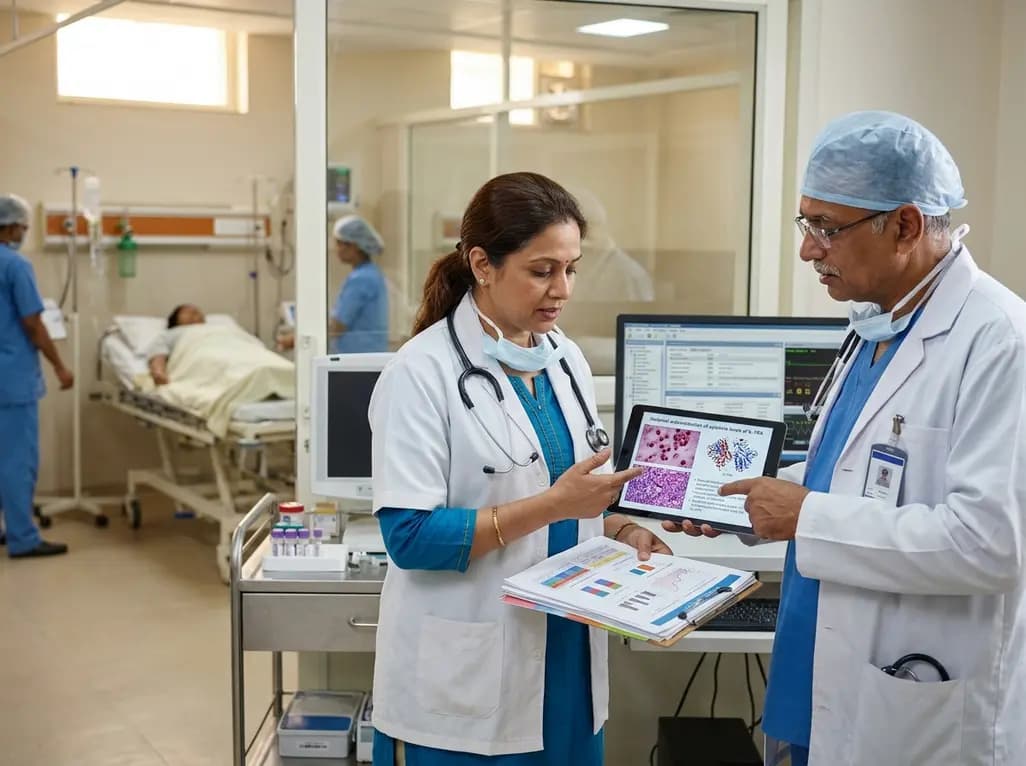
Recent clinical studies reveal maternal autoantibodies targeting IL-1RA as potential triggers for preterm labor, opening avenues for targeted cytokine therapies. Concurrently, new perioperative findings show inhaled cannabis increases propofol requirements during upper endoscopy compared to oral edible consumption.
Today

In high-risk pulmonary embolism complicated by severe anemia and active uterine bleeding, systemic thrombolysis is contraindicated. Large-bore aspiration thrombectomy provides rapid hemodynamic rescue without fibrinolysis, supported by inferior vena cava filter placement and multidisciplinary critical care.
Today

This comparative study evaluates posterior labral tears with and without glenohumeral instability, highlighting distinct demographic patterns, MRI underestimation in stable shoulders, and successful arthroscopic repair outcomes.
Today

A clinical study demonstrates that early intervention with tocilizumab, either as monotherapy or bridged with corticosteroids, achieves significant proptosis reduction and resolves active inflammation in treatment-naive thyroid eye disease.
Today
