.webp&w=384&q=75)

Loading, please wait...
Loading, please wait...
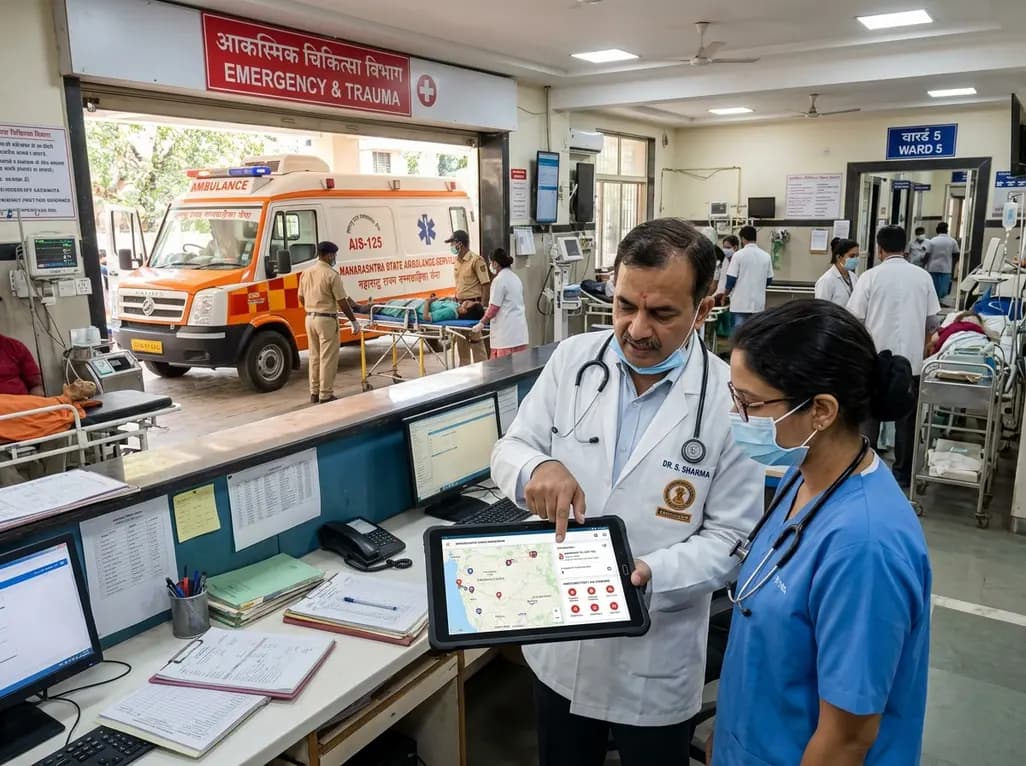
The emergency medical ecosystem in western India is undergoing a transformative shift as the state government prepares to roll out the comprehensive Maharashtra Ambulance Policy. Transport Minister Pratap Sarnaik recently announced this regulatory framework, which aims to bring complete transparency, real-time digital oversight, and standardized operational protocols to emergency medical transport. Currently, thousands of public and private emergency vehicles operate without a unified monitoring mechanism. Furthermore, this initiative addresses longstanding challenges such as arbitrary pricing, prolonged response times, and uncoordinated pre-hospital care. Consequently, healthcare providers and citizens will soon experience a modernized emergency response infrastructure.
The proposed Maharashtra Ambulance Policy seeks to reorganize how emergency medical transport functions across both urban and rural regions. Presently, Maharashtra relies on approximately 1,076 public ambulances operating under the Maharashtra Emergency Medical Services (MEMS-108) public-private partnership project. However, an estimated 4,500 to 5,000 additional ambulances run independently through private hospitals, charitable trusts, and non-governmental organizations. Until now, these entities functioned in isolation without a centralized tracking system. Consequently, citizens frequently faced severe difficulties during critical medical crises due to lack of reliable information regarding ambulance locations, onboard medical facilities, and transit delays.
To resolve these systemic deficiencies, the state Motor Vehicles Department designed a comprehensive regulatory architecture covering every phase of emergency care. This framework regulates registration, dispatch mechanisms, route navigation, fare structures, and hospital integration. Transport Minister Pratap Sarnaik highlighted that ambulances are critical lifelines where early intervention directly determines patient survival. Furthermore, by bringing every registered vehicle under a single digital governance structure, the state ensures that emergency medical care becomes predictably accessible and dependable for all residents.
At the heart of the new policy lies a digital ecosystem consisting of four interconnected mobile applications. First, a dedicated citizen application allows users to locate the nearest active ambulance in real time. Through this platform, patients or bystanders can track live vehicle movement, calculate accurate estimated arrival times, and view binding fare estimates prior to booking. Additionally, the application features video call functionality, enabling bystanders to receive live preliminary guidance from medical staff while waiting for arrival.
Second, a specialized driver application manages daily operational workflows. This system tracks duty status, records response times, logs call acceptances or rejections, and provides optimized navigation. Third, emergency vehicles will be equipped with dashboard-mounted tablets for paramedics. These tablets enable personnel to record patient vitals, log treatments, transmit real-time patient data to emergency departments, and monitor onboard equipment. Fourth, a central administrative dashboard empowers the Regional Transport Office and Health Department to oversee operations live. Consequently, authorities can monitor response times, track driver performance, detect call rejections, and immediately investigate potential misuse.
One of the most crucial consumer-centric provisions within the Maharashtra Ambulance Policy addresses unpredictable pricing during medical emergencies. Currently, private operators often set arbitrary rates, placing immense financial strain on distressed families. To eliminate these practices, the policy mandates that every registered ambulance must publish its official fare schedule directly on the centralized application. Furthermore, the state government will notify maximum permissible fares based strictly on standard Automotive Industry Standard (AIS-125) vehicle classifications.
Under the AIS-125 framework, ambulances are classified according to their clinical capabilities, ranging from basic transport vehicles to advanced life support units. Consequently, citizens can verify estimated fares prior to booking, ensuring total financial transparency. Moreover, every completed journey will generate a digital trip log alongside an electronic receipt. Since emergency transport vehicles already enjoy exemptions from motor vehicle taxes and receive highway toll concessions, the government insists that operators pass these economic benefits to the public. Thus, this regulatory mechanism balances commercial viability for operators with consumer protection for patients requiring urgent transport.
Pre-hospital care serves as the first vital link in emergency medicine, where every minute significantly influences clinical outcomes. The new policy elevates in-transit medical management by equipping paramedics with digital tablet computers linked directly to receiving tertiary hospitals. Paramedics can instantly document patient vitals, record diagnostic findings, and log emergency interventions performed during transit. Moreover, these digital tools maintain live video links with emergency physicians, allowing paramedics to receive direct expert guidance during complex resuscitations.
In addition to telemetry, the policy enforces strict equipment maintenance protocols onboard every registered vehicle. Paramedics must conduct digital inventory checks for essential life-saving devices, including high-flow oxygen units, suction apparatus, transport ventilators, cardiac monitors, and automated external defibrillators (AEDs). Consequently, receiving emergency departments gain early clinical visibility before patient arrival, enabling trauma teams and cardiologists to prepare resuscitation bays, catheterization labs, or operating theaters in advance. Therefore, this seamless integration between pre-hospital teams and hospital emergency departments bridges critical care gaps and dramatically improves survival rates.
Beyond vehicle management and transport logistics, the policy introduces innovative community-focused pre-hospital intervention features. A dedicated digital first-aid guidance module within the citizen application offers step-by-step illustrated instructions for bystanders. Consequently, individuals on the scene can effectively perform cardiopulmonary resuscitation (CPR), control bleeding, manage burn injuries, and safely position unconscious patients during the critical golden hour before emergency units arrive. This immediate community participation directly enhances pre-hospital survival rates across urban centers and rural districts alike.
Simultaneously, the policy establishes rigorous accountability mechanisms for operators and drivers. Central monitoring dashboards track vehicle performance, route efficiency, and unexplained dispatch delays. Furthermore, repeated call rejections or suspected vehicle misuse will trigger swift regulatory inquiries and potential penalty actions by the Regional Transport Office. By combining real-time GPS tracking, transparent pricing, continuous equipment audits, and digital first-aid instructions, the government creates a disciplined emergency response framework. Ultimately, this comprehensive policy ensures that every citizen across Maharashtra gains rapid, safe, and dignified access to life-saving emergency medical transport.
Q1: What are the main objectives of the proposed Maharashtra Ambulance Policy?
The proposed policy aims to streamline emergency medical transport across Maharashtra by implementing real-time digital monitoring for all registered public and private ambulances. It establishes unified fare regulations based on AIS-125 standards, improves dispatch efficiency, reduces response times, and integrates pre-hospital paramedic care directly with receiving hospital emergency departments through an integrated digital platform.
Q2: How will the digital four-application ecosystem benefit citizens during emergencies?
The citizen mobile application allows users to locate nearby available ambulances, track live arrival times, and view standardized fares before booking. Additionally, the application provides live video call assistance from medical professionals and offers illustrated first-aid guides for bystander CPR, bleeding control, and safe patient positioning during critical minutes before the ambulance arrives.
Q3: How does the policy prevent overcharging by private ambulance operators?
The policy enforces mandatory fare transparency by requiring all registered operators to display their rate charts on the central app. The state government will set maximum fare caps based on AIS-125 vehicle classifications. Furthermore, every ride generates an official digital record and electronic receipt, ensuring complete financial accountability for patients.
Disclaimer: This content is for informational and educational purposes only. It does not constitute medical advice or replace professional judgment. Refer to the latest local and national guidelines for clinical practice.
References

Read summarized clinical updates, watch expert medical content, and earn CME certifications right from your smartphone.
Open your smartphone camera to scan and install.





The proposed Maharashtra State Ambulance Policy promises to modernize emergency medical transport across the state through real-time GPS tracking, transparent fare capping under AIS-125 standards, integrated multi-app digital connectivity, and structured first-aid guidance for emergency care.
last month

A large German population-based cohort study reveals that 43% of post-acute infection syndrome cases are recurrences. Patients who experience new respiratory infections without fully recovering from an earlier episode suffer more protracted symptoms and greater functional impairment.
Today

A landmark study reveals that circMCM3 promotes cisplatin resistance in cervical squamous cell carcinoma by recruiting USP49 to stabilize PTBP1 and CCND1. Targeting this newly identified molecular axis presents a promising therapeutic avenue to restore chemotherapy sensitivity and improve gynaecological outcomes.
Today

A 24-week trial shows that patients starting amlodipine/benazepril maintain stable blood pressure across all seasons, whereas those on benazepril/hydrochlorothiazide require significantly more up-titration when initiated in winter (18.9% vs. 5.0%), highlighting amlodipine's superior seasonal hemodynamic stability.
Today
A rare case of a pediatric pathological femoral fracture caused by occult telangiectatic osteosarcoma demonstrates the risks of misdiagnosis after trauma, where intramedullary nailing prompted iatrogenic tumor dissemination and required modular total endoprosthetic reconstruction.
Today

A comprehensive analysis of DRCRnet studies reveals that 15.1% of participants discontinue diabetic retinopathy clinical trials. Identifying baseline demographic and clinical predictors helps ophthalmologists and endocrinologists mitigate real-world treatment dropouts and protect long-term visual outcomes.
Today
