.webp&w=384&q=75)

Loading, please wait...
Loading, please wait...

Modern healthcare systems receive thousands of clinical incident reports annually, yet investigating every report thoroughly remains an operational challenge. Consequently, institutions often struggle to address preventable clinical errors before harm recurs. A recent study evaluated artificial intelligence algorithms designed to prioritize high-severity patient safety events from free-text hospital records. Therefore, clinical risk management teams can now identify catastrophic threats rapidly without drowning in minor incident logs. This technological advancement provides an indispensable strategy for hospital administrators seeking safer clinical workflows.
Clinical incident reporting systems collect immense volumes of reports from nurses, resident doctors, and allied health staff. However, hospital risk managers frequently encounter substantial fatigue because low-severity administrative errors outnumber major clinical catastrophes. When staff submit free-text incident descriptions, reviewer interpretation introduces subjective variance. Furthermore, reporter-assigned severity scores frequently fail to reflect actual clinical risk accurately. Many junior clinicians downgrade severe complications due to fear of institutional punitive measures. Conversely, anxious staff often mark minor procedural delays as catastrophic emergencies. As a result, safety committees waste valuable resources reviewing trivial notifications while critical diagnostic oversights remain unexamined. In busy multispecialty hospitals, this manual triage bottleneck delays root-cause investigations. Therefore, healthcare leaders require robust automated triage mechanisms that rapidly identify critical adverse events. Moreover, timely identification of adverse drug reactions and surgical errors directly influences hospital accreditation benchmarks. Ultimately, automating the triage queue enables clinical quality teams to initiate rapid root-cause analyses before preventable harm cascades across inpatient units.
To resolve the triage bottleneck, investigators analyzed 101,239 patient incident reports collected from a Canadian academic health system between 2017 and 2025. Each record featured unstructured free-text descriptions alongside validated institutional severity labels. Traditionally, data scientists approached incident classification as standard categorical bins, such as low, moderate, or high severity. However, conventional classification algorithms often fail when severe incidents represent only a minute fraction of total hospital submissions. To overcome this limitation, the researchers pioneered a learning-to-rank paradigm that organizes incident notifications hierarchically based on relative urgency. Specifically, they constructed both feature-engineered algorithms and advanced transformer-based architectures, including LLAMA-3.1 variants. By training models to compare relative pairs of incidents rather than assigning rigid single labels, the algorithms learned subtle linguistic cues that signify severe patient deterioration. Furthermore, the team assessed algorithm accuracy using normalized discounted cumulative gain and precision metrics at distinct review cutoffs. Consequently, ranking frameworks transform unstructured clinical notes into actionable, prioritized lists for immediate institutional scrutiny.
The experimental results demonstrated that ranking architectures overwhelmingly outperform standard classification systems in clinical triage. Specifically, the ranking model LLAMA3.1-RA achieved an exceptional mean average precision of 0.94. This milestone marks a remarkable 22.1% relative improvement over the best-performing classification model. In addition, the ranking algorithm outperformed traditional reporter-assigned severity ratings across all analytical thresholds. Clinicians often misclassify incident severity during hectic shifts, but the transformer architecture deciphered critical patterns within unstructured narratives with remarkable consistency. Furthermore, the model sustained outstanding precision even when evaluating top-tier thresholds, such as the highest ten or twenty prioritized events. Because patient safety officers possess limited weekly review hours, high precision at small cutoffs ensures that investigators inspect the most dangerous clinical failures first. Therefore, hospital administrators can deploy ranking algorithms without overburdening incident review committees. Consequently, the technology acts as an intelligent institutional safety net that catches insidious clinical hazards before adverse outcomes multiply.
Healthcare facilities in India manage immense patient footfalls, making comprehensive incident auditing exceptionally challenging for administrative leadership. Although accreditation bodies like the National Accreditation Board for Hospitals and Healthcare Providers mandate proactive incident reporting, manual audits remain irregular. Furthermore, fear of medicolegal liability and cultural hierarchies often lead to underreporting or misclassification of clinical sentinel events. As a result, critical safety signals get lost within thousands of mundane operational notes. Adopting automated natural language processing models can revolutionize clinical risk governance across Indian tertiary centers. Specifically, these algorithms can run locally within hospital intranet servers, ensuring strict adherence to national digital privacy standards. Moreover, quality assurance teams can immediately direct urgent surgical complications, nosocomial outbreaks, and medication dispensing errors to respective clinical department heads. Consequently, medical directors can transition from reactive damage control to proactive system-level error prevention. Ultimately, Indian healthcare networks can elevate patient safety standards by embedding advanced computational triage into daily administrative rounds.
Integrating artificial intelligence into routine hospital safety workflows requires thoughtful change management and interdisciplinary collaboration. First, hospital information technology teams must integrate natural language processing pipelines directly into electronic incident reporting interfaces. When a nurse or resident physician logs an event, the algorithm immediately analyzes the text description in real time. Subsequently, the system generates an automated severity rank without altering the reporter's original narrative. However, hospital administrators must recognize that artificial intelligence should assist rather than replace clinical judgment. Multidisciplinary safety committees comprising senior physicians, nursing supervisors, and clinical pharmacologists must continue conducting thorough root-cause investigations. Furthermore, institutions should establish feedback loops where safety officers validate or correct model recommendations. This continuous refinement trains the algorithm on institutional terminology, local drug brand names, and department-specific operational challenges. Therefore, the algorithm becomes progressively sharper over time, adapting to evolving clinical pathways. In summary, combining automated text analysis with clinical expertise ensures that hospitals address systemic hazards before patients experience irreversible injury.
Classification algorithms attempt to place incident reports into rigid categories, which creates severe errors when high-severity events are extremely rare. Conversely, ranking-based models evaluate the relative clinical urgency among competing incident reports. This pairwise comparative structure allows transformer networks to recognize subtle nuances in free-text clinical notes. Consequently, ranking models identify critical safety events with much higher precision, ensuring risk managers review the most dangerous clinical incidents first.
Accreditation frameworks like NABH require healthcare organizations to maintain active adverse event reporting and continuous quality improvement. However, manual incident processing creates backlogs that obscure serious clinical failures. Automated triage tools analyze unstructured logs instantly, highlighting sentinel events and recurring procedural breakdowns. Furthermore, this objective ranking eliminates reporting biases and fear of punitive action. Therefore, clinical governance committees can resolve root causes promptly, fulfilling national accreditation standards while elevating patient care.
Machine learning cannot replace human clinical safety committees because algorithmic tools lack contextual intuition and empathy. Instead, these algorithms function as powerful decision-support assistants that organize vast queues of incident reports by urgency. Multidisciplinary teams of doctors, nurses, and administrators must still conduct detailed clinical investigations, interview staff, and design systemic interventions. Ultimately, automated ranking frees clinicians from tedious screening, allowing them to focus expertise where comprehensive investigation matters most.
Disclaimer: This content is for informational and educational purposes only... Refer to the latest local and national guidelines for clinical practice.
References
Chen H et al. Machine Learning to Prioritize High-Severity Patient Safety Events for Institutional Investigation: Algorithm Development and Validation Study. JMIR Med Inform. 2026 Sep 29. doi: 10.2196/101393. PMID: 42809834.
World Health Organization. Global Patient Safety Action Plan 2021–2030: Towards eliminating avoidable harm in health care. Geneva: World Health Organization; 2021.
National Accreditation Board for Hospitals & Healthcare Providers. Continuous Quality Improvement and Patient Safety Standards. 5th Edition. New Delhi: Quality Council of India; 2020.

Read summarized clinical updates, watch expert medical content, and earn CME certifications right from your smartphone.
Open your smartphone camera to scan and install.





A landmark study evaluates machine learning models to prioritize high-severity patient safety events from over 100,000 incident reports, showing that ranking-based transformer models outperform traditional triage to enhance clinical audit workflows.
Today
A novel microgel platform presenting FasL and protease-resistant CXCL12 enables sustained allogeneic islet survival and glycemic control without systemic immunosuppression, enhancing local Treg recruitment and graft revascularization.
Today
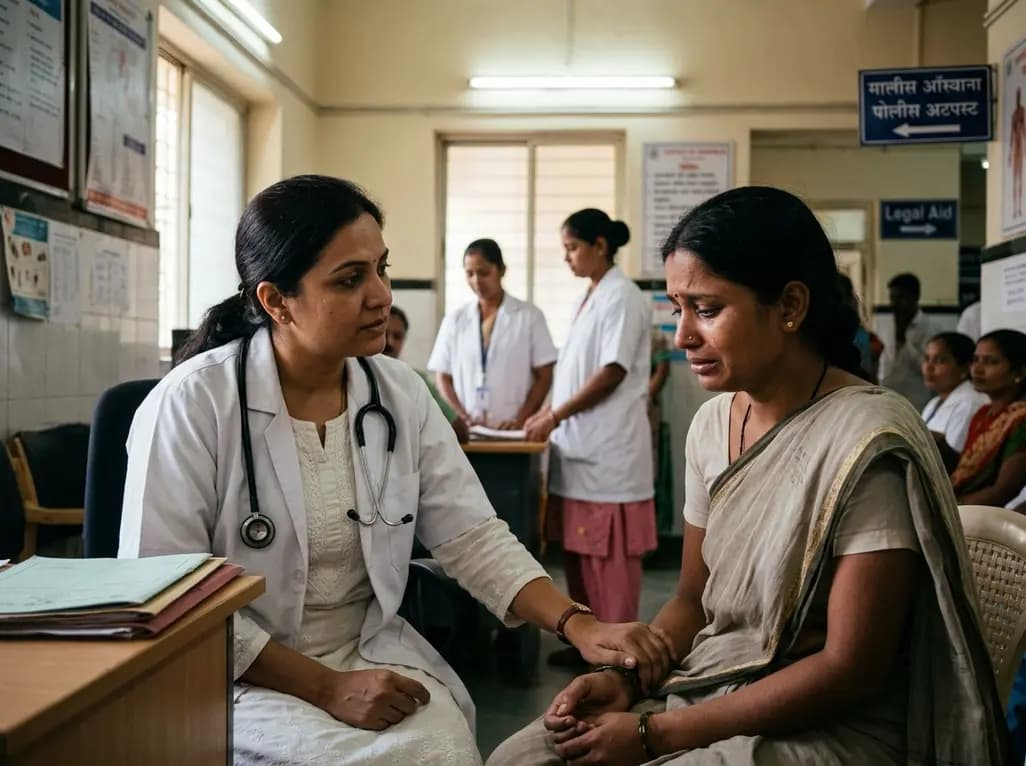
A recent qualitative study evaluates institutional gaps across health, police, and justice sectors in supporting survivors of intimate partner violence. Healthcare providers must bridge procedural fragmentation with empathetic, trauma-informed care and cross-sector coordination to safeguard vulnerable patients.
Today
A study evaluates axillary arteriovenous fistula creation for resolving pulmonary arteriovenous malformations after bidirectional cavopulmonary connection. The technique achieved 75% clinical improvement and successfully bridged patients to total cavopulmonary connection.
Today
A cross-sectional study reveals a strong positive correlation between problematic internet use and kinesiophobia in adults aged 18-45 with non-specific low back pain, highlighting how digital overuse reinforces movement fear and complicates musculoskeletal recovery.
Today
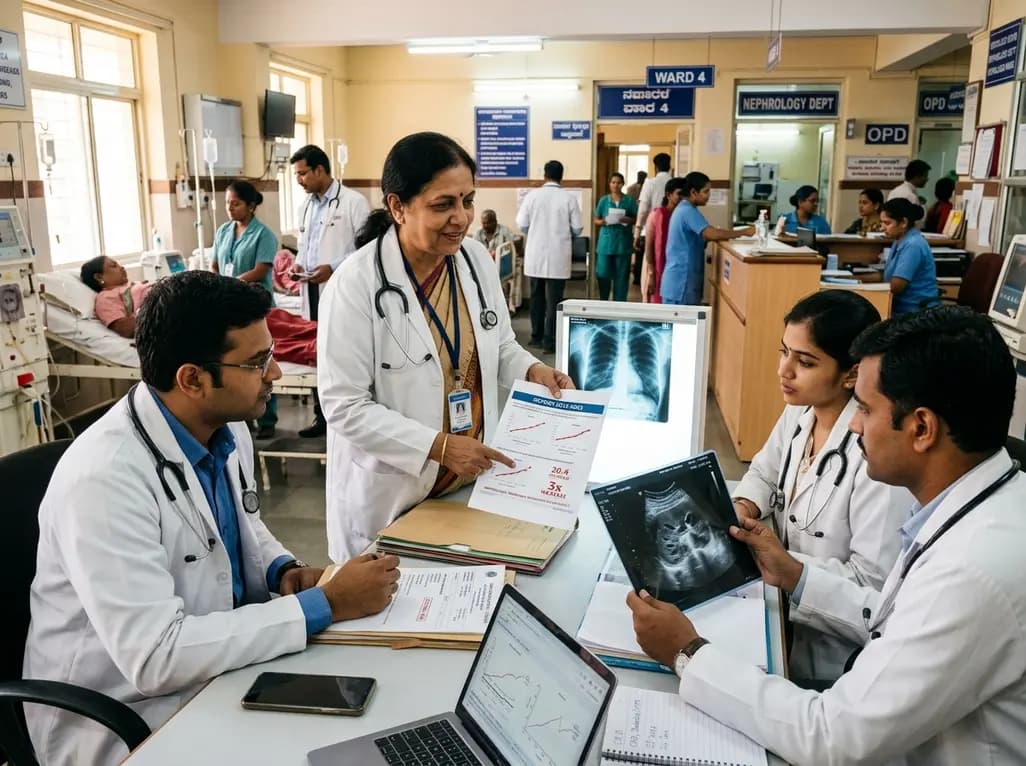
Recent data from Karnataka reveals a threefold surge in genitourinary and renal deaths over ten years. Driven by uncontrolled diabetes, hypertension, and emerging lifestyle hazards, this epidemiological shift highlights an urgent need for proactive screening and multidisciplinary nephrology management in primary care.
Today
