.webp&w=384&q=75)

Loading, please wait...
Loading, please wait...

Non-valvular atrial fibrillation substantially increases the risk of stroke, which frequently stems from a left atrial appendage thrombus. Consequently, prompt detection of intracardiac clots remains essential for guiding anticoagulation therapy. Although transesophageal echocardiography represents the clinical reference standard, it remains semi-invasive and demanding. Therefore, researchers developed an explainable machine learning model to streamline non-invasive risk stratification.
Atrial fibrillation fundamentally disrupts normal atrial mechanics, causing marked blood stasis, local endothelial injury, and hypercoagulability. Within the cardiac chambers, the left atrial appendage provides a uniquely secluded pouch prone to clot formation. Consequently, stagnant blood flow fosters rapid fibrin generation, particularly when appendage contractile function deteriorates.
Cardiologists recognize decreased emptying flow velocity as a pivotal hemodynamic indicator of thrombosis. When peak emptying velocities fall below critical thresholds, local stasis accelerates sharply. Furthermore, progressive structural remodeling, chamber enlargement, and myocardial fibrosis worsen intra-atrial flow dynamics. Therefore, anatomical dilatation and hemodynamic stasis together heighten thromboembolic vulnerability in susceptible individuals.
Standard clinical risk scores like CHA2DS2-VASc evaluate overall systemic thromboembolic potential. However, these clinical scores often fail to capture specific intracardiac hemodynamic stagnation. As a result, patients with moderate clinical scores may still harbor silent intra-appendage clots. Consequently, clinicians need advanced assessment tools that combine hemodynamic measurements with routine clinical profiles. By identifying localized blood stasis early, modern predictive models provide crucial insight before cardioversion or ablation.
In a recent clinical investigation, researchers evaluated 325 patients presenting with non-valvular atrial fibrillation. All participants underwent transesophageal echocardiography between September 2022 and October 2024. The study aimed to design an explainable machine learning system capable of detecting left atrial appendage thrombi accurately.
To select candidate predictors, the research team applied Least Absolute Shrinkage and Selection Operator regression. They executed fivefold cross-validation exclusively within the training cohort to avoid overfitting. Subsequently, multivariable logistic regression identified several independent predictors of thrombus formation. Specifically, preserved appendage flow velocity demonstrated a strong protective association, yielding an odds ratio of 0.805. Conversely, lower velocities correlated directly with elevated thrombotic probability.
In addition, multivariable modeling identified elevated total cholesterol and enlarged left atrial diameter as critical independent risk factors. Chronically elevated cholesterol exacerbates systemic vascular inflammation and hyperviscosity. Meanwhile, an expanded left atrium indicates chronic pressure overload and extensive structural remodeling. Therefore, integrating echocardiographic metrics with laboratory variables captures a comprehensive physiological profile. By utilizing this dual-method feature selection, the authors successfully isolated the most clinically impactful parameters for subsequent computational modeling.
Following feature selection, the investigators trained and compared six distinctive machine learning algorithms. The analytical lineup included logistic regression, support vector classifier, random forest, Gradient Boosting, Extreme Gradient Boosting, and Light Gradient Boosting Machine. Each mathematical paradigm analyzed non-linear interactions across the selected clinical and echocardiographic features.
Notably, ensemble decision-tree algorithms excel at handling complex interactions without making rigid assumptions about data distribution. Consequently, gradient-boosting methods effectively uncovered subtle prognostic relationships between lipid levels, chamber dimensions, and blood flow velocity. The researchers evaluated model discrimination through receiver operating characteristic curves, accuracy, sensitivity, and specificity metrics.
Throughout the evaluation, several algorithms achieved outstanding predictive accuracy in identifying intracardiac thrombi. Furthermore, decision curve analysis highlighted meaningful clinical net benefits across multiple threshold probabilities. Therefore, these computational frameworks offer superior discriminatory capability compared to single clinical risk scores. In contrast to manual scoring paradigms, advanced algorithms systematically integrate multifaceted parameters into one objective score. This rigorous validation confirms that artificial intelligence can reliably support non-invasive cardiovascular risk stratification.
A major obstacle preventing machine learning adoption in daily cardiology practice involves model interpretability. Clinicians frequently reject complex algorithms because they operate as untrustworthy "black boxes." To address this fundamental limitation, the authors utilized the SHapley Additive exPlanations framework.
Originating from cooperative game theory, the SHAP framework calculates the precise marginal contribution of each variable toward the final output. Consequently, clinicians can visualize exactly why the algorithm classifies a patient as high risk. In this investigation, SHAP summary plots demonstrated that diminished appendage blood flow velocity exerted the strongest influence on clot prediction.
Furthermore, elevated serum cholesterol and larger atrial diameters consistently shifted risk values toward positive thrombus classification. In contrast, higher blood flow velocities provided robust negative predictive value, reducing the calculated probability of thrombosis. By delivering transparent visual explanations, the SHAP framework bridges the gap between complex artificial intelligence and practical bedside decision-making. Therefore, physicians can verify biological plausibility before acting on computational predictions. This interpretability fosters necessary clinical confidence, making algorithmic recommendations practical and actionable.
The successful implementation of explainable predictive modeling delivers substantial clinical benefits for cardiovascular practice. Before elective cardioversion or catheter ablation, physicians must exclude intracardiac clots to avoid catastrophic thromboembolic stroke. Currently, transesophageal echocardiography represents the mandatory pre-procedural imaging modality. However, the procedure requires esophageal intubation, demands specialized operator expertise, and carries small risks of mucosal injury.
Consequently, an accurate machine learning screening tool can optimize hospital triage. Patients exhibiting minimal predicted risk might safely avoid unnecessary invasive examinations when supported by comprehensive clinical data. In contrast, patients flagged with elevated risk can undergo prioritized imaging and prompt anticoagulant intensification. Furthermore, resource-constrained healthcare facilities often lack immediate access to advanced transesophageal ultrasound probes. Therefore, deploying accessible algorithmic risk calculators can bridge diagnostic disparities across regional healthcare settings.
Nonetheless, widespread clinical adoption requires rigorous prospective validation across multicenter cohorts. Future studies should evaluate diverse demographic groups and incorporate emerging myocardial strain biomarkers. By combining algorithmic precision with clinical acumen, physicians can deliver highly personalized, safer cardiovascular care.
Detecting a left atrial appendage thrombus is critical because this anatomical structure accounts for over ninety percent of cardiac thrombi in non-valvular atrial fibrillation. If an undetected clot dislodges, it travels directly into the cerebral circulation, precipitating severe ischemic stroke or systemic arterial embolism. Furthermore, verifying clot absence is mandatory prior to cardioversion or catheter ablation, as manipulating the atrium can inadvertently liberate thrombi and cause catastrophic neurological disability.
The SHAP framework enhances clinical machine learning models by resolving the opaque black-box problem common to complex algorithms. By calculating individual Shapley values, SHAP quantifies the exact contribution of each clinical and echocardiographic feature toward the final risk prediction. Consequently, clinicians can review intuitive visual summaries, confirm biological plausibility against established medical knowledge, and comprehend why a specific patient received a high-risk score, thereby building confidence in artificial intelligence recommendations.
Machine learning models cannot entirely replace transesophageal echocardiography, which remains the definitive diagnostic gold standard for visualizing intracardiac clots. Instead, these computational algorithms function as valuable clinical decision support tools. They help clinicians triage patients effectively, identify individuals who urgently need transesophageal imaging, and optimize procedural scheduling. Therefore, artificial intelligence complements existing echocardiographic workflows, enhancing diagnostic efficiency and conserving institutional resources without eliminating the need for direct anatomical imaging in high-risk patients.
Disclaimer: This content is for informational and educational purposes only and should not be taken as professional medical advice. It is not intended to diagnose, treat, cure, or prevent any medical condition. Healthcare professionals should always rely on their clinical judgment and confirmed diagnostic tests when making clinical decisions. Refer to the latest local and national guidelines for clinical practice.
References

Read summarized clinical updates, watch expert medical content, and earn CME certifications right from your smartphone.
Open your smartphone camera to scan and install.





A study demonstrates an explainable machine learning framework integrating clinical and echocardiographic metrics to predict left atrial appendage thrombus in non-valvular atrial fibrillation, utilizing SHAP analysis for clinical interpretability.
Today

Maternal anaemia contributes to nearly half of pregnancy-related fatalities across India. To prevent complications, Uttar Pradesh has added single-dose parenteral iron to its essential medicines list. This clinical transition aims to restore haemoglobin rapidly and protect high-risk mothers across rural facilities.
Today
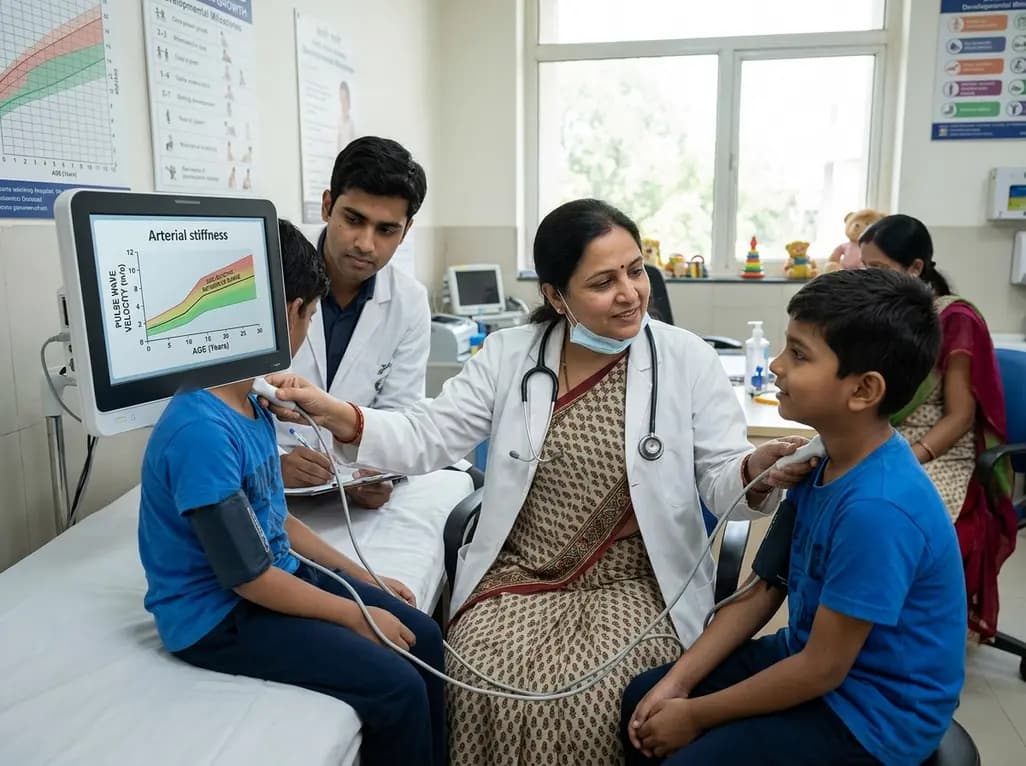
A landmark systematic review and meta-analysis establishes age-specific normative reference values for pediatric pulse wave velocity, revealing a nonlinear trajectory of arterial stiffness from early childhood through adolescence.
Today
A new systematic review evaluates lumbar facet arthroplasty, predominantly the Total Posterior Spine System (TOPS). Evidence shows significant reductions in back and leg pain and preserved segmental mobility, though revision rates and outcome heterogeneity highlight the need for careful patient selection.
Today

A landmark cross-sectional study in Asian adults with type 2 diabetes identifies novel urinary metabolites linked to mild cognitive impairment. Elevated urinary sucrose and altered metabolites highlight non-invasive pathways for early cognitive risk stratification and targeted metabolic management.
Today
