.webp&w=384&q=75)

Loading, please wait...
Loading, please wait...
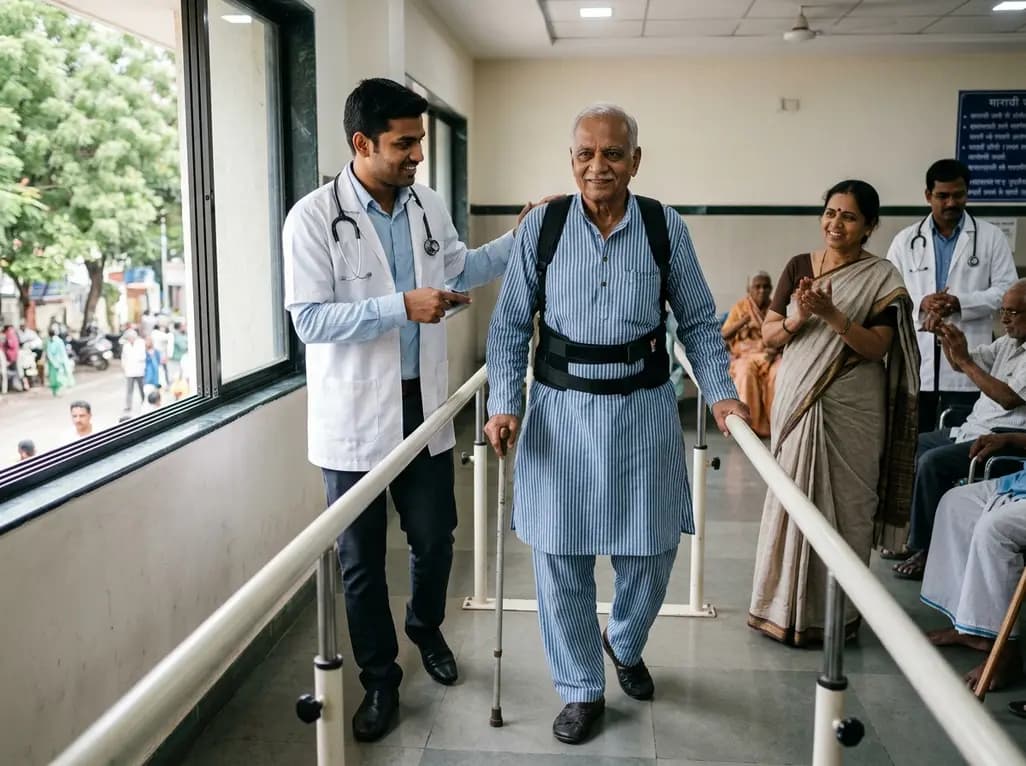
Physical frailty represents a major challenge among aging populations worldwide. As individuals age, progressive loss of neuromuscular capacity often diminishes functional independence. Clinicians frequently encounter older adults who avoid physical training due to fear of injury or lack of confidence. Consequently, building exercise self-efficacy becomes a fundamental prerequisite for long-term functional recovery. Exercise self-efficacy reflects an individual's internal belief in their ability to perform physical tasks successfully. Wearable robotic technology offers an innovative therapeutic avenue to overcome these psychological and physiological barriers. The lumbar-type Hybrid Assistive Limb provides biofeedback-driven mechanical assistance during voluntary trunk and hip movements. This retrospective analysis evaluated how robotic assistance influences exercise self-efficacy across distinct behavioral stages.
Physical frailty diminishes both muscular performance and self-confidence in aging individuals. Therefore, psychological barriers frequently prevent seniors from adopting and sustaining consistent physical routines. Exercise self-efficacy serves as a cornerstone of behavioral change within geriatric rehabilitation programs. When patients possess high confidence, they adhere far more consistently to prescribed physical activities. Conversely, low confidence fosters kinesiophobia, task avoidance, and accelerated functional decline. Bandura's social cognitive theory indicates that personal mastery experiences provide the most potent stimulus for self-efficacy development. However, conventional physiotherapy often provokes joint discomfort or excessive fatigue in frail older adults. These negative sensations impair successful mastery experiences during early training phases. By utilizing modern assistive robotics, clinicians effectively diminish biomechanical lumbar strain while facilitating repetitive movement patterns. Furthermore, wearable devices allow safe execution of functional tasks like sit-to-stand transitions. Consequently, patients experience immediate movement success without overwhelming physical exhaustion. This combined physiological and psychological reassurance encourages older individuals to perceive challenging exercises as achievable. Ultimately, targeting exercise self-efficacy transforms routine geriatric rehabilitation into an empowering, patient-driven intervention.
The lumbar-type Hybrid Assistive Limb represents an advanced wearable cyborg system. The device utilizes non-invasive skin sensors to detect faint bioelectric signals from hip and back muscles. When the user intends to initiate movement, the system instantly processes these neuromuscular signals. Consequently, electric actuators provide synchronized mechanical support to assist lumbar extension and hip flexion. This real-time assistance significantly reduces compressive stress across the lumbar spine during high-load activities. For example, the device supports core movements during deep squats and repeated chair rises. Unlike passive exoskeletons, this active robotic suit responds directly to the user's voluntary neuromuscular effort. Thus, the system enhances natural motor control rather than enforcing rigid, predetermined trajectories. Moreover, repetitive biofeedback training promotes neuromuscular re-education and neuroplastic adaptation. Patients can perform functional exercises with enhanced stability and markedly diminished perceived exertion. Additionally, the device minimizes the acute fear of falling during trunk flexion and extension. Because the technology adapts to individual functional capacities, clinicians can precisely calibrate the level of robotic support. As a result, older adults execute critical mobility exercises with superior biomechanical alignment and renewed confidence.
The evaluated study pooled data from two prospective trials within the Kanagawa ME-BYO Cohort Study. Specifically, researchers combined data from an initial feasibility study and a subsequent randomized controlled trial. The combined cohort included 96 participants aged between 50 and 84 years with varying degrees of frailty. Participants completed structured exercise sessions twice weekly using the lumbar-type Hybrid Assistive Limb. The intervention centered around functional tasks, including repetitive sit-to-stand transitions and squatting movements. Investigators assessed changes in exercise self-efficacy using a validated four-item scale with scores ranging from 4 to 20. The primary within-person analysis revealed a statistically significant increase in exercise self-efficacy following the intervention period. Additionally, secondary comparative analyses confirmed superior confidence gains among robotic intervention participants relative to waitlist controls. Researchers observed that the device allowed frail participants to perform higher exercise volumes safely. Importantly, participants experienced these psychological benefits without reports of severe adverse events or worsening low back pain. Thus, the empirical findings demonstrate that robotic-assisted functional training effectively enhances confidence alongside physical conditioning in older populations.
A critical aspect of the study examined participant responsiveness across different stages of behavioral change. The transtheoretical model categorizes individuals into precontemplation, contemplation, preparation, action, and maintenance stages. Notably, the prespecified subgroup analysis divided participants into two primary groups based on their baseline habits. The first subgroup comprised individuals in stages one through four, where regular exercise habits were not yet established. The second subgroup consisted of individuals in stage five, who already maintained regular physical activity routines. Interestingly, participants without established exercise habits demonstrated the most pronounced improvements in exercise self-efficacy scores. These individuals began with lower baseline confidence and faced greater psychological hurdles to movement. The adjustable robotic assistance provided these hesitant participants with immediate, tangible mastery experiences. Consequently, the technology effectively lowered the psychological barrier to initiating physical training. In contrast, individuals already in the maintenance stage exhibited ceiling effects due to higher initial confidence. Therefore, clinicians should recognize that assistive robotic interventions deliver maximal psychological utility to unconditioned, hesitant patients who lack baseline exercise confidence.
Integrating assistive robotic devices into standard geriatric care offers substantial opportunities to combat frailty. Clinicians can employ these devices to bridge the gap between physical limitation and functional independence. In outpatient rehabilitation and community wellness centers, robotic-assisted programs can safely increase patient engagement. Furthermore, multidisciplinary teams can combine robotic exercise with structured behavioral counseling to maximize therapeutic outcomes. When addressing frail seniors, physicians must evaluate psychological readiness alongside standard physiological metrics. Identifying individuals with low exercise self-efficacy allows targeted deployment of robotic assistance to cultivate early behavioral success. In addition, future technological developments may yield lighter, highly portable exoskeletons suitable for home-based telerehabilitation. Broader accessibility could democratize advanced frailty prevention strategies across diverse socioeconomic settings. Nevertheless, healthcare providers must establish clear protocols regarding patient selection, training frequency, and progression criteria. By integrating neuro-robotic rehabilitation into comprehensive geriatric pathways, clinicians can mitigate disability, promote active aging, and preserve independent living.
The lumbar-type Hybrid Assistive Limb is a wearable robotic device designed to assist core movements. Non-invasive skin sensors detect voluntary bioelectric signals from trunk and hip muscles. The system then delivers synchronized motorized torque during lumbar extension and hip flexion. Consequently, it reduces spinal loading, decreases fatigue, and enhances movement stability during functional tasks like squats and chair rises.
Exercise self-efficacy determines an individual's belief in their ability to perform physical tasks successfully. In frail older adults, low self-efficacy frequently causes kinesiophobia, fear of falling, and activity avoidance. High self-efficacy fosters long-term adherence to rehabilitation, improves functional independence, and encourages active lifestyle adoption. Therefore, enhancing confidence through assisted mastery experiences is fundamental for effective frailty prevention.
Research indicates that older adults without established exercise habits experience the greatest psychological benefits from robotic training. These individuals typically present with low baseline confidence and elevated fear of exertion. The adjustable robotic support provides immediate mastery experiences, lowering psychological resistance to movement. Conversely, individuals who already maintain regular physical activity exhibit smaller incremental gains due to ceiling effects.
Disclaimer: This content is for informational and educational purposes only and does not substitute for professional medical judgment. Consult a qualified healthcare professional for medical advice, diagnosis, and treatment. Refer to the latest local and national guidelines for clinical practice.
References

Read summarized clinical updates, watch expert medical content, and earn CME certifications right from your smartphone.
Open your smartphone camera to scan and install.





A retrospective analysis of the Kanagawa ME-BYO cohort shows that lumbar-type Hybrid Assistive Limb training significantly boosts exercise self-efficacy in frail older adults, particularly those lacking established exercise habits.
last month

PZL-26, a selective small-molecule inhibitor of LONP1, reveals essential roles of this mitochondrial protease in complex I biogenesis, translation, and oxidative phosphorylation. These findings provide critical mechanistic insights for developing targeted anticancer therapies against proteostasis-dependent tumors.
Today
A nationwide South Korean study shows underreporting of smoking among women dropped from 57.4% to 36.4% between 2008 and 2021. However, over one-third of female smokers still conceal their habit, highlighting the critical role of cotinine verification in clinical risk assessment.
Today

PepsiCo and Monster Beverage have challenged the FSSAI ban on the energy drink label in Indian courts. While companies highlight supply disruptions, regulatory actions spotlight severe cardiovascular and metabolic risks associated with excessive caffeine, sugar, and taurine consumption, especially in adolescents.
Today
A recent investigation analyzes whether cervical disc arthroplasty effectively restores or merely preserves physiological range of motion, providing critical biomechanical insights for treating hypomobile cervical segments.
Today

A Bayesian multilevel meta-analysis reveals that aerobic training combined with moderate carbohydrate restriction modestly lowers HbA1c in type 2 diabetes. However, sparse data and very low certainty leave incremental benefits over exercise or diet alone unproven, highlighting the need for individualized care.
Yesterday
