.webp&w=384&q=75)

Loading, please wait...
Loading, please wait...

A recent study published in the American Journal of Roentgenology highlights the potential of LLM-augmented diagnostic reasoning in thoracic imaging. Researchers evaluated how human-in-the-loop workflows, which utilize reader-generated text descriptions rather than direct image analysis, influence clinical decision-making. The results suggest that while radiologic expertise remains crucial, AI significantly supports less experienced clinicians in achieving higher diagnostic accuracy. Consequently, this reader-mediated approach may offer a more practical integration path for large language models in current clinical settings.
The study analyzed 93 complex thoracic cases involving CT, MRI, and PET/CT images. Ten readers, including five thoracic radiologists and five residents, participated in two distinct interpretation sessions. In the first session, readers selected diagnoses based solely on their expertise. However, in the second session, they utilized output from Gemini 3.0 Pro, which processed their free-text descriptions of the findings. Notably, the LLM achieved a diagnostic accuracy of 63.9% when using human descriptions, compared to only 52.7% when processing images directly. This indicates that human-provided context significantly enhances the AI's reasoning capabilities.
Furthermore, the expertise of the person providing the text description played a pivotal role. The LLM performed better when processing descriptions generated by thoracic radiologists (67.3%) than those from residents (60.4%). This disparity underscores the continuing importance of specialized radiologic skills in guiding AI systems. More importantly, the use of LLM-augmented diagnostic reasoning led to a significant improvement in the diagnostic performance of radiology residents, whose accuracy rose from 56.8% to 65.2%. In contrast, the accuracy of board-certified radiologists did not see a statistically significant change, suggesting that AI serves as a powerful "safety net" or educational tool for trainees.
Integrating AI into radiology workflows often faces technical and regulatory hurdles. However, this reader-mediated workflow provides a feasible alternative by keeping the radiologist at the center of the process. Since the LLM interprets the text rather than the pixel data, it bypasses many of the complexities associated with direct image-processing software. Moreover, the study demonstrates that even without seeing the images, the LLM can provide valuable explanatory rationales that assist residents in refining their final diagnoses. This suggests that AI could eventually serve as a real-time consultation partner during the reporting process.
This workflow significantly boosts the diagnostic accuracy of residents by providing a ranking of differential diagnoses and explanatory rationales based on their own observations. It helps bridge the gap between trainee experience and specialist-level interpretation.
Large language models currently excel more at text-based reasoning than direct image interpretation. By having a human describe the findings first, the AI receives structured, high-quality clinical data, which allows it to generate more accurate diagnostic rankings.
According to the study, the accuracy of experienced thoracic radiologists did not show a statistically significant increase with AI assistance. This implies that while AI is a valuable support tool for trainees, its impact on seasoned specialists may be more limited in standard diagnostic tasks.
Disclaimer: This content is for informational and educational purposes only and does not constitute medical advice or a professional recommendation. Healthcare providers should rely on their clinical judgment and refer to the latest local and national guidelines for clinical practice.
References
Song J et al. Human-in-the-Loop Large Language Model-Augmented Diagnostic Reasoning in Thoracic Imaging: Impact of Radiologic Expertise. AJR Am J Roentgenol. 2026 May 20. doi: 10.2214/AJR.26.34999. PMID: 42160120.
"
Read summarized clinical updates, watch expert medical content, and earn CME certifications right from your smartphone.
Open your smartphone camera to scan and install.





A study shows that LLM-augmented diagnostic reasoning using reader-generated text significantly boosts diagnostic accuracy, particularly for radiology resid...
5 months ago

The HELO study evaluates hearing function in virologically suppressed persons living with HIV. Learn how chronic inflammation, vascular factors, and antiretroviral therapy impact auditory decline and why regular audiological monitoring is critical for aging patients.
Today

A population-based study of 20,928 children reveals that small vulnerable newborns face sex-divergent mental capital outcomes at ages 6-7: term SGA girls show higher behavioral difficulties and lower resilience, while preterm non-SGA boys experience increased behavioral problems.
Today
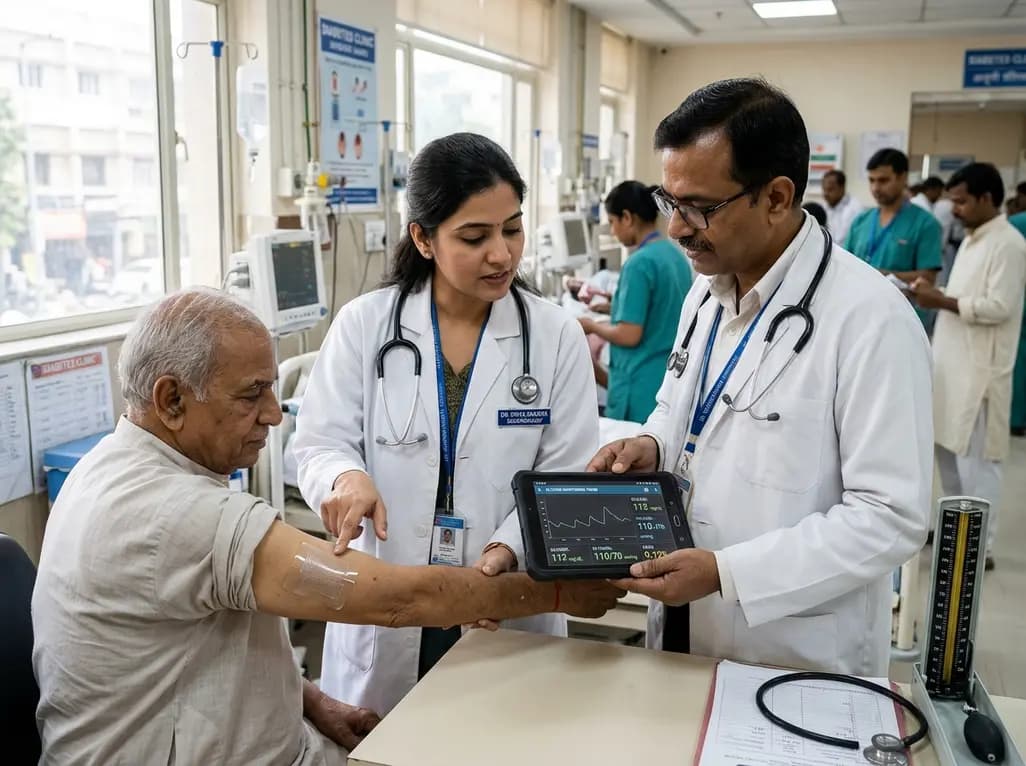
A breakthrough ultrathin multimodal sensor decouples physical hemodynamic monitoring from disposable electrochemical calibration, achieving long-term wearable glucose prediction with 81.36% accuracy and a 9.12% MARD. This offers a robust, drift-free solution for outpatient metabolic surveillance.
Today
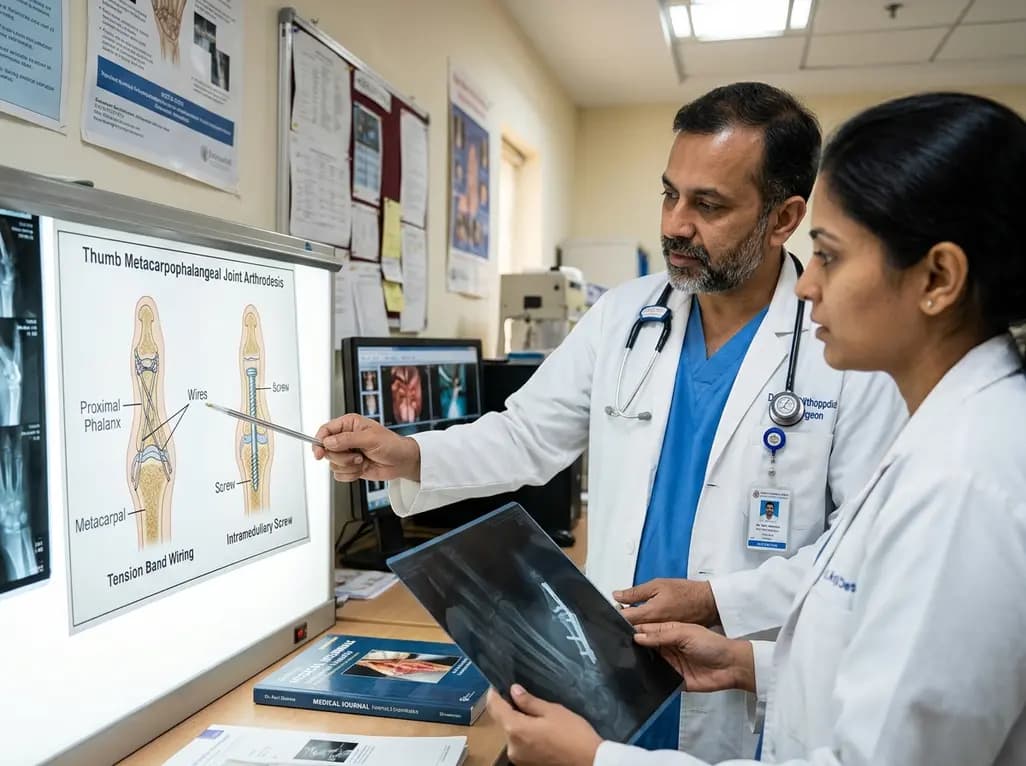
A comparative review of tension band wiring and intramedullary screw fixation in thumb metacarpophalangeal arthrodesis, evaluating union rates, hardware complications, and clinical outcomes.
Today

Following regulatory scrutiny from FSSAI regarding promotional representations and lean muscle preservation claims, Dr. Reddy's Laboratories and Nestlé Health Science are currently reviewing the branding and marketing strategy for their joint nutritional supplement Celevida GLP+.
Today
