.webp&w=384&q=75)

Loading, please wait...
Loading, please wait...
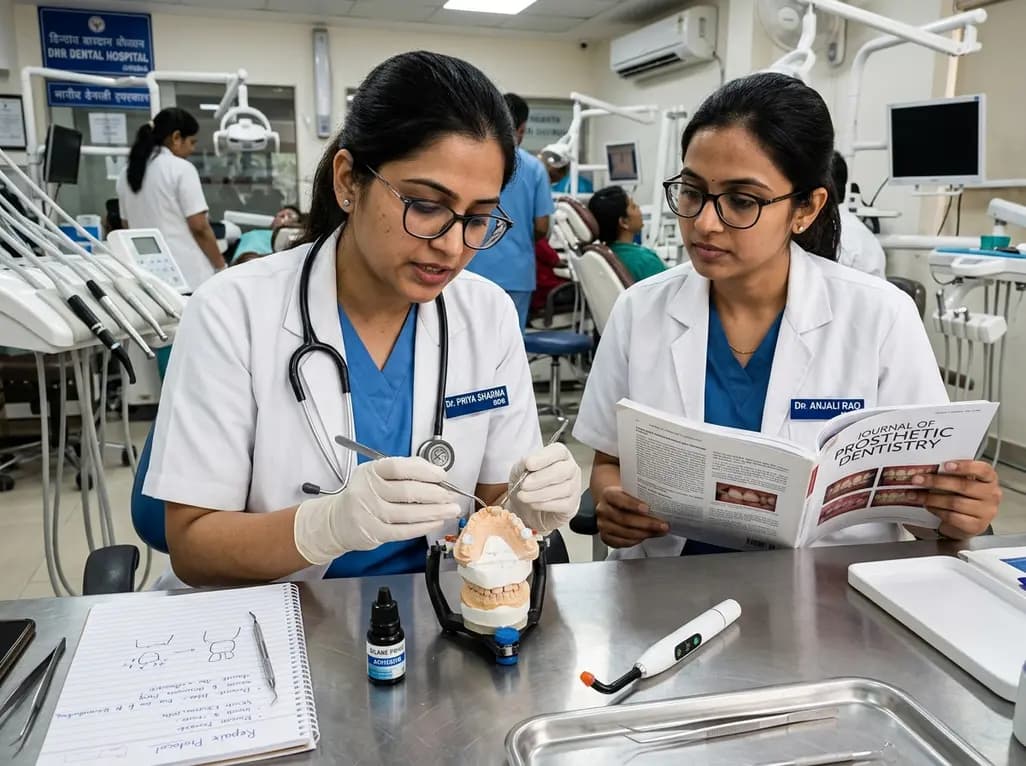
Ceramic restorations made from glass-ceramics offer remarkable esthetics and high strength in daily clinical practice. However, minor chipping or marginal fractures occasionally threaten restoration integrity, creating significant clinical dilemmas for restorative practitioners. Rather than remaking an entire prosthesis, performing an intraoral lithium disilicate repair provides a minimally invasive and cost-effective clinical alternative. Therefore, understanding evidence-based conditioning protocols allows dental teams to restore function efficiently while preserving healthy tooth structure.
Restorative dentists frequently encounter localized fractures on glass-ceramic crowns, veneers, and fixed prostheses. Complete replacement of these restorations often requires traumatic removal, which risks irreversible damage to underlying abutment teeth. Consequently, practitioners increasingly choose intraoral repair to extend restoration longevity. However, establishing durable adhesion between aged ceramic and fresh composite resin remains technically demanding. The glassy matrix of lithium disilicate demands rigorous surface conditioning to achieve micromechanical interlocking and chemical hybridization. Furthermore, oral humidity, salivary contamination, and masticatory stresses constantly challenge the newly formed adhesive interface. Recent comprehensive scoping reviews systematically examined published evidence regarding repair strategies to identify predictable clinical pathways. Researchers evaluated various mechanical treatments, chemical couplers, and resin combinations under diverse laboratory conditions. Ultimately, the synthesis of these in vitro investigations underscores that achieving high initial bond strength is entirely feasible. Nevertheless, long-term intraoral survivability depends on meticulous contamination control and proper chemical coupling. Clinicians must therefore master each procedural step to avoid premature interfacial debonding.
Mechanical modification creates the micro-retentive surface roughness necessary for micromechanical composite interlocking. Clinicians primarily use hydrofluoric acid etching to dissolve the glassy silicate phase within the ceramic. This selective dissolution exposes an intricate network of lithium disilicate crystals, which dramatically expands the available bonding surface area. In contrast, phosphoric acid etching fails to etch the glass matrix and functions merely as a cleaning agent. Airborne-particle abrasion with aluminum oxide also provides surface roughening, although it produces less favorable retention patterns than hydrofluoric acid. In addition, aggressive particle abrasion can generate microcracks that compromise the structural integrity of thin ceramic margins. Recent studies have investigated laser irradiation as an alternative conditioning modality to alter ceramic topography. However, laser parameters require precise calibration to prevent thermal damage and uncontrolled surface melting. Therefore, hydrofluoric acid etching remains the benchmark mechanical pretreatment for lithium disilicate glass-ceramics in contemporary restorative dentistry. Clinicians should carefully control etching time and acid concentration to avoid over-etching, which weakens the fragile crystalline framework.
Chemical conditioning provides molecular bridging between inorganic ceramic crystals and organic methacrylate monomers. After thorough rinsing and drying of the etched ceramic, clinicians apply a dedicated silane coupling agent. Silane molecules possess bifunctional properties that establish covalent siloxane bonds with ceramic silica and copolymerize with resin adhesives. Consequently, silanization markedly improves surface wettability and enhances immediate bond strength. Furthermore, many dental practitioners now utilize universal adhesives containing both silane and 10-methacryloyloxydecyl dihydrogen phosphate (MDP). These universal formulations simplify chairside steps by combining chemical primers into a single bottle. However, laboratory investigations show that dedicated, freshly mixed silane primers consistently produce more stable bonds than premixed adhesive mixtures. The acidic environment inside universal adhesives can trigger premature silane hydrolysis, which reduces chemical durability over time. Therefore, applying a separate silane primer before brushing on the adhesive system ensures optimal chemical hybridization. Clinicians subsequently apply an unfilled bonding resin or a low-viscosity flowable composite to initiate incremental composite buildup.
Although many repair strategies achieve satisfactory immediate bond strength, intraoral aging inevitably degrades adhesion durability. Water storage and thermocycling simulate the thermal and chemical fatigue that restorations experience intraorally. During thermal fluctuations, differences in thermal expansion coefficients between ceramic, adhesive, and composite generate substantial interfacial shear stresses. Consequently, microscopic interfacial microgaps develop along the repair margin. Moreover, continuous water sorption promotes hydrolytic degradation of both the polymer matrix and the fragile siloxane bonds. As a result, in vitro studies consistently demonstrate significant bond strength reduction after prolonged artificial aging. Mechanical masticatory loading further accelerates bond fatigue and promotes subcritical crack propagation at the interface. Therefore, clinicians must inform patients that composite repairs represent conservative interventions that require regular maintenance. Regular clinical monitoring allows early identification of marginal discoloration or localized breakdown. When practitioners strictly adhere to combined mechanical and chemical protocols, repairs can successfully function for extended maintenance intervals.
Translating in vitro evidence into daily practice requires systematic protocols to achieve predictable ceramic repair outcomes. First, clinicians must isolate the surgical field using a rubber dam to prevent moisture and salivary contamination. Salivary proteins rapidly adhere to etched ceramic, creating an organic pellicle that severely hinders resin penetration. If contamination occurs, cleaning the ceramic with 37 percent phosphoric acid or ethanol restores surface energy effectively. Next, the dentist etches the exposed lithium disilicate with five to nine percent hydrofluoric acid for twenty seconds. After thorough water rinsing and warm air drying, the practitioner applies a pure silane coupling agent and allows it to evaporate completely. Warm air drying volatilizes residual solvent and water, promoting condensation of the siloxane network. Subsequently, the clinician applies a thin layer of light-cured adhesive, followed by an esthetic composite resin matched to the original restoration shade. Finally, meticulous finishing, polishing, and occlusal adjustment minimize destructive lateral forces, ensuring optimal longevity for the repaired prosthesis.
Hydrofluoric acid selectively dissolves the glassy silicate phase of lithium disilicate, leaving an intricate porous network of exposed crystalline needles. This morphological transformation dramatically multiplies the effective surface area for micromechanical interlocking. Consequently, low-viscosity resins penetrate deep into these microporosities, establishing a robust mechanical foundation. Without this chemical etching step, composite resins cannot adhere predictably to the smooth ceramic surface, leading to early interfacial failure under normal masticatory loads.
Silane functions as an indispensable bifunctional chemical bridge between inorganic ceramic silica and organic resin polymers. The hydrolyzable alkoxy groups bond covalently to ceramic silanol groups, whereas the organofunctional methacrylate groups copolymerize with the adhesive resin. In addition, silane significantly lowers surface tension, allowing the bonding agent to wet the micro-etched ceramic topography thoroughly. Therefore, omitting silane severely impairs adhesive bonding and leaves the repaired interface highly susceptible to early hydrolytic degradation.
Airborne-particle abrasion with aluminum oxide cannot adequately replace hydrofluoric acid etching on lithium disilicate ceramics. Although particle blasting creates superficial surface roughness, it does not dissolve the glassy matrix or expose crystal retentive undercuts. Furthermore, excessive kinetic impact can introduce microscopic surface cracks that weaken the brittle ceramic structure. Consequently, mechanical air abrasion yields significantly lower bond durability than hydrofluoric acid etching and should primarily serve as an adjunct debridement protocol.
Disclaimer: This content is for informational and educational purposes only... Refer to the latest local and national guidelines for clinical practice.
References
Silva UPC et al. Repair strategies for lithium disilicate ceramics: A scoping review. J Prosthet Dent. 2026 Oct 13. doi: undefined. PMID: 42869750.
Kimmich M, Stappert CF. Intraoral repair of chipped or fractured all-ceramic restorations: A systematic review. Oper Dent. 2013;38(1):E1-E30.
Loomans B, Özcan M. Intraoral repair of direct and indirect restorations: Procedures and guidelines. Oper Dent. 2016;41(S7):S68-S78.

Read summarized clinical updates, watch expert medical content, and earn CME certifications right from your smartphone.
Open your smartphone camera to scan and install.





A comprehensive scoping review evaluates mechanical and chemical repair strategies for lithium disilicate ceramics, highlighting protocols to optimize bond strength.
Today

A comprehensive critical appraisal of the science-to-practice gap in allergology, detailing systemic guideline adherence barriers across ARIA and GINA, health economic disparities, and proven knowledge-translation strategies to optimize real-world patient outcomes.
Today

The government of Maharashtra is establishing a novel state-level Living Lab to elevate clinical outcomes, bridge public-private service gaps, and test real-world health interventions. By integrating digital innovations and frontline feedback, the platform fosters sustainable, equitable care models across communities.
Today

Cardiac involvement is the leading cause of mortality in EGPA. This report highlights an overlap phenotype of lymphocyte-predominant myocardial injury, Takotsubo-like cardiomyopathy, and left ventricular thrombus, emphasizing early multimodality diagnostics and aggressive immunosuppressive biologic therapy.
Today

A landmark biomechanical study demonstrates that sports bra support and running shoe cushioning interact significantly to influence tibial acceleration, breast motion, and comfort in female runners, providing crucial insights for clinical counseling in sports medicine and women's health.
Yesterday

A systematic review and meta-analysis of 5,406 participants reveals that tirzepatide significantly reduces hsCRP by 34.3%, improves cardiorenal biomarkers, and enhances functional capacity and exercise endurance in patients with heart failure.
Today
