.webp&w=384&q=75)

Loading, please wait...
Loading, please wait...

Scientists are currently optimizing Liquid Crystal Elastomer Filaments to bridge the gap between advanced material science and practical clinical applications. These materials represent a unique class of polymers. They combine the molecular orientational order of liquid crystals with the high elasticity of rubber. Consequently, they enable large and reversible actuation. This capability makes them ideal candidates for the development of artificial muscles, soft robotics, and adaptive medical textiles.
The transition of Liquid Crystal Elastomer (LCE) technology from small lab films to industrial-grade filaments requires standardized processing. Researchers emphasize a synthesis-to-filament framework. This framework integrates molecular formulation with rheological conditioning and flow-induced alignment. Specifically, benchmark systems utilizing diacrylate mesogens (such as RM82 and RM257) and triazine crosslinkers (TATATO) have shown great promise. Furthermore, staged Michael-addition reactions produce shear-thinning oligomers with viscosities ranging from 30 to 200 Pa s. These parameters allow for efficient extrusion, wet spinning, and melt drawing. Therefore, engineers can now produce defect-free filaments that retain high alignment and superior actuation performance.
The performance of these filaments depends heavily on the interplay between viscosity, extrusion pressure, and flow rate. Engineers utilize specialized nozzle designs and draw ratios to encode anisotropy directly into the material. In addition, in-line UV curing and thermal annealing improve the durability of the filaments. These strategies ensure that the artificial muscles can withstand repeated cycles of contraction and expansion. Moreover, emerging machine learning-assisted strategies are now helping scientists identify sustainable chemistries and optimal formulations faster than ever before. This progress suggests that scalable manufacturing of medical-grade actuators is becoming a reality.
Liquid crystal elastomers offer significant advantages for the next generation of medical devices. In surgery, soft robotic tools can navigate complex anatomical structures with minimal trauma. Similarly, in orthopedics, LCE-based artificial muscles could revolutionize prosthetics by mimicking the natural movement of human tissue. Historically, rigid motors limited the fluidity of prosthetic limbs. However, these new filaments provide a lightweight and responsive alternative. These advancements will likely lead to smarter compression garments and adaptive textiles for chronic disease management.
Standard polymers lack the molecular alignment found in liquid crystals. LCE filaments integrate mesogenic order, which allows them to change shape in response to heat or light, effectively acting as an actuator.
The primary applications include soft robotic surgical tools, artificial muscles for advanced prosthetics, and smart textiles that adapt to the wearer's physiological needs.
Yes. Recent reviews highlight that by controlling viscosity regimes and utilizing extrusion techniques like melt drawing, manufacturers can produce continuous, high-performance filaments at scale.
Disclaimer: This content is for informational and educational purposes only. It does not constitute medical advice or professional engineering recommendations. Refer to the latest local and national guidelines for clinical practice.
References

Read summarized clinical updates, watch expert medical content, and earn CME certifications right from your smartphone.
Open your smartphone camera to scan and install.





A comprehensive review of Liquid Crystal Elastomer (LCE) filament processing, highlighting their potential in artificial muscles and soft robotic actuators....
4 months ago

Explore vital recurrent stroke predictors in lacunar stroke patients managed with intensive blood pressure lowering. This analysis examines trial findings from SPS3 to uncover residual vascular risks, metabolic factors, and targeted secondary prevention strategies for high-risk neurological patients.
Today
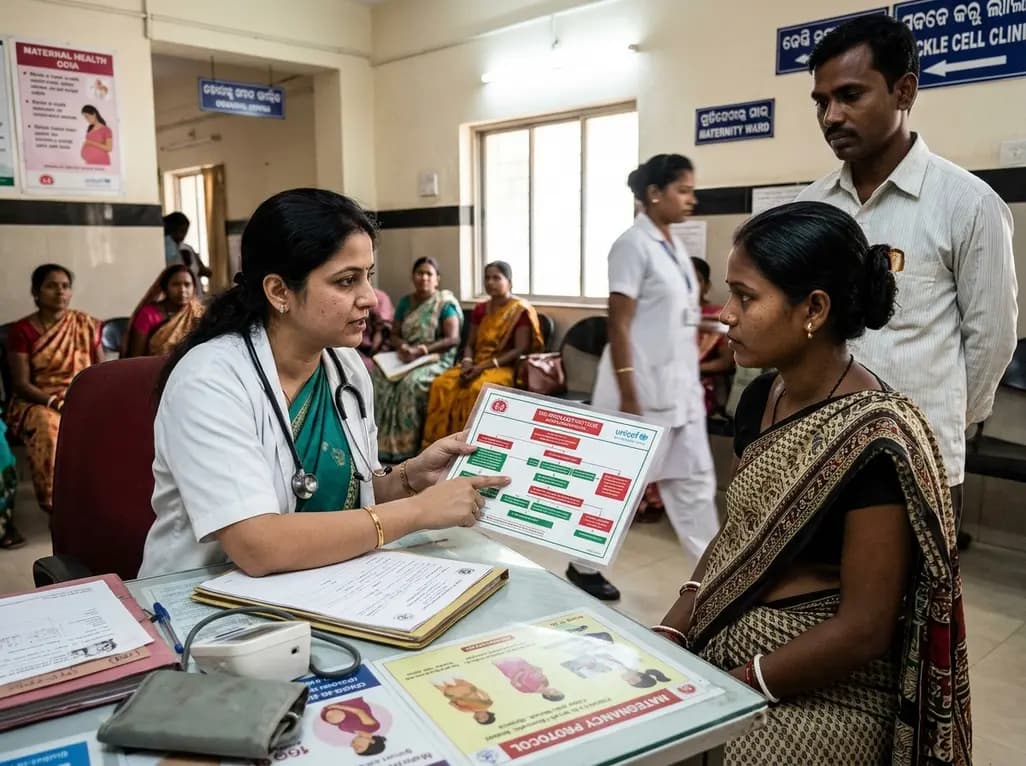
Odisha has established India's first state-level clinical protocol specifically tailored for pregnant women with sickle cell disease. Developed with NHM and UNICEF, the framework provides structured antenatal screening, crisis mitigation, standardized referral pathways, and specialized interdisciplinary care.
Today

India is advancing preventive healthcare by integrating genomics, artificial intelligence, and quantum technologies. With the SANGAM programme sequencing one million Indian genomes, clinicians can unlock personalized therapies, detect cardiometabolic risks early, and curb the burden of diabetes and heart disease.
Today
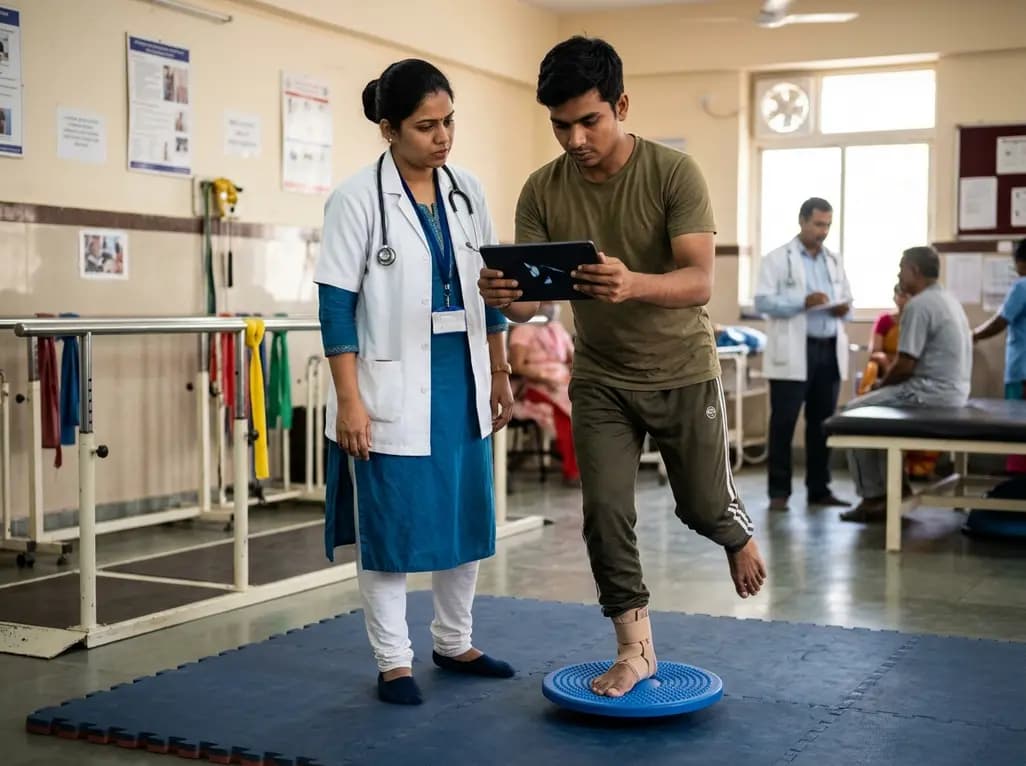
A randomized controlled trial demonstrates that an eight-week dual-task training intervention significantly improves static and dynamic postural control over standard balance exercises in individuals with chronic ankle instability, addressing critical neurocognitive deficits during athletic and daily activities.
Today

A retrospective cohort study of 7,716 ICU patients from the MIMIC-IV database demonstrates that Gradient Boosting Decision Trees significantly outperform traditional SOFA scores in predicting in-hospital mortality among patients with sepsis and diabetes, with SHAP analysis providing clinical interpretability.
Today
