.webp&w=384&q=75)

Loading, please wait...
Loading, please wait...

Soft microrobots in medicine are currently transforming the possibilities of minimally invasive procedures. Traditionally, tethered systems have faced significant challenges in navigating the complex, fluid-filled environments of the human body. However, a new leech-inspired robotic system utilizing liquid-crystal gels (LCGs) offers a breakthrough in autonomous aquatic movement.
This innovative robot consists of a single LCG sheet. Specifically, the device uses a twist-nematic director field to encode traveling-wave kinematics. When researchers apply remote laser scanning, the sheet generates metachronal waves. Consequently, this drives forward propulsion at speeds of 0.5 mm/s in saline environments. This speed and autonomy represent a significant leap over previous soft material systems.
The primary advantage of this system lies in its programmable navigation. For instance, localized illumination on the robot's head reorients the body vector. As a result, operators can program upward or lateral trajectories. Furthermore, this capability enables the LCG leech to navigate through intricate tunnels in three-dimensional space. By integrating multiple leeches into a monolithic construct, the system can even perform rotating swimming modes for better maneuverability.
Moreover, these robots demonstrate the potential for functional cargo transport. Since light drives the locomotion, the robot requires no on-board electronics or batteries. Therefore, the device remains incredibly lightweight and compliant. Such a platform is ideal for delivering targeted therapies or navigating the delicate vascular networks of the brain and heart. Molecular-level patterning essentially translates optical commands into complex biomimetic actions.
In the near future, these smart microrobots may replace rigid surgical tools in specific diagnostic and therapeutic roles. Because the LCG material responds rapidly and maintains reconfigurable curvature, it can adapt to the dynamic conditions of the human body. Ultimately, this technology offers a versatile platform for the next generation of smart medical devices in fluidic environments.
These robots use stimuli-responsive materials like liquid-crystal gels. When exposed to specific triggers like light or heat, the molecular structure of the material changes shape. This programmed deformation creates wave-like motions that propel the robot forward.
Current research focuses on using biocompatible materials and low-intensity lasers or infrared light that can penetrate tissues without causing damage. Ongoing studies are evaluating the thermal effects of these light sources on surrounding biological fluids.
Potential applications include targeted drug delivery, clearing arterial blockages, and performing micro-surgeries in hard-to-reach areas like the gastrointestinal tract or the nervous system.
Disclaimer: This content is for informational and educational purposes only. It does not constitute medical advice or endorse any specific technology for clinical use. Always consult with a qualified healthcare professional regarding medical developments. Refer to the latest local and national guidelines for clinical practice.
References

Read summarized clinical updates, watch expert medical content, and earn CME certifications right from your smartphone.
Open your smartphone camera to scan and install.





A leech-inspired LCG robot uses light-driven undulatory motion for precise 3D navigation in saline media, facilitating untethered medical applications....
8 months ago
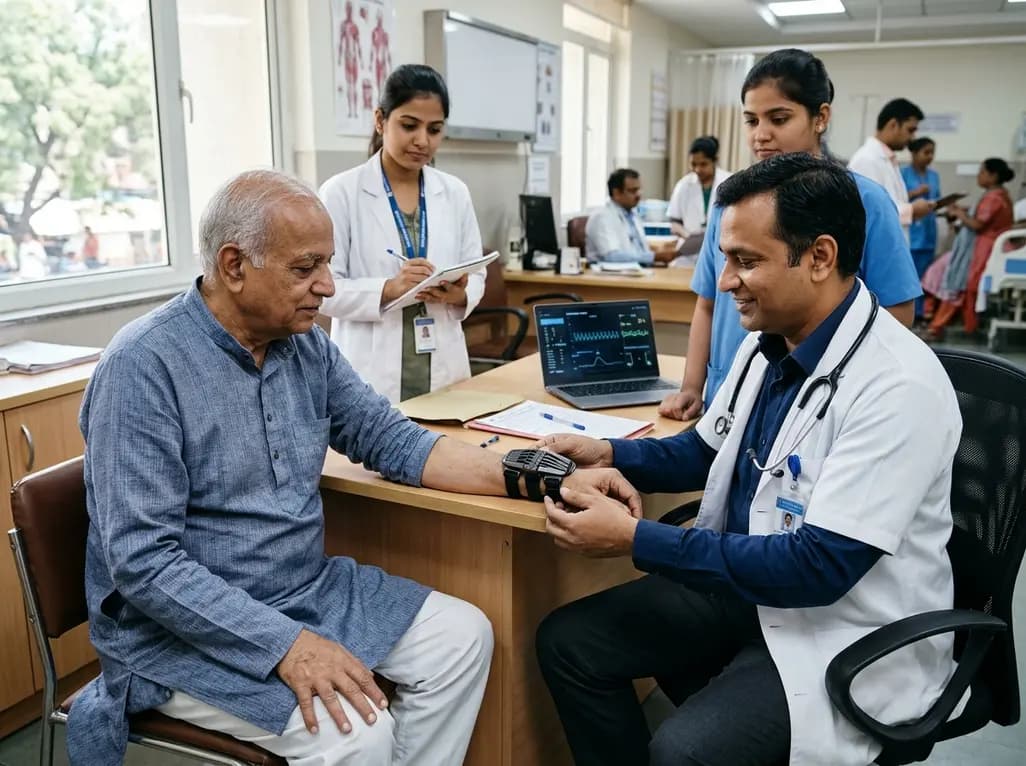
The TREM-AB open-label pilot study evaluated a wearable passive nonlinear vibration absorber for essential tremor. The Nonlinear Energy Sink bracelet reduced clinical Fahn-Tolosa-Marin tremor scores by 32.1% and electrophysiological tremor power by 49.2% with no adverse effects reported.
Today

A population-based study of 20,928 children reveals that small vulnerable newborns face sex-divergent mental capital outcomes at ages 6-7: term SGA girls show higher behavioral difficulties and lower resilience, while preterm non-SGA boys experience increased behavioral problems.
Today
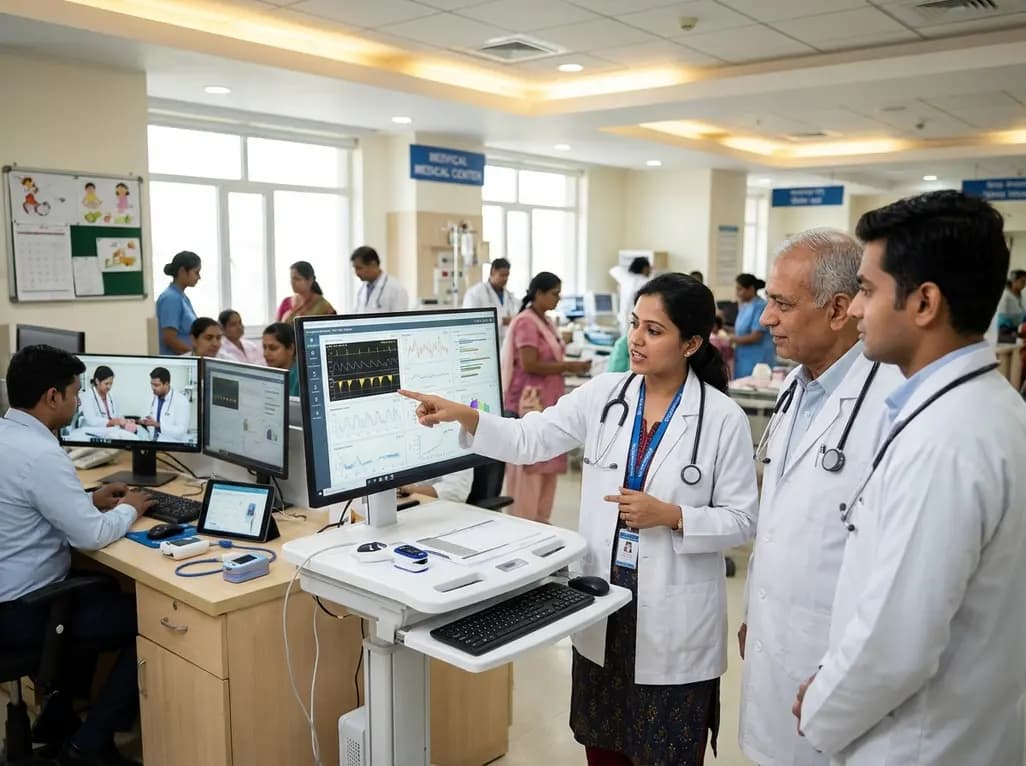
A landmark study details how an enterprise pediatric remote patient management model expanded from a single cardiology pilot to 16 diverse specialty programs by combining centralized digital operations with specialty clinical leadership.
Today
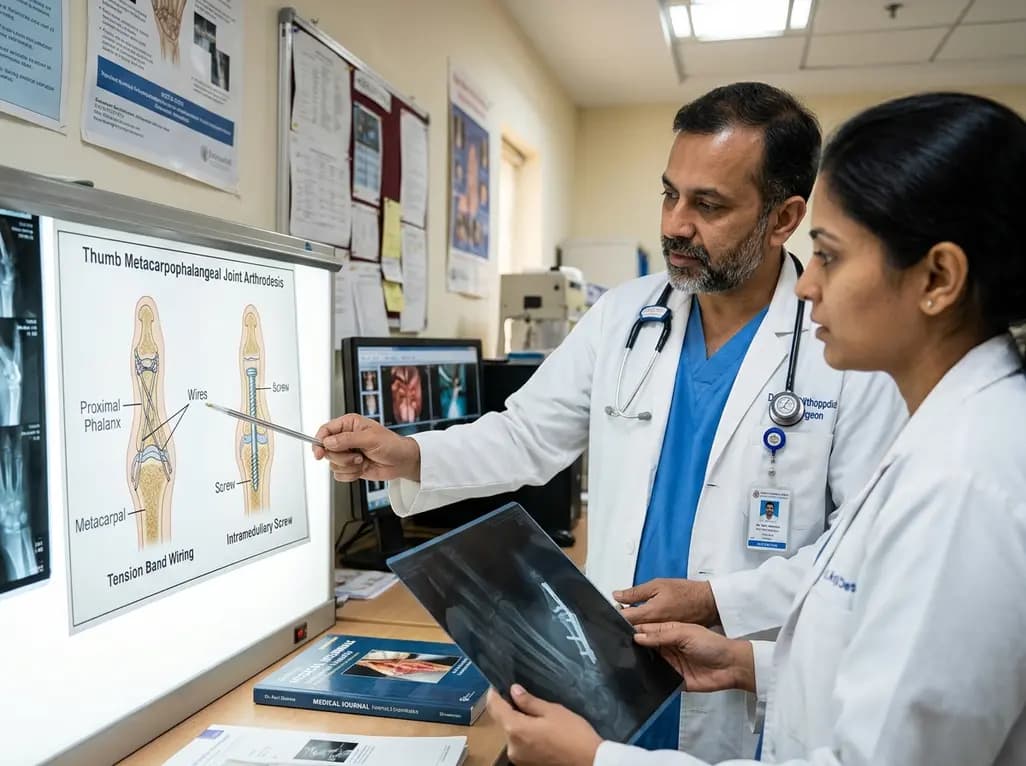
A comparative review of tension band wiring and intramedullary screw fixation in thumb metacarpophalangeal arthrodesis, evaluating union rates, hardware complications, and clinical outcomes.
Today
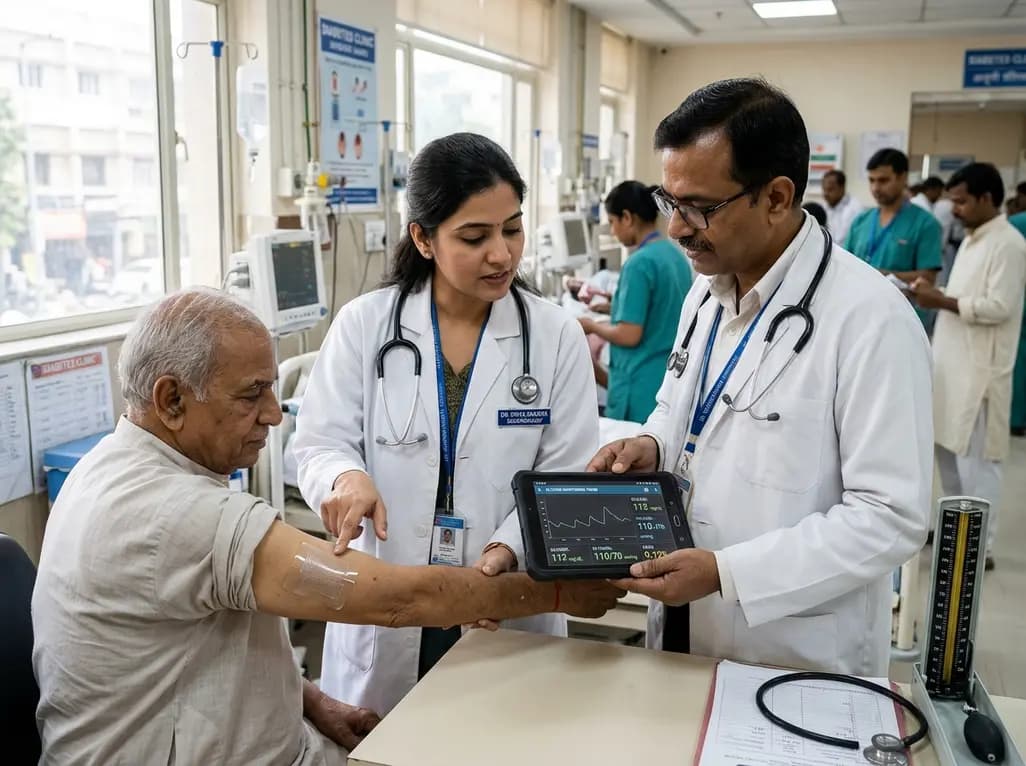
A breakthrough ultrathin multimodal sensor decouples physical hemodynamic monitoring from disposable electrochemical calibration, achieving long-term wearable glucose prediction with 81.36% accuracy and a 9.12% MARD. This offers a robust, drift-free solution for outpatient metabolic surveillance.
Today
