.webp&w=384&q=75)

Loading, please wait...
Loading, please wait...

Leptospirosis diagnostic methods are essential clinical tools today. Furthermore, this zoonotic disease causes over a million cases and 58,900 deaths annually. However, many people still do not recognize it as a significant pathogen. Consequently, early and specific detection is mandatory for starting treatment quickly. Therefore, clinicians must understand the strengths of available tests. Because symptoms often mimic other fevers, laboratory confirmation is vital. Specifically, accurate testing identifies the pathogen early. In addition, prompt medical care saves many lives.
Firstly, the Microscopic Agglutination Test (MAT) remains the primary reference standard. Although MAT is highly specific, it is notoriously slow. Moreover, it requires skilled personnel and live bacterial cultures. Therefore, it is a complex process. In addition, clinicians frequently use the Enzyme-linked immunosorbent assay (ELISA) to detect IgM antibodies. While ELISA is rapid, it has some flaws. For instance, early samples might yield false-negative results. Yet, it remains a useful screening tool. Similarly, combining these tests improves diagnostic confidence.
Secondly, molecular techniques like Polymerase Chain Reaction (PCR) and Loop-mediated Isothermal Amplification (LAMP) offer speed. Additionally, they detect leptospiral DNA directly in clinical samples early. Furthermore, mass spectrometry (MS) has emerged as a sophisticated tool for identification. Specifically, matrix-assisted laser desorption/ionization time-of-flight (MALDI-ToF) MS identifies species with high precision. However, many laboratories have not yet fully utilized this analytical expertise. Consequently, many experts recommend wider adoption of these tools. Thus, testing becomes more sensitive and accurate. Indeed, this helps patients in the acute phase.
Finally, researchers suggest new strategies for better outcomes. In contrast to traditional ways, rapid diagnostic tests (RDTs) provide fast answers in rural areas. Therefore, they are extremely useful. As a result, patients get treated much faster. Moreover, sensitivity improves when labs consolidate mass spectrometric methods. Consequently, mortality rates may drop. Indeed, combining different methods is the best approach. Similarly, early clinical action is the key to success.
Diagnosis is challenging because early symptoms are often non-specific and mimic other tropical diseases like malaria or dengue. Additionally, standard antibody tests often require a week for seroconversion to occur.
Mass spectrometry, specifically MALDI-ToF, allows for the rapid and precise identification of Leptospira at the species level. This technique saves time compared to traditional culture-based methods.
PCR tests detect the presence of the bacteria in blood or urine during the early bacteremic phase. Therefore, they allow for a definitive diagnosis before antibodies become detectable by ELISA or MAT.
Disclaimer: This content is for informational and educational purposes only. It is not intended as medical advice or a substitute for the professional judgment of a healthcare provider. Refer to the latest local and national guidelines for clinical practice.
References
1. Kannan EP et al. Investigating the existing analytical methods deployed for leptospirosis detection and diagnostics. Analyst. 2026 Feb 11. doi: 10.1039/d6an00005c. PMID: 41669918.
2. Shivakumar S. Indian Guidelines for the Diagnosis and Management of Human Leptospirosis. Journal of the Association of Physicians of India.
3. Murugalakshmi T et al. Emerging Trends in Leptospirosis: Advancements in Diagnosis, Treatment, and Prevention Strategies. South Eastern European Journal of Public Health. 2025.

Read summarized clinical updates, watch expert medical content, and earn CME certifications right from your smartphone.
Open your smartphone camera to scan and install.





A review of leptospirosis diagnostic methods, exploring traditional MAT and ELISA alongside molecular PCR and mass spectrometry for early detection....
8 months ago
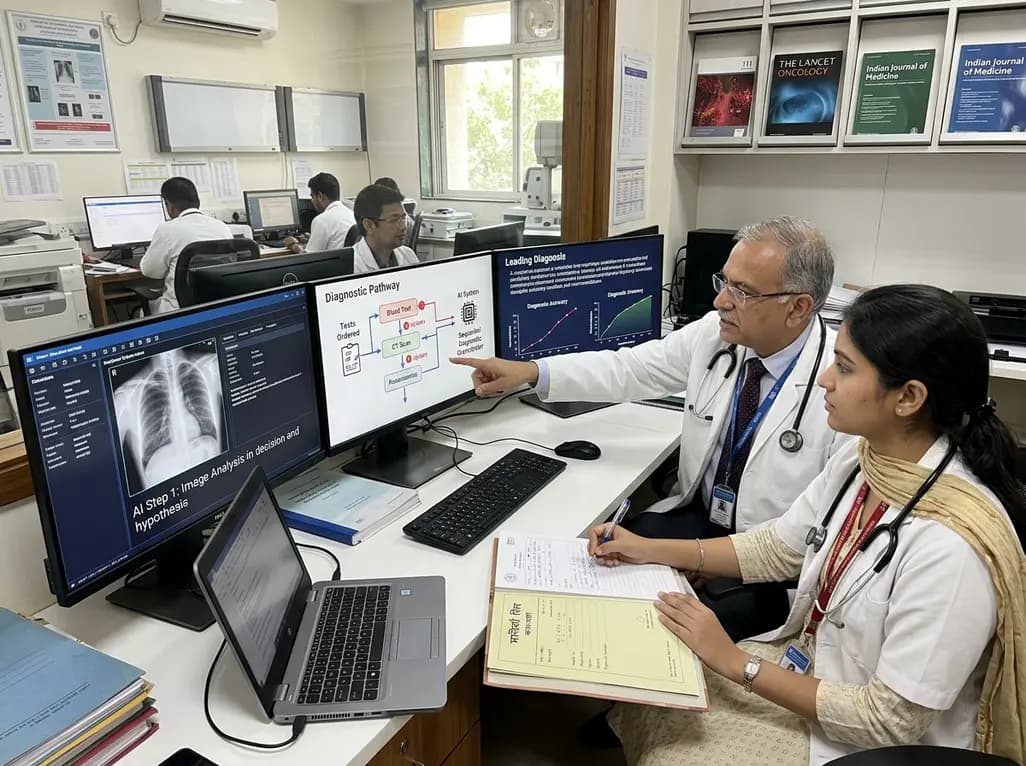
A breakthrough peer-reviewed study demonstrates that a sequential AI diagnosis system can mirror real-world clinical reasoning. By ordering stepwise tests and updating hypotheses dynamically, this multi-agent orchestrator achieved superior diagnostic accuracy while reducing investigative costs.
Today

A prenatal case highlights severe glutaric acidemia type II presenting as bilateral hyperechoic cystic kidneys at 18 weeks. Whole-exome sequencing revealed a novel homozygous ETFDH frameshift variant, demonstrating the power of rapid genetic testing in fetal renal anomalies.
Today

Review how tailored exercise programs benefit frail older patients with heart failure. Explore pathophysiological mechanisms, individualized training prescriptions, and strategies to overcome adherence barriers in clinical practice.
Yesterday

This comparative study evaluates posterior labral tears with and without glenohumeral instability, highlighting distinct demographic patterns, MRI underestimation in stable shoulders, and successful arthroscopic repair outcomes.
Yesterday

A clinical study demonstrates that early intervention with tocilizumab, either as monotherapy or bridged with corticosteroids, achieves significant proptosis reduction and resolves active inflammation in treatment-naive thyroid eye disease.
Yesterday
