.webp&w=384&q=75)

Loading, please wait...
Loading, please wait...

Leishmaniases encompass a group of clinically distinct diseases caused by the protozoan parasite Leishmania. Infected sand flies transmit these parasites to humans through bites. For clinicians, understanding leishmaniasis diagnosis and treatment is vital, especially given the rising global cases of cutaneous forms. Furthermore, India has shown remarkable progress in reducing the burden of the visceral form, known as Kala-azar.
The disease manifests in three primary forms. Cutaneous leishmaniasis (CL) represents the most frequent presentation, typically appearing as localized skin ulcers. Moreover, the Eastern Mediterranean region currently reports increasing case numbers of this form. Mucosal leishmaniasis (ML) is more aggressive, causing destruction in the nose and throat. Visceral leishmaniasis (VL) remains life-threatening due to systemic dissemination to the blood and bone marrow.
Consequently, laboratory techniques have evolved significantly. Traditional microscopy is being replaced by molecular methods. Additionally, physicians use these tests to identify specific parasite species from tissue samples. This specificity ensures more targeted therapeutic choices for the patient. Therefore, molecular testing is now the gold standard in modern leishmaniasis diagnosis and treatment protocols.
Treating this infection remains difficult because of limited pharmacological options. However, the shift toward combination therapies for visceral leishmaniasis has significantly improved clinical outcomes. In India, the national program primarily utilizes single-dose liposomal amphotericin B. This strategy has successfully pushed the country toward elimination status. Furthermore, maintaining early diagnosis and vector control remains essential for long-term success.
Moreover, research into prevention is advancing rapidly. Two human vaccines are currently in the pipeline, with some ready for human trials. Until these become available, clinicians must rely on rapid molecular identification and optimized drug regimens. Regular surveillance and adherence to updated management protocols are critical for managing all forms of the disease.
Clinicians now prefer molecular methods over traditional microscopy. Furthermore, these techniques allow for species identification using tissue samples from the bone marrow or skin, which ensures higher diagnostic accuracy.
The primary challenges include a limited selection of effective drugs and the risk of parasitic resistance. Therefore, experts recommend using combination therapies and strictly following the latest clinical guidelines to optimize recovery.
Disclaimer: This content is for informational and educational purposes only and does not constitute professional medical advice, diagnosis, or treatment. Always seek the advice of your physician or other qualified health provider with any questions you may have regarding a medical condition. Refer to the latest local and national guidelines for clinical practice.
References

Read summarized clinical updates, watch expert medical content, and earn CME certifications right from your smartphone.
Open your smartphone camera to scan and install.





A clinical update on leishmaniasis diagnosis and treatment, highlighting the shift to molecular methods and combination therapies in the Indian context....
4 months ago
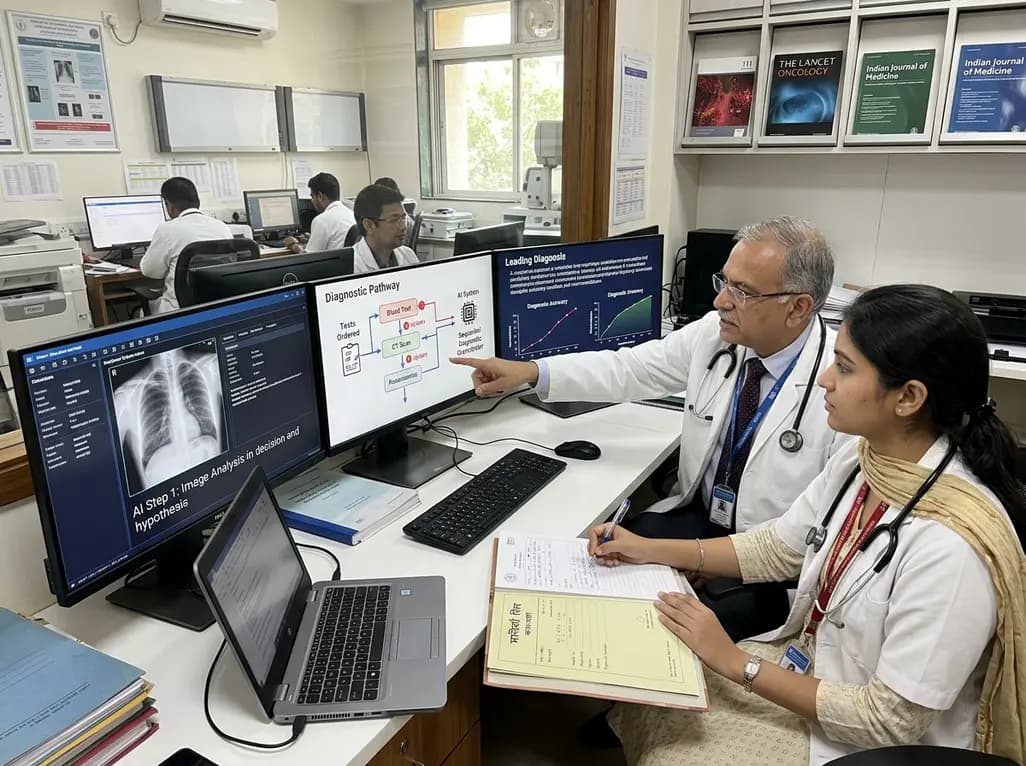
A breakthrough peer-reviewed study demonstrates that a sequential AI diagnosis system can mirror real-world clinical reasoning. By ordering stepwise tests and updating hypotheses dynamically, this multi-agent orchestrator achieved superior diagnostic accuracy while reducing investigative costs.
Today

A prenatal case highlights severe glutaric acidemia type II presenting as bilateral hyperechoic cystic kidneys at 18 weeks. Whole-exome sequencing revealed a novel homozygous ETFDH frameshift variant, demonstrating the power of rapid genetic testing in fetal renal anomalies.
Today

Review how tailored exercise programs benefit frail older patients with heart failure. Explore pathophysiological mechanisms, individualized training prescriptions, and strategies to overcome adherence barriers in clinical practice.
Yesterday

This comparative study evaluates posterior labral tears with and without glenohumeral instability, highlighting distinct demographic patterns, MRI underestimation in stable shoulders, and successful arthroscopic repair outcomes.
Yesterday

A clinical study demonstrates that early intervention with tocilizumab, either as monotherapy or bridged with corticosteroids, achieves significant proptosis reduction and resolves active inflammation in treatment-naive thyroid eye disease.
Yesterday
