

Loading, please wait...
Loading, please wait...

Zoonotic vector-borne diseases continue to challenge global public health systems. In Mediterranean regions, Leishmania infantum causes severe visceral and cutaneous manifestations in susceptible human hosts. Understanding the ecological mechanisms sustaining Leishmania infantum transmission requires an integrated One Health approach that evaluates vectors, domestic animals, and human populations simultaneously. Recent eco-epidemiological findings from historically endemic foci in Spain provide compelling evidence regarding how domestic dogs sustain persistent parasite cycles despite very low clinical human disease rates. These critical findings provide vital clinical insights for infectious disease specialists, epidemiologists, and general physicians managing vector-borne parasitic infections.
Understanding the epidemiology of zoonotic leishmaniasis requires investigating long-term endemic equilibria where human clinical incidence remains low despite continuous parasite circulation. Historically, researchers hypothesized that wild lagomorphs, such as hares and wild rabbits, could displace domestic canines as primary amplification hosts during human outbreaks. However, rigorous field surveillance demonstrates that domestic cycles remain exceptionally stable over multi-decade intervals. In stable endemic foci, parasite transmission persists quietly within canine populations without generating sudden explosive human epidemics. Consequently, clinicians must recognize that the absence of reported human clinical cases does not indicate parasite absence in the environment.
Furthermore, ecological evaluations show that parasite transmission networks adapt to local microclimates and housing densities. Rural environments consistently display higher transmission intensity than urbanized sectors because peri-domestic structures offer ideal microhabitats for vectors. As a result, domestic dogs residing in rural or suburban perimeters experience sustained exposure to infected sand flies throughout warm seasons. In addition, these stable canine cycles create persistent environmental infection pressure. Consequently, understanding this baseline transmission dynamic prevents misinterpreting surveillance data when public health officers evaluate regional pathogen persistence. Therefore, public health professionals must maintain continuous epidemiological vigilance even when hospitals document zero human admissions for visceral leishmaniasis over extensive observational periods.
Phlebotomine sand flies serve as the obligatory vectors responsible for parasite dissemination across southern European ecosystems. Field collections confirm that two predominant sand fly species dominate endemic landscapes: Sergentomyia minuta and Phlebotomus perniciosus. Notably, P. perniciosus serves as the primary proven vector for mammalian transmission, displaying pronounced seasonal abundance from late spring through early autumn. Entomological investigations reveal high parasite infection rates in vector populations, with real-time polymerase chain reaction assays identifying kinetoplast DNA consistent with the parasite complex.
Blood meal analyses offer crucial insights into actual vector feeding behaviors in nature. Molecular sequencing shows that sand flies feed predominantly on domestic dogs and humans, rather than wild animals. Although wild lagomorphs inhabit surrounding agricultural land, vector blood meals derived from rabbits and hares occur infrequently. Consequently, vectors maintain an active feeding interface directly between domestic dogs and cohabiting humans. In addition, researchers frequently detect parasite DNA within atypical sand fly species, suggesting complex vector-parasite interactions. Similarly, tracking these entomological parameters enables health authorities to deploy targeted vector control interventions during peak transmission months. Therefore, entomological surveillance remains essential to identify vector shifts and to anticipate human exposure risks across changing agricultural and suburban landscapes.
Domestic canines represent the chief domestic reservoir host sustaining the life cycle of the parasite in endemic territories. Serological evaluations consistently reveal remarkable infection rates among rural dogs, frequently exceeding forty percent. Because dogs often harbor substantial cutaneous parasite burdens without exhibiting visible overt signs, asymptomatic canines represent dangerous transmission sources for biting vectors. Consequently, uninfected sand flies acquire amastigotes readily while taking blood meals from seemingly healthy domestic pets. Furthermore, rural living conditions significantly increase canine seroprevalence due to outdoor housing arrangements and proximity to vector breeding sites.
In contrast to temporary wildlife amplification events, domestic canine reservoirs maintain parasite transmission continuously year after year. Although wild rabbits occasionally amplify outbreaks in urban parklands, domestic dogs preserve baseline endemicity across typical Mediterranean rural ecosystems. Moreover, community-wide veterinary programs provide substantial indirect protection to vulnerable human populations residing within nearby residential areas. Therefore, controlling canine leishmaniasis through regular veterinary screening, vaccination, and topical pyrethroid collars directly protects human community health. Veterinary professionals and medical practitioners must collaborate closely under a unified One Health framework to minimize domestic reservoir competence. Thus, active veterinary interventions remain the cornerstone of sustainable vector-borne disease reduction in domestic environments.
Evaluating human infection dynamics requires distinguishing between vector bite exposure and actual clinical systemic disease. Serological markers targeting sand fly salivary gland antigens provide an accurate measure of human exposure to vector bites. Epidemiological data show that over one-third of residents in endemic communities possess antibodies against sand fly saliva, demonstrating widespread vector contact. However, despite this frequent exposure, molecular detection of parasite DNA in human blood donors remains very low, typically around three percent. Similarly, anti-parasite antibodies appear in only four percent of exposed individuals.
This striking divergence highlights the protective capability of human cell-mediated immunity against natural challenge. Most immunocompetent individuals successfully abort or contain initial parasite inoculations without developing symptomatic disease. Consequently, active clinical illness remains rare, explaining the prolonged absence of hospitalized visceral leishmaniasis cases in stable endemic regions. In addition, longitudinal surveillance of these asymptomatic cohorts clarifies how host immunological resistance evolves against natural vector challenge over extended periods. Nevertheless, subclinical carriage persists quietly within a small fraction of exposed populations. Therefore, clinicians must stay alert to subclinical infections, particularly when managing vulnerable individuals whose immune competence may decline due to systemic illness, immunosuppressive medications, or aging.
The persistence of asymptomatic parasite carriers in historically endemic foci poses tangible implications for modern transfusion medicine and clinical practice. Because asymptomatic blood donors can harbor circulating parasite DNA, unmonitored blood transfusions present a potential transmission route to susceptible hospital patients. Immunosuppressed patients, solid organ transplant recipients, and oncology patients undergoing aggressive chemotherapy face extreme risks of severe visceral leishmaniasis if they receive contaminated blood units. Therefore, transfusion centers operating in regions with documented vector activity should consider implementing molecular screening protocols for blood donors.
In addition, infectious disease clinicians practicing in non-endemic or eliminating regions must recognize travel-associated and imported leishmaniasis risks. Clinicians should evaluate patients presenting with unexplained pyrexia, hepatosplenomegaly, and cytopenia for visceral leishmaniasis, especially following travel to endemic Mediterranean regions. Furthermore, managing zoonotic leishmaniasis requires sustained interdisciplinary coordination between human physicians, veterinary surgeons, and vector control teams. Consequently, strengthening these integrated surveillance networks ensures early recognition of localized transmission spikes and prevents avoidable clinical morbidity across communities. By integrating canine reservoir management, vector reduction strategies, and sensitive human diagnostic protocols, healthcare systems can effectively eliminate transmission hazards and protect vulnerable patient populations.
Domestic dogs serve as the principal domestic reservoir host for Leishmania infantum across endemic Mediterranean regions. Infected canines often harbor high parasite loads in their skin and peripheral blood, even while remaining asymptomatic. Consequently, phlebotomine sand flies feed readily on domestic canines and acquire the pathogen efficiently. Veterinary surveillance and regular topical insecticide applications in dogs therefore remain indispensable strategies to interrupt vector feeding and prevent subsequent transmission to humans.
High exposure to sand fly saliva does not automatically trigger widespread clinical disease in humans. Epidemiological studies demonstrate that vector saliva antibodies frequently indicate frequent human bites, yet actual systemic parasite infection rates remain substantially lower. Furthermore, robust cell-mediated immunity in immunocompetent individuals frequently controls parasite replication, keeping infections completely asymptomatic. Thus, clinical leishmaniasis manifests primarily when host immune defenses fail or when immunosuppressive comorbidities, such as HIV infection, impair host protection.
Asymptomatic blood donors harboring Leishmania DNA can unknowingly transmit parasites via transfusions to vulnerable recipients. Immunocompromised patients, organ transplant recipients, and young infants face severe risks if they receive infected blood products. Consequently, evaluating molecular markers like real-time PCR alongside serological assays helps transfusion services identify subclinical carriers. Implementing targeted blood donation vigilance in areas with documented vector exposure protects vulnerable recipients from severe post-transfusion visceral leishmaniasis complications.
Disclaimer: This content is for informational and educational purposes only... Refer to the latest local and national guidelines for clinical practice.
References
Jumakanova Z et al. Integrated Vector, Canine, and Human Evidence Reveal a Stable Dog-Maintained Cycle of Leishmania Infantum in a Historically Endemic Area From Spain. Zoonoses Public Health. 2026 Nov 22. doi: 10.1111/zph.70109. PMID: 43068484.
World Health Organization. Leishmaniasis Fact Sheet. Geneva: WHO; 2023.
National Centre for Vector Borne Diseases Control (NCVBDC). Guidelines on Visceral Leishmaniasis Elimination in India. Directorate General of Health Services, Ministry of Health and Family Welfare, Government of India; 2022.

Read summarized clinical updates, watch expert medical content, and earn CME certifications right from your smartphone.
Open your smartphone camera to scan and install.





A One Health eco-epidemiological study reveals that domestic dogs sustain Leishmania infantum transmission in endemic settings despite high sand fly biting rates and low human clinical disease, underscoring vector control and blood safety surveillance needs.
Today

The latest surveillance report from the Indian Council of Medical Research exposes a steep nationwide decline in bacterial susceptibility. Common pathogens like E. coli and Klebsiella pneumoniae demonstrate critical resistance to cephalosporins and carbapenems, urging clinicians to rethink empirical antimicrobial therapy.
Today
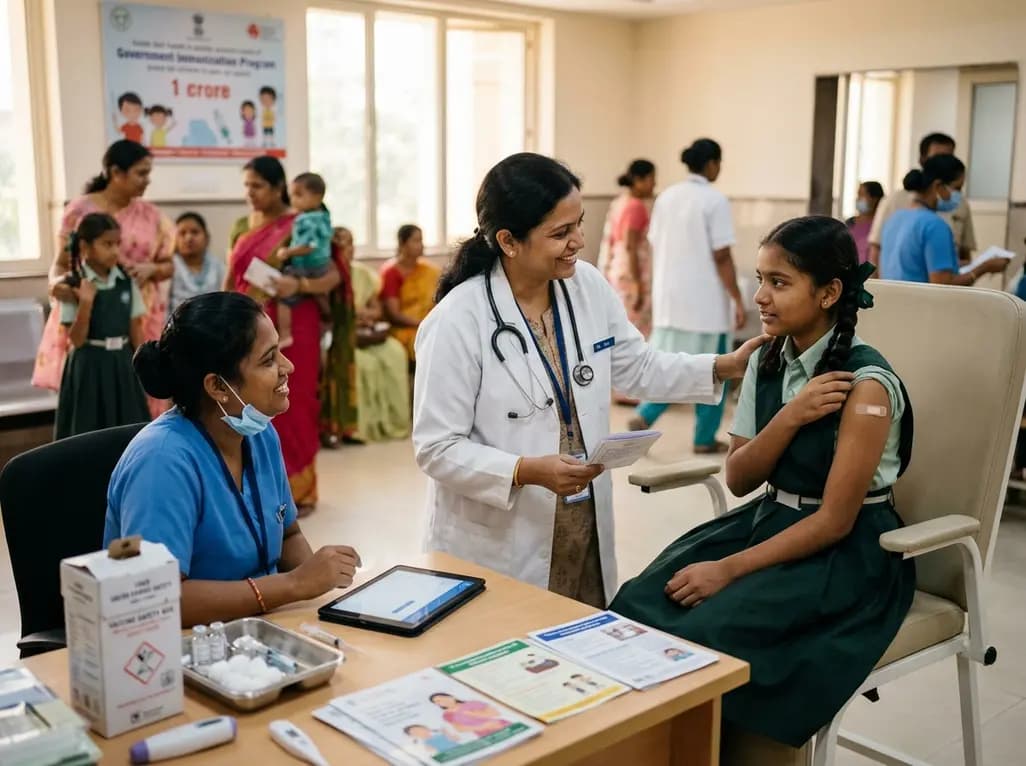
Under India's nationwide immunization drive, healthcare teams have vaccinated more than one crore 14-year-old girls within nine months. This comprehensive analysis evaluates state achievements, digital tracking via the U-WIN platform, clinical safety monitoring, and practical counselling strategies for practitioners.
Today

A large network analysis of middle-aged and older adults reveals distinct sex-specific dependency pathways between lifestyle factors and cardiometabolic diseases. Physical activity, smoking, and alcohol exhibit divergent bridging roles in men and women, underscoring the need for tailored clinical prevention.
Today

A landmark study reveals that patellofemoral cartilage defects in patients with trochlear dysplasia are primarily driven by patellar maltracking and spur height rather than dislocation frequency or shape mismatch, offering crucial insights for preoperative imaging and surgical stabilization.
Today
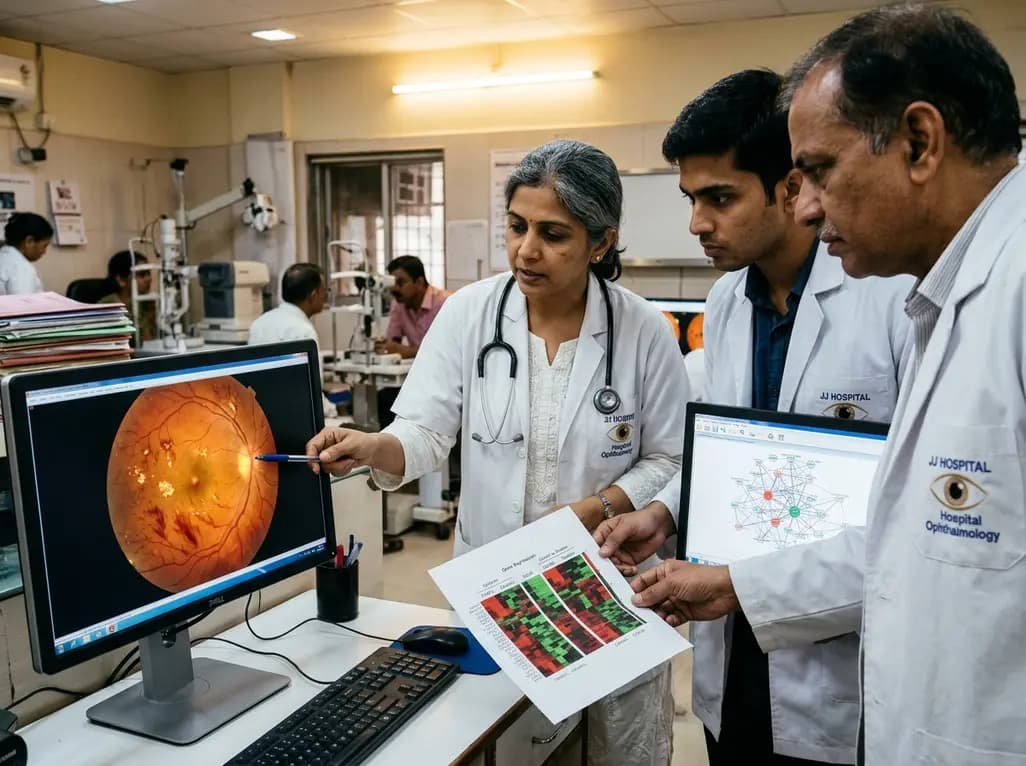
Single-cell transcriptomics reveals that STAP2 promotes retinal endothelial dysfunction in diabetic retinopathy through CXCR4 signaling. In vivo and in vitro studies show STAP2 knockdown reduces capillary drop-out and vascular leakage, uncovering a novel therapeutic target beyond anti-VEGF therapies.
Today
