.webp&w=384&q=75)

Loading, please wait...
Loading, please wait...
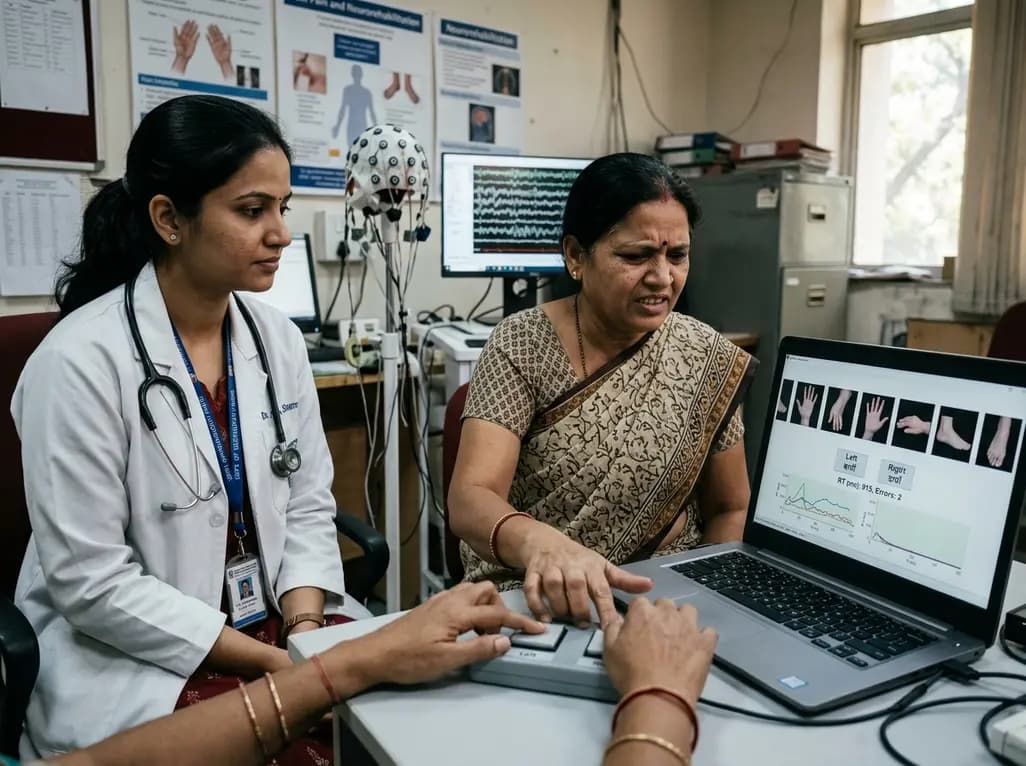
Fibromyalgia syndrome presents complex challenges that involve altered central pain processing and neuroplastic disruptions. In recent years, researchers have examined how working body schema alterations reflect functional disability. Emerging neurorehabilitation approaches utilize the left right judgment task to assess implicit motor imagery performance in affected individuals.
The left right judgment task evaluates an individual's ability to identify laterality in displayed body segments. Specifically, patients observe digital images of body parts and quickly determine whether they view a left or right limb. This mental rotation activates cortical networks responsible for somatic representation and motor planning without eliciting actual joint movement. Consequently, reaction time reflects the cognitive and sensorimotor processing efficiency of the underlying body schema. In chronic musculoskeletal conditions, persistent nociceptive input often disrupts primary somatosensory and motor cortices. As a result, patients frequently experience distorted cortical body representations. Furthermore, this neuroplastic degradation slows down mental rotation tasks. When individuals struggle to recognize bodily laterality efficiently, they demonstrate prolonged latency during digital testing. Clinicians increasingly recognize that cortical reorganization correlates with persistent symptoms. Therefore, assessing laterality recognition offers valuable clinical insights beyond conventional physical examinations. Moreover, measuring latency across multiple anatomical segments helps identify distinct areas of disrupted cortical processing. Ultimately, this assessment establishes a foundation for targeted cognitive and sensorimotor interventions.
To investigate these relationships, researchers conducted an exploratory cross-sectional study involving 113 adult women diagnosed with fibromyalgia syndrome. The team recruited participants to assess whether motor imagery reaction times correlate with functional status and psycho-affective parameters. They administered the left right judgment task using the validated Recognise™ digital software platform. In addition, the investigators completed comprehensive clinical and psychometric evaluations for each participant. They measured functional health status using the Fibromyalgia Impact Questionnaire. Furthermore, they quantified pain intensity through the Visual Analog Scale. The researchers also measured kinesiophobia with the Tampa Scale for Kinesiophobia and pain catastrophizing via the Pain Catastrophizing Scale. Similarly, the team assessed central sensitization manifestations using the Central Sensitization Inventory. After completing data collection, the investigators computed Pearson correlation coefficients to detect associations among all clinical measures. Subsequently, they conducted stepwise multiple linear regression modeling to determine which anatomical reaction times independently predicted functional impairment scores. Through this structured methodology, the investigators thoroughly characterized sensorimotor and affective interactions.
The investigative team identified several significant relationships between mental rotation reaction speed and overall functional burden. In particular, multiple linear regression analysis demonstrated that longer latency in specific anatomical regions significantly predicted higher Fibromyalgia Impact Questionnaire scores. The final regression model explained 16 percent of the total variance in overall functional impairment. Notably, prolonged reaction time in the left cervical spine emerged as the strongest independent predictor of functional disability. In addition, delayed processing in the left shoulder significantly correlated with greater disease burden. The researchers observed similar predictive associations for the left hand and the left low back region. Interestingly, the right low back reaction time also independently predicted increased functional limitation among the participants. These anatomical findings highlight a notable predilection for delayed processing across left-sided body segments. Consequently, the results suggest that fibromyalgia impacts bilateral sensorimotor representations unevenly in certain functional domains. Furthermore, slower processing times across spinal and axial regions reinforce the systemic nature of cortical disruption. Therefore, prolonged reaction speed mirrors the daily physical and functional difficulties that these patients endure.
Beyond physical disability, the investigators evaluated critical psychological and cognitive constructs that aggravate chronic widespread pain. In this analysis, pain catastrophizing displayed a statistically significant positive correlation with reaction time in the left cervical segment. Thus, patients who magnified threat value and experienced helplessness took significantly longer to complete laterality judgments. Catastrophizing thoughts frequently intensify fear-avoidance behaviors and hypervigilance toward bodily sensations. Consequently, elevated psychological distress disrupts the cognitive bandwidth required for rapid motor imagery processing. In contrast, while participants exhibited substantial central sensitization and kinesiophobia, their correlations with reaction times remained low to moderate. This observation indicates that motor imagery latency captures a unique facet of neurocognitive function. Moreover, these findings emphasize that affective distress directly modulates body schema integrity. When negative pain appraisal dominates cognition, the brain allocates fewer attentional resources to spatial motor planning. As a result, the cortical representation of vulnerable segments like the cervical spine becomes less distinct. Clinicians must therefore address both psychological distress and sensory-perceptual deficits simultaneously during evaluation.
These cross-sectional findings offer meaningful clinical implications for rheumatology, physical therapy, and multidisciplinary pain management. First, clinicians should understand that delayed reaction times indicate compromised sensorimotor representations rather than purely peripheral musculoskeletal dysfunction. Therefore, incorporating laterality testing can provide objective biomarkers of central nervous system involvement in fibromyalgia. Furthermore, these findings support the implementation of graded motor imagery protocols. Graded motor imagery systematically restores cortical organization through three sequential stages: laterality restoration, explicit motor imagery, and mirror therapy. Because mental rotation does not activate painful peripheral nociceptors, patients can engage in rehabilitation without triggering symptom flare-ups. Consequently, progressive laterality training helps rebuild accurate somatic representations safely. Additionally, multidisciplinary care teams should combine cognitive retraining with cognitive behavioral therapy. Because pain catastrophizing correlates with delayed cervical reaction time, targeting negative cognitive biases enhances sensorimotor rehabilitation outcomes. Clinicians can thereby reduce fear of movement, decrease catastrophizing, and improve physical function concurrently. Ultimately, integrating objective motor imagery metrics empowers practitioners to design more precise, personalized neurorehabilitation programs.
The left right judgment task assesses implicit motor imagery and cortical body schema integrity by measuring laterality recognition speed and accuracy. In fibromyalgia, altered central processing and persistent pain distort somatosensory cortical maps. Consequently, patients require more cognitive time to mentally rotate and recognize displayed body parts. Evaluating reaction latency provides clinicians with an objective, non-invasive biomarker of central neuroplastic alterations without aggravating tender points or musculoskeletal symptoms.
The study found significant associations between functional disability and reaction times in left-sided segments, especially the cervical spine, shoulder, hand, and low back. Researchers hypothesize that asymmetric central sensitization or unilateral motor dominance influences cortical reorganizational patterns. Furthermore, the right cerebral hemisphere plays a dominant role in spatial body representation and affective pain appraisal. Consequently, disruptions in right hemispheric processing may selectively prolong left-sided motor imagery latency in affected individuals.
Clinicians can integrate digital laterality applications into outpatient rheumatology and physical therapy clinics to evaluate cortical processing objectively. Identifying prolonged reaction times helps practitioners detect disrupted body schemas before initiating physical exercise. Furthermore, teams can prescribe graded motor imagery protocols alongside cognitive behavioral therapy. This combined approach systematically restores cortical representations, reduces pain catastrophizing, mitigates kinesiophobia, and improves overall physical functioning without inducing painful peripheral joint loading or post-exertional fatigue.
Disclaimer: This content is for informational and educational purposes only and does not constitute medical advice. Consult qualified healthcare professionals for diagnosis and treatment. Refer to the latest local and national guidelines for clinical practice.
References

Read summarized clinical updates, watch expert medical content, and earn CME certifications right from your smartphone.
Open your smartphone camera to scan and install.





A cross-sectional study reveals that slower reaction times on the left right judgment task correlate with higher functional disability and pain catastrophizing in women with fibromyalgia syndrome, underscoring cortical body schema disruptions and informing neurorehabilitation strategies.
Today

A five-week pilot study demonstrates that app-guided workplace activity breaks significantly improve self-perceived work ability and physical activity among sedentary administrative employees, cutting poor work ability ratings from 27% to 6% and offering a feasible occupational health solution.
Today

India faces a significant breast cancer survival gap, with five-year survival at 65.7% compared to 87% in high-income nations. Late clinical presentation, dismissal of painless lumps, and inadequate organized screening drive poor outcomes. Addressing systemic delays is crucial to transforming cancer prognosis.
Today

A landmark Lancet Commission analysis reveals that obesity will cause over 23 billion avoidable DALYs by 2100. For healthcare providers, especially in India, combating this crisis demands moving beyond basic BMI metrics to prioritize visceral fat assessment, muscle preservation, and early metabolic intervention.
Today

A novel metronidazole-functionalized Type I photosensitizer transforms intra-articular hypoxia into a therapeutic asset, effectively eliminating MRSA biofilms and resolving septic arthritis without promoting drug resistance.
Today

A longitudinal study reveals that an escalating cardiometabolic disease burden significantly accelerates health-related work cessation among middle-aged adults, highlighting an urgent need for proactive multimorbidity screening and tailored workplace health interventions.
Today
