.webp&w=384&q=75)

Loading, please wait...
Loading, please wait...

Modern office environments require prolonged occupational sitting, which creates substantial metabolic and musculoskeletal hazards. Consequently, many administrative professionals spend over eight hours daily seated before computers without sufficient physical movement. This pervasive immobility directly suppresses muscular contractile activity and impairs glucose regulation. Furthermore, sustained sitting compromises vascular endothelial function and exacerbates neck and lower back discomfort. Because modern corporate structures prioritize continuous screen engagement, workers frequently disregard essential baseline physiological needs. As a result, subjective vitality drops and cumulative fatigue impairs daily job performance. Sedentary habits also elevate the long-term risk of type 2 diabetes, hypertension, and cardiovascular events. Clinicians frequently encounter these downstream complications in routine outpatient practice. Therefore, implementing structured workplace activity breaks represents an essential public health strategy to disrupt continuous sedentariness. When employees perform brief active pauses throughout the workday, they reactivate muscular metabolism and improve cerebral perfusion. Moreover, these short interruptions offer achievable lifestyle modifications that do not disrupt corporate workflows. Addressing prolonged sitting requires practical interventions that blend seamlessly into daily routines. Ultimately, transforming occupational culture from passive immobility to dynamic movement remains vital for worker health.
To evaluate pragmatic movement solutions, investigators conducted a five-week prospective pilot intervention involving seventy administrative employees aged eighteen to fifty-nine years. The study specifically investigated how structured movement pauses influence self-perceived work ability and general physical activity habits. Investigators deployed a multicomponent Occupational Active Breaks protocol designed to overcome typical behavioral barriers. Initially, participants attended an interactive educational lecture that emphasized the physiological perils of excessive sitting. In addition, each worker received individualized mentoring to tailor movement strategies to their specific workstation constraints. To maintain ongoing motivation, researchers provided a dedicated mobile smartphone application. This application delivered timed notifications, instructional exercise videos, and gamified progress feedback throughout each workday. The protocol encouraged participants to complete four distinct active pauses lasting three to five minutes daily. During these brief intervals, workers performed light calisthenics, joint mobility routines, and dynamic stretching exercises. Furthermore, the intervention required minimal physical space and demanded no specialized exercise equipment. Investigators evaluated changes using paired statistical comparisons and standardized subjective questionnaires before and after the intervention window. Consequently, this design provided clear insights into real-world adherence and occupational feasibility.
The study generated remarkable quantitative shifts in employee participation and subjective professional performance. First, self-reported daily adherence surged dramatically from zero percent at baseline to ninety-four percent following the five-week intervention. Although objective app telemetry recorded an average of 2.2 completed breaks daily instead of the four-break target, this partial engagement yielded profound clinical benefits. Specifically, self-perceived work ability increased from an initial mean of 7.04 to 8.10 on standardized scoring scales. The proportion of employees reporting good or high work ability rose impressively from seventy-three percent to ninety-four percent. In contrast, ratings indicating poor or moderate vocational capacity dropped steeply from twenty-seven percent to just six percent. Statistical analyses confirmed high significance with a large effect size for work ability gains. Furthermore, participants experienced broader lifestyle improvements extending beyond office hours. Weekly physical activity sessions escalated from 2.24 to 3.54 sessions per week, demonstrating a moderate-to-large effect size. As a result, brief workplace movement stimulated greater overall enthusiasm for personal fitness. These findings prove that modest reductions in sedentary time induce substantial gains in occupational vitality without compromising daily office duties.
The biological mechanisms underpinning these occupational improvements involve both vascular hemodynamics and neurometabolic modulation. Prolonged uninterrupted sitting causes significant venous pooling in the lower extremities, which diminishes systemic venous return and cardiac output. Consequently, arterial shear stress declines, impairing endothelial nitric oxide release and vascular flexibility. When individuals introduce frequent standing breaks and dynamic muscular contractions, the skeletal muscle pump immediately restores venous circulation. This mechanical stimulation improves peripheral blood flow and optimizes postprandial glucose uptake through insulin-independent GLUT4 transporter translocation. In addition, brief movement bursts enhance cerebral perfusion, delivering vital oxygen and neurotrophic factors to the prefrontal cortex. Therefore, employees experience faster cognitive processing, heightened executive functioning, and reduced subjective mental exhaustion during tedious computational tasks. Moreover, intermittent active stretching alleviates static myofascial tension across the cervical spine, shoulders, and lumbar regions. By mitigating musculoskeletal strain, short breaks eliminate common sensory distractions caused by physical discomfort. As a result, workers maintain higher concentration levels and sustained task efficiency throughout demanding shifts. These combined neurovascular and biomechanical responses explain the substantial gains observed in perceived work capability.
These findings offer crucial actionable guidance for physicians, occupational health consultants, and primary care practitioners managing desk-bound populations. Sedentary office employment represents an insidious risk factor that clinicians must actively evaluate during routine clinical encounters. Therefore, doctors should take detailed occupational histories regarding daily sitting duration and physical movement patterns. Rather than prescribing intimidating, unmanageable exercise targets, clinicians can advocate for brief active pauses as a realistic starting point. For instance, advising patients to stand and perform light movements for three minutes every hour provides meaningful metabolic advantages. Furthermore, digital wellness tools and automated phone alarms can reinforce long-term behavioral compliance. Medical practitioners should emphasize that brief micro-breaks do not diminish workplace productivity; instead, they revitalize mental clarity and physical comfort. In addition, healthcare teams can collaborate with corporate wellness committees to establish movement-friendly office cultures. Simple infrastructural changes, such as central water coolers and walking meetings, reinforce these therapeutic goals. Ultimately, integrating structured activity breaks into occupational life provides a scalable, cost-effective method to counteract chronic lifestyle diseases among sedentary professionals.
Workers should ideally interrupt prolonged sitting every thirty to sixty minutes throughout the workday. Health guidelines suggest taking a brief active pause lasting three to five minutes during each hour of continuous desk work. During these intervals, employees can perform brisk walking, gentle stretching, or calf raises. Consistent, frequent movement breaks optimize peripheral blood circulation, alleviate spinal tension, and prevent acute metabolic slowdown far more effectively than a single isolated exercise session.
Brief movement breaks cannot completely replace structured aerobic and resistance exercise sessions recommended by public health authorities. Adults still require at least 150 minutes of moderate-intensity exercise weekly to build cardiovascular fitness and muscular strength. However, active breaks successfully dismantle sustained sedentary time during working hours. By stimulating metabolism and muscle recruitment throughout the day, these breaks complement planned workouts, lowering cardiometabolic risk and boosting overall daily energy expenditure substantially.
Ideal workplace breaks incorporate low-intensity exercises that do not cause heavy sweating or require specialized athletic attire. Employees can perform standing calf raises, bodyweight chair squats, shoulder rolls, and gentle torso twists next to their desks. In addition, taking stair walks or pacing during phone calls provides excellent cardiovascular activation. These accessible movements enhance muscle tone, loosen stiff spinal joints, and restore mental focus quickly without disrupting general professional routines.
Disclaimer: This content is for informational and educational purposes only... Refer to the latest local and national guidelines for clinical practice.
References
Sandy DD et al. Standing up for productivity: A pilot study of short workplace activity breaks and self-perceived work ability among administrative workers. Work. 2026 Oct 12. doi: 10.1177/10519815261494574. PMID: 42862165.
World Health Organization. WHO Guidelines on physical activity and sedentary behaviour. Geneva: World Health Organization; 2020.
Diaz KM, Howard VJ, Montana B, et al. Breaking Up Prolonged Sitting to Improve Cardiometabolic Risk: A Randomized Cross-Over Trial. Med Sci Sports Exerc. 2023;55(5):847-855.

Read summarized clinical updates, watch expert medical content, and earn CME certifications right from your smartphone.
Open your smartphone camera to scan and install.





A five-week pilot study demonstrates that app-guided workplace activity breaks significantly improve self-perceived work ability and physical activity among sedentary administrative employees, cutting poor work ability ratings from 27% to 6% and offering a feasible occupational health solution.
Today
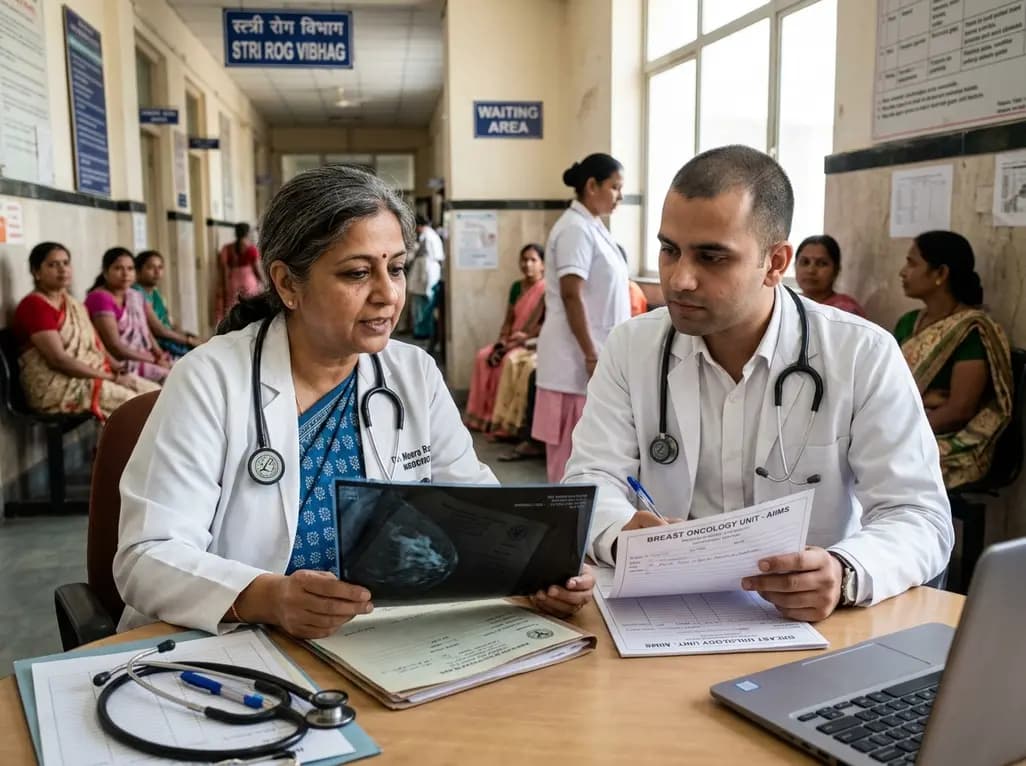
India faces a significant breast cancer survival gap, with five-year survival at 65.7% compared to 87% in high-income nations. Late clinical presentation, dismissal of painless lumps, and inadequate organized screening drive poor outcomes. Addressing systemic delays is crucial to transforming cancer prognosis.
Today

A landmark Lancet Commission analysis reveals that obesity will cause over 23 billion avoidable DALYs by 2100. For healthcare providers, especially in India, combating this crisis demands moving beyond basic BMI metrics to prioritize visceral fat assessment, muscle preservation, and early metabolic intervention.
Today
A novel metronidazole-functionalized Type I photosensitizer transforms intra-articular hypoxia into a therapeutic asset, effectively eliminating MRSA biofilms and resolving septic arthritis without promoting drug resistance.
Today

A longitudinal study reveals that an escalating cardiometabolic disease burden significantly accelerates health-related work cessation among middle-aged adults, highlighting an urgent need for proactive multimorbidity screening and tailored workplace health interventions.
Today
