.webp&w=384&q=75)

Loading, please wait...
Loading, please wait...

Healthy cognitive ageing frequently involves a progressive reduction in executive function and working memory capacity. Clinicians and neuroscientists recognize that verbal working memory plays an indispensable role in maintaining daily functional autonomy among older adults. However, determining the precise causal contribution of prefrontal cortical structures to age-related memory shifts remains challenging. Recent investigative breakthroughs combining continuous theta burst stimulation with event-related potentials provide fresh mechanistic insights. Consequently, these electrophysiological evaluations illuminate how frontal neural circuits coordinate complex memory representations during normal human senescence.
The dorsolateral prefrontal cortex represents a central hub for higher-order cognitive operations, executive orchestration, and dynamic memory retrieval. Age-dependent neuroarchitectural changes, including microstructural white matter alterations and localized synaptic pruning, disproportionately affect prefrontal networks. Consequently, older adults experience subtle decrements in their ability to manipulate transient information during demanding cognitive tasks. Historically, neuroimaging investigations demonstrated altered bilateral recruitment patterns across frontal regions during challenging storage paradigms. Furthermore, researchers frequently debate whether such frontal hyperactivation reflects functional compensatory recruitment or inefficient neural dedifferentiation. In the domain of verbal working memory, hemispheric specialization typically favors the left cerebral hemisphere. Specifically, left-sided frontoparietal networks govern the phonological loop and articulatory rehearsal mechanisms. When age-related cortical changes occur, these finely tuned neural oscillations encounter temporal desynchronization. Therefore, establishing a definitive causal link between prefrontal integrity and cognitive performance requires active experimental perturbations. By selectively modulating cortical excitability, neurophysiologists can directly dissect the functional relevance of the left dorsolateral prefrontal cortex in healthy older individuals.
Continuous theta burst stimulation provides a non-invasive protocol that delivers repetitive transcranial magnetic pulses to transiently suppress cortical excitability. Researchers apply this technique to create reversible, virtual lesions that elucidate localized functional contributions. In a landmark clinical investigation, investigators applied continuous theta burst stimulation over the left dorsolateral prefrontal cortex in healthy older individuals. Additionally, the experimental design utilized vertex stimulation as an active control alongside baseline evaluations to establish rigorous neurophysiological benchmarks. Participants performed standardized verbal and visuospatial N-back paradigms under each distinct stimulation condition. During these testing sessions, synchronous electroencephalography captured precise millisecond-level cortical responses. Crucially, vertex stimulation revealed robust practice-related improvements in task performance across repeated trials. In contrast, magnetic disruption of the left dorsolateral prefrontal cortex blunted these anticipated learning gains during verbal challenges. Thus, the transient inhibition directly interfered with normal task acquisition and working memory optimization. These empirical findings demonstrate that prefrontal integrity remains essential for online verbal memory processing even in late adulthood.
Cognitive neuroscientists have long identified domain-specific dissociations between verbal and visuospatial processing streams across the cerebral hemispheres. In the evaluated clinical cohort, behavioural performance exhibited distinct divergence between task modalities following prefrontal stimulation. While verbal tasks demonstrated notable vulnerability to left dorsolateral prefrontal disruption, visuospatial tasks followed an unexpected trajectory. Specifically, participants demonstrated modest accuracy gains during visuospatial trials despite left prefrontal stimulation, mirroring typical practice effects. Meanwhile, vertex control stimulation yielded inconclusive performance shifts within the visuospatial domain. This divergence underscores the specialized lateralization of verbal memory pathways within the left hemisphere. Visuospatial storage and manipulation rely more heavily on right prefrontal and parietal networks. Consequently, targeted suppression of the left hemisphere spares contralateral visuospatial circuits from inhibitory interference. Moreover, older adults often recruit alternative compensatory pathways to overcome localized focal disruption during spatial tasks. These observations reinforce the hypothesis that verbal working memory demands persistent left prefrontal engagement throughout healthy ageing.
Event-related potentials yield crucial temporal metrics that expose real-time neural dynamics during cognitive evaluation. Interestingly, continuous theta burst stimulation did not induce widespread changes in ERP amplitudes across the experimental conditions. Instead, stimulation produced prominent latency prolongations across early and late electrophysiological components. Specifically, disruption of the left dorsolateral prefrontal cortex significantly delayed both P200 and P300 latencies during verbal tasks. The P200 component reflects early sensory gating, selective attention, and preliminary stimulus classification. Prolonged P200 latencies suggest that prefrontal inhibition impaired the rapid temporal allocation of attentional resources. Furthermore, participants exhibiting shorter P200 latencies achieved significantly greater accuracy gains, highlighting the functional importance of rapid early processing. The subsequent P300 component indexes cognitive control, context updating, and conscious stimulus evaluation. As a result, delayed P300 responses indicate slower downstream decision-making under increased cognitive load. Therefore, event-related latency shifts serve as sensitive neurophysiological biomarkers that capture subtle prefrontal disruptions preceding overt behavioural impairment.
The ageing human brain possesses remarkable neuroplasticity, allowing networks to adapt dynamically when focal circuits experience physiological disruption. In healthy older adults, cognitive preservation often hinges on the temporal coordination of distributed cortical networks. When the left dorsolateral prefrontal cortex undergoes transient inhibition, compensatory mechanisms attempt to preserve behavioural output. Notably, researchers identified subtle latency modulations in the N200 component during challenging memory loads. The N200 waveform indexes conflict monitoring and executive inhibition within medial prefrontal regions. Consequently, adaptive latency adjustments reflect a strategic slowing of information processing to maintain response accuracy. However, this compensatory slowing carries physiological costs, as extended processing times limit performance efficiency under strict temporal constraints. Additionally, high interindividual variability in cognitive reserve influences how successfully older adults recruit alternative frontal networks. Understanding these compensatory pathways helps clinicians differentiate benign age-related adaptations from pathological neurodegenerative changes. Ultimately, identifying such temporal dynamics illuminates how prefrontal circuits balance functional stability and neural vulnerability.
These electrophysiological insights offer meaningful therapeutic implications for clinicians managing cognitive decline and healthy ageing. Non-invasive brain stimulation modalities, including transcranial magnetic stimulation and transcranial direct current stimulation, are gaining clinical traction worldwide. However, therapeutic success requires precise anatomical targeting and parameter selection tailored to specific cognitive domains. Because the left prefrontal cortex causally underpins verbal working memory, neuromodulatory protocols aiming to enhance verbal retention must support this region. Furthermore, latency metrics from event-related potentials provide objective physiological endpoints for monitoring clinical interventions. Rather than relying solely on subjective questionnaires, geriatricians can track electrophysiological recovery using P200 and P300 waveforms. In clinical practice, combining targeted neuromodulation with computerized cognitive training may yield synergistic benefits for older adults. Clinicians must also account for individual differences in processing speed and baseline neuroanatomy when designing personalized protocols. Therefore, translating these neurophysiological discoveries into evidence-based rehabilitation protocols represents a promising frontier in geriatric medicine.
Continuous theta burst stimulation delivers repetitive magnetic pulses that transiently reduce local cortical excitability. When applied over the left dorsolateral prefrontal cortex, this inhibitory stimulation disrupts the temporal coordination of verbal working memory. As a result, older adults demonstrate prolonged electrophysiological latencies and attenuated practice-related learning gains during cognitive tasks.
P200 and P300 latencies reflect the temporal speed of neural information processing. Specifically, the P200 indexes early attentional gating, whereas the P300 marks stimulus classification and cognitive control. Prolonged latencies signify slowed neural conduction and impaired resource allocation, serving as sensitive neurophysiological biomarkers of subclinical executive decline.
Excitatory neuromodulation protocols, such as intermittent theta burst stimulation or anodal direct current stimulation, show promising potential for cognitive enhancement. By strengthening synaptic plasticity and frontoparietal connectivity, these targeted interventions can optimize processing speed and verbal working memory performance when paired with structured cognitive rehabilitation exercises.
Disclaimer: This content is for informational and educational purposes only and is not intended as medical advice, diagnosis, or treatment. It does not replace professional clinical judgment. Healthcare professionals should independently verify information and consider individual patient needs. The views expressed are those of the authors and do not necessarily reflect official policies or positions of any healthcare institution. Refer to the latest local and national guidelines for clinical practice.
References

Read summarized clinical updates, watch expert medical content, and earn CME certifications right from your smartphone.
Open your smartphone camera to scan and install.





A pioneering study investigates the causal role of the left DLPFC in verbal working memory during healthy ageing using cTBS and ERP, demonstrating that prefrontal inhibition alters P200 and P300 latencies and impairs learning-related performance gains.
Today
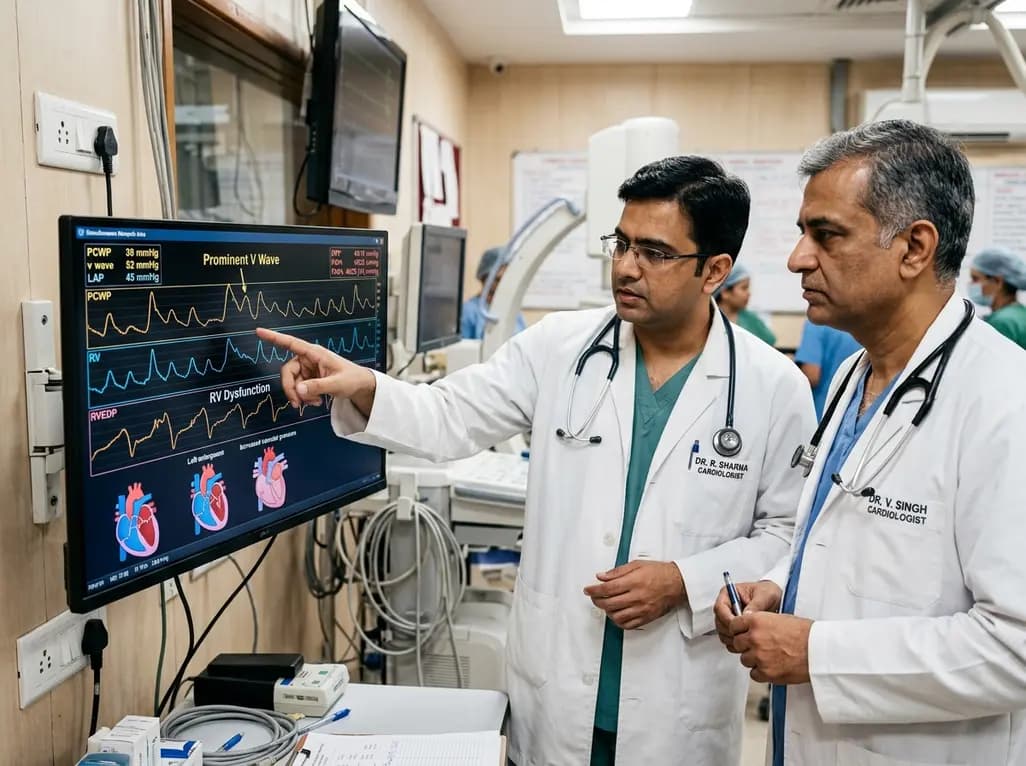
Left atrial stiffening generates prominent V waves that pressurize the pulmonary circulation and augment right ventricular afterload independently of intrinsic pulmonary vascular disease in patients with heart failure with preserved ejection fraction.
Today

A meta-analysis demonstrates that secondhand smoke exposure significantly elevates fetal loss risk by 21% among nonsmoking pregnant women. Clinicians must implement household screening and family-centered cessation interventions to prevent avoidable miscarriages and stillbirths.
Today

Preclinical validation demonstrates that a novel contact force-integrated pulsed field quantization index accurately predicts lesion depth in real time, achieving 100% durable pulmonary vein isolation without collateral injury.
Today
A new cross-sectional evaluation reveals how regional lean mass and bone mineral content interact in resistance-trained men, showing that whole-body size and allometric scaling explain shared musculoskeletal phenotypes and strength relationships.
Today

Explore the emerging role of glucose metabolic reprogramming in exercise-attenuated osteoporosis, examining how physical activity influences osteoblast glycolysis, osteoclast bioenergetics, and skeletal remodeling pathways to improve bone mineral density.
Today
