.webp&w=384&q=75)

Loading, please wait...
Loading, please wait...

Living donor liver transplantation (LDLT) is becoming a vital option as the global population ages. Specifically, clinicians are increasingly performing LDLT in elderly patients who are 70 years or older. While age was once considered a significant barrier, modern surgical techniques and better perioperative care have changed the landscape. However, long-term outcomes and specific risk factors for this older demographic remained somewhat unclear until recently.
Researchers recently conducted a comprehensive analysis using data from the Korean Organ Transplantation Registry. This study examined 4,802 adult recipients to understand how age affects survival and complications. Notably, the team focused on recipients aged 70 and older to identify age-specific risk factors. They compared these outcomes against younger cohorts to establish clear safety profiles. Consequently, the findings provide a data-driven foundation for transplant centers worldwide.
The study highlights that age alone should not disqualify a candidate for transplantation. Furthermore, the registry data showed that graft survival in older recipients remains acceptable when clinicians manage comorbidities effectively. Specifically, preoperative health status and donor-recipient matching play crucial roles in ensuring success. Therefore, meticulous patient selection is essential to optimize results for LDLT in elderly patients. Additionally, the analysis identified that certain metabolic and cardiovascular factors significantly influence post-transplant recovery.
Physicians must balance the urgency of the transplant with the physiological reserve of the older recipient. Since the waitlist time for deceased donor grafts can be long, LDLT offers a timely alternative. This speed is particularly beneficial for older adults who might deteriorate quickly while waiting. However, surgeons must still consider the heightened risk of age-related complications like infection or delayed graft function. Ultimately, the Korean registry analysis supports the feasibility of LDLT in elderly patients while emphasizing the need for personalized risk assessment.
No, advanced age is no longer a strict contraindication. Many centers successfully perform transplants in patients over 70. However, doctors must carefully evaluate the patient\'s overall health and functional status rather than relying solely on chronological age.
Older recipients may face higher risks of cardiovascular events and postoperative infections. Additionally, their recovery period might be longer compared to younger patients. Meticulous management of pre-existing conditions is vital to mitigate these risks.
While some studies show slightly lower long-term survival in those over 70, short-term outcomes are often comparable to younger groups. Success depends heavily on donor quality and the recipient\'s physical resilience.
Disclaimer: This content is for informational and educational purposes only and does not constitute medical advice. Always seek the advice of a physician or other qualified health provider with any questions you may have regarding a medical condition. Refer to the latest local and national guidelines for clinical practice.
References
Kim DG et al. Risk Profiles and Outcomes in Living Donor Liver Transplantation Recipients Aged 70 y and Older: A Korean National Registry Analysis. Transplantation. 2026 May 06. doi: 10.1097/TP.0000000000005716. PMID: 42090716.
Moon DB et al. Living donor liver transplantation for patients older than age 70 years: A single-center experience. American Journal of Transplantation. 2017;17(11):2851-2860.
Al-Saeedi M et al. Survival after LDLT in recipients ≥70 years old in the United States. Clinical Transplantation. 2023;37(12):e15112.
"
Read summarized clinical updates, watch expert medical content, and earn CME certifications right from your smartphone.
Open your smartphone camera to scan and install.





A Korean national registry analysis of 4,802 recipients evaluates graft survival and risk profiles for liver transplant recipients aged 70 years and older....
5 months ago
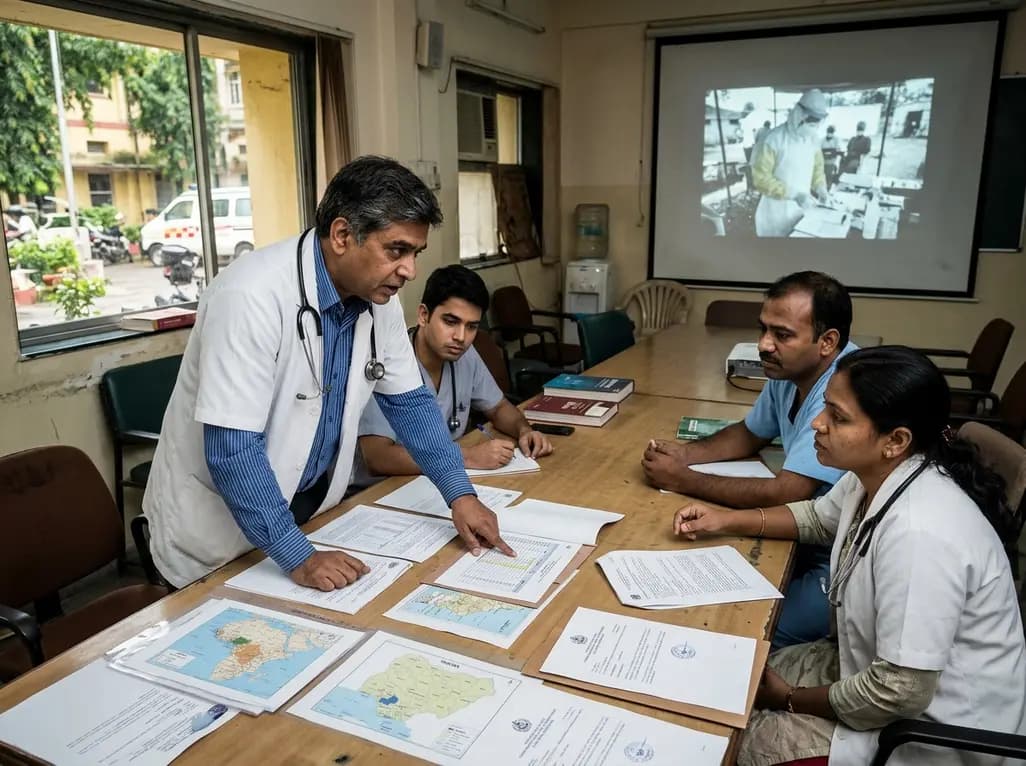
Following Nigeria's first recorded Ebola case linked to regional travel, the Africa CDC has convened an emergency ministerial summit. This alert underscores critical clinical priorities for healthcare professionals, including differentiating early viral infection from malaria, implementing barrier nursing, and triage.
Today

Leucine Rich Bio has introduced South Asia's first comprehensive vaginal microbiome test, BugSpeaks. By profiling microbial dysbiosis, pathogens, and antimicrobial resistance, this next-generation diagnostic platform provides clinicians with deeper insights into recurrent infections, fertility, and reproductive health.
Today

Review how tailored exercise programs benefit frail older patients with heart failure. Explore pathophysiological mechanisms, individualized training prescriptions, and strategies to overcome adherence barriers in clinical practice.
Today

This comparative study evaluates posterior labral tears with and without glenohumeral instability, highlighting distinct demographic patterns, MRI underestimation in stable shoulders, and successful arthroscopic repair outcomes.
Today

A clinical study demonstrates that early intervention with tocilizumab, either as monotherapy or bridged with corticosteroids, achieves significant proptosis reduction and resolves active inflammation in treatment-naive thyroid eye disease.
Today
