.webp&w=384&q=75)

Loading, please wait...
Loading, please wait...
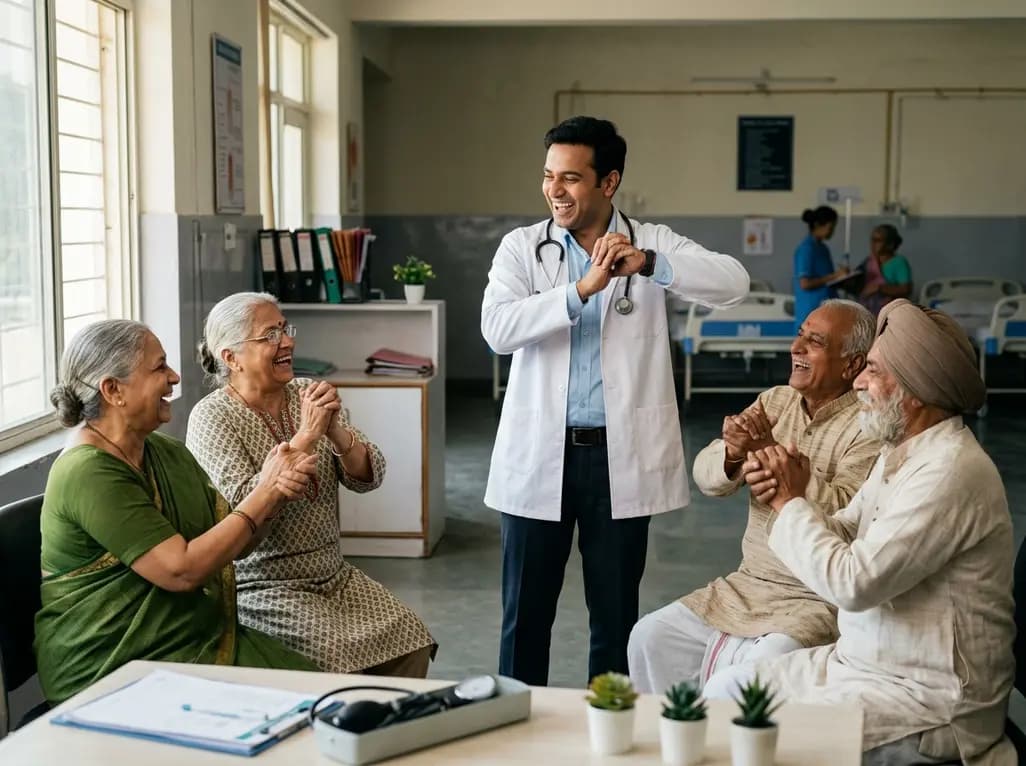
As the global population ages, the search for non-pharmacological interventions to enhance the quality of life for older adults has intensified. Laughter yoga in geriatrics is a practice that combines voluntary laughter exercises with yogic breathing techniques. This unique approach does not rely on humor or jokes, which makes it accessible even to those with cognitive decline. A recent phenomenological study conducted in Türkiye has shed new light on the lived experiences of older adults participating in these sessions. By examining the psychological, social, and metaphorical dimensions of this practice, researchers have uncovered its potential as a strategic model for geriatric programs. The study highlights that laughter yoga provides a multifaceted improvement in mental well-being and physical health. Consequently, clinicians are increasingly looking toward such interventions to address the holistic needs of the elderly. This article explores how laughter yoga fosters emotional resilience and strengthens social capital among the aging population.
One of the most profound findings of the research is the psychological shift experienced by participants. Older adults reported a significant increase in overall happiness and a renewed sense of life energy. Specifically, laughter yoga acts as a powerful tool for stress management by lowering cortisol levels and inducing a state of positive affect. Many participants described their experience through metaphors of nature and rebirth, indicating a deep internal transformation. Furthermore, the practice allows individuals to release pent-up emotions in a safe, group environment. This emotional catharsis often leads to improved resilience against the common psychological challenges of aging, such as depression and anxiety. Because the brain cannot distinguish between simulated and spontaneous laughter, the physiological benefits remain consistent regardless of the participant's initial mood. Notably, the study found that regular engagement helps older adults develop a more optimistic outlook on life. In turn, this psychological shift contributes to better adherence to other medical treatments and lifestyle recommendations.
While the emotional impact of laughter yoga is evident, its physical benefits are equally critical for geriatric populations. Participants in the Turkish study noted a reduction in chronic pain and a general sense of physical relaxation following their sessions. These somatic improvements are often linked to the increased production of endorphins, the body's natural painkillers. Additionally, the deep breathing exercises central to the practice enhance respiratory awareness and lung capacity. This is particularly beneficial for older adults who may suffer from age-related pulmonary decline. Moreover, the rhythmic nature of the exercises provides a gentle cardiovascular workout that stimulates circulation without the risks associated with high-impact activities. Consequently, laughter yoga supports body awareness and helps individuals reconnect with their physical selves. By reducing muscle tension and improving sleep quality, the practice serves as an effective adjunctive therapy for various geriatric conditions. Therefore, incorporating these sessions into routine care can lead to improved physical functioning and a greater sense of bodily autonomy for the elderly.
Integrating laughter yoga in geriatrics requires an understanding of both the physical exercises and the social dynamics involved. The recent phenomenological findings emphasize that the practice is more than just a series of exercises; it is a social intervention that builds community. In many care settings, older adults face the dual threats of isolation and loneliness. Laughter yoga addresses these issues by creating a shared experience that transcends language and cultural barriers. Through symbolic representations, participants expressed that the sessions felt like a \"reunion with nature\" or a \"social feast.\" These metaphors suggest that the practice helps rebuild social capital, which is essential for mental health in old age. Furthermore, the group setting encourages peer support and collective joy, which can be far more effective than individual therapy for certain patients. Clinicians in India and globally can implement these sessions in retirement centers, nursing homes, and community clinics with minimal equipment. The low cost and high scalability of laughter yoga make it an ideal candidate for public health geriatric programs aimed at improving long-term well-being.
The success of laughter yoga interventions is heavily dependent on the attitude and competence of the leader. The Turkish study identified the facilitator's role as a critical determinant in the participant's journey toward health. A skilled leader must create a non-judgmental atmosphere where older adults feel safe to express themselves freely. Their ability to guide participants through the transition from forced to spontaneous laughter is essential for achieving the full range of benefits. Specifically, the leader must be attuned to the physical limitations of the elderly, ensuring that all exercises are inclusive and safe. Furthermore, the facilitator acts as a social catalyst, helping to weave individual experiences into a cohesive group dynamic. When the leader demonstrates empathy and enthusiasm, participants are more likely to engage deeply and report positive outcomes. This highlights the need for specialized training for healthcare workers and geriatric caregivers who wish to incorporate laughter yoga into their practice. Ultimately, the human element in delivery is what transforms a simple exercise into a meaningful psychological and social experience.
In conclusion, laughter yoga offers a comprehensive, biopsychosocial approach to aging that addresses more than just physical symptoms. By fostering happiness, reducing pain, and strengthening social ties, it provides a strategic model for enhancing the quality of life in older adults. The qualitative insights from recent studies suggest that this intervention should be a staple in geriatric wellness programs. As we look toward the future, more structured clinical trials could further validate these findings and provide standardized protocols for global use. For now, the evidence strongly supports its integration as a safe, effective, and joyful complementary therapy.
Laughter yoga significantly enhances psychological well-being by reducing symptoms of depression and anxiety. It promotes the release of endorphins and reduces cortisol levels, leading to immediate stress relief. Participants often report increased happiness, a more positive outlook on life, and improved emotional resilience. These benefits are achieved through a group setting that encourages emotional expression, helping seniors feel more connected and less isolated in their daily lives.
Yes, laughter yoga is highly adaptable and safe for individuals with limited mobility or chronic health conditions. Most exercises can be performed while seated, and the intensity is easily adjusted to suit individual needs. Since the practice focuses on voluntary laughter and yogic breathing rather than complex physical postures, it minimizes the risk of injury. It is a gentle way to improve circulation and respiratory health without the strain of high-impact exercise.
Laughter yoga strengthens social capital by creating a shared, joyful environment that breaks down social barriers. The group nature of the sessions fosters a sense of belonging and community among participants. By engaging in collective laughter, seniors build stronger interpersonal relationships and reduce feelings of loneliness. This increased social interaction is vital for mental health, providing a support network that enhances overall quality of life and promotes active aging.
Disclaimer: This content is for informational and educational purposes only. It is not intended to provide medical advice or to take the place of such advice or treatment from a personal physician. All readers/viewers of this content are advised to consult their doctors or qualified health professionals regarding specific health questions. Neither the publisher nor the author takes responsibility for possible health consequences of any person or persons reading or following the information in this educational content. All viewers, especially those taking prescription or over-the-counter medications, should consult their physicians before beginning any nutrition, supplement or lifestyle program. Refer to the latest local and national guidelines for clinical practice.
References
\u00d6zt\u00fcrk F\u00d6 et al. Psychological, social, and metaphorical experiences of laughter yoga in older adults: a phenomenological study. Aging Ment Health. 2026 Jul 09. doi: 10.1080/13607863.2026.2699888. PMID: 42424103.
Kuru N, Ar\u0131kan A. A systematic review of the effect of laughter yoga on physical function and psychosocial outcomes in older adults. Complement Ther Clin Pract. 2020;41:101252. doi:10.1016/j.ctcp.2020.101252.
Seraj Z, Sanagoo A, Behnampour N, Jouybari L. Investigating the effect of laughter yoga on happiness and life expectancy in an elderly population. J Educ Health Promot. 2025;14:343. doi:10.4103/jehp.jehp_482_24.
"
Read summarized clinical updates, watch expert medical content, and earn CME certifications right from your smartphone.
Open your smartphone camera to scan and install.





A phenomenological study explores the multidimensional impact of laughter yoga on older adults, revealing significant improvements in psychological resilience, physical relaxation, and social connectivity. Learn why integrating laughter yoga into geriatric care is a strategic move for holistic health.
3 months ago

Discover the crucial role of glymphatic dysfunction in stroke, where perivascular clearance failure and neuroinflammation exacerbate cerebral edema and post-stroke brain injury.
Today

A prenatal case highlights severe glutaric acidemia type II presenting as bilateral hyperechoic cystic kidneys at 18 weeks. Whole-exome sequencing revealed a novel homozygous ETFDH frameshift variant, demonstrating the power of rapid genetic testing in fetal renal anomalies.
Today

Review how tailored exercise programs benefit frail older patients with heart failure. Explore pathophysiological mechanisms, individualized training prescriptions, and strategies to overcome adherence barriers in clinical practice.
Yesterday

This comparative study evaluates posterior labral tears with and without glenohumeral instability, highlighting distinct demographic patterns, MRI underestimation in stable shoulders, and successful arthroscopic repair outcomes.
Yesterday

A clinical study demonstrates that early intervention with tocilizumab, either as monotherapy or bridged with corticosteroids, achieves significant proptosis reduction and resolves active inflammation in treatment-naive thyroid eye disease.
Yesterday
