.webp&w=384&q=75)

Loading, please wait...
Loading, please wait...

Splenic hemangioma represents the most common benign primary neoplasm of the spleen. While clinicians often discover these lesions during routine imaging, larger tumors require intervention due to the risk of rupture. Historically, total splenectomy served as the standard of care. However, newer techniques like splenic hemangioma ablation now offer organ-preserving alternatives. Recently, a 67-year-old woman with an enlarging 6 cm mass successfully underwent laparoscopic-assisted microwave ablation (LMWA), marking a significant milestone in minimally invasive surgery.
Microwave ablation uses electromagnetic energy to induce thermal necrosis within the tumor tissue. Consequently, this method effectively treats hypervascular lesions while minimizing the risk of massive hemorrhage. During the documented procedure, surgeons achieved complete ablation in just 25 minutes. Furthermore, the patient experienced negligible blood loss of only 20 mL. Therefore, LMWA provides a safer surgical profile compared to conventional open or laparoscopic splenectomy. Additionally, preserving the spleen prevents the lifelong risk of overwhelming post-splenectomy infection (OPSI).
Clinical outcomes for this approach remain highly encouraging. For instance, the patient in this report was discharged on postoperative day five without complications. Moreover, follow-up imaging demonstrated a significant reduction in the ablation zone. Specifically, the hypervascular mass shrunk and laboratory markers returned to baseline. Ultimately, this technique addresses the clinical need for effective, parenchyma-sparing treatments. Similarly, other studies suggest that microwave ablation can successfully manage various benign splenic pathologies with high safety margins.
The primary advantage is organ preservation. Unlike a total splenectomy, LMWA allows the patient to retain their splenic immune function while effectively treating the tumor with minimal blood loss.
Doctors typically recommend intervention if the hemangioma is larger than 4-6 cm, becomes symptomatic, or shows progressive growth on serial imaging, as these factors increase the risk of spontaneous rupture.
Disclaimer: This content is for informational and educational purposes only. It does not constitute medical advice or establish a doctor-patient relationship. Professional medical consultation is required for any health concerns or treatment decisions. Refer to the latest local and national guidelines for clinical practice.
References
Wu C et al. Laparoscopic-Assisted Microwave Ablation for Splenic Hemangioma: A Case Report and Literature Review. Am J Case Rep. 2026 Mar 07. doi: 10.12659/AJCR.950823. PMID: 41793744.
Liu Q et al. Ultrasound-guided percutaneous microwave ablation for splenic hemangioma. World J Gastroenterol. 2014;20(27):9182-9186.
Chen Z, Liu Z. Application of Microwave Ablation in Laparoscopic Partial Splenectomy. J Vis Exp. 2024 Nov 15;(213). doi: 10.3791/67563.

Read summarized clinical updates, watch expert medical content, and earn CME certifications right from your smartphone.
Open your smartphone camera to scan and install.





A case report explores laparoscopic-assisted microwave ablation (LMWA) as a safe, minimally invasive alternative to splenectomy for treating splenic hemangi...
7 months ago
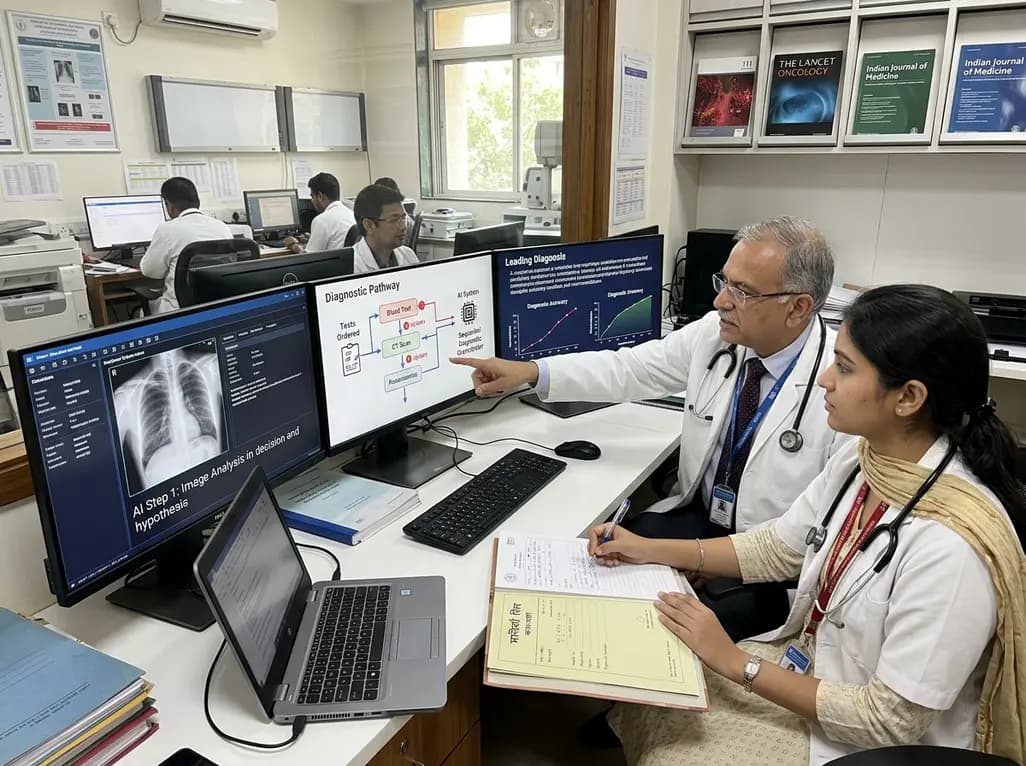
A breakthrough peer-reviewed study demonstrates that a sequential AI diagnosis system can mirror real-world clinical reasoning. By ordering stepwise tests and updating hypotheses dynamically, this multi-agent orchestrator achieved superior diagnostic accuracy while reducing investigative costs.
Today

A prenatal case highlights severe glutaric acidemia type II presenting as bilateral hyperechoic cystic kidneys at 18 weeks. Whole-exome sequencing revealed a novel homozygous ETFDH frameshift variant, demonstrating the power of rapid genetic testing in fetal renal anomalies.
Today

Review how tailored exercise programs benefit frail older patients with heart failure. Explore pathophysiological mechanisms, individualized training prescriptions, and strategies to overcome adherence barriers in clinical practice.
Yesterday

This comparative study evaluates posterior labral tears with and without glenohumeral instability, highlighting distinct demographic patterns, MRI underestimation in stable shoulders, and successful arthroscopic repair outcomes.
Yesterday

A clinical study demonstrates that early intervention with tocilizumab, either as monotherapy or bridged with corticosteroids, achieves significant proptosis reduction and resolves active inflammation in treatment-naive thyroid eye disease.
Yesterday
