.webp&w=384&q=75)

Loading, please wait...
Loading, please wait...

Effective communication is the cornerstone of patient-centered treatment. Recent clinical evidence highlights how language-concordant oncology care significantly impacts the quality of life for patients facing terminal gynecologic malignancies. When physicians and patients share a primary language, treatment goals usually align better with patient values. Consequently, this reduces the likelihood of unnecessary medical interventions during a patient's final days.
Researchers recently conducted a retrospective study to evaluate these disparities. They analyzed eighty-three patients with gynecologic cancers who died between 2020 and 2024. Specifically, they looked at National Quality Forum (NQF) indicators to measure "aggressive" care. This category includes ICU admissions, late-stage chemotherapy, and multiple hospitalizations near death. The findings showed a stark contrast between those receiving care in their preferred language and those facing linguistic barriers.
The study found that patients in the language-discordant group were significantly more likely to receive aggressive treatment. For instance, 87% of these patients experienced high-intensity end-of-life care. In comparison, only 60% of those in concordant pairings faced similar measures. Furthermore, multivariable analysis revealed that language discordance was associated with a six-fold higher odds of aggressive interventions. This association remained strong even after adjusting for factors like age and cancer stage.
Moreover, linguistic barriers often affect marginalized communities more heavily. Patients identifying as Hispanic or Asian, or those on Medicaid, were more frequently in discordant pairings. Therefore, addressing these gaps is not just a matter of clinical efficiency but one of health equity. In the Indian context, where patients often speak regional languages different from their clinicians, these findings emphasize the need for professional medical interpretation. Integrating linguistic services can ensure that end-of-life care remains compassionate and dignified rather than overly aggressive.
Aggressive end-of-life care is measured using NQF indicators. These include chemotherapy administration in the final 14 days of life, ICU admission within 30 days of death, or dying in a hospital rather than at home or in hospice.
Hospitals can implement diverse hiring practices, utilize certified medical interpreters, and offer telehealth services with translation support. These steps help ensure patients fully understand their prognosis and palliative options.
Disclaimer: This content is for informational and educational purposes only. It does not constitute medical advice or a professional relationship. Always consult a qualified healthcare provider for diagnosis and treatment. Refer to the latest local and national guidelines for clinical practice.
References
Yoh K et al. Impact of Patient-Oncologist Language Concordance on the Quality of End-of-Life Care. J Palliat Med. 2026 May 20. doi: 10.1177/10966218261449553. PMID: 42159044.
Narayan L. Addressing language barriers to healthcare in India. Natl Med J India. 2013;26(4):236-8. PMID: 24758552.
Diamond LC, et al. A Systematic Review of the Impact of Patient–Physician Non-English Language Concordance on Quality of Care and Outcomes. J Gen Intern Med. 2019;34(8):1591-1606. doi: 10.1007/s11606-019-04847-5.

Read summarized clinical updates, watch expert medical content, and earn CME certifications right from your smartphone.
Open your smartphone camera to scan and install.





A study reveals that language discordance increases the odds of aggressive end-of-life care by over six times in gynecologic oncology patients....
5 months ago
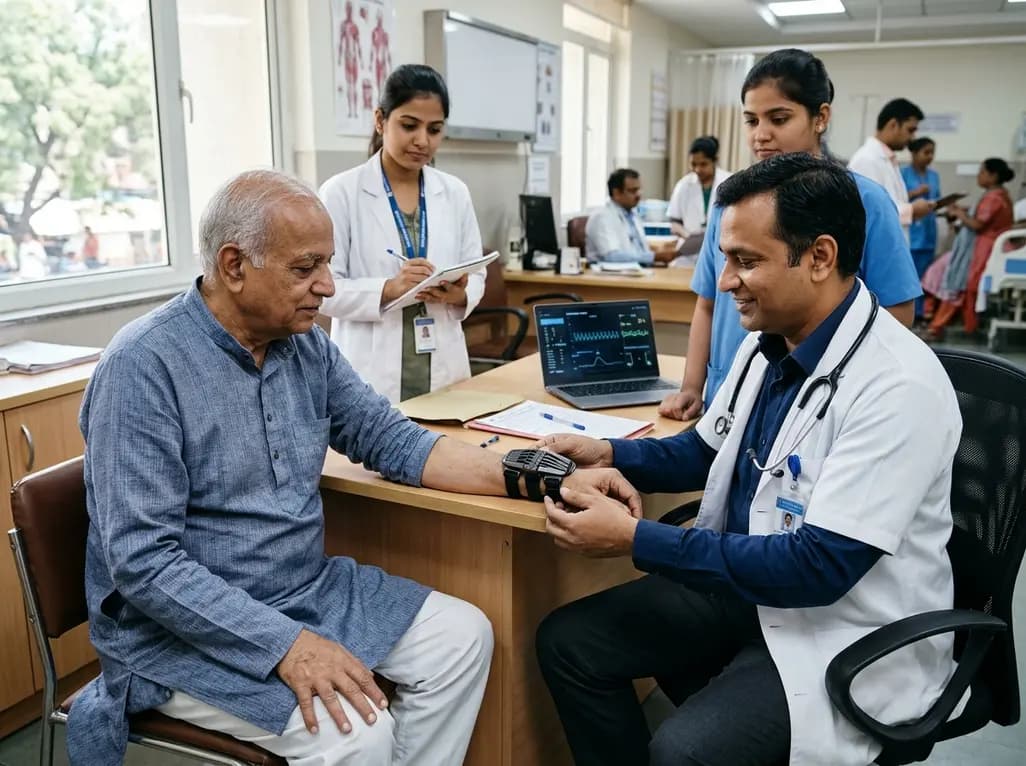
The TREM-AB open-label pilot study evaluated a wearable passive nonlinear vibration absorber for essential tremor. The Nonlinear Energy Sink bracelet reduced clinical Fahn-Tolosa-Marin tremor scores by 32.1% and electrophysiological tremor power by 49.2% with no adverse effects reported.
Today

A study in JAMIA Open shows lightweight open-source reasoning LLMs achieve up to 95% sensitivity and accelerate evidence synthesis screening by nearly twentyfold, presenting a cost-effective, scalable AI solution for biomedical research and systematic reviews.
Today
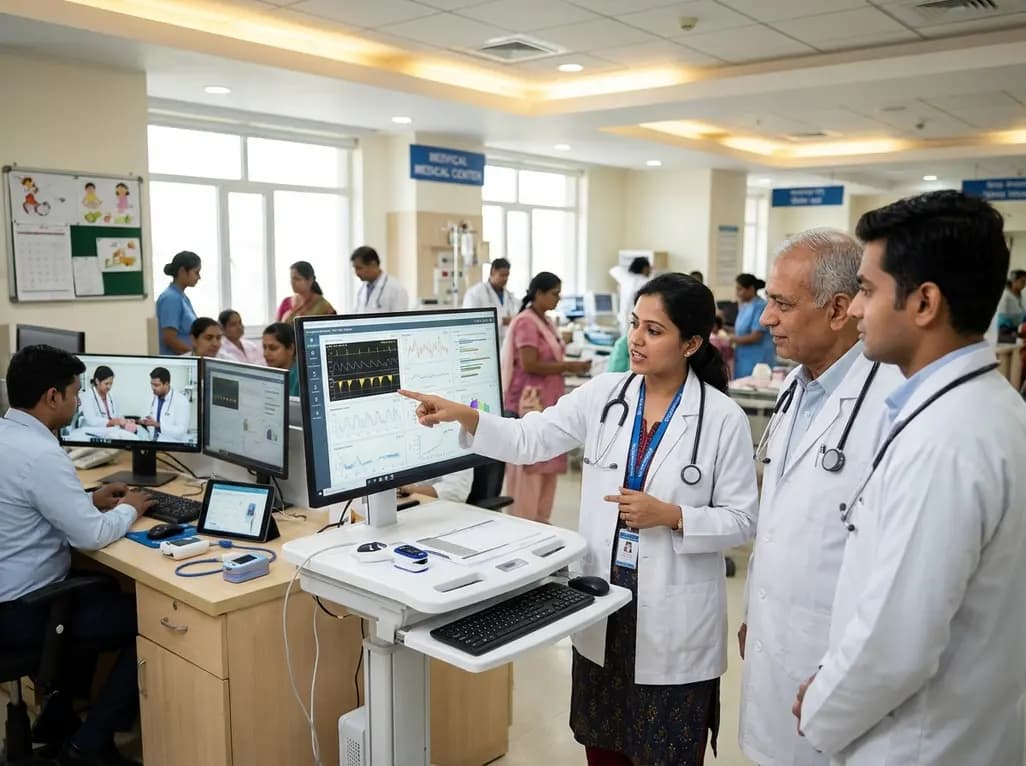
A landmark study details how an enterprise pediatric remote patient management model expanded from a single cardiology pilot to 16 diverse specialty programs by combining centralized digital operations with specialty clinical leadership.
Today
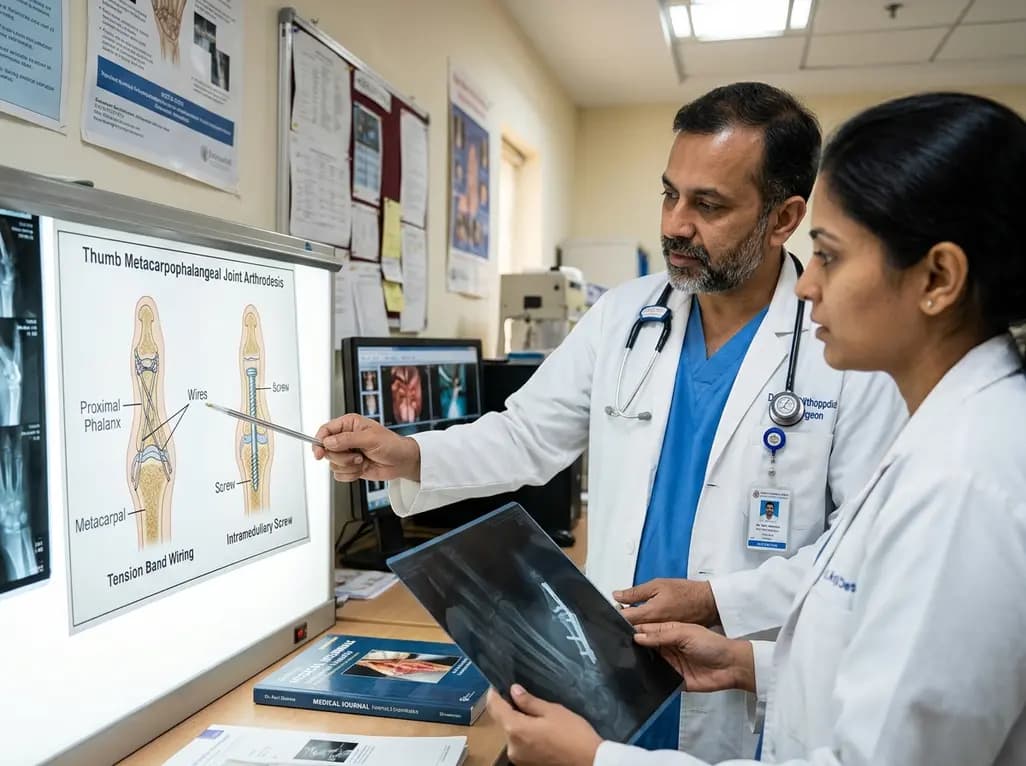
A comparative review of tension band wiring and intramedullary screw fixation in thumb metacarpophalangeal arthrodesis, evaluating union rates, hardware complications, and clinical outcomes.
Today
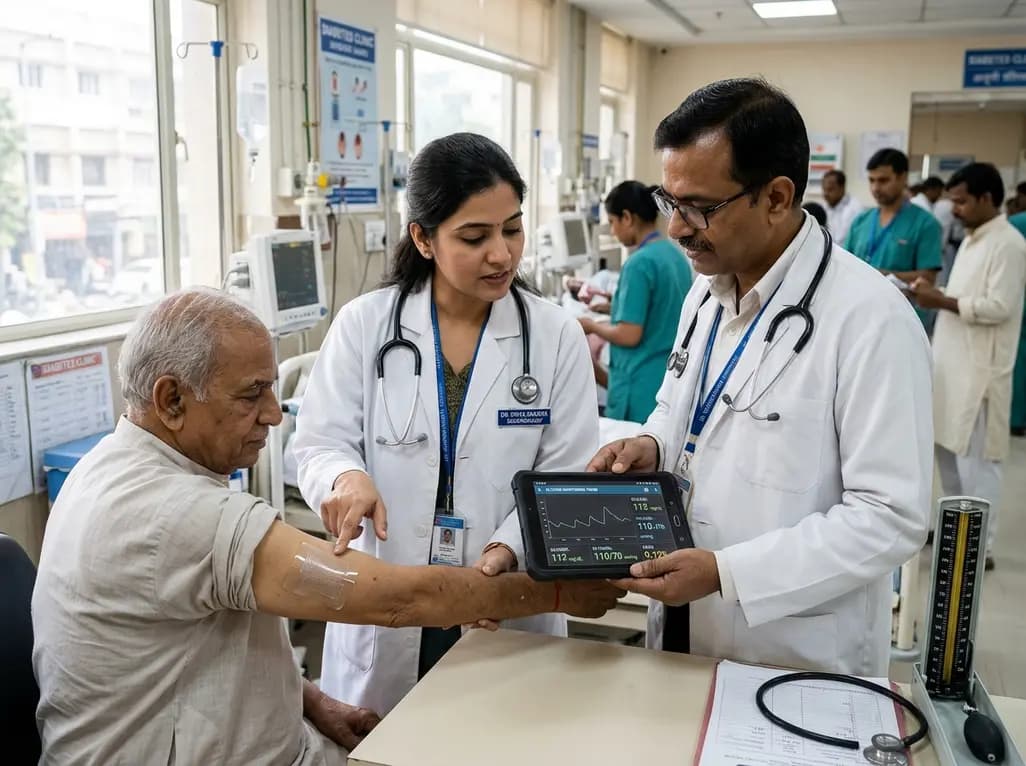
A breakthrough ultrathin multimodal sensor decouples physical hemodynamic monitoring from disposable electrochemical calibration, achieving long-term wearable glucose prediction with 81.36% accuracy and a 9.12% MARD. This offers a robust, drift-free solution for outpatient metabolic surveillance.
Today
