.webp&w=384&q=75)

Loading, please wait...
Loading, please wait...

Hepatocellular carcinoma (HCC) remains a significant challenge for clinicians because of its high molecular heterogeneity. Consequently, precise diagnosis and effective treatment strategies are often difficult to implement. Recent evidence highlights how lactate metabolism significantly influences tumor progression. In a groundbreaking study, Li et al. developed an interaction network using lactate metabolism HCC subtypes to create a robust stratification framework. This new approach offers a deeper understanding of how metabolic pathways drive cancer growth.
The researchers used consensus clustering to identify four distinct molecular subtypes of HCC. Among these, Cluster2 stood out as particularly significant. Patients in this group exhibited the worst overall prognosis. Furthermore, they showed an adverse response to immune checkpoint inhibitors (ICIs). This suggests that specific metabolic profiles can predict how well a patient will respond to modern immunotherapy. By validating these findings in independent cohorts, the study provides a reliable foundation for clinical decision-making.
An intriguing aspect of this research is the link between metabolism and the tumor microbiome. The study found that Cluster2 had the lowest beta-diversity in its microbial community. Additionally, there was a significantly higher abundance of the Streptomyces and Pseudoxanthomonas genera. These microbial changes were closely associated with the immune microenvironment. Therefore, the intratumoral microbiome may act as a critical player in the metabolic reprogramming of liver cancer cells.
To make these findings clinically actionable, the team identified a 5-gene signature using LASSO regression. This tool predicts survival across multiple HCC cohorts with high accuracy. Because the signature targets the specific vulnerabilities of the Cluster2 subtype, it could revolutionize personalized therapy. Clinicians can now potentially use this metabolic network-driven system to stratify patients more effectively. Ultimately, this leads to better-informed treatment choices and improved patient outcomes.
Lactate metabolism is a key driver of the tumor microenvironment. It promotes immune evasion and fuels cancer cell proliferation, making it a valuable target for both diagnosis and therapy.
Cluster2 is characterized by the poorest prognosis and resistance to immunotherapy. It also features a unique intratumoral microbiome composition, specifically showing higher levels of certain bacteria like Streptomyces.
The 5-gene signature serves as a prognostic tool. It allows doctors to predict survival outcomes and identify patients who might not respond well to standard treatments, facilitating more personalized care.
Disclaimer: This content is for informational and educational purposes only. It does not constitute professional medical advice, diagnosis, or treatment. Always seek the advice of your physician or other qualified health provider with any questions you may have regarding a medical condition. Refer to the latest local and national guidelines for clinical practice.
References
Li S et al. Lactate metabolism-related interaction perturbation network enables robust stratification of hepatocellular carcinoma. Discov Oncol. 2026 Feb 14. doi: 10.1007/s12672-026-04613-0. PMID: 41689750.
Llovet JM et al. Immunotherapies for hepatocellular carcinoma. Nat Rev Clin Oncol. 2022;19:151-72.
Vaupel P, Multhoff G. Lactate in cancer biology: A journey from an end product of glycolysis to a tumor-promoting factor. Gene. 2021;799:145828.

Read summarized clinical updates, watch expert medical content, and earn CME certifications right from your smartphone.
Open your smartphone camera to scan and install.





A new study identifies four HCC subtypes based on lactate metabolism, offering a 5-gene signature to predict survival and guide personalized immunotherapy....
8 months ago
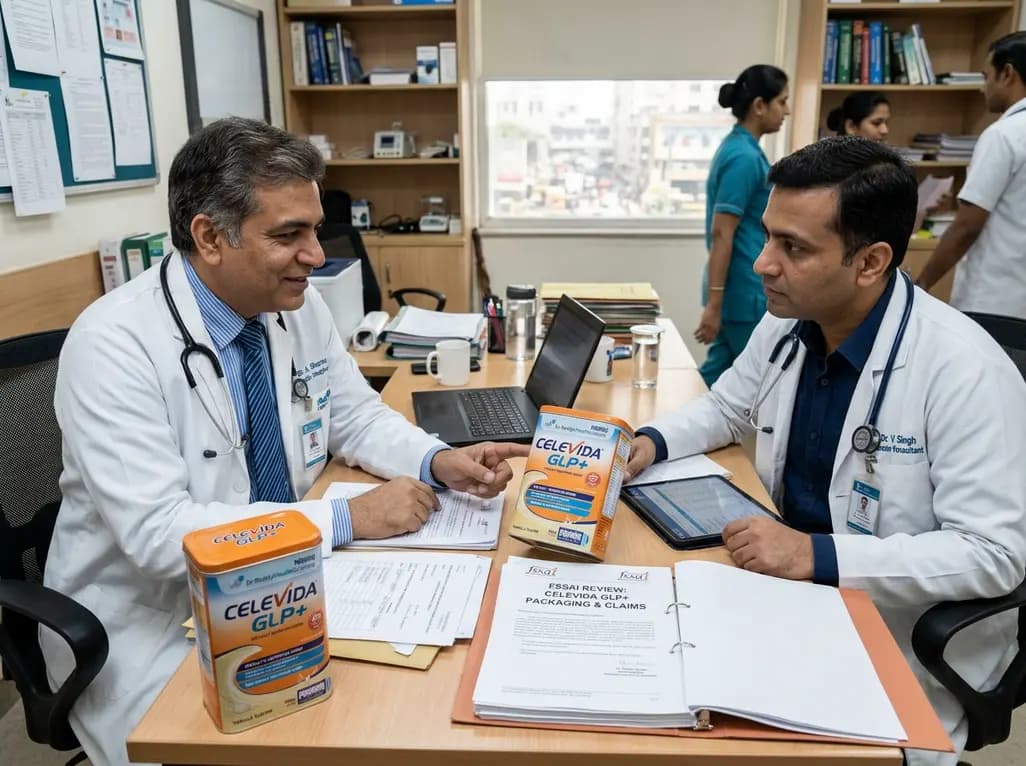
Following regulatory scrutiny from FSSAI regarding promotional representations and lean muscle preservation claims, Dr. Reddy's Laboratories and Nestlé Health Science are currently reviewing the branding and marketing strategy for their joint nutritional supplement Celevida GLP+.
Today

A comprehensive scoping review synthesises evidence linking prenatal maternal mental health to long-term offspring neurodevelopment, evaluating neuroendocrine, inflammatory, and epigenetic pathways while highlighting clinical screening and future research priorities.
Today

The Directorate General of Health Services directs Indian states to halt the hazardous reuse and reprocessing of single-use medical devices. Discover regulatory implications under the Drugs and Cosmetics Act, critical infection risks, legal liabilities, and operational changes required across clinical specialties.
Today

A 25-year multi-institutional cohort reveals high recurrence rates in pediatric giant cell tumor of bone, particularly in patients with open physes and bone marrow edema on preoperative MRI. Early surveillance and careful balance between growth plate preservation and tumor clearance are essential.
Today

India is advancing preventive healthcare by integrating genomics, artificial intelligence, and quantum technologies. With the SANGAM programme sequencing one million Indian genomes, clinicians can unlock personalized therapies, detect cardiometabolic risks early, and curb the burden of diabetes and heart disease.
Today
