.webp&w=384&q=75)

Loading, please wait...
Loading, please wait...

Labor epidural analgesia (LEA) remains the most effective method for managing pain during childbirth. However, clinical teams often face the challenge of labor epidural catheter replacement due to failure or inadequacy. A large retrospective cohort study recently evaluated how maintenance regimens and initiation techniques influence these failure rates. The researchers analyzed over 15,000 cases to determine if specific protocols could minimize interventions.
The primary objective was to compare Programmed Intermittent Epidural Bolus (PIEB) with Continuous Epidural Infusion (CEI). Theoretically, PIEB provides better drug distribution within the epidural space. In this assessment, researchers found that CEI did not significantly increase the odds of the primary outcome, labor epidural catheter replacement, when compared to PIEB. Nevertheless, the study revealed that patients on CEI were 1.34 times more likely to require at least one supplemental top-up. Consequently, while PIEB may not directly prevent catheter replacement, it appears to reduce the need for clinician-led rescue boluses.
Furthermore, the study investigated whether the initiation technique affected long-term catheter success. Analysis showed that the standard epidural (EPID) technique was associated with a 1.28-fold increase in the odds of labor epidural catheter replacement compared to the Combined Spinal-Epidural (CSE) approach. This finding suggests that the precision or reliability of the CSE technique might offer protective benefits against early catheter failure. Therefore, choosing CSE for initiation could be a strategic choice for high-volume obstetric units.
These findings highlight the importance of initiation methods in maintaining a functional epidural. Although PIEB did not drastically change replacement rates, its reduction in supplemental top-ups enhances clinical efficiency and patient comfort. Moreover, anesthesiologists should consider that initiation with CSE might provide a more robust start to labor analgesia. Ultimately, combining CSE with PIEB may offer the most stable experience for laboring patients.
According to this study, there was no statistically significant difference in replacement rates between PIEB and CEI. However, PIEB significantly reduced the incidence of supplemental top-ups required by patients.
The study found that the standard EPID technique had a 1.28 times higher risk of replacement compared to CSE. This suggests that CSE may provide more reliable initial placement or confirmation, reducing the likelihood of later failure.
Continuous Epidural Infusion (CEI) was associated with a higher odds of requiring manual top-ups. PIEB protocols generally result in more consistent analgesia with fewer clinician-administered boluses.
Disclaimer: This content is for informational and educational purposes only. It does not constitute medical advice or establish a doctor-patient relationship. Practitioners should always rely on their clinical judgment and the specific needs of the patient. Refer to the latest local and national guidelines for clinical practice.
References
Morgan BE et al. A Retrospective Cohort Assessment of Labor Epidural Catheter Replacement With Programmed Intermittent Epidural Bolus and Continuous Epidural Infusion. Anesth Analg. 2026 May 01. doi: 10.1213/ANE.0000000000007788. PMID: 41980266.

Read summarized clinical updates, watch expert medical content, and earn CME certifications right from your smartphone.
Open your smartphone camera to scan and install.





A retrospective cohort study evaluates how PIEB vs CEI and CSE vs EPID influence the rates of labor epidural catheter replacement and supplemental top-ups....
6 months ago

An observational study from the NIH All of Us Research Program reveals that adding a multi-ancestry polygenic risk score to machine learning models provides only modest improvements in predicting adult weight gain, underscoring the enduring significance of routine clinical and lifestyle factors.
Today

A study in JAMIA Open shows lightweight open-source reasoning LLMs achieve up to 95% sensitivity and accelerate evidence synthesis screening by nearly twentyfold, presenting a cost-effective, scalable AI solution for biomedical research and systematic reviews.
Today
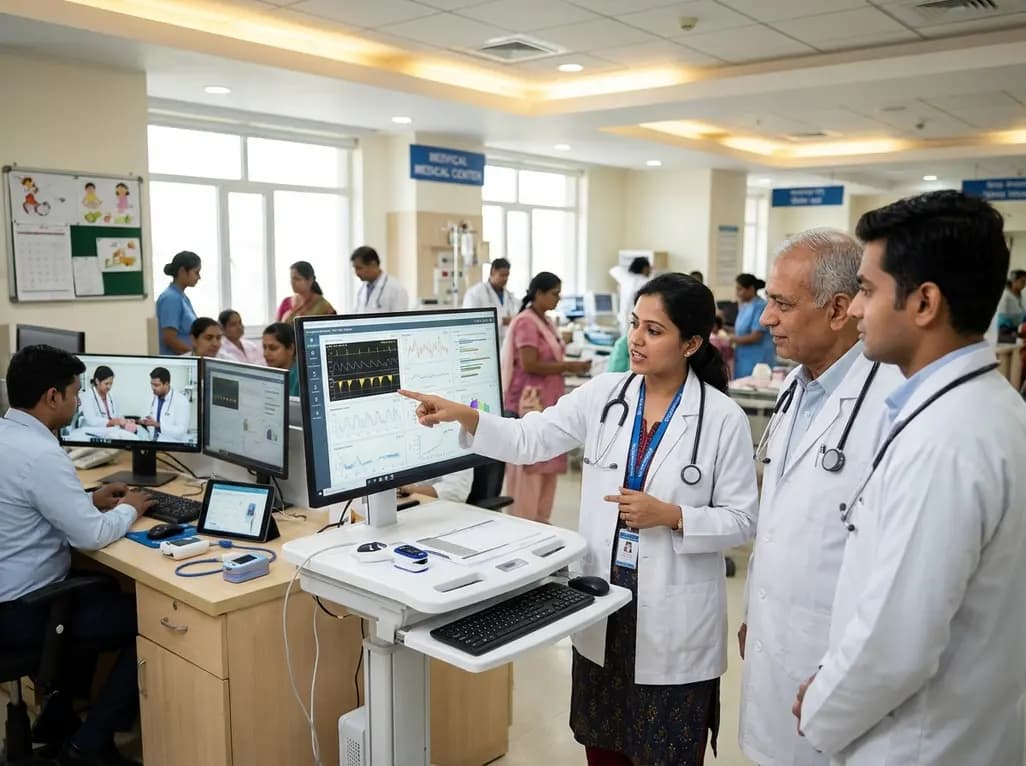
A landmark study details how an enterprise pediatric remote patient management model expanded from a single cardiology pilot to 16 diverse specialty programs by combining centralized digital operations with specialty clinical leadership.
Today
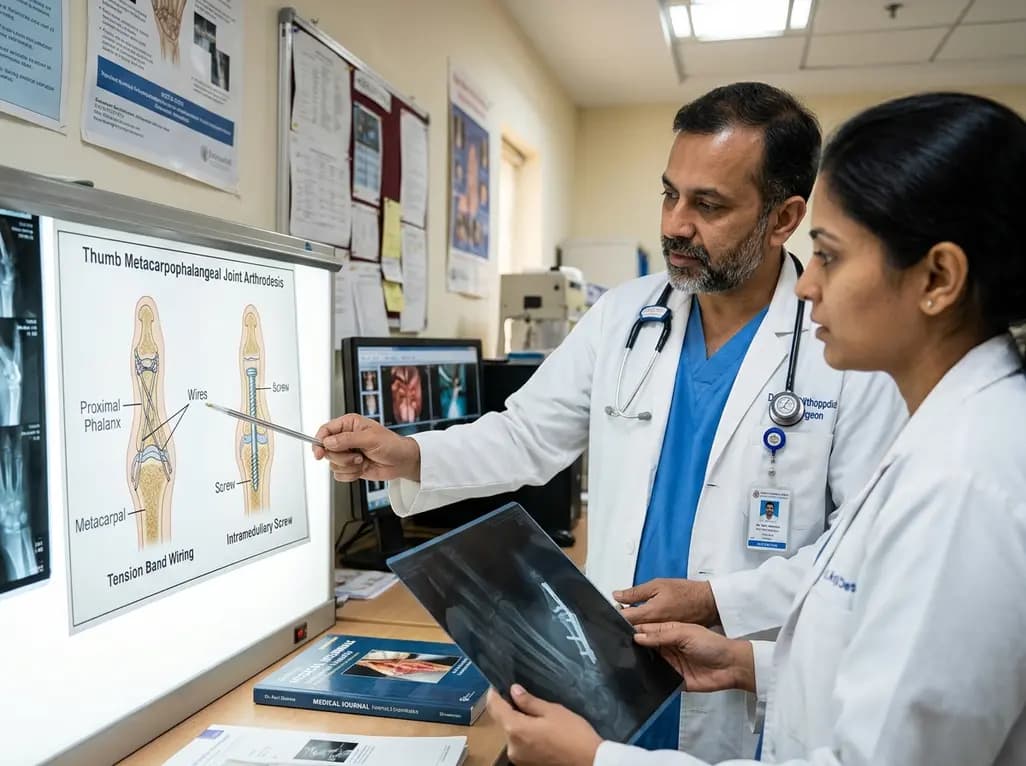
A comparative review of tension band wiring and intramedullary screw fixation in thumb metacarpophalangeal arthrodesis, evaluating union rates, hardware complications, and clinical outcomes.
Yesterday
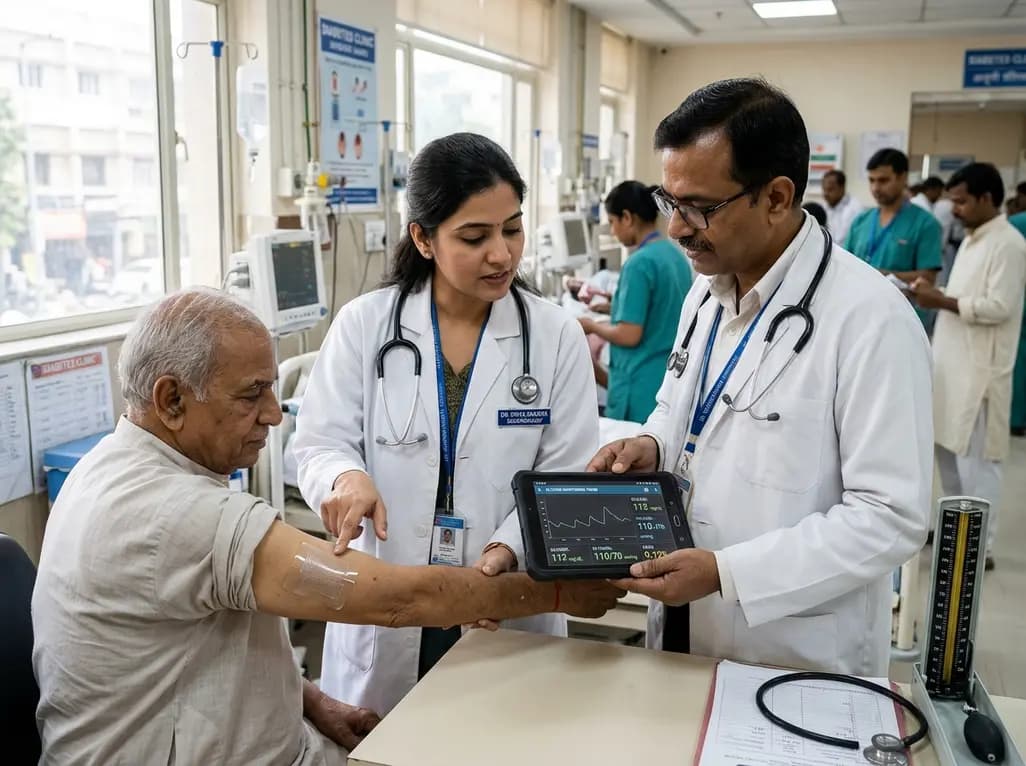
A breakthrough ultrathin multimodal sensor decouples physical hemodynamic monitoring from disposable electrochemical calibration, achieving long-term wearable glucose prediction with 81.36% accuracy and a 9.12% MARD. This offers a robust, drift-free solution for outpatient metabolic surveillance.
Yesterday
