

Loading, please wait...
Loading, please wait...

Severe congenital kyphosis affects approximately 10% to 21% of pediatric patients born with myelomeningocele. This progressive spinal deformity creates substantial biomechanical deficits, thoracic collapse, and devastating skin breakdown over the bony gibbus. Consequently, children experience impaired sitting balance, debilitating pressure ulceration, and reduced bimanual functional activity. Performing a kyphectomy in myelomeningocele serves as the primary reconstructive intervention to restore sagittal alignment and relieve focal skin pressure. Nevertheless, spine surgeons encounter extreme technical challenges during these procedures due to dysplastic vertebrae, severe dural sac anomalies, and compromised soft tissue coverage. Although surgical realignment remains necessary, clinicians lack definitive consensus regarding optimal surgical timing and reconstructive techniques. Historically, surgical teams prioritized radiographic correction while largely neglecting standardized functional outcomes and patient-centered rehabilitation metrics. In addition, high complication frequencies have continued to complicate long-term postoperative management across diverse clinical environments. Recent comprehensive systematic reviews therefore highlight the urgent necessity to re-evaluate structural stability, instrumentation length, and wound management protocols. By synthesizing multi-decade clinical evidence, surgical teams can better understand how specific stabilization strategies directly impact durability, operative risks, and long-term functional mobility in these fragile pediatric patients.
Spinal surgeons historically debated whether short, localized hardware or extensive multi-segment constructs provide the most dependable mechanical stability after apical resection. Recent quantitative systematic analyses encompassing 64 studies and 766 surgical patients clarify this structural dilemma. Specifically, long instrumentation constructs achieve superior initial angular correction compared to short or non-instrumented approaches, demonstrating 85 degrees versus 50.2 degrees of deformity correction. Furthermore, unadjusted evaluations indicate greater maintained correction over extended follow-up, recording 79 degrees versus 47.6 degrees. However, multivariable regression adjustments reveal that this advantage in maintained correction diminishes when controlling for confounding baseline covariates. In contrast, longer operative durations persist robustly as an independent consequence of extended spinal fixation. Surgeons require an average of 280 minutes for long instrumentation, whereas shorter constructs average only 155 minutes. Despite the increased mechanical complexity and operative exposure, overall complication rates remain remarkably comparable between the two cohorts, hovering near 56.8% and 53.8%. Consequently, while extended spinal constructs deliver superior immediate radiographic correction, clinicians must weigh this initial benefit against heightened anesthetic exposure and surgical invasiveness. Surgeons must therefore personalize fixation length based on patient age, baseline bone quality, and overall physiological reserve.
Managing severe spinal deformities in very young children presents another profound technical challenge regarding thoracic growth and pulmonary development. To preserve spinal growth and avoid early trunk foreshortening, surgeons frequently deploy growing or sliding rod constructs. Nevertheless, systematic evidence indicates that growing constructs introduce distinct clinical vulnerabilities without offering tangible radiographic advantages over standard rigid fixation. Notably, comparative data show that growing or sliding rods incur significantly higher wound complications, reaching 42.0% compared to 28.3% in non-growing long constructs. Pediatric patients receiving dynamic sliding hardware generally undergo surgery at a younger chronological age, which inherently compounds skin healing vulnerabilities. Moreover, limited preliminary reports suggest lower intraoperative blood loss with growing systems, recording approximately 200 milliliters versus 1005 milliliters. However, this blood loss finding derives from only three small investigations, preventing definitive surgical conclusions. Unfortunately, existing literature lacks adequate longitudinal data to verify whether sliding constructs truly protect pulmonary capacity or thoracic volume over time. Therefore, surgical teams cannot assume that dynamic growth instrumentation guarantees superior systemic development. Clinicians must critically evaluate whether preserving potential spinal growth justifies the substantially elevated risk of debilitating soft tissue dehiscence and recurrent instrumentation exposure.
Postoperative complications represent the most formidable barrier to successful recovery following spinal realignment in myelomeningocele patients. Systematic data document an alarming overall complication proportion exceeding 50% across virtually all published surgical cohorts. Among these adverse events, soft tissue breakdown, deep surgical site infections, and cerebrospinal fluid leaks dominate clinical morbidities. Children with spina bifida typically possess thin, poorly vascularized dorsal skin with extensive scarring from neonatal defect closures. In addition, underlying neuromuscular sensory deficits prevent patients from detecting localized tissue ischemia or pressure sore formation. When surgeons perform extensive bony resections and place prominent metallic implants, tension-free primary skin closure becomes extraordinarily difficult. Consequently, hardware prominence frequently leads to skin ulceration, persistent discharging sinus tracts, and secondary hardware contamination. Furthermore, recurrent kyphosis and pseudoarthrosis often develop when mechanical anchor failure or persistent infection destabilizes the osteotomy site. To minimize these disastrous complications, multidisciplinary surgical teams increasingly collaborate with plastic and reconstructive surgeons. Employing advanced latissimus dorsi muscle transposition or fasciocutaneous rotation flaps provides robust, well-vascularized soft tissue padding over spinal instrumentation. Such proactive plastic surgical reconstruction significantly lowers catastrophic wound failure rates and protects underlying metallic stabilization systems.
Historically, orthopedic and neurosurgical literature focused almost exclusively on radiographic Cobb angle measurements when reporting kyphectomy success. However, recent systematic analyses reveal a striking deficit in patient-centered outcome reporting throughout published literature. Out of 65 comprehensive investigations, only three studies implemented standardized functional questionnaires or validated health-related quality-of-life instruments. This historic oversight obscures critical aspects of patient recovery, including daily care ease, independent sitting balance, and respiratory improvements. When clinicians utilize validated tools such as the Early Onset Scoliosis Questionnaire 24, caregivers consistently report meaningful real-world benefits. Specifically, successful spinal leveling eliminates the painful lumbar prominence, facilitating comfortable wheelchair seating and freeing the upper extremities for bimanual tasks. Additionally, expanding the compressed abdominal cavity alleviates chronic gastrointestinal crowding, thereby improving nutritional intake and bowel management. Caregivers also observe substantial reductions in daily nursing burden, as managing pressure ulcers and perineal hygiene becomes significantly more manageable. Therefore, future surgical protocols must integrate validated functional scales alongside radiographic metrics. Ultimately, combining meticulous osteotomy planning, robust plastic coverage, and longitudinal functional tracking optimizes therapeutic durability and provides meaningful independence for affected children.
Surgeons perform kyphectomy in myelomeningocele to correct severe kyphotic gibbus deformities that threaten skin integrity and impair functional posture. Key clinical indications include recurrent ulceration over prominent vertebrae, impaired sitting balance, reduced upper extremity mobility, and progressive respiratory compromise resulting from visceral crowding within a collapsed abdominal and thoracic cavity.
Growing or sliding constructs carry significantly higher wound complication rates because clinicians typically implant them in younger children with extremely thin, dysplastic soft tissue envelopes. Furthermore, dynamic hardware creates repetitive mechanical shearing forces beneath fragile scars, predisposing the surgical site to dehiscence, persistent seroma formation, and secondary hardware extrusion requiring revision surgery.
Long instrumentation achieves significantly greater initial radiographic deformity correction and provides enhanced biomechanical lever arms compared to short constructs. However, long constructs require significantly extended operative durations and substantial surgical exposure. Although long instrumentation provides superior immediate alignment, overall complication rates remain similarly high across both surgical approaches over long-term clinical follow-up.
Disclaimer: This content is for informational and educational purposes only... Refer to the latest local and national guidelines for clinical practice.
References

Read summarized clinical updates, watch expert medical content, and earn CME certifications right from your smartphone.
Open your smartphone camera to scan and install.





A systematic review of 64 studies reveals that long instrumentation in pediatric kyphectomy for myelomeningocele achieves superior initial correction but extends operative time, with persistent high wound complications across constructs.
Today

A large network analysis of middle-aged and older adults reveals distinct sex-specific dependency pathways between lifestyle factors and cardiometabolic diseases. Physical activity, smoking, and alcohol exhibit divergent bridging roles in men and women, underscoring the need for tailored clinical prevention.
Today

A meta-analysis of 9 randomized controlled trials evaluated health-related quality of life when adding PD-1/PD-L1 inhibitors to standard therapy for endometrial and cervical cancer. Adding immunotherapy did not detectably change global quality of life or worsen functional and symptom domains.
Today

A cross-sectional study evaluates the critical intersection between acute surgical pain, kinesiophobia, and fall risks during initial mobilization after cardiac surgery, emphasizing targeted nursing strategies.
Today

A landmark study reveals that patellofemoral cartilage defects in patients with trochlear dysplasia are primarily driven by patellar maltracking and spur height rather than dislocation frequency or shape mismatch, offering crucial insights for preoperative imaging and surgical stabilization.
Today
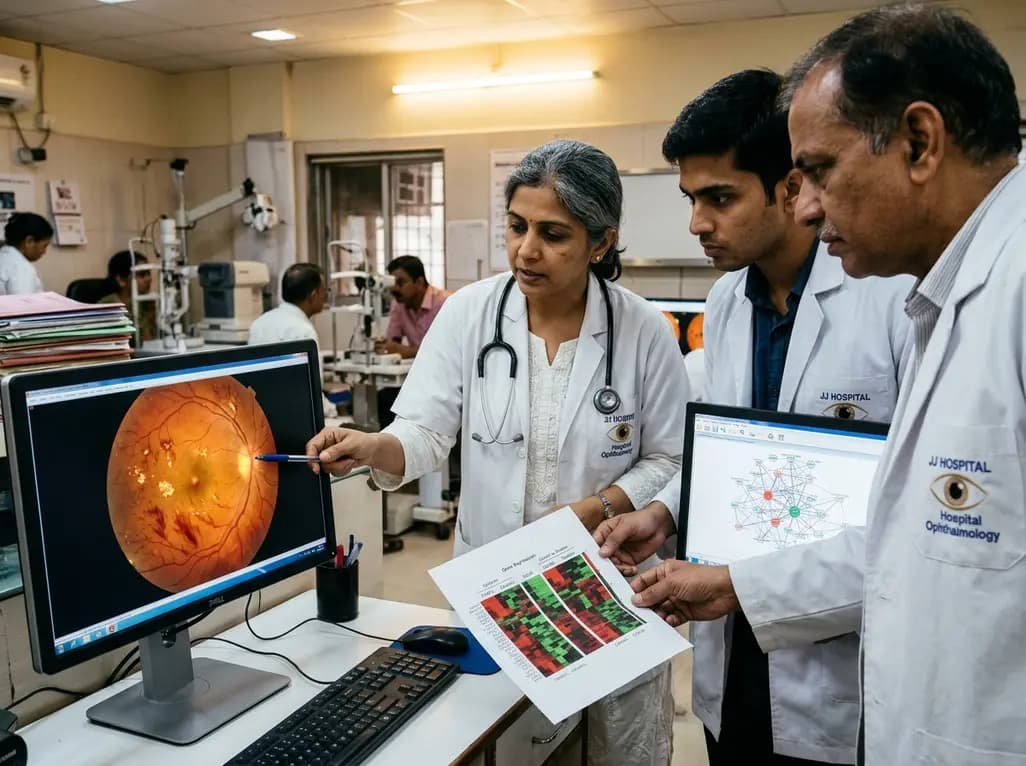
Single-cell transcriptomics reveals that STAP2 promotes retinal endothelial dysfunction in diabetic retinopathy through CXCR4 signaling. In vivo and in vitro studies show STAP2 knockdown reduces capillary drop-out and vascular leakage, uncovering a novel therapeutic target beyond anti-VEGF therapies.
Today
