.webp&w=384&q=75)

Loading, please wait...
Loading, please wait...

Chronic neuropathic conditions, phantom limb pain, and complex regional pain syndrome represent difficult clinical challenges. Standard pharmacological regimens frequently fail to provide adequate, long-term relief for these disorders. Consequently, clinicians are continually exploring integrative paradigms that modulate central and peripheral pain pathways simultaneously. A groundbreaking clinical case study at Walter Reed National Military Medical Center investigated the synergistic integration of ketamine and autogenic training for severe chronic pain management. The medical team evaluated an active-duty service member who experienced persistent neuropathic distress following a transtibial amputation. Conventional therapies had offered minimal relief for his debilitating symptoms. Therefore, the clinical team formulated a specialized protocol combining neuropharmacology with autonomic self-regulation. By coupling biochemical receptor antagonism with structured psychological training, clinicians aimed to interrupt maladaptive sensory loops. This innovative approach demonstrated that combining mind-body interventions with anesthetic infusions is clinically feasible and safe. Furthermore, the findings highlight how multimodal strategies can effectively address complex pain phenotypes in high-demand populations. Pain specialists can utilize these findings to enhance rehabilitation protocols for difficult cases.
The innovative protocol, designated as Ketamine and Autogenic Training (KAT), systematically combined pharmacotherapy with autonomic self-regulation techniques. First, the patient attended two outpatient preparation sessions prior to inpatient admission. During these initial appointments, a clinical psychologist introduced core autogenic exercises that cultivate psychophysiological relaxation. Subsequently, the patient was admitted to receive a continuous 24-hour inpatient subanesthetic ketamine infusion. During this extended infusion period, the patient completed two formal administrations of the structured autogenic protocol. Autogenic training involves repetitive mental formulas focused on somatic warmth, heaviness, and regular breathing. Meanwhile, ketamine provides potent central analgesia and induces a transient state of heightened synaptic plasticity. Therefore, the psychological intervention capitalized directly on the neurochemical receptivity induced by the infusion. The clinician guided the participant through visualization and autonomic modulation exercises while monitoring hemodynamic stability. In addition, the preparatory sessions established reliable cognitive anchors that remained accessible despite subanesthetic dosing. This structured framework ensured treatment adherence and demonstrated the viability of hospital-based integrative pain interventions.
Neuropathic pain and complex regional pain syndrome are heavily driven by central sensitization within dorsal horn spinal pathways. Prolonged nociceptive input leads to continuous activation and upregulation of N-methyl-D-aspartate (NMDA) receptors. Consequently, sensory neurons enter a hyper-excitable state that amplifies pain perception beyond the initial site of tissue injury. Ketamine operates as an uncompetitive NMDA receptor antagonist, effectively halting excessive glutamate signaling and resetting sensory pathways. However, pharmacological intervention alone may not extinguish established cognitive and autonomic stress reactions. Autogenic training directly stimulates parasympathetic tone, thereby reducing sympathetic outflow, systemic vasoconstriction, and cortisol production. When clinicians combine both modalities, ketamine suppresses hyperactive nociceptive circuits while autogenic exercises guide adaptive neural rewiring. The resulting neuroplastic state allows the brain to establish calmer somatic interpretations. Moreover, reducing physiological tension relieves muscular guarding and mitigates peripheral ischemia. Thus, the biological synergy between NMDA blockade and autonomic self-regulation offers a powerful mechanism to reverse central sensitization and alleviate intractable pain.
A critical consideration when implementing psychotherapy during ketamine administration is the maintenance of cognitive clarity. Subanesthetic ketamine infusions frequently induce dissociative phenomena, perceptual distortions, and cognitive slowing. As a result, many clinicians have questioned whether patients can meaningfully engage in structured mental training while receiving active infusions. Remarkably, the patient in this investigation remained fully alert, oriented, and cognitively capable throughout the 24-hour protocol. He successfully engaged with the psychologist and completed all autogenic relaxation cycles without difficulty. Furthermore, the treatment team observed no adverse neuropsychiatric events, severe emergence agitation, or cardiovascular complications. These observations confirm that patients can maintain adequate executive function for psychological interventions during controlled subanesthetic dosing. Comprehensive pre-infusion preparation and attentive psychological guidance appear essential for preserving cognitive focus. Additionally, actively participating in therapy empowers patients and strengthens their perceived self-efficacy. Consequently, concurrent psychological training during ketamine infusions represents a safe and practical clinical strategy.
The patient demonstrated significant and enduring therapeutic improvements across multiple standardized outcome measures. Immediately following the 24-hour infusion, assessments revealed marked reductions in both pain intensity and pain-related functional interference. Crucially, these clinically meaningful reductions persisted at the one-week and one-month follow-up evaluations. The service member reported improved physical mobility, reduced sleep disturbances, and a decreased need for supplementary analgesics. In addition, psychological evaluations documented notable reductions in baseline anxiety and depressive symptoms following the procedure. Although affective improvements showed slight attenuation by the two-month follow-up, functional pain interference remained significantly suppressed. The patient experienced no adverse side effects during the infusion or the subsequent monitoring intervals. Such durable functional recovery is especially vital for active military personnel aiming to restore operational readiness. Ultimately, combining targeted autonomic training with intravenous ketamine delivers a robust, multi-targeted therapeutic avenue for chronic, treatment-resistant pain conditions.
The success of this integrative case study highlights valuable lessons for modern pain medicine teams. Chronic pain is an intrinsically biopsychosocial phenomenon that demands coordinated physical, neurological, and psychological treatments. However, conventional clinical care often isolates pharmacological management from behavioral and psychological therapies. By bridging inpatient infusion protocols with structured autogenic training, clinicians can optimize patient outcomes and accelerate functional recovery. Furthermore, this approach minimizes reliance on escalating opioid doses and invasive procedures. Interdisciplinary teams consisting of anesthesiologists, pain specialists, and psychologists can readily adapt this framework within tertiary care settings. Pre-infusion psychological training provides patients with practical coping mechanisms that enhance long-term self-management. Moreover, the enhanced neuroplasticity induced by ketamine creates an ideal therapeutic window for reinforcing adaptive cognitive patterns. Therefore, expanding translational research into combined pharmacotherapy and behavioral interventions remains an essential priority for advancing chronic pain management worldwide.
Ketamine and Autogenic Training is an integrative clinical protocol that combines continuous subanesthetic intravenous ketamine with structured autogenic relaxation exercises. The protocol utilizes pre-infusion psychological preparation and concurrent autogenic sessions during the infusion. This approach pairs ketamine's NMDA receptor blockade and neuroplastic benefits with autonomic self-regulation to reduce neuropathic pain intensity and functional interference effectively.
Yes, clinical findings demonstrate that patients receiving controlled subanesthetic ketamine infusions can maintain sufficient cognitive engagement to perform structured psychological interventions. With appropriate pre-infusion counseling and active clinician guidance, patients can focus, follow guided instructions, and execute autogenic relaxation techniques without experiencing debilitating disorientation or severe neuropsychiatric adverse events throughout the treatment protocol.
This integrative approach is particularly suited for complex, treatment-resistant pain conditions characterized by central sensitization, including complex regional pain syndrome, phantom limb pain, and peripheral neuropathy. By combining biochemical modulation with parasympathetic autonomic training, the protocol addresses both somatic pain signaling and associated psychological distress, promoting sustained functional recovery and improved overall quality of life.
Disclaimer: This content is for informational and educational purposes only and does not constitute medical advice, diagnosis, or treatment. Healthcare professionals should exercise their clinical judgment when applying new evidence. Patients must consult a qualified physician regarding their specific medical conditions. Refer to the latest local and national guidelines for clinical practice.
References
Carlson JG et al. Integrating Ketamine and Autogenic Training for Chronic Pain: A Case Study at Walter Reed National Military Medical Center. Mil Med. 2026 Aug 20. doi: undefined. PMID: 42623656.
Goordeen A, Zemmedhun G, Abd-Elsayed A, Yolland M. Ketamine infusion and its role in chronic pain. ASRA Pain Medicine News. 2022;47. https://doi.org/10.52211/asra080122.036.
Lii T, et al. Ketamine for Chronic Pain: Neuroplasticity and Central Sensitization. Stanford Pain Medicine Clinical Insights. 2025.

Read summarized clinical updates, watch expert medical content, and earn CME certifications right from your smartphone.
Open your smartphone camera to scan and install.





A Walter Reed case study demonstrates the feasibility and efficacy of combining continuous subanesthetic ketamine infusions with autogenic training to significantly reduce neuropathic pain and functional interference.
last month

A laboratory technician's death in Siberia from an unverified respiratory pathogen has renewed global vigilance for pneumonic plague. Clinicians must recognize early presentations of Yersinia pestis, enforce immediate respiratory isolation, and start early bactericidal therapy to prevent severe secondary spread.
Today

A retrospective study of 824 patients undergoing over 2,200 intradetrusor onabotulinumtoxinA injections identifies sex- and etiology-specific predictors of 2-week post-void residual, highlighting the influence of baseline residual volumes, toxin dosage, and distinct urodynamic parameters on urinary retention risk.
Today
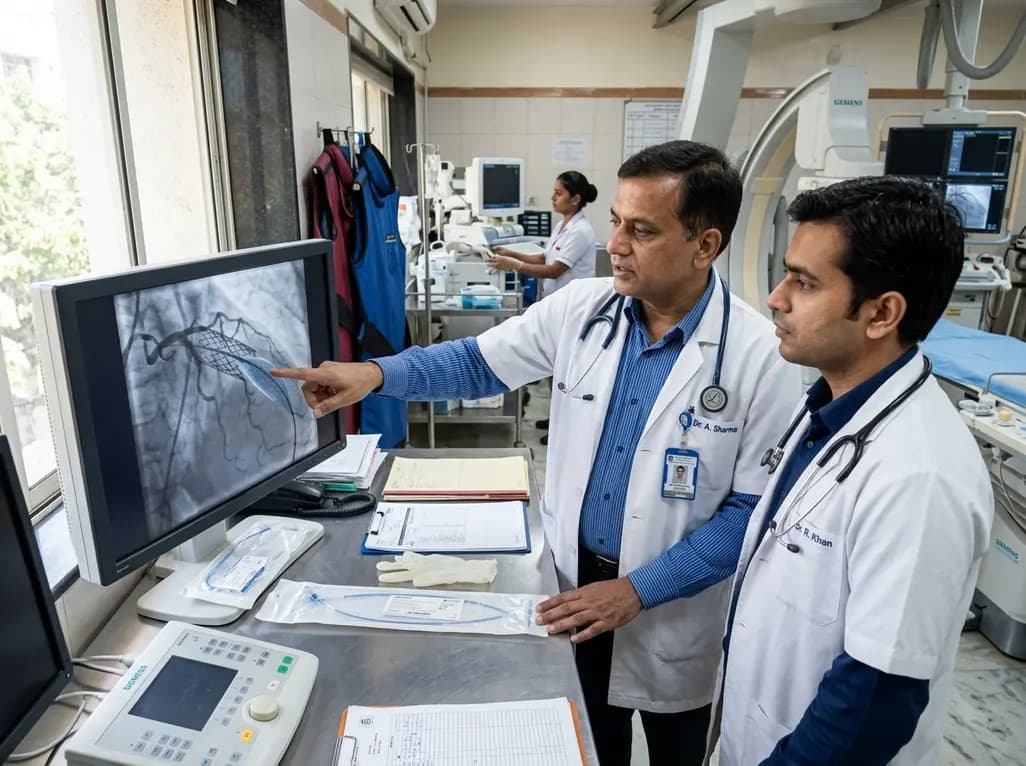
The US FDA has granted approval to the SELUTION SLR drug-eluting balloon for treating coronary in-stent restenosis. This milestone introduces a sustained-release sirolimus platform that eliminates the need for additional permanent metallic stents while maintaining robust vascular healing and luminal patency.
Today

The Thumbs-Out Classification (TOC) is a reliable screening tool for detecting thumb-in-palm deformity in children with cerebral palsy. Utilizing traffic-light tiers for radial abduction, TOC enables clinicians to monitor upper limb function and initiate timely therapeutic or surgical interventions.
Today

A comprehensive review analyzes periconceptional GLP-1 receptor agonist exposure, revealing reassuring data on congenital anomalies and adverse perinatal outcomes while emphasizing the need for cautious patient counseling.
Today
