

Loading, please wait...
Loading, please wait...
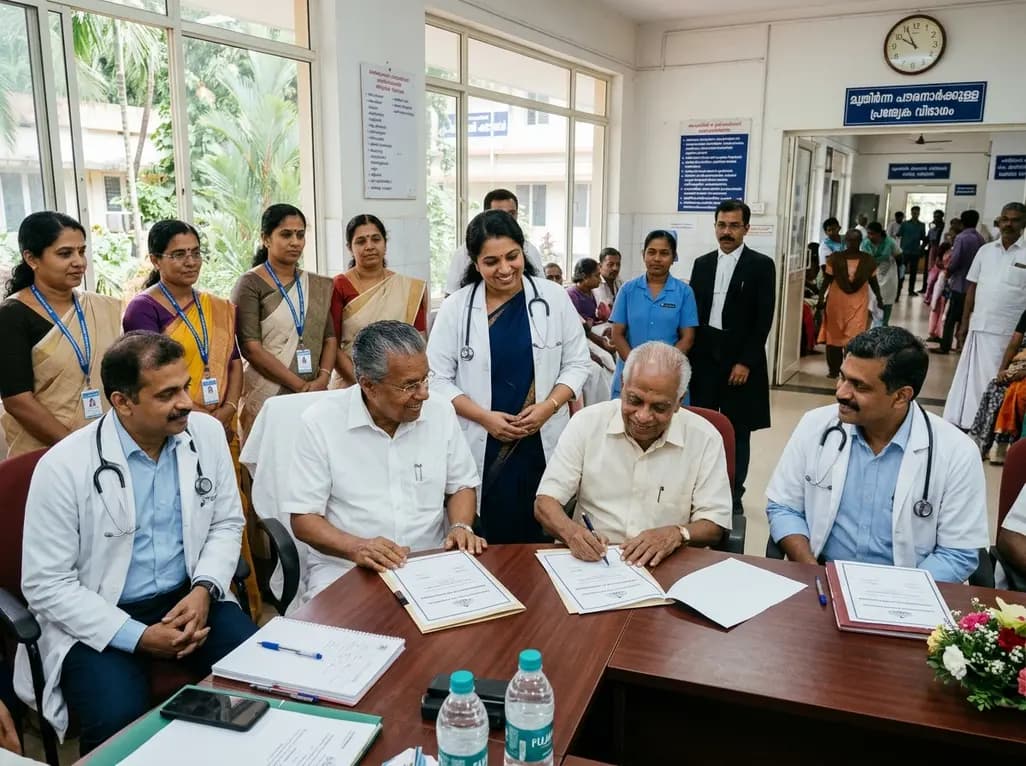
Kerala has taken a major step toward establishing an integrated public health framework by collaborating with twelve specialized institutions. This multi-sectoral initiative aims to advance senior citizen welfare across community and clinical domains. Rapid demographic shifts have heightened the demand for sustainable geriatric support systems. Therefore, the state government has instituted formal agreements across healthcare, social work, academic research, and legal disciplines. These collaborations target five core areas: healthy ageing, community-based care, silver economic development, research-driven policymaking, and the enforcement of statutory social rights. State leadership emphasized that safeguarding elderly dignity requires active societal participation alongside administrative action.
The state Department of Senior Citizens signed bilateral agreements with twelve multidisciplinary organizations to decentralize healthcare delivery. Notably, these partners include the Institute of Mental Health and Neurosciences, Dementia India Alliance, and the Public Health and Social Development Foundation. Academic institutions such as Rajagiri College of Social Sciences, Loyola College of Social Sciences, and the National University of Advanced Legal Studies have also joined this coalition. Additionally, technical bodies including Health Action by People, Swasti – The Health Catalyst, and the Centre for Socio-Economic and Environmental Studies provide strategic expertise. Consequently, this broad coalition bridges clinical neurology, community social work, and legal governance. Geriatric health outcomes depend heavily on factors beyond tertiary hospital facilities. Therefore, connecting clinical psychiatry with local social workers ensures vulnerable seniors receive timely medical reviews. Furthermore, legal partners will help enforce statutory protections against abandonment and neglect, safeguarding fundamental rights for vulnerable elders statewide.
A primary objective of this statewide policy is the creation of a granular health registry across local self-government institutions. Local panchayats will catalogue all residing senior citizens, mapping chronic morbidities, cognitive impairments, and social vulnerability indicators. Consequently, primary care physicians and public health teams can access verifiable demographic data to direct resources efficiently. In addition, this database will undergo periodic clinical updates through community health workers and auxiliary staff. Targeted interventions can significantly mitigate acute hospital admissions when managed proactively at the primary care level. For instance, elderly patients with uncontrolled hypertension, diabetes, or frailty can receive customized monitoring routines. Furthermore, tracking functional limitations at local levels prevents individuals from slipping into profound isolation or progressive disability. The government intends to combine administrative oversight with local grassroot networks. Therefore, this registry serves as a vital bridge between community screening and targeted clinical referrals.
Formalizing home-based nursing support represents another critical pillar of the new geriatric policy. To address chronic workforce shortages, the state is designing a comprehensive one-year practical caregiving course. Curricula from Germany, the United Kingdom, and Australia are being adapted to match regional socioeconomic realities. Importantly, this training curriculum will occupy a well-defined professional niche positioned directly below certified nursing qualifications. Consequently, trainees will acquire competencies in bed-side assistance, hygiene management, vital sign monitoring, and fall prevention strategies. Furthermore, deployment will occur through transparent coordination among local bodies, non-governmental groups, and corporate social responsibility frameworks. Clinicians frequently encounter geriatric admissions caused by inadequate home supervision or improper medicine administration. Thus, deploying formally certified caregivers will minimize avoidable complications like aspiration pneumonia, pressure ulcers, and medication toxicity. Ultimately, standardizing caregiving elevates the quality of bedside support across both urban and rural households.
Neuropsychiatric conditions remain major contributors to chronic disability and reduced quality of life among the elderly. Under the new pact, specialized bodies like IMHANS and the Dementia India Alliance will implement structured community intervention protocols. Consequently, memory screening and early neurocognitive evaluations will become accessible at local wellness centers. In addition, the state is establishing a dedicated youth volunteer corps comprising higher secondary students. These young volunteers will conduct regular home visits to converse with isolated seniors and identify subtle signs of psychological distress. Loneliness often accelerates cognitive decline and exacerbates late-life depressive disorders. Therefore, facilitating structured intergenerational contact offers measurable psychosocial protection against social withdrawal. Furthermore, these regular visits can serve as an informal early warning mechanism for primary care clinics. When youth volunteers notice sudden behavioral changes or physical decline, they can immediately alert local health authorities for medical intervention.
The state framework recognizes that healthy longevity requires purposeful engagement alongside clinical disease management. To support this objective, the administration is launching an active silver economy strategy. This project seeks to integrate the expertise of retired professionals into industrial mentorship and startup incubators. Consequently, senior experts in engineering, management, healthcare, and education can contribute meaningfully to economic growth. Productive engagement directly preserves executive cognitive function and reinforces emotional resilience during retirement. Moreover, maintaining social networks through professional advisory roles significantly lowers cardiovascular risks linked to sedentary, isolated lifestyles. The government emphasizes that ageing should signify continued contribution rather than social obsolescence. Thus, structured mentorship opportunities provide older individuals with renewed purpose and dignity. Furthermore, establishing silver enterprise models stimulates regional market demand for assistive technologies, age-friendly infrastructure, and dedicated home-care innovations.
These policy reforms present significant operational advantages for general practitioners and geriatricians operating throughout the region. First, decentralized screening tools will facilitate earlier detection of neurodegenerative conditions before advanced stages emerge. Second, access to standardized caregivers ensures that complex outpatient therapeutic regimens are administered reliably at home. Furthermore, legal enforcement against parental abandonment strengthens the physician's hand when managing neglected patients requiring systemic support. Local medical officers can collaborate closely with panchayat administrative committees to formulate patient-centered care pathways. Additionally, regular communication between community health teams and tertiary neurology centers will optimize longitudinal outcomes for dementia patients. As life expectancy increases, healthcare systems must shift from episodic crisis management to sustained, community-rooted health maintenance. Therefore, these collaborative agreements establish an integrated clinical ecosystem capable of addressing complex multimorbidities across aging populations.
Q1: What is the main objective of the MoUs signed by the Kerala government?
The memoranda of understanding establish a coordinated multi-agency network to strengthen elderly welfare, community-based clinical care, and legal safeguards. By partnering with twelve academic, legal, and public health institutions, the state intends to enhance dementia management, build standardized caregiver training, and maintain a decentralized panchayat-level database to track the medical and mental health needs of senior citizens statewide.
Q2: How will the proposed one-year caregiver training program function?
The government is establishing a one-year practical curriculum adapted from established healthcare systems in Australia, Germany, and the United Kingdom. Positioned directly below formal nursing credentials, this course trains candidates in bedside geriatric assistance, vital monitoring, and palliative care. Caregivers will subsequently be deployed across communities through combined funding from local bodies, non-profit organizations, and corporate social responsibility partnerships.
Q3: How will the panchayat-level elderly registry improve community healthcare delivery?
The panchayat-level database will systematically document chronic illnesses, mental health conditions, and dependency levels of older individuals in each locality. By updating these clinical records periodically, local healthcare teams and administrators can design targeted welfare schemes, deploy home-care staff efficiently, prevent social isolation, and intervene promptly before minor health deteriorations progress into acute hospital admissions.
Disclaimer: This content is for informational and educational purposes only. It does not constitute medical advice or replace professional judgment. Refer to the latest local and national guidelines for clinical practice.
References

Read summarized clinical updates, watch expert medical content, and earn CME certifications right from your smartphone.
Open your smartphone camera to scan and install.





The Kerala government has partnered with twelve specialized institutions across healthcare, social work, and law to build a community-driven elderly support infrastructure. This multi-sectoral initiative introduces standardized caregiver certification, local health tracking, and dementia care systems.
Today
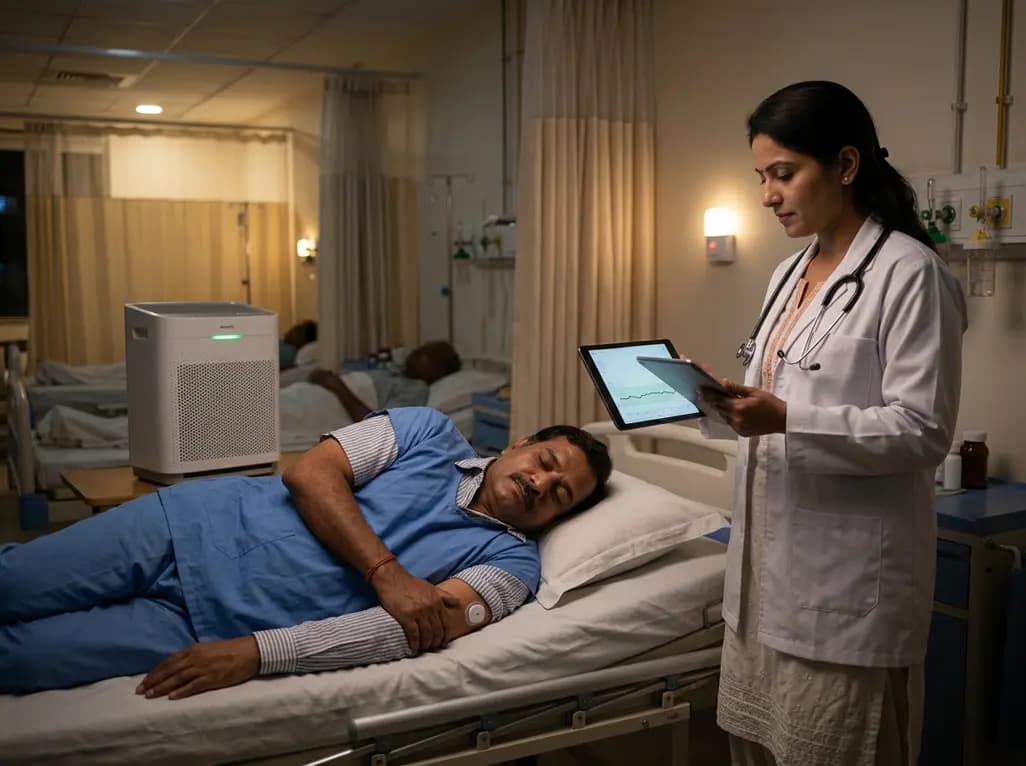
A recent clinical trial demonstrates that using bedroom HEPA air filtration during sleep significantly reduces nocturnal particulate exposure, curbs glycemic variability, and mitigates postprandial glucose surges in prediabetic patients, underscoring indoor air quality as an actionable cardiometabolic risk factor.
Today

An intracranial EWSR1::CREM fusion sarcoma in a 31-year-old female manifested as a paraneoplastic inflammatory syndrome with anemia and secondary infertility. The dural mass mimicked meningioma, but gross-total resection resolved her systemic inflammation and restored natural fertility within one month.
Today

The DOMINO study protocol presents a multidisciplinary implementation mapping approach to overcome provider, patient, and payer barriers to antiobesity medications, offering vital insights for Indian clinicians managing the growing diabesity burden.
Today
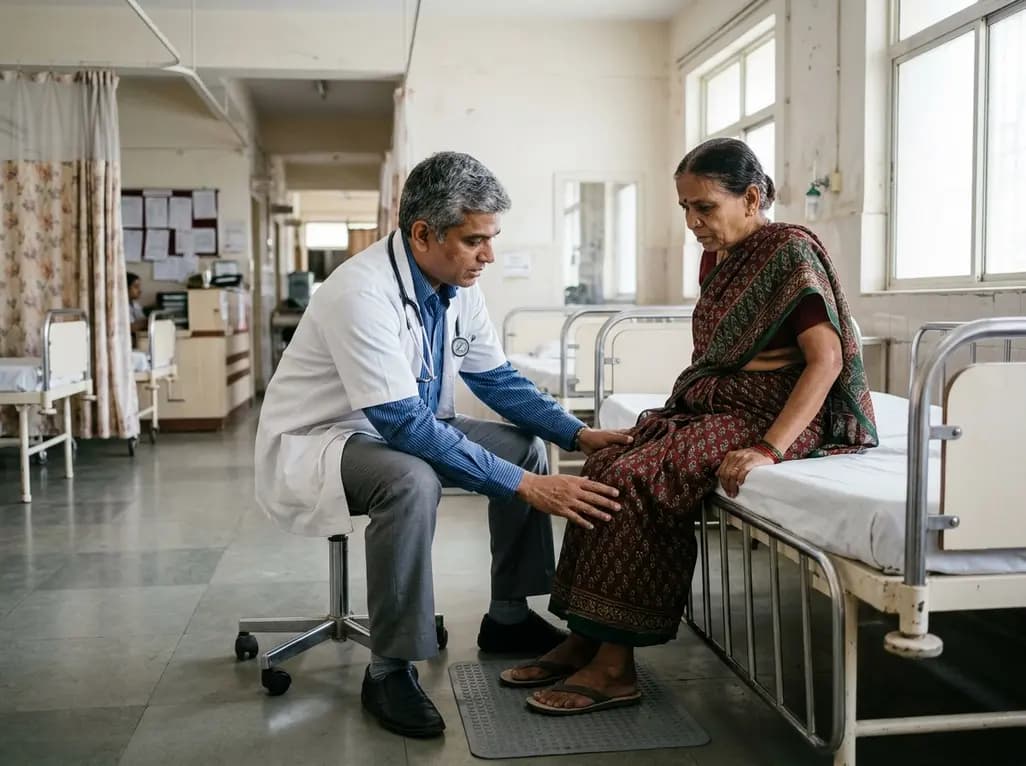
An age-matched cross-sectional study reveals that lower muscle quality and impaired lower-extremity function strongly correlate with an increased fear of falling in older women, highlighting the necessity of targeted resistance training and balance interventions in geriatric care.
Today

Near-infrared autofluorescence provides real-time label-free optical guidance during endoscopic transsphenoidal pituitary surgery. By highlighting stark signal contrasts between normal pituitary gland and adenomas, this technique aids gross-total tumor resection while safeguarding critical endocrine function.
Today
