.webp&w=384&q=75)

Loading, please wait...
Loading, please wait...
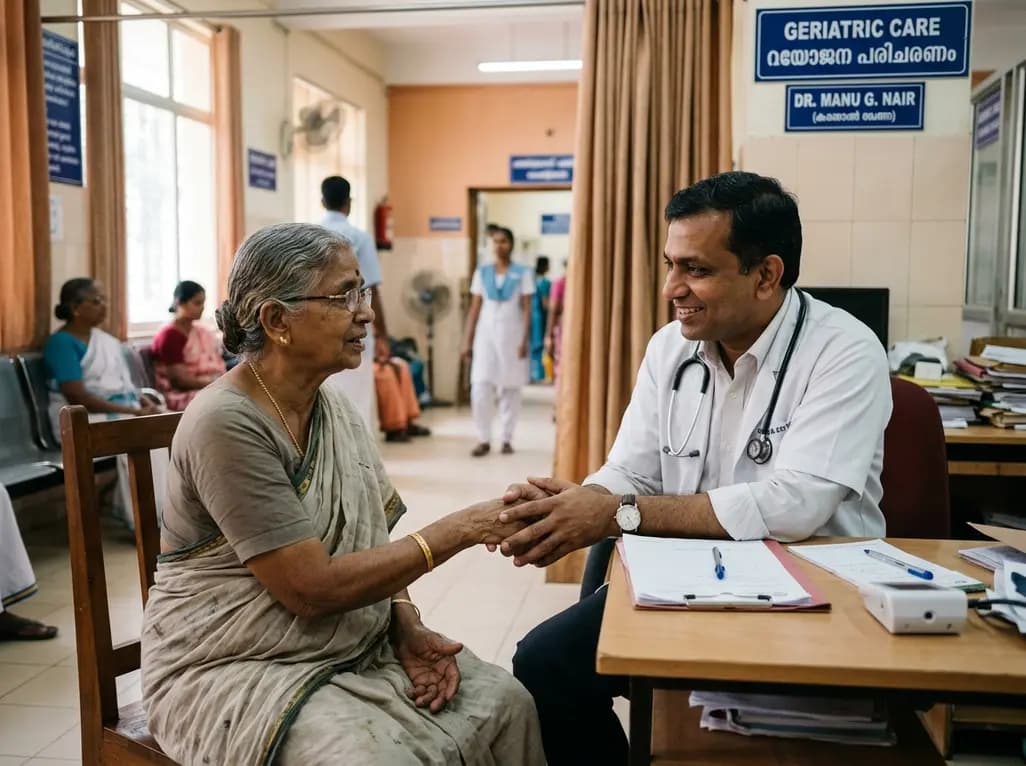
Demographic shifts across India demand urgent legislative and clinical interventions to support vulnerable senior citizens. In response to this pressing reality, the state government recently tabled the landmark elderly care bill in the legislative assembly. Officially titled the Keralam Senior Citizens (Care and Protection of Rights) Bill, 2026, this legislation seeks to establish an unprecedented standard for elder protection. The statute addresses systemic gaps by curbing elder abuse, regulating assisted living facilities, and improving public healthcare access. Consequently, healthcare providers and policy experts view this initiative as a transformative benchmark for social security and geriatric clinical welfare across the country.
Kerala currently witnesses one of the fastest demographic transitions across India due to rising life expectancy and declining fertility rates. Consequently, senior citizens represent a rapidly expanding segment of the regional population. Chief Minister V D Satheesan formally introduced the draft law to protect the dignity and legal rights of vulnerable elders. The statute directly addresses harrowing instances where adult children seize property and abandon elderly parents in pilgrimage towns. Therefore, the legislative framework aims to build an inclusive ecosystem that guarantees comprehensive financial, emotional, and health security.
Furthermore, the statutory framework introduces a specialized State Senior Citizens Protection Unit alongside dedicated district protection forums. These administrative bodies will actively investigate complaints regarding domestic neglect, severe mistreatment, and financial exploitation. Additionally, the legislation provides a robust definition of abuse that encompasses physical trauma, mental cruelty, emotional manipulation, and verbal hostility. It also penalizes the deliberate denial of life-saving medical care, nutrition, and daily assistive devices. Ultimately, the bill shifts the societal paradigm from passive, uncoordinated charity toward an enforceable rights-based model for every senior citizen. Moreover, regional authorities must maintain transparent records of vulnerable older adults requiring specialized state assistance. As a result, community health workers can systematically track high-risk seniors within local administrative wards.
Private home-care agencies and residential hospices have grown rapidly without uniform regulatory oversight in recent years. To resolve this challenge, the legislation establishes mandatory registration requirements for all elderly care facilities. These institutions include assisted living facilities, day-care centres, respite units, hospices, and private home-care agencies. Under the proposed statutory provisions, operating certificates will remain valid for four years before requiring formal renewal. Furthermore, designated regulatory officers hold full authority to enter premises, inspect hygiene standards, and review resident records. Facilities that fail inspection protocols will face mandatory closure, and authorities will orchestrate the safe rehabilitation of vulnerable residents.
Additionally, the legislative framework directly addresses substandard bedside assistance by creating mandatory caregiver training benchmarks. Home-care agencies must ensure that at least twenty-five percent of staff achieve formal accreditation within two years. Subsequently, this benchmark increases to sixty percent within three years, reaching universal certification by the fourth year. A standardized curriculum will thoroughly educate professional caregivers in geriatric support, emergency response, and mobility assistance. Consequently, this structured approach reduces the risk of iatrogenic injuries, bedsores, and medication errors among bedridden patients at home. Hence, healthcare providers can confidently recommend certified home nursing agencies that comply with rigorous state protocols.
Legal ambiguity often allows perpetrators of elder mistreatment to escape accountability within domestic and institutional settings. However, the proposed law institutes severe punitive deterrents against physical, psychological, and financial offences. For instance, any family member, caregiver, or facility staff convicted of cruelty faces up to three years of imprisonment. In addition, the court may impose financial penalties reaching fifty thousand rupees for such reprehensible acts. The legislation also addresses property grab crimes by punishing care home operators who unlawfully take residents' assets. Such offenders face up to three years in prison along with substantial monetary fines.
Furthermore, operating an unregistered elderly care institution constitutes a serious statutory crime under the new legal framework. Violators risk up to one year of imprisonment, a fine of twenty-five thousand rupees, or both penalties combined. Similarly, individuals who intentionally obstruct enforcement officers during inspection visits face up to two years of incarceration. To combat modern threats, the statute also mandates specialized police units to prioritize cybercrime complaints filed by seniors. Consequently, financial institutions must implement enhanced digital authentication safeguards to shield older clients from predatory online scams. Therefore, these comprehensive penal measures establish an unyielding legal barrier against the physical and economic predation of seniors.
Institutionalisation often leads to rapid cognitive decline and depressive symptoms among elderly individuals who feel uprooted from family surroundings. Recognizing this clinical phenomenon, the proposed statute prioritizes ageing in place as its foundational philosophical principle. The bill explicitly treats institutional care as an absolute last resort for vulnerable older adults. Instead, the legal framework directs state resources toward strengthening home-based care networks, community assistance, and family support systems. Families receive systemic support to care for elderly relatives within their established domestic environments.
Moreover, the legislation establishes a State Contingency Fund dedicated to senior citizen welfare, supported by recurring budget allocations. This dedicated fund guarantees continuous financial resources to supply essential assistive devices, mobility aids, and emergency medical assistance. Additionally, local civic bodies must redesign municipal infrastructure to create age-friendly public parks, walkways, and transport transit hubs. The law also mandates that government departments maintain accessible non-digital service counters alongside modern online platforms. Thus, digitally illiterate senior citizens will not face administrative exclusion or healthcare disenfranchisement when accessing essential social entitlements. Furthermore, neighborhood support circles will offer regular social interaction to mitigate isolation and loneliness among homebound individuals. Consequently, this holistic community approach preserves psychological well-being and active independence throughout the twilight years.
For primary care physicians, geriatricians, and emergency specialists, this statutory development brings significant medicolegal and clinical responsibilities. Doctors frequently represent the primary point of contact for detecting subtle indicators of elder mistreatment, neglect, or malnutrition. Under the new legal framework, clinicians must maintain high clinical suspicion when evaluating unexplained fractures, recurrent trauma, or sudden withdrawal. Furthermore, clear documentation becomes paramount whenever physicians identify suspicious injuries, poor personal hygiene, or unexplained medication non-compliance. Prompt reporting to district protection forums can shield frail patients from continued domestic harm and ensure immediate protective intervention.
In addition, physicians must actively collaborate with registered home-care services to devise tailored multidisciplinary rehabilitation plans. Regulated caregiver training ensures that nursing assistants accurately administer complex polypharmacy regimens, insulin therapies, and wound dressings. Clinicians can also guide families on preventive strategies against falls, cognitive stimulation techniques, and advance care directives. Ultimately, this landmark legislation bridges the historic gap between statutory social welfare policies and bedside clinical practice. By embracing these legal protections, medical practitioners can champion patient autonomy, physical dignity, and superior geriatric outcomes across the state. Consequently, healthcare teams will play an indispensable role in transforming statutory rights into tangible clinical safeguards for vulnerable elders.
Q1: What are the primary objectives of the Keralam Senior Citizens Bill, 2026?
The Keralam Senior Citizens Bill, 2026, establishes an enforceable legal framework to protect elderly rights and eliminate abuse. Furthermore, the legislation introduces mandatory licensing for elder care homes, day-care centres, and home-care agencies. It also creates dedicated district protection units to monitor care standards and resolve domestic neglect complaints. Consequently, the bill ensures that senior citizens access quality healthcare, legal assistance, and social security while preserving dignity.
Q2: What penalties does the legislation impose for elder abuse and illegal property possession?
The proposed law imposes severe penal consequences to deter elder abuse and financial exploitation. Family members, caregivers, or care home staff convicted of cruelty face up to three years of imprisonment and fifty thousand rupee fines. Similarly, care facility administrators who unlawfully seize residents' assets face up to three years in prison and financial penalties. Additionally, individuals running unregistered care institutions face up to one year of incarceration and statutory fines.
Q3: How does the new bill regulate private home-care agencies and professional caregivers?
Under the legislation, all home-care agencies, hospices, and caregiver training centres must register with designated state authorities. These registration certificates remain valid for four years, subject to routine official inspections. Furthermore, home-care agencies must mandate structured training for their staff through approved state curricula. Specifically, agencies must certify twenty-five percent of caregivers within two years, rising to one hundred percent within four years. Consequently, this initiative standardizes patient bedside care across communities.
Disclaimer: This content is for informational and educational purposes only. It does not constitute medical advice or replace professional judgment. Refer to the latest local and national guidelines for clinical practice.
References

Read summarized clinical updates, watch expert medical content, and earn CME certifications right from your smartphone.
Open your smartphone camera to scan and install.





Kerala has tabled a pioneering bill to establish comprehensive statutory protection for senior citizens. The framework introduces mandatory registration for care centres, caregiver accreditation, and criminal penalties for abuse, establishing a holistic model for geriatric health and social welfare across India.
Today

Preclinical findings demonstrate that ginsenoside Ra1 preserves vascular integrity and attenuates multi-organ injury during sepsis by targeting non-muscle myosin heavy chain IIA (NMMHC IIA) and dampening TLR4/NF-κB/NLRP3 inflammatory signaling.
Today

The government of Maharashtra is establishing a novel state-level Living Lab to elevate clinical outcomes, bridge public-private service gaps, and test real-world health interventions. By integrating digital innovations and frontline feedback, the platform fosters sustainable, equitable care models across communities.
Today

Cardiac involvement is the leading cause of mortality in EGPA. This report highlights an overlap phenotype of lymphocyte-predominant myocardial injury, Takotsubo-like cardiomyopathy, and left ventricular thrombus, emphasizing early multimodality diagnostics and aggressive immunosuppressive biologic therapy.
Today

A landmark biomechanical study demonstrates that sports bra support and running shoe cushioning interact significantly to influence tibial acceleration, breast motion, and comfort in female runners, providing crucial insights for clinical counseling in sports medicine and women's health.
Yesterday

A systematic review and meta-analysis of 5,406 participants reveals that tirzepatide significantly reduces hsCRP by 34.3%, improves cardiorenal biomarkers, and enhances functional capacity and exercise endurance in patients with heart failure.
Today
