.webp&w=384&q=75)

Loading, please wait...
Loading, please wait...
Kerala is currently facing an escalating public health challenge as monsoon rains intensify across the region. Recently, Health Minister K Muraleedharan warned that Thiruvananthapuram faces a high risk of a major disease surge due to inadequate waste management. Consequently, state health authorities are emphasizing the urgent implementation of comprehensive dengue prevention measures. Clinicians and local civic bodies must cooperate immediately to mitigate these risks.
Proper municipal waste management acts as the primary shield against the proliferation of Aedes aegypti mosquitoes, the main vector for dengue. When garbage removal services experience delays, discarded plastic containers and organic waste accumulate rapidly in residential neighborhoods. Intermittent monsoon showers quickly fill these unmanaged receptacles with clean, stagnant water, creating ideal breeding sites. Consequently, the local vector population increases exponentially within a short period. The Health Minister noted that the Thiruvananthapuram Corporation must treat waste clearance as an urgent priority. Therefore, immediate sanitation drives are essential to disrupt the mosquito life cycle and prevent a widespread outbreak. Neglecting municipal cleanliness directly compromises public health, as waterlogged garbage provides a continuous source of vector breeding. Ultimately, seamless coordination between civic authorities and health workers remains crucial during the high-transmission monsoon months. Furthermore, community participation in identifying and eliminating these micro-breeding sites plays an indispensable role. When individuals actively monitor surroundings and dispose of household waste properly, the likelihood of localized outbreaks decreases. This collaborative effort is vital to sustain effective vector control.
To combat the rising threat of vector-borne illnesses, the state government has launched several targeted initiatives. Specifically, the Health Department introduced a weekly \"Dry Day\" campaign to encourage systematic vector control. This structured campaign schedules specific cleaning days across different sectors of society. For instance, schools participate on Fridays, government offices on Saturdays, and households on Sundays. During these designated days, citizens systematically drain stagnant water from common household items, including flowerpots, refrigerator trays, and discarded coconut shells. These simple yet highly effective dengue prevention measures successfully break the breeding cycle of Aedes mosquitoes, which typically takes about seven to ten days. Additionally, health workers are conducting extensive door-to-door awareness campaigns to educate residents on source reduction techniques. They distribute informative leaflets and demonstrate proper source reduction techniques. However, the success of these programs depends heavily on sustained public compliance and rigorous local enforcement. If citizens ignore these guidelines, sporadic breeding sites will continue to sustain transmission. Therefore, maintaining consistent vigilance is key to protecting public health during this challenging monsoon season across all districts.
For healthcare providers in Kerala, the concurrent circulation of multiple seasonal illnesses presents a significant clinical challenge. Currently, dengue, influenza, leptospirosis, and waterborne infections like Shigella are co-circulating in the community. Because the initial clinical presentations of these infections often overlap, distinguishing between them early requires meticulous evaluation. Patients frequently present with acute onset high fever, severe myalgia, arthralgia, retro-orbital pain, and headaches. Clinicians must maintain a high index of suspicion and obtain detailed exposure histories. Clinicians should initiate early diagnostic testing, such as dengue NS1 antigen detection or PCR assays, promptly. Furthermore, monitoring platelet counts and hematocrit levels remains vital to identify patients at risk of developing severe complications. Delayed diagnosis often leads to severe dengue hemorrhagic fever, which can be fatal. Therefore, primary care physicians must educate patients on warning signs, such as persistent vomiting, abdominal pain, or mucosal bleeding. Prompt hospitalization and supportive fluid therapy significantly improve clinical outcomes. Consequently, early clinical recognition is just as critical as active vector control. Active clinical surveillance is crucial.
To strengthen the ongoing epidemic prevention efforts, the Kerala state government is addressing critical administrative challenges within the health sector. The Health Minister recently acknowledged that several vacancies exist within the department, particularly at the grass-roots level. Consequently, the government has issued urgent directives to the Director of Health Services to accelerate the recruitment process. Filling these administrative and clinical vacancies is essential to ensure that rural and urban primary health centers can manage the influx of febrile patients. Additionally, the process of appointing District Medical Officers is currently underway, and the government expects to release official appointment lists shortly. These administrative reinforcements will greatly improve the coordination of district-level surveillance and outbreak response. Moreover, adequate staffing ensures that field workers can effectively monitor vector indices and distribute diagnostic kits. Strengthening the healthcare infrastructure is vital to support both preventive campaigns and clinical management. By resolving staffing shortages, the state hopes to build a more resilient healthcare system capable of handling potential epidemics. Workforce expansion remains essential for long-term health outcomes.
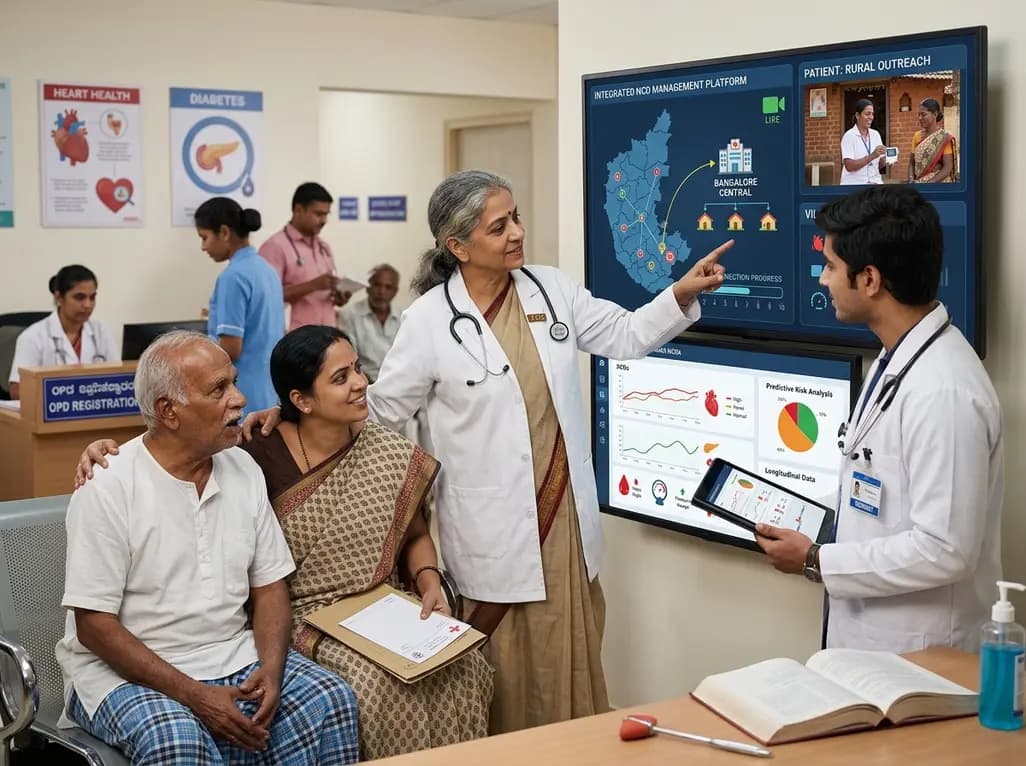
A high-level steering committee appointed by the Kerala government has recommended adopting a comprehensive \"One Health\" framework. This modern scientific strategy integrates human, animal, and environmental health surveillance to predict and manage disease outbreaks. To implement this, the committee advised holding immediate inter-departmental meetings involving health, education, forest, agriculture, and public works departments. Furthermore, they suggested establishing a Unified Public Health Command and Control Centre to consolidate real-time data from government and private hospitals. This centralized dashboard will track infectious disease trends, food safety indices, and water quality reports simultaneously. Such integration allows public health officials to identify emerging disease hotspots rapidly and deploy targeted interventions. For example, municipal workers can detect and treat local water contamination before waterborne illnesses spread. Additionally, mapping high-risk geographic areas helps allocate vector control resources where they are most urgently needed. This collaborative, surveillance-driven methodology ensures a swift, synchronized response to overlapping health threats. Ultimately, breaking down administrative silos is the most effective way to safeguard the population. Integrated surveillance represents the future of epidemic prevention in India.
Q1: Why does delayed garbage clearance in Thiruvananthapuram increase the risk of a dengue outbreak?
Accumulated municipal waste acts as a significant risk factor during the monsoon season. Discarded plastic containers, tires, and organic waste easily trap rain water, creating stagnant pools. Because Aedes aegypti mosquitoes breed exclusively in clean, stagnant water, these unmanaged waste sites become highly active breeding grounds. Prompt garbage removal and effective sanitation are therefore vital to eliminate these micro-habitats and control vector proliferation.
Q2: What is the state-sponsored \"Dry Day\" campaign and how does it prevent dengue transmission?
The \"Dry Day\" campaign is a weekly state-wide sanitation initiative designed to systematically disrupt the breeding cycle of Aedes mosquitoes. The program schedules specific cleaning activities on consecutive days: Fridays for school campuses, Saturdays for public and private offices, and Sundays for residential homes. By regularly draining stagnant water from refrigerator trays, flowerpots, and outdoor containers, participants prevent mosquito larvae from developing into adult vectors, thereby reducing local transmission rates.
Q3: How is the Kerala government addressing healthcare shortages to manage seasonal epidemics?
To prepare for potential outbreaks, the Kerala Health Department is actively addressing critical workforce shortages. The Health Minister has directed the Director of Health Services to fast-track recruitment processes and fill vacant positions at various administrative and clinical levels. Furthermore, the appointment of District Medical Officers is currently underway. These measures aim to strengthen local surveillance, clinical management, and outbreak coordination across all affected districts.
Disclaimer: This content is for informational and educational purposes only. It does not constitute medical advice or replace professional judgment. Refer to the latest local and national guidelines for clinical practice.
References

Read summarized clinical updates, watch expert medical content, and earn CME certifications right from your smartphone.
Open your smartphone camera to scan and install.





Kerala Health Minister K Muraleedharan has warned of a severe dengue outbreak risk in Thiruvananthapuram due to poor waste management during the monsoon. Discover the state's clinical response and the essential preventative guidelines launched to safeguard public health.
3 months ago

Discover the crucial role of glymphatic dysfunction in stroke, where perivascular clearance failure and neuroinflammation exacerbate cerebral edema and post-stroke brain injury.
Today

A prenatal case highlights severe glutaric acidemia type II presenting as bilateral hyperechoic cystic kidneys at 18 weeks. Whole-exome sequencing revealed a novel homozygous ETFDH frameshift variant, demonstrating the power of rapid genetic testing in fetal renal anomalies.
Today

Review how tailored exercise programs benefit frail older patients with heart failure. Explore pathophysiological mechanisms, individualized training prescriptions, and strategies to overcome adherence barriers in clinical practice.
Yesterday

This comparative study evaluates posterior labral tears with and without glenohumeral instability, highlighting distinct demographic patterns, MRI underestimation in stable shoulders, and successful arthroscopic repair outcomes.
Yesterday

A clinical study demonstrates that early intervention with tocilizumab, either as monotherapy or bridged with corticosteroids, achieves significant proptosis reduction and resolves active inflammation in treatment-naive thyroid eye disease.
Yesterday
