

Loading, please wait...
Loading, please wait...

The Karnataka government has temporarily paused its controversial directive regarding hospital billing transparency. Consequently, healthcare institutions across the state will not face immediate enforcement of mandatory medicine price disclosure in patient bills. This announcement arrived during ongoing legal proceedings before the Karnataka High Court. The state's Food Safety and Drug Administration issued the contested circular on October 1, 2026. However, private hospital associations promptly approached the judiciary to halt its implementation. Additional Advocate General B.V. Bhanuprakash assured the court that authorities are currently reviewing the mandate. Therefore, the administration will not insist upon compliance until the court hears the matter again on November 12. This temporary pause provides vital breathing room for healthcare administrators and clinical leaders across Karnataka.
The state regulatory authority issued the circular to curb escalating treatment costs in private medical establishments across Karnataka. Under this directive, hospitals and nursing homes were required to overhaul their billing procedures starting November 1. Specifically, medical centers had to list three distinct financial figures for every pharmaceutical product, medical device, and consumable item. These mandatory details included the base landing or procurement cost, the maximum retail price, and the final price charged to the patient. Furthermore, the circular mandated that facilities display comprehensive price boards prominently at pharmacy counters and billing desks. Health authorities also instructed hospitals to upload these extensive pricing schedules directly onto their official institutional websites. In addition, institutions faced strict requirements to preserve all procurement invoices and billing documentation for a minimum of three years. State officials asserted that these transparency measures would protect consumers against excessive markups on essential drugs and consumables. Moreover, district health officers received formal powers to inspect billing records and penalize non-compliant institutions. Thus, the directive introduced significant regulatory oversight over clinical drug distribution within the private medical sector.
Private healthcare providers mounted a swift legal challenge against the state directive before the Karnataka High Court. The Private Hospitals and Nursing Homes Association, alongside Pristine Hospitals and independent medical professionals, spearheaded the joint petition. Primarily, the petitioners argued that the Food Safety and Drug Administration lacked statutory power to issue such sweeping disclosure directives. Existing central drug legislation establishes maximum retail prices under national pharmaceutical pricing orders to protect consumer interests. However, these central statutes do not authorize state departmental authorities to compel private hospitals to publish confidential base purchase prices. Additionally, the petitioners stressed that bulk purchase rates depend on negotiated supplier agreements, credit cycles, and volume discounts. Consequently, compelling hospitals to reveal their wholesale acquisition costs directly compromises sensitive commercial contracts between healthcare providers and distributors. Furthermore, publicizing variable procurement rates could create widespread misunderstanding among patients receiving care across different hospital tiers. For instance, smaller community clinics and large tertiary multi-specialty hospitals negotiate vastly different procurement contracts based on institutional volume. Therefore, petitioners contended that unvetted price disclosures would distort the healthcare marketplace and disrupt private clinical care delivery.
Hospital administrators raised major concerns regarding the operational feasibility of complying with the state mandate on short notice. Most health centers rely on established enterprise software systems that do not automatically map wholesale landing costs to individual patient bills. Therefore, modifying internal billing platforms within a four-week window posed significant technical hurdles for IT departments. Furthermore, institutional drug procurement involves complex financial variables that obscure simple unit costs during everyday clinical workflows. Hospitals frequently negotiate bulk annual tenders, tiered distributor rebates, and prompt-payment cash discounts across thousands of inventory lines. Calculating the exact landing price for a single injectable vial or surgical suture during an emergency intervention requires substantial administrative labor. In addition, hospitals absorb significant indirect overhead costs associated with routine drug handling and regulatory compliance. These operational expenses encompass continuous cold-chain refrigeration, secure biomedical storage, computerized inventory tracking, and licensed clinical pharmacy personnel. Because standard patient markups cross-subsidize these crucial clinical overheads, exposing raw acquisition numbers without operational context distorts public perception. Consequently, hospital networks warned that arbitrary transparency rules might undermine the financial viability of private healthcare institutions.
The ongoing legal dispute highlights an enduring tension between patient affordability and institutional financial sustainability in modern healthcare. Regulatory authorities correctly seek to protect vulnerable patients from predatory billing and inflated consumables charges during medical emergencies. In recent months, public health officials engaged private healthcare leaders to address widespread public grievances regarding opaque medical bills. Nevertheless, imposing mandatory wholesale price disclosures without statutory backing creates severe legal uncertainty and operational friction for providers. Hospital administrators maintain that clear statutory caps, rather than mandatory commercial exposure, provide a far more balanced solution. For example, national price control authorities successfully regulate essential cardiac stents and orthopedic implants through formal ceiling prices. This established framework prevents excessive profiteering while maintaining commercial privacy and predictable supply chains across manufacturers. Moreover, forcing hospitals to disclose procurement margins could incentivize pharmaceutical distributors to eliminate discretionary institutional discounts. Consequently, smaller community nursing homes might face higher wholesale acquisition prices, ultimately increasing healthcare costs for ordinary citizens. Thus, policymakers must collaborate closely with medical professionals to construct sustainable, transparent, and fair billing regulations.
While the High Court reviews the underlying policy, practicing doctors and healthcare managers must evaluate their administrative readiness. The state government promised Justice C.M. Poonacha that it will not initiate coercive actions before November 12. As a result, hospitals do not need to overhaul their itemized billing formats on November 1. However, healthcare leaders should use this interim window to audit their current pharmaceutical pricing and billing practices. Administrators must ensure that all pharmacy sales remain strictly within statutory maximum retail price boundaries across departments. Furthermore, clinical teams should improve upfront communication regarding estimated medication and surgical device costs during inpatient admissions. Providing transparent financial counseling prior to major elective procedures substantially reduces billing disputes and fosters enduring therapeutic trust. Additionally, professional medical societies must remain actively engaged in the legal and administrative consultation process with the government. Meaningful dialogue with regulatory authorities can produce balanced policies that protect patient welfare without compromising clinical independence. Consequently, physicians and clinical leaders must stay informed about forthcoming judicial directives and evolving state compliance standards.
Q1: Why did the Karnataka High Court pause the hospital medicine price disclosure circular?
The state government voluntarily paused the circular after private hospital associations challenged its legality in the Karnataka High Court. Petitioners argued that drug authorities lacked statutory power to mandate procurement price disclosures. Furthermore, they demonstrated that disclosing wholesale purchase rates breaches commercial confidentiality and ignores hospital overheads. Consequently, state legal counsel requested additional time to re-examine the policy, prompting the court to defer enforcement until the upcoming judicial hearing on November 12.
Q2: What specific pricing information did the state government circular require hospitals to disclose?
The October 1 directive mandated that hospitals and nursing homes disclose three specific financial data points on every itemized patient bill. Specifically, institutions had to record the actual procurement or landing price, the approved maximum retail price, and the final rate billed to the patient. Moreover, facilities were instructed to erect prominent price disclosure boards in pharmacies, publish price lists on websites, and preserve all purchase invoices for three years.
Q3: How do fluctuating wholesale drug prices complicate direct bill disclosures for private hospitals?
Wholesale drug pricing varies substantially based on manufacturer volume rebates, supplier payment schedules, and inventory turnover rates across institutions. Forcing hospitals to print raw base costs creates patient confusion because acquisition prices differ significantly between small clinics and major hospital networks. Furthermore, landing costs exclude crucial clinical expenses, such as refrigeration, licensed pharmacist oversight, and specialized packaging. Therefore, printing isolated procurement figures misrepresents true hospital expenses and disrupts established distributor pricing models.
Disclaimer: This content is for informational and educational purposes only. It does not constitute medical advice or replace professional judgment. Refer to the latest local and national guidelines for clinical practice.
References

Read summarized clinical updates, watch expert medical content, and earn CME certifications right from your smartphone.
Open your smartphone camera to scan and install.





The Karnataka government informed the High Court that it will not enforce the October 1 circular mandating hospitals to publish base procurement prices, MRP, and charged rates on patient bills. Private medical associations argued against statutory overreach and commercial confidentiality risks as officials review rules.
Today

The deadliest Bundibugyo Ebola virus epidemic has crossed 5,000 fatalities in DR Congo, extending across borders. Discover vital clinical guidance for healthcare providers on pathogen features, differential diagnosis, infection prevention, supportive management, and surveillance protocols for returned travelers.
Today
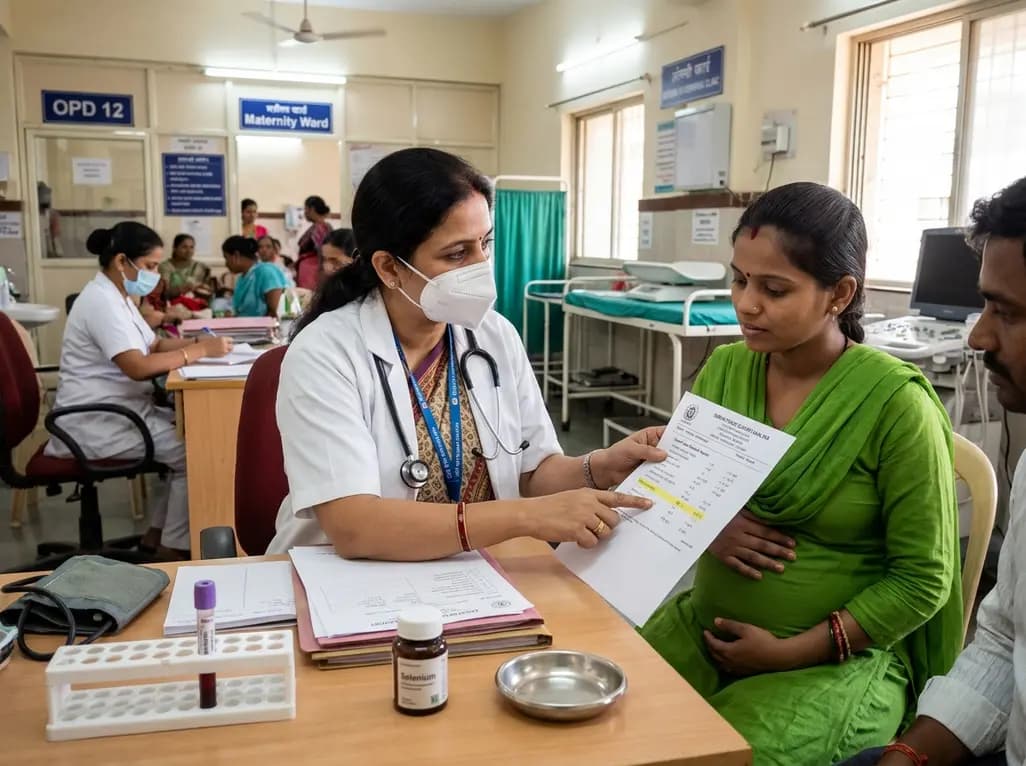
A prospective study reveals significant first-trimester trace-element alterations in pregnant women with epilepsy. Lower serum selenium independently predicted subsequent seizure recurrence despite prior remission, highlighting the vital clinical role of micronutrient profiling during antenatal care.
Today

A 15-year-old patient presented with knee arthralgia and acute rheumatic fever, exhibiting complex arrhythmias including AV blocks and non-sustained ventricular tachycardia despite lacking severe valvulitis. This highlights the importance of extended Holter monitoring in pediatric rheumatic carditis.
Today

An eight-year longitudinal imaging follow-up reveals severe temporomandibular joint remodeling in nodulosis-arthropathy-osteolysis (NAO) syndrome. Despite extensive osseous destruction, the patient maintained functional jaw opening without TMJ interventions, highlighting the role of conservative management.
Today

Discover essential clinical insights into AGLP1-type amyloidosis, a rare localized complication of glucagon-like peptide-1 analog injections. Learn how histopathology and mass spectrometry differentiate benign iatrogenic amyloidomas from systemic disease, preventing misdiagnosis and unwarranted therapies.
Today
