.webp&w=384&q=75)

Loading, please wait...
Loading, please wait...

Preterm birth and low birth weight significantly increase the lifelong risk of neuromotor impairment and altered brain connectivity. In recent decades, Kangaroo Mother Care has emerged as an essential, evidence-based intervention that provides continuous skin-to-skin contact, promotes exclusive breastfeeding, and fosters maternal-infant bonding. While clinicians widely recognise its immediate survival benefits, researchers continue to evaluate its long-term neurological impacts well into adulthood. A groundbreaking follow-up study now sheds light on how early neonatal skin-to-skin intervention influences adult motor pathways and neurophysiology. By examining adults who were born weighing 1800 grams or less, this cohort analysis provides compelling physiological evidence regarding the neuroprotective legacy of early post-birth care.
The present investigation evaluated young adults originally enrolled in a landmark randomized controlled trial conducted between 1993 and 1994 in Bogotá, Colombia. The cohort comprised 214 young adults who had a recorded birth weight of 1800 grams or less, representing a predominantly preterm population. Investigators aimed to determine whether receiving Kangaroo Mother Care during infancy conferred sustained benefits on neuromotor function decades later compared to conventional incubator care. In addition to the preterm cohort, researchers recruited a reference group of 50 term-born individuals with normal birth weights to establish baseline neurophysiological benchmarks. Consequently, this longitudinal framework offered a unique opportunity to evaluate the enduring neurodevelopmental trajectory of vulnerable neonates across a 20-year span. Therefore, the trial bridges a critical knowledge gap concerning whether early neonatal interventions alter adult neurobiology. Clinicians have long sought objective physiological metrics to determine if neonatal kangaroo care truly modifies lifelong motor circuits. By tracking this cohort over two decades, the authors provide essential data on how early thermal, physical, and sensory support translates into adult central nervous system integrity.
To assess central motor system integrity, investigators employed single-pulse and paired-pulse transcranial magnetic stimulation over the primary motor cortex. Specifically, these TMS protocols measured corticospinal excitability, intracortical inhibition, and transcallosal interhemispheric communication. In healthy individuals, the corpus callosum facilitates rapid communication and balanced motor control between the two cerebral hemispheres. However, preterm birth frequently disrupts white matter development and impairs transcallosal conduction. Alongside neurophysiological testing, participants completed functional motor assessments, including the Nine Hole Peg Test to evaluate manual dexterity, and dynamometry to measure grip strength. Thus, the comprehensive assessment combined physiological precision with real-world functional motor outcomes. Researchers carefully compared the physiological parameters of the preterm adults against the normative values established by the term-born reference group. Furthermore, multivariate logistic regression models accounted for potential confounding neonatal and socioeconomic variables. By combining transcranial magnetic stimulation with objective motor tasks, the researchers established a rigorous methodology to detect subtle, subclinical neurological deficits that standard physical examinations might overlook.
The functional findings revealed that adults born with birth weights of 1800 grams or less exhibited persistent motor impairments. Specifically, regardless of whether they received Kangaroo Mother Care or conventional care, preterm-born adults demonstrated significantly longer completion times on the Nine Hole Peg Test and reduced handgrip strength compared to normative standards. Moreover, general baseline TMS measures across the broad cohort did not differ significantly between the two intervention arms. However, multivariate logistic regression revealed a profound neurophysiological advantage among individuals who received Kangaroo Mother Care. Early skin-to-skin intervention showed a 78% effectiveness in preventing altered transcallosal conduction time. This protective effect indicates that early kangaroo care helped preserve crucial interhemispheric motor connectivity despite the persistent functional deficits. Therefore, while fine motor speed and muscle strength reflect multifaceted developmental challenges, early skin-to-skin holding specifically protected the structural and functional integrity of callosal motor pathways. Consequently, this preservation highlights a targeted physiological resilience granted by early sensory and maternal contact.
The biological mechanisms underlying this callosal preservation involve multiple neurodevelopmental pathways. Preterm neonates in neonatal intensive care units routinely encounter maternal separation, sensory deprivation, and physiological instability, all of which elevate systemic stress. In contrast, Kangaroo Mother Care provides a stable physiological microenvironment characterized by thermal stability, rhythmic maternal heartbeat, and continuous multisensory stimulation. Consequently, this nurturing environment lowers infant cortisol levels and regulates the autonomic nervous system. Furthermore, early skin-to-skin contact stimulates the release of oxytocin, which promotes synaptogenesis and enhances cerebral perfusion during a critical window of brain development. The corpus callosum undergoes rapid myelination and structural organization during late gestation and early infancy. Therefore, shielding fragile neonates from toxic environmental stress helps maintain oligodendrocyte maturation and protects axonal pathways from hypoxic-ischemic or inflammatory injury. Thus, the enhanced synchronization and preserved transcallosal conduction observed in adulthood represent the direct physiological legacy of an optimized developmental environment during early infancy.
These physiological findings carry profound clinical implications, particularly for healthcare professionals working in low- and middle-income countries like India. India accounts for the largest global burden of preterm births and low birth weight infants, facing considerable resource constraints in advanced neonatal intensive care. Fortunately, Kangaroo Mother Care represents a cost-effective, readily available, and highly impactful intervention that does not rely on sophisticated equipment. Neonatologists and pediatricians should aggressively advocate for early, prolonged, and continuous skin-to-skin contact in all eligible stable and unstable low birth weight neonates. Moreover, healthcare institutions must redesign neonatal units to accommodate mother-infant couplets and facilitate maternal presence around the clock. Furthermore, because fine motor deficits and reduced strength persist into adult life, clinicians must implement structured, long-term neurodevelopmental follow-up programs. Combining neonatal kangaroo care with early physical therapy and developmental surveillance will maximize neuromotor recovery and improve lifelong functional outcomes for high-risk preterm infants.
Kangaroo Mother Care creates a stable physiological environment that stabilizes vital signs, reduces stress hormone secretion, and promotes autonomic regulation. Furthermore, continuous skin-to-skin contact stimulates maternal oxytocin release, which supports synaptogenesis and healthy oligodendrocyte maturation. Consequently, this nurturing sensory input protects vulnerable white matter tracts, including the corpus callosum, preserving interhemispheric neural communication and mitigating long-term connectivity deficits in adults born preterm.
Adults born with low birth weights often experience long-term neuromotor challenges, including reduced manual dexterity, slower fine motor coordination, and diminished grip strength compared to individuals born at term. Although early interventions like Kangaroo Mother Care preserve critical interhemispheric neural pathways, some functional motor deficits remain evident on standardized assessments such as the Nine Hole Peg Test, highlighting the need for continuous developmental support.
Transcranial magnetic stimulation provides a non-invasive, highly objective method to evaluate corticospinal excitability and transcallosal conduction time in the human motor cortex. By delivering magnetic pulses over primary motor areas, clinicians and researchers can directly quantify the efficiency of neural circuits and interhemispheric communication. Consequently, TMS detects subtle neurophysiological differences and microstructural connectivity changes that routine clinical physical examinations cannot readily identify.
Disclaimer: This content is for informational and educational purposes only and should not be considered medical advice. Always consult a qualified healthcare provider for clinical diagnosis and treatment. Refer to the latest local and national guidelines for clinical practice.
References

Read summarized clinical updates, watch expert medical content, and earn CME certifications right from your smartphone.
Open your smartphone camera to scan and install.





A 20-year follow-up study reveals that Kangaroo Mother Care helps preserve adult transcallosal motor connectivity in individuals born preterm, providing 78% protection against altered conduction times despite persistent fine motor deficits.
last month

Modern renal nutrition is shifting toward additive-aware dietary guidance. This paradigm differentiates between intrinsic nutrients in whole foods and hyper-bioavailable inorganic additives, offering practical strategies to mitigate additive stacking and toxicity without restricting nutritious whole foods.
Today

A multiparametric MRI approach combining quantitative T2 shading, apparent diffusion coefficient (ADC) measurements, and morphological signs provides superior diagnostic accuracy over subjective evaluation to differentiate ovarian endometriomas from benign hemorrhagic cysts.
Today

A landmark case report reveals a donor heart beating for a century in a 63-year-old recipient, challenging conventional age limits in cardiac transplantation and offering critical lessons on organ longevity, donor selection, and long-term graft survival.
Today

A new randomized crossover trial reveals that a hinged ulnar gutter orthosis significantly improves hand function and weight-bearing tolerance compared to standard volar splints in patients with degenerative triangular fibrocartilage complex lesions, supporting functionally permissive orthotic designs.
Today
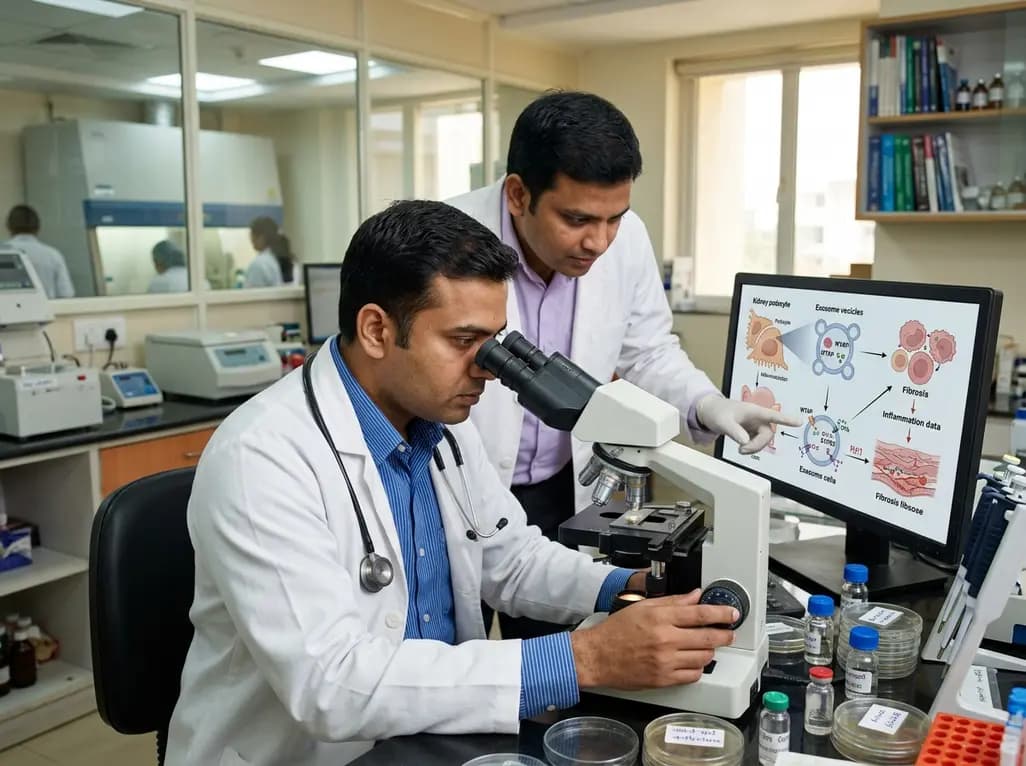
New research reveals that M1 macrophage-derived exosomes aggravate diabetic nephropathy by transferring WTAP to stabilize S1PR2 mRNA. Silencing WTAP in these vesicles attenuates endothelial injury and renal fibrosis, pointing toward innovative nanomedicine therapies.
Yesterday
