.webp&w=384&q=75)

Loading, please wait...
Loading, please wait...
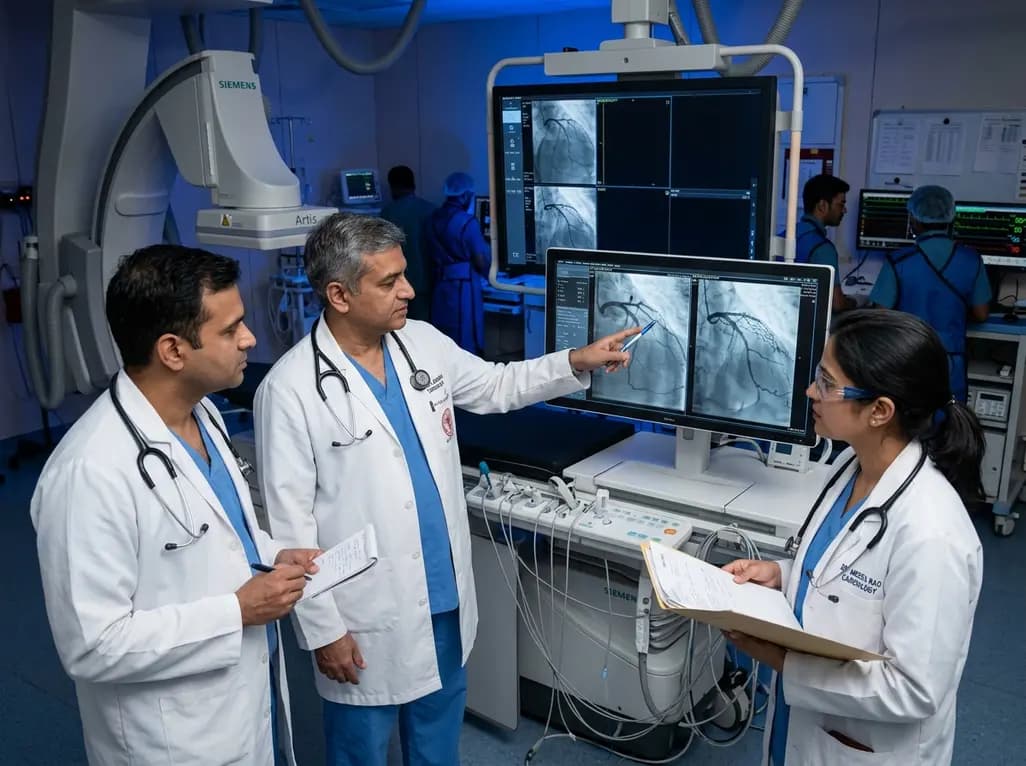
Union Minister of Health and Family Welfare JP Nadda recently underwent a coronary angioplasty at the All India Institute of Medical Sciences (AIIMS), New Delhi. Following initial complaints of uneasiness, medical specialists promptly evaluated him and performed necessary diagnostic workups. Consequently, hospital authorities confirmed that the minister remains hemodynamically stable and continues under careful observation within the cardiology unit.
On the evening of August 13, 2026, the Union Health Minister presented to AIIMS Delhi after experiencing episodes of physical uneasiness. Therefore, the medical team admitted him to the Department of Cardiology for comprehensive diagnostic evaluation and monitoring. Consequently, clinical specialists initiated structured baseline assessments, including non-invasive cardiac markers and an invasive coronary angiography on August 14. These preliminary investigations helped clinicians assess coronary anatomy and identify specific vascular lesions requiring mechanical revascularization.
Subsequently, interventional cardiologists performed a successful percutaneous procedure on August 17 to restore optimal myocardial perfusion. Following the intervention, AIIMS issued official statements confirming that the minister was recuperating well under standard post-procedure surveillance protocols. Furthermore, the clinical team emphasized that prompt presentation and early diagnostic stratification contributed significantly to a smooth therapeutic outcome. Therefore, this high-profile case underscores the vital importance of rapid hospital triage when evaluating acute cardiopulmonary symptoms.
Coronary angiography remains the gold standard modality for visualizing arterial stenosis and guiding subsequent catheter-based interventions. When patients report atypical or typical chest discomfort, clinicians must systematically exclude acute coronary syndromes through electrocardiography, cardiac biomarkers, and imaging. Furthermore, invasive angiography provides high-resolution luminography to pinpoint anatomical obstructions accurately. In addition, fractional flow reserve or instantaneous wave-free ratio can assess hemodynamic significance in borderline intermediate stenoses.
Moreover, intravascular ultrasound and optical coherence tomography offer superior cross-sectional resolution to characterize plaque morphology. Consequently, these intravascular imaging modalities assist interventionalists in identifying calcified, fibrous, or lipid-rich plaques prior to balloon dilation. In modern cardiology practice, radial artery access serves as the preferred anatomical entry route because it dramatically minimizes access-site bleeding complications. Furthermore, radial catheterization allows earlier post-procedure patient mobilization compared to traditional femoral approaches. As a result, integrating comprehensive angiographic protocols with advanced intravascular imaging ensures optimal procedural planning and patient safety.
The primary therapeutic goal of coronary angioplasty is the restoration of unrestricted lumen diameter and coronary blood flow. Clinicians indicate percutaneous coronary intervention for acute ST-segment elevation myocardial infarction, non-ST elevation acute coronary syndromes, and refractory chronic stable angina. Furthermore, revascularization relieves myocardial ischemia, enhances functional capacity, and mitigates long-term ventricular remodeling. Consequently, selection between percutaneous intervention and surgical bypass grafting relies on lesion complexity, anatomical distribution, and patient comorbidities.
Specifically, interventional teams calculate clinical SYNTAX scores to determine whether multi-vessel disease warrants surgical revascularization or multi-stent placement. Moreover, modern second- and third-generation drug-eluting stents have drastically reduced the historic risk of in-stent restenosis. These devices slowly release antiproliferative agents such as everolimus or zotarolimus from biocompatible polymers to inhibit neointimal hyperplasia. Additionally, contemporary bioresorbable polymer platforms improve endothelial healing and reduce persistent vascular inflammation over extended durations. Therefore, meticulous lesion preparation with non-compliant balloons or rotational atherectomy remains critical for achieving adequate stent expansion and optimal wall apposition.
Successful interventional outcomes depend heavily on meticulous periprocedural pharmacology and mechanical precision. Clinicians routinely administer unfractionated heparin or bivalirudin during the procedure to prevent catheter-associated thrombosis and acute vessel closure. Furthermore, operators must carefully select balloon diameters and stent lengths using precise angiographic or intravascular imaging measurements. Consequently, avoiding geographic miss and ensuring complete stent expansion prevents early scaffold thrombosis.
Additionally, high-pressure post-dilation with non-compliant balloons ensures adequate strut apposition against the arterial wall. Moreover, interventionalists maintain strict vigilance over hemodynamic parameters and monitor continuous electrocardiographic tracings throughout balloon inflations. In cases involving complex bifurcation lesions, provisional stenting techniques provide excellent procedural success while reducing metallic clutter. Furthermore, adequate hydration protocols before and after contrast delivery help protect renal function, particularly in susceptible individuals. Therefore, adhering to standardized periprocedural checklists minimizes procedural hazards and maximizes long-term lumen patency.
Following successful revascularization, patients require intensive hemodynamic monitoring in a specialized coronary care setting. Nurses and physicians regularly evaluate arterial access sites to detect hematomas, pseudoaneurysms, or retroperitoneal bleeding promptly. Furthermore, maintaining dual antiplatelet therapy consisting of aspirin combined with a potent P2Y12 inhibitor is mandatory to prevent stent thrombosis. Clinicians tailor the exact antiplatelet duration based on individual ischemic risks versus bleeding liabilities.
Moreover, long-term secondary prevention requires intensive pharmacological management alongside structured lifestyle interventions. High-intensity statin therapy, often combined with ezetimibe, helps achieve rigorous low-density lipoprotein cholesterol targets below 55 mg/dL. In addition, beta-blockers and angiotensin-converting enzyme inhibitors optimize left ventricular remodeling in patients with reduced ejection fractions. Structured cardiac rehabilitation programs further encourage supervised physical exercise, smoking cessation, and stress management. Consequently, comprehensive secondary prevention substantially diminishes future major adverse cardiovascular events and ensures sustained clinical recovery.
Q1: What are the primary indications for performing a coronary angioplasty?
Clinicians perform this procedure to relieve significant coronary artery narrowing causing myocardial ischemia. Primary indications include acute coronary syndromes, such as unstable angina or acute myocardial infarction, to restore tissue perfusion rapidly. Additionally, physicians recommend it for chronic coronary disease when lifestyle changes and optimal medical therapy fail to manage debilitating angina symptoms effectively.
Q2: How does coronary angiography differ from a coronary angioplasty?
Coronary angiography is strictly a diagnostic examination where radiographic contrast dye and fluoroscopy visualize arterial narrowing and blockages. Conversely, angioplasty is the subsequent therapeutic intervention where cardiologists inflate a balloon catheter and deploy a stent to widen narrowed lumens, successfully restoring unobstructed myocardial blood flow.
Q3: What critical post-procedure precautions must patients follow after stent placement?
Patients must strictly adhere to their prescribed dual antiplatelet regimen without interruption to avoid acute stent thrombosis. Furthermore, individuals should avoid vigorous physical exertion and heavy lifting during initial recovery. Routine medical follow-ups, cardiac rehabilitation, blood pressure control, and intensive lipid-lowering therapies are essential for long-term arterial patency.
Disclaimer: This content is for informational and educational purposes only. It does not constitute medical advice or replace professional judgment. Refer to the latest local and national guidelines for clinical practice.
References

Read summarized clinical updates, watch expert medical content, and earn CME certifications right from your smartphone.
Open your smartphone camera to scan and install.





Union Health Minister JP Nadda recently underwent a successful coronary angioplasty at AIIMS Delhi after presenting with uneasiness and undergoing diagnostic angiography. This case highlights crucial clinical protocols surrounding coronary evaluation, interventional revascularization, and structured post-PCI care.
last month

A nationwide English cohort study shows that interstitial lung diseases are no longer rare, with incidence jumping 30% and 200,000 active cases. This analysis highlights clinical implications for diagnosis, multi-disciplinary management, and global health priorities across respiratory and internal medicine.
Today

A nationwide South Korean study shows underreporting of smoking among women dropped from 57.4% to 36.4% between 2008 and 2021. However, over one-third of female smokers still conceal their habit, highlighting the critical role of cotinine verification in clinical risk assessment.
Today

PepsiCo and Monster Beverage have challenged the FSSAI ban on the energy drink label in Indian courts. While companies highlight supply disruptions, regulatory actions spotlight severe cardiovascular and metabolic risks associated with excessive caffeine, sugar, and taurine consumption, especially in adolescents.
Today
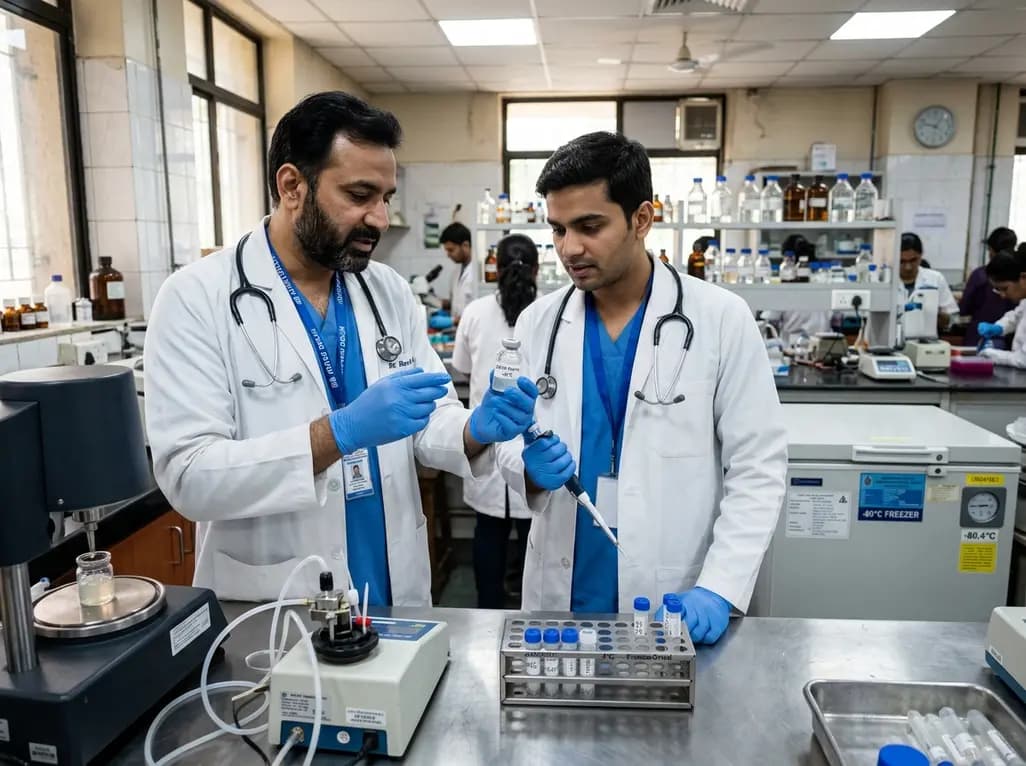
A new study evaluates the rheological stability of decellularized peripheral nerve matrix hydrogels under varied storage conditions. Findings show -80°C storage and freeze-drying preserve gelation kinetics and mechanical stiffness, offering key insights for shipping and translational clinical applications.
Today

A Bayesian multilevel meta-analysis reveals that aerobic training combined with moderate carbohydrate restriction modestly lowers HbA1c in type 2 diabetes. However, sparse data and very low certainty leave incremental benefits over exercise or diet alone unproven, highlighting the need for individualized care.
Yesterday
