.webp&w=384&q=75)

Loading, please wait...
Loading, please wait...
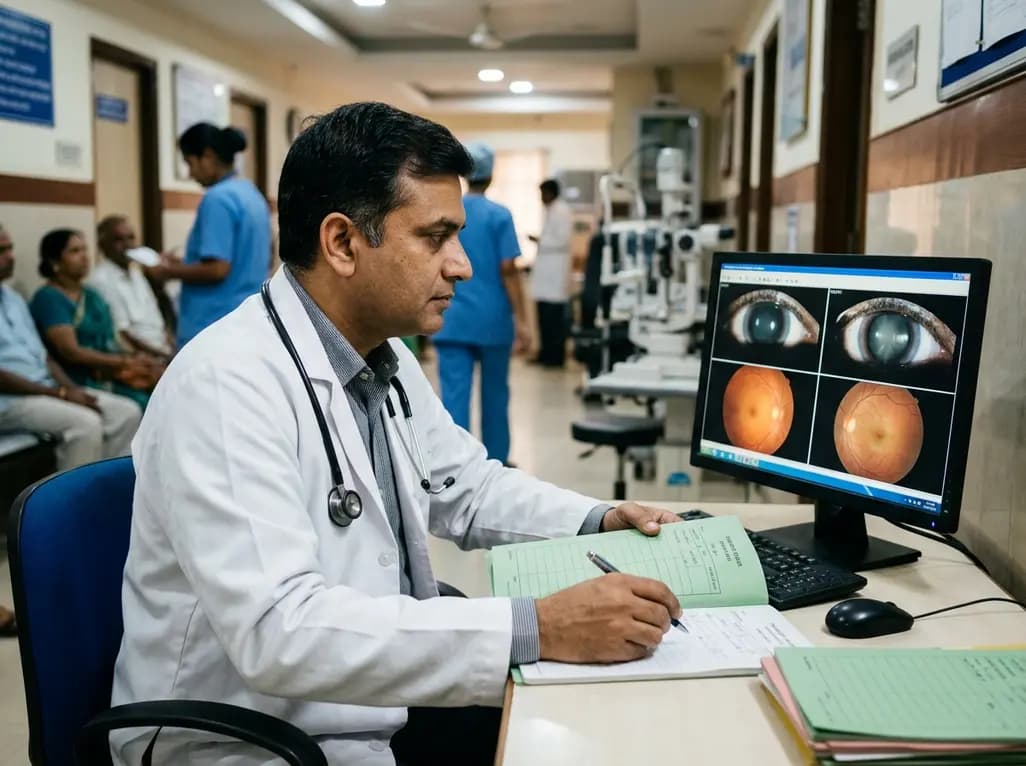
Understanding ISBCS adoption barriers is essential for improving surgical efficiency and patient outcomes. A recent investigation using data from the U.S. Department of Veterans Affairs (VA) explored why immediate sequential bilateral cataract surgery (ISBCS) remains underutilized. By analyzing over 44,000 cases between 2004 and 2023, researchers identified critical trends that shape ophthalmic practice patterns. While the COVID-19 pandemic served as a catalyst for change, the absolute adoption rate for this procedure remains remarkably low in the United States.
The study highlights a significant relative increase in ISBCS use during the pandemic. Specifically, the rate jumped by 231%, yet the absolute use rate settled at just 4%. Several clinical factors, such as ocular comorbidities and facility volume, traditionally hindered adoption. However, these factors became less influential during the global health crisis. In contrast, non-clinical factors took center stage. Travel burden, for instance, became a primary driver for choosing same-day bilateral surgery. Patients and surgeons often preferred ISBCS to minimize hospital visits and reduce potential exposure to the virus.
Interestingly, the study suggests that low use rates persist because many stakeholders act as if the procedure poses substantial risks. Even in the VA system, where most physicians receive salaries rather than fee-for-service payments, hesitancy remains high. Surgeons and patients often perceive ISBCS as less safe or effective than delayed sequential surgery. Consequently, institutional policies and individual beliefs continue to favor traditional approaches despite the potential for faster visual rehabilitation and lower logistical costs for the patient.
To overcome ISBCS adoption barriers, healthcare systems must address these safety perceptions directly. Education on modern aseptic protocols and refractive accuracy can help mitigate fears of bilateral endophthalmitis. Furthermore, streamlining facility protocols and recognizing the impact of travel burden can improve patient access to efficient care. As surgical backlogs grow globally, re-evaluating the role of ISBCS could become a vital strategy for ophthalmologists who seek to optimize clinical throughput.
The primary barriers include perceived safety risks, concerns about bilateral complications, and institutional policies that favor delayed sequential surgery. Despite growing evidence of safety, both surgeons and patients remain hesitant to adopt the same-day approach.
The pandemic significantly increased the relative use rate of ISBCS as healthcare facilities aimed to reduce patient visits. Factors like travel burden became more important, driving a 231% relative increase in the procedure's adoption compared to pre-pandemic levels.
Disclaimer: This content is for informational and educational purposes only. It is not intended as medical advice or to replace the professional judgment of a healthcare provider. Refer to the latest local and national guidelines for clinical practice.
References
Kang C et al. An Investigation into the Low Use Rate of Immediate Sequential Bilateral Cataract Surgeries in the U.S. J Cataract Refract Surg. 2026 Jun 16. doi: 10.1097/j.jcrs.0000000000001992. PMID: 42302317.
Deshmukh R et al. Resident and consultant ophthalmologists compare immediate sequential bilateral cataract surgery successes. Eye (Lond). 2024. doi: 10.1038/s41433-024-03150-1.
Aggarwal S. Is it Time to Implement ISBCS in Routine Clinical Practice? CRSToday. 2024 Apr.

Read summarized clinical updates, watch expert medical content, and earn CME certifications right from your smartphone.
Open your smartphone camera to scan and install.





A comprehensive analysis of over 44,000 bilateral cataract surgeries within the U.S. VA system reveals that while ISBCS rates tripled during the pandemic, they remain at a low 4%. The study identifies travel burden as a key driver, while safety concerns and ocular comorbidities remain primary barriers.
4 months ago

Discover the crucial role of glymphatic dysfunction in stroke, where perivascular clearance failure and neuroinflammation exacerbate cerebral edema and post-stroke brain injury.
Today

A prenatal case highlights severe glutaric acidemia type II presenting as bilateral hyperechoic cystic kidneys at 18 weeks. Whole-exome sequencing revealed a novel homozygous ETFDH frameshift variant, demonstrating the power of rapid genetic testing in fetal renal anomalies.
Today

Review how tailored exercise programs benefit frail older patients with heart failure. Explore pathophysiological mechanisms, individualized training prescriptions, and strategies to overcome adherence barriers in clinical practice.
Yesterday

This comparative study evaluates posterior labral tears with and without glenohumeral instability, highlighting distinct demographic patterns, MRI underestimation in stable shoulders, and successful arthroscopic repair outcomes.
Yesterday

A clinical study demonstrates that early intervention with tocilizumab, either as monotherapy or bridged with corticosteroids, achieves significant proptosis reduction and resolves active inflammation in treatment-naive thyroid eye disease.
Yesterday
