.webp&w=384&q=75)

Loading, please wait...
Loading, please wait...

Modern urologic oncology has shifted considerably toward organ-sparing treatments that preserve quality of life while maintaining effective oncological control. In this clinical landscape, irreversible electroporation prostate cancer ablation has emerged as a compelling non-thermal focal therapy modality for localized disease. Unlike thermal ablative techniques such as cryotherapy or high-intensity focused ultrasound, irreversible electroporation applies short, high-voltage electrical pulses across targeted prostatic tissue. Consequently, these electrical fields generate nanoscale pores in the lipid bilayer of malignant cell membranes, driving irreversible permeabilization and subsequent apoptosis. Crucially, this unique non-thermal mechanism spares extracellular stromal architecture, adjacent neurovascular bundles, and urethral sphincters. Therefore, patients experience substantially lower rates of severe urinary incontinence and erectile dysfunction compared to radical prostatectomy or whole-gland radiotherapy. However, the long-term success of this tissue-selective modality depends heavily on rigorous candidate selection. A landmark review from the European Association of Urology Section of Endourology provides essential clinical clarity on identifying patients who derive the maximal benefit from primary ablation.
Selecting suitable candidates requires a comprehensive evaluation of both tumor biology and baseline clinical characteristics. According to recent clinical consensus, the ideal candidate presents with primary, organ-confined intermediate-risk prostate cancer, classified under International Society of Urological Pathology grades 2 or 3. Furthermore, clinicians must confirm disease localization using pre-biopsy multiparametric magnetic resonance imaging alongside transperineal targeted and systematic template biopsies. Patients with a low prostate-specific antigen density and low-volume, unilateral disease achieve the most durable oncological outcomes. In addition, candidates should possess preserved baseline erectile function and urinary continence if functional preservation remains a primary therapeutic objective. Conversely, patients presenting with high-volume multifocal disease, extraprostatic extension, or seminal vesicle invasion should avoid focal ablation. For these higher-risk presentations, standard radical therapies or multimodal systemic protocols remain the preferred standard of care. Thus, precise patient profiling ensures that focal irreversible electroporation addresses clinically significant disease without compromising curative intent.
Technical considerations heavily influence treatment efficacy during irreversible electroporation prostate cancer ablation procedures. The spatial configuration of electrodes creates precise electrical fields that dictate the final ablation volume. Therefore, current clinical evidence and needle geometry strongly favor discrete index lesions measuring 20 millimeters or less in maximum diameter. When tumors exceed this dimensional threshold, achieving confluent electrical field coverage becomes technically challenging. Consequently, larger lesions carry an increased risk of inadequate marginal clearance and in-field cancer persistence. Contemporary prospective series report in-field ablation rates between 80% and 90% for properly sized index targets. For instance, findings from the pivotal PRESERVE trial demonstrated an in-field persistence rate of approximately 16% at one year post-ablation. To overcome geometric limitations, urologists must apply adequate safety margins of at least 5 to 10 millimeters around the visible target lesion. Moreover, meticulous real-time transrectal ultrasound guidance ensures parallel electrode placement, thereby optimizing energy delivery and preventing untreated gaps within the ablation zone.
Urological surgeons frequently debate whether to perform true targeted focal ablation or extended hemi-gland ablation. Recent comparative evidence reveals distinct oncological and functional trade-offs between these two procedural strategies. Specifically, hemi-gland irreversible electroporation provides superior local tumor eradication by treating the entire affected lobe along with occult micro-foci. A prominent comparative study demonstrated that clinically significant cancer persistence was only 8.6% following hemi-ablation, compared to 25% after focal ablation. In contrast, focused lesion ablation achieves better preservation of baseline erectile potency because it minimizes energy delivery near the ipsilateral neurovascular bundle. Urinary continence rates remain exceptionally high across both approaches, with most patients maintaining pad-free status postoperatively. As a result, treatment teams must tailor the ablation boundary to each patient's specific priorities and tumor characteristics. When a patient prioritizes maximum oncological assurance over slight potency risks, hemi-gland ablation presents an attractive intermediate approach between focal treatment and radical prostatectomy.
Prostate cancer remains an inherently multifocal disease in a significant proportion of men. Consequently, out-of-field recurrence represents the primary mode of therapeutic failure, occurring in approximately 15% to 25% of cases during follow-up. This biological reality highlights the paramount importance of structured post-treatment surveillance rather than passive observation. Clinical protocols recommend serial serum prostate-specific antigen testing every three months during the first year, complemented by multiparametric magnetic resonance imaging at six to twelve months. In addition, experts strongly recommend mandatory surveillance biopsy at 12 months post-procedure, combining targeted sampling of the ablation scar with systematic template biopsies of the untreated lobe. Fortunately, primary irreversible electroporation preserves natural tissue planes and does not induce extensive peri-prostatic fibrosis. Therefore, if out-of-field recurrence or significant in-field recurrence develops, salvage radical prostatectomy, salvage radiation therapy, or repeat irreversible electroporation remain technically feasible and safe options without excessive surgical complexity.
The role of irreversible electroporation continues to expand as registry data mature and randomized comparative trials progress. Currently, international urological guidelines recommend that clinicians offer focal therapy within well-designed clinical trials or prospective multicentre registries. Furthermore, emerging diagnostic technologies such as prostate-specific membrane antigen positron emission tomography are enhancing candidate selection accuracy. Combining advanced molecular imaging with artificial intelligence-driven treatment planning will likely refine electrode placement and minimize marginal miss rates. In addition, researchers are actively investigating synergistic combinations, including focal electroporation paired with short-course antiandrogen therapy or immunomodulatory agents. Such combination therapies may further decrease both in-field persistence and out-of-field progression. Ultimately, as long-term oncological durability reaches equivalence with standard modalities in carefully selected cohorts, irreversible electroporation will establish a definitive place in personalized, risk-stratified prostate cancer management paradigms worldwide.
The ideal candidate has organ-confined, intermediate-risk prostate cancer (ISUP Grade Group 2 or 3) with a single MRI-visible index lesion measuring 20 millimeters or less. Additionally, patients should have a low prostate-specific antigen density and unilateral disease verified by targeted and systematic biopsies. Men seeking to preserve functional quality of life, particularly erectile potency and urinary continence, benefit most from this tissue-selective, organ-sparing approach.
Hemi-gland irreversible electroporation provides superior oncological control compared to ultra-focal ablation, demonstrating significantly lower rates of clinically significant cancer persistence (8.6% versus 25%). However, focal ablation delivers superior preservation of erectile function because it limits energy exposure near the ipsilateral neurovascular bundle. Both therapeutic techniques maintain excellent urinary continence rates, allowing clinicians to tailor treatment extent based on individual risk profiles and patient preferences.
Structured post-treatment surveillance includes serum prostate-specific antigen testing every three to six months, paired with multiparametric magnetic resonance imaging at six to twelve months post-ablation. Crucially, clinicians should perform a mandatory 12-month post-ablation biopsy, combining targeted sampling of the treated scar with systematic biopsies of untreated tissue. This rigorous monitoring strategy enables early detection of in-field persistence or out-of-field recurrence while preserving salvage treatment options.
Disclaimer: This content is for informational and educational purposes only. It is not intended to be a substitute for professional medical advice, diagnosis, or treatment. Always seek the advice of your physician or other qualified health provider with any questions you may have regarding a medical condition. Refer to the latest local and national guidelines for clinical practice.
References

Read summarized clinical updates, watch expert medical content, and earn CME certifications right from your smartphone.
Open your smartphone camera to scan and install.





A narrative review from the EAU Section of Endourology identifies the ideal candidate for irreversible electroporation in localized prostate cancer: men with MRI-visible, organ-confined ISUP 2-3 index lesions under 20 mm, balancing excellent oncological control with functional preservation.
last month

Systemic amyloidosis management is undergoing a therapeutic revolution. This clinical review synthesizes updates from the International Society of Amyloidosis, detailing novel plasma cell therapies, TTR stabilizers, silencers, translational models, and artificial intelligence in drug development.
Today

A retrospective study of 824 patients undergoing over 2,200 intradetrusor onabotulinumtoxinA injections identifies sex- and etiology-specific predictors of 2-week post-void residual, highlighting the influence of baseline residual volumes, toxin dosage, and distinct urodynamic parameters on urinary retention risk.
Today
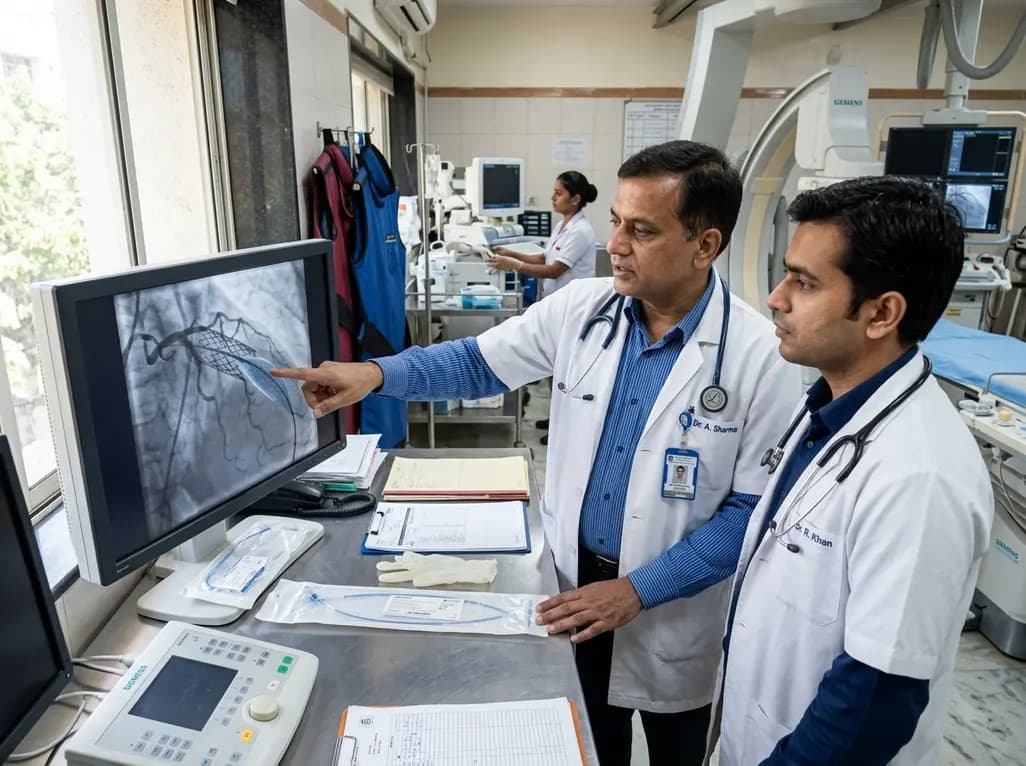
The US FDA has granted approval to the SELUTION SLR drug-eluting balloon for treating coronary in-stent restenosis. This milestone introduces a sustained-release sirolimus platform that eliminates the need for additional permanent metallic stents while maintaining robust vascular healing and luminal patency.
Today

The Thumbs-Out Classification (TOC) is a reliable screening tool for detecting thumb-in-palm deformity in children with cerebral palsy. Utilizing traffic-light tiers for radial abduction, TOC enables clinicians to monitor upper limb function and initiate timely therapeutic or surgical interventions.
Today

A comprehensive review analyzes periconceptional GLP-1 receptor agonist exposure, revealing reassuring data on congenital anomalies and adverse perinatal outcomes while emphasizing the need for cautious patient counseling.
Today
