.webp&w=384&q=75)

Loading, please wait...
Loading, please wait...

Moreover, intravenous lipid emulsion safety is a vital consideration because clinicians use it as a rescue antidote. However, potential effects on coagulation remain a concern so researchers performed a prospective crossover study. Consequently, they evaluated healthy Beagles and analyzed their viscoelastic parameters. Therefore, the study aimed to detect any induced hypocoagulability. Additionally, the team compared ILE to a control group because they needed a baseline for comparison.
Specifically, the dogs received a standard dose and then researchers measured clotting times. After that, they observed that clot formation times increased but platelet counts remained stable. Furthermore, the alpha angle decreased slightly and the clot amplitude was lower. In contrast, the prothrombin time increased after LRS administration so the changes were unique to the infusion type. Accordingly, most measurements stayed within reference intervals and thus the clinical impact was minimal. Consequently, ILE was well tolerated and it did not cause significant bleeding. Therefore, practitioners can trust the safety of this protocol because the results support its use. Finally, while statistically significant, the changes are clinically irrelevant and so ILE remains a safe rescue option.
Based on current study data, ILE may cause minor statistical changes in clot formation time, but these typically remain within normal reference ranges and do not lead to clinical bleeding.
Yes, the study used the standard antidotal protocol: a 2 mL/kg bolus followed by a 0.25 mL/kg/min infusion for 60 minutes.
Disclaimer: This content is for informational and educational purposes only. It does not constitute medical advice or substitute for professional judgment. Refer to the latest local and national guidelines for clinical practice.
References

Read summarized clinical updates, watch expert medical content, and earn CME certifications right from your smartphone.
Open your smartphone camera to scan and install.





Study evaluating the effect of 20% intravenous lipid emulsion (ILE) on coagulation, finding that changes are statistically minor and clinically insignifican...
6 months ago
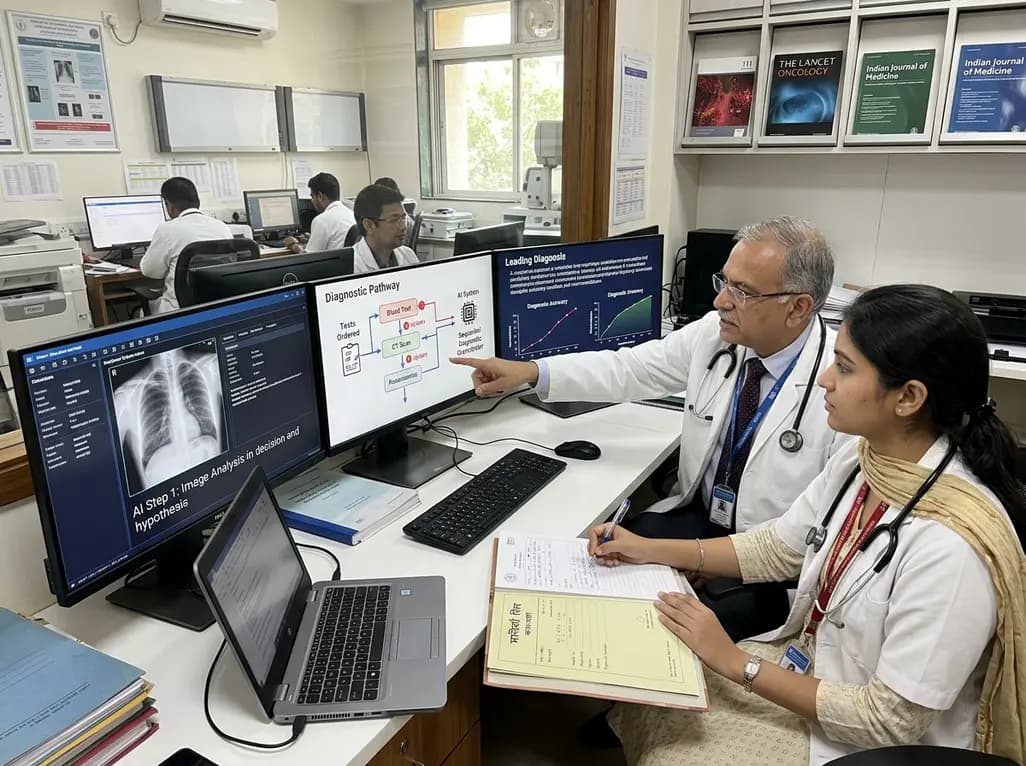
A breakthrough peer-reviewed study demonstrates that a sequential AI diagnosis system can mirror real-world clinical reasoning. By ordering stepwise tests and updating hypotheses dynamically, this multi-agent orchestrator achieved superior diagnostic accuracy while reducing investigative costs.
Today

A prenatal case highlights severe glutaric acidemia type II presenting as bilateral hyperechoic cystic kidneys at 18 weeks. Whole-exome sequencing revealed a novel homozygous ETFDH frameshift variant, demonstrating the power of rapid genetic testing in fetal renal anomalies.
Today

Review how tailored exercise programs benefit frail older patients with heart failure. Explore pathophysiological mechanisms, individualized training prescriptions, and strategies to overcome adherence barriers in clinical practice.
Yesterday

This comparative study evaluates posterior labral tears with and without glenohumeral instability, highlighting distinct demographic patterns, MRI underestimation in stable shoulders, and successful arthroscopic repair outcomes.
Yesterday

A clinical study demonstrates that early intervention with tocilizumab, either as monotherapy or bridged with corticosteroids, achieves significant proptosis reduction and resolves active inflammation in treatment-naive thyroid eye disease.
Yesterday
