

Loading, please wait...
Loading, please wait...

Selecting the most appropriate intracranial aneurysm treatment represents a cornerstone of modern neurovascular medicine. Clinicians worldwide balance the durability of microsurgical clipping against the minimally invasive nature of endovascular interventions. Recently, a multicenter retrospective study from Eastern China evaluated 2,720 patients harboring 2,811 aneurysms treated between 2018 and 2022. This comprehensive investigation provides critical real-world insights into clinical decision-making, procedural safety, long-term efficacy, and financial implications across both ruptured and unruptured cohorts.
Over the past decade, neurovascular teams have embraced catheter-based interventions with increasing enthusiasm. The multicenter analysis demonstrated a striking growth trajectory for endovascular coiling across tertiary centers. Specifically, the adoption of endovascular coiling exhibited a compound annual growth rate of 16.3% for ruptured aneurysms. Furthermore, the growth rate climbed to 19.1% for unruptured intracranial aneurysms. Consequently, by 2022, endovascular strategies accounted for 90% of all treated unruptured cases.
This swift transition mirrors evolving international trends favoring less disruptive access routes. Moreover, the study captured 1,439 patients with unruptured lesions, where 1,295 underwent endovascular therapy. Meanwhile, among 1,281 ruptured aneurysm cases, 748 received coiling while 533 underwent surgical clipping. Therefore, while open surgery previously dominated neurosurgical admissions, endovascular techniques now represent the frontline modality in high-volume hospitals.
However, this therapeutic evolution does not indicate complete obsolescence of traditional surgery. Instead, clinicians must contextualize these figures within institutional technological capability. Advanced imaging tools, biplane fluoroscopy suites, and dedicated neurointerventional devices directly accelerate catheter adoption. As a result, healthcare systems must weigh the clinical momentum of new technology against overall health system sustainability.
To eliminate baseline confounding, researchers implemented robust propensity score matching between clipped and coiled cohorts. This analytical technique matched patients across demographic variables, aneurysm morphology, and neurological severity. Consequently, the balanced comparison revealed significant discrepancies in perioperative parameters between both surgical modalities.
Most notably, endovascular coiling achieved significantly shorter operative times compared to open craniotomy. Shorter surgical exposure reduced immediate physiological stress and minimized intraoperative anesthetic burdens. In addition, coiled patients experienced lower overall perioperative complication rates during their acute hospital stay. This advantage proved particularly evident among elderly individuals and patients presenting with compromised cardiorespiratory reserves.
In contrast, microsurgical clipping required extensive intracranial dissection, brain retraction, and vascular skeletonization. Consequently, open surgery demonstrated longer operating room duration and slightly elevated perioperative morbidity. Nonetheless, surgical clipping achieved immediate and complete anatomical neck obliteration. Furthermore, direct visualization allowed surgeons to manage complex branching vessels safely. Thus, while endovascular therapy offers superior short-term safety profiles, open clipping preserves crucial microvascular architecture under direct operative inspection.
Although endovascular intervention provides rapid recovery, long-term durability remains a critical clinical concern. The propensity-matched analysis revealed that patients receiving endovascular coiling faced higher aneurysm recurrence risks over extended follow-up. Incomplete packing, coil compaction, and hemodynamic remodeling within the aneurysm sac frequently compromise long-term occlusion. Consequently, coiled patients require rigorous, lifelong neuroimaging surveillance to detect delayed recanalization early.
Conversely, microsurgical clipping demonstrated exceptional structural durability and near-permanent protection against late rupture. Because a titanium clip permanently excludes the lesion from arterial circulation, mechanical recanalization occurs infrequently. Therefore, retreatment rates remained significantly lower among surgically clipped patients. For younger individuals with decades of life expectancy, this enduring obliteration represents an invaluable therapeutic attribute.
In addition, clinicians must consider the psychological burden of perpetual radiological monitoring. Patients managed with endovascular devices often experience persistent anxiety regarding potential recanalization. In contrast, successful microsurgical clipping provides definitive closure, thereby relieving patients from mandatory annual angiographic evaluations. Therefore, multidisciplinary teams must explicitly explain recurrence probabilities when counseling eligible candidates.
Multivariable logistic regression identified several decisive clinical parameters dictating procedural selection. Clinicians demonstrated a clear preference for endovascular coiling in patients presenting with higher Glasgow Coma Scale scores. Similarly, medical teams preferentially selected endovascular management for incidental, unruptured aneurysms. These patients typically tolerated catheterization with minimal disruption to their baseline functional status.
However, microsurgical clipping remained the indispensable modality for complex anatomical configurations. Wide-necked aneurysms, lesions incorporating vital branching vessels, and giant pathologies presented formidable challenges for catheter-based occlusion. Furthermore, surgeons favored open clipping in severe clinical presentations accompanied by large space-occupying intracerebral hematomas. In such critical emergencies, craniotomy facilitates simultaneous hematoma evacuation and aneurysm securement, promptly relieving elevated intracranial pressure.
Thus, patient presentation and vascular geometry fundamentally define the optimal intervention. Neurosurgeons cannot apply a universal strategy to every cerebrovascular lesion. Instead, they must tailor the approach to individual hemodynamic risks and structural features. Furthermore, maintaining high-level microsurgical proficiency remains vital for centers handling tertiary neurovascular emergencies.
Beyond clinical efficacy, socioeconomic factors exert substantial influence over neurosurgical practice. The Eastern China analysis highlighted that endovascular coiling incurred considerably higher total hospitalization expenses than microsurgical clipping. Proprietary coils, microcatheters, balloon assist devices, and intracranial stents dramatically inflated procedural costs. Consequently, endovascular interventions placed a heavier direct financial burden on healthcare infrastructure and insurance payers.
In developing healthcare systems like India, these economic realities carry profound clinical implications. While public health schemes and insurance penetration are expanding, out-of-pocket healthcare expenditures remain formidable for many households. Microsurgical clipping requires skilled surgical hands and specialized operating room infrastructure, yet its disposable implant costs remain substantially lower. Therefore, open surgery offers a cost-effective, durable therapeutic choice for economically constrained patients.
Nonetheless, prolonged post-surgical convalescence and productivity losses from open surgery also generate indirect economic impacts. Endovascular intervention facilitates earlier discharge and faster return to employment, partially offsetting procedural device expenditures. As a result, healthcare administrators and neurovascular specialists must collaborate to formulate balanced reimbursement strategies that preserve broad patient access to both modalities.
The evolving landscape of neurovascular therapy necessitates comprehensive institutional synergy between neurosurgeons and neurointerventionalists. Modern hybrid operating suites now allow seamless transitions between fluoroscopic imaging and open microneurosurgery. Consequently, dual-trained cerebrovascular specialists can dynamically tailor treatments to complex morphologies during a single operative session.
Moreover, artificial intelligence and hemodynamic computational modeling are transforming pre-procedural risk stratification. Clinicians can now simulate coil packing densities and flow patterns before entering the angiosuite. Nevertheless, clinical judgment rooted in multicenter evidence remains the ultimate arbiter of patient outcomes. Ongoing medical education must continue emphasizing both advanced catheter techniques and meticulous microneurosurgical skills. Ultimately, maintaining balanced dual-modality expertise ensures that patients receive individualized, clinically sound, and economically viable neurovascular care.
Endovascular coiling is a minimally invasive catheter-based procedure that seals aneurysms internally, offering shorter operative times and fewer acute complications. In contrast, microsurgical clipping requires a craniotomy to place a mechanical clip across the aneurysm neck, providing higher anatomical durability and lower recurrence rates over long-term follow-up.
Coiling relies on dense intra-aneurysmal thrombogenicity and mechanical coil packing. Over time, pulsatile arterial hemodynamics can cause coil compaction, thrombus resorption, or aneurysm neck remodeling, allowing blood to re-enter the sac. Consequently, coiled lesions require longitudinal angiographic surveillance to identify delayed recanalization and prevent late secondary rupture.
Clinicians preferentially select microsurgical clipping for complex, wide-necked aneurysms, bifurcations incorporating critical branches, and younger patients seeking definitive lifelong obliteration. Furthermore, clipping is essential during acute subarachnoid hemorrhage when large space-occupying intracerebral hematomas require immediate surgical decompression alongside vascular occlusion to relieve intracranial hypertension.
Disclaimer: This content is for informational and educational purposes only... Refer to the latest local and national guidelines for clinical practice.
References

Read summarized clinical updates, watch expert medical content, and earn CME certifications right from your smartphone.
Open your smartphone camera to scan and install.





A multicenter propensity-matched study evaluated 2,720 patients with intracranial aneurysms treated between 2018 and 2022 in Eastern China. The analysis contrasts endovascular coiling and microsurgical clipping, detailing shifting clinical preferences, complication rates, recurrence risks, and economic impacts.
Today

A large network analysis of middle-aged and older adults reveals distinct sex-specific dependency pathways between lifestyle factors and cardiometabolic diseases. Physical activity, smoking, and alcohol exhibit divergent bridging roles in men and women, underscoring the need for tailored clinical prevention.
Today

A meta-analysis of 9 randomized controlled trials evaluated health-related quality of life when adding PD-1/PD-L1 inhibitors to standard therapy for endometrial and cervical cancer. Adding immunotherapy did not detectably change global quality of life or worsen functional and symptom domains.
Today

A cross-sectional study evaluates the critical intersection between acute surgical pain, kinesiophobia, and fall risks during initial mobilization after cardiac surgery, emphasizing targeted nursing strategies.
Today

A landmark study reveals that patellofemoral cartilage defects in patients with trochlear dysplasia are primarily driven by patellar maltracking and spur height rather than dislocation frequency or shape mismatch, offering crucial insights for preoperative imaging and surgical stabilization.
Today
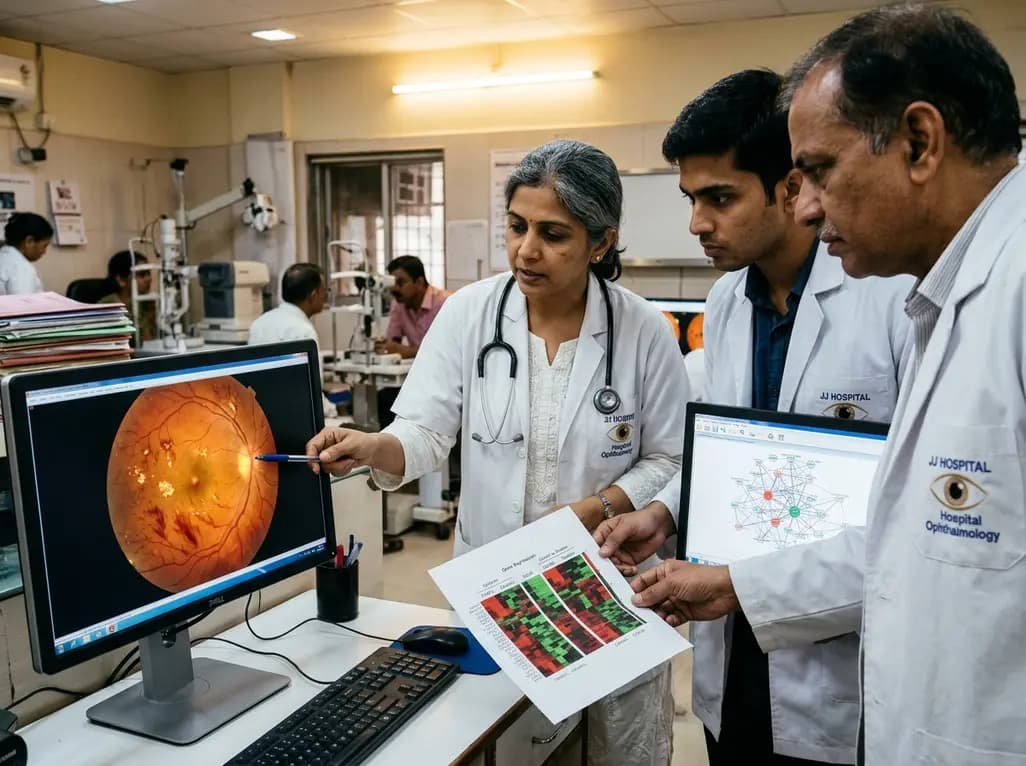
Single-cell transcriptomics reveals that STAP2 promotes retinal endothelial dysfunction in diabetic retinopathy through CXCR4 signaling. In vivo and in vitro studies show STAP2 knockdown reduces capillary drop-out and vascular leakage, uncovering a novel therapeutic target beyond anti-VEGF therapies.
Today
