

Loading, please wait...
Loading, please wait...

Obstructive sleep apnea represents a pervasive respiratory disorder that drives severe cardiovascular morbidity and mortality worldwide. Repeated airway collapse produces cyclical desaturation and reoxygenation episodes, driving profound oxidative stress and systemic inflammation. Recent landmark research demonstrates that intermittent hypoxia vascular dysfunction arises through targeted epigenetic remodeling and premature cellular aging. Consequently, clinicians must look beyond simple mechanical obstruction to appreciate how nocturnal hypoxemia alters cellular lifespan. Understanding these molecular mechanisms offers transformative opportunities to combat sleep-related vasculopathies and resistant hypertension.
To characterize the chronobiology of nocturnal hypoxemia, researchers established a robust animal model using male C57BL/6J mice. Specifically, investigators exposed experimental cohorts to cyclical intermittent hypoxia simulating moderate-to-severe sleep apnea across exposure intervals ranging from 7 to 210 days. Parallel control cohorts breathed standard room air under identical environmental conditions. Throughout the exposure regimen, physiological evaluations revealed significant hemodynamic derangements. Mice subjected to intermittent hypoxia developed progressive systemic hypertension and severe endothelial vasomotor dysfunction. Furthermore, the duration of hypoxic cycles directly dictated the severity of vascular impairment. Previous studies often overlooked the longitudinal trajectory of arterial remodeling under chronic oxygen deprivation. However, this extended exposure protocol demonstrated that sustained hypoxic insults perpetuate vascular stiffness and compromise normal vasodilation. Notably, these experimental findings closely mirror clinical observations in hypertensive sleep apnea patients who show persistent arterial stiffness despite nocturnal intervention. By establishing this detailed temporal framework, the researchers successfully illuminated how chronic hypoxia initiates early endothelial breakdown and sustains progressive cardiovascular deterioration.
Epigenetic mechanisms govern how environmental stressors influence gene transcription without modifying the underlying DNA sequence. In this investigation, scientists conducted genome-wide DNA methylation profiling on both left ventricular myocardial tissue and circulating peripheral blood mononuclear cells. Remarkably, intermittent hypoxia induced 5,747 differentially methylated positions within the left ventricle and 1,307 distinct positions within peripheral immune cells. Furthermore, statistical analysis demonstrated minimal genomic overlap between these distinct compartments, identifying only 163 shared methylated sites. This crucial disparity reveals that circulating blood markers do not faithfully mirror deep tissue epigenetic remodeling. In addition, the authors applied multi-tissue epigenetic clocks to calculate epigenetic age acceleration across both tissue compartments. Both tissues exhibited an acute spike in biological aging after merely 7 days of hypoxic exposure. However, their subsequent age trajectories diverged significantly during prolonged exposure periods. Left ventricular tissue sustained persistent epigenetic age advancement, whereas circulating leukocytes followed a distinct regulatory pattern. Therefore, localized cardiac epigenetic remodeling represents an autonomous driver of structural cardiac pathology that blood sampling cannot fully quantify.
Pathway enrichment analyses of the differentially methylated loci highlighted major networks governing oxidative stress, inflammatory signaling, and cell cycle arrest. Specifically, the data brought the Cdkn2a gene into sharp focus. This genetic locus encodes the p16 protein, an established molecular hallmark of irreversible cellular senescence. Intermittent hypoxia triggered significant promoter hypomethylation at the Cdkn2a locus, which directly facilitated sustained gene overexpression. Consequently, immunofluorescence imaging confirmed a marked upregulation of p16 protein within aortic endothelial cells following chronic intermittent hypoxia. Endothelial cells entering this senescent state permanently cease replication yet remain metabolically active. Moreover, senescent vascular cells secrete an array of pro-inflammatory cytokines, chemokines, and matrix metalloproteinases known collectively as the senescence-associated secretory phenotype. This destructive secretome degrades vascular matrix elasticity, inhibits nitric oxide synthesis, and impairs microvascular compliance. Thus, p16-driven endothelial senescence does not merely indicate passive vascular injury. Instead, it operates as an active biochemical engine that sustains continuous arterial damage and accelerates cardiovascular pathology throughout chronic hypoxemic stress.
To definitively prove causality between cellular senescence and cardiovascular morbidity, the researchers utilized sophisticated transgenic mouse models. Specifically, they employed a targeted genetic system capable of conditionally ablating p16-expressing senescent cells upon administration of a biological trigger. Following chronic intermittent hypoxia, researchers eliminated p16-high cells across the entire vascular system and assessed cardiovascular function. The results demonstrated striking physiological recovery. Systemic ablation of senescent cells completely reversed hypoxia-induced blood pressure elevation, restoring arterial pressures back toward baseline levels. Furthermore, the targeted clearance of senescent endothelium fully restored coronary flow reserve in experimental animals. This dramatic functional rescue proves that cellular senescence actively perpetuates vascular dysfunction rather than remaining a benign consequence of hypoxia. In addition, these results suggest that eliminating senescent endothelial cells permits healthy neighboring progenitors to restore functional endothelium. Therefore, senolytic therapies that selectively eliminate senescent vascular cells represent a transformative therapeutic strategy. Such targeted interventions could potentially reverse established cardiovascular injury in chronic sleep apnea patients where continuous positive airway pressure provides incomplete vascular benefits.
These preclinical discoveries carry profound implications for clinical medicine and cardiovascular risk stratification. Clinicians currently manage obstructive sleep apnea primarily with continuous positive airway pressure devices. While positive airway pressure effectively eliminates airway collapse, large randomized trials demonstrate that mechanical therapy often fails to eliminate cardiovascular mortality. This clinical paradox suggests that chronic intermittent hypoxia initiates enduring epigenetic alterations that pneumatic splinting cannot reverse. Consequently, patients retain elevated vascular vulnerability even after achieving compliant nightly therapy. In clinical practice, integrating senotherapeutic strategies alongside airway management could eliminate this residual risk. Furthermore, pharmacological senolytics could selectively destroy dysfunctional endothelial cells and allow healthy vascular regeneration. Thus, targeted interventions may bridge the gap left by standard mechanical devices. Moreover, measuring epigenetic clocks may soon help physicians identify patients experiencing accelerated biological aging. By adopting these cutting-edge molecular insights, clinicians can establish comprehensive care models that directly counteract vascular senescence.
Intermittent hypoxia generates intense bursts of reactive oxygen species during repeated reoxygenation episodes. This persistent oxidative stress alters DNA methylation patterns across critical genomic loci, notably within the Cdkn2a promoter. Consequently, vascular endothelial cells upregulate p16 protein expression and enter an irreversible state of senescence. These dysfunctional cells secrete damaging inflammatory cytokines that accelerate biological aging, promote arterial stiffness, and perpetuate chronic vascular dysfunction throughout the cardiovascular system.
Preclinical evidence demonstrates that clearing senescent cells successfully reverses hypertension and restores coronary flow reserve. In human clinical medicine, pharmaceutical senolytics currently undergo trials for diverse age-related conditions. While continuous positive airway pressure addresses mechanical airway obstruction, combining airway therapy with senolytic agents could directly clear damaged endothelium. Consequently, this multi-targeted approach holds strong potential to reverse residual cardiovascular damage in sleep apnea patients.
Blood leukocytes and cardiac myocytes exhibit markedly different epigenetic responses under chronic hypoxic stress. Experimental studies reveal that fewer than three percent of differentially methylated sites overlap between circulating immune cells and left ventricular myocardium. Furthermore, biological aging trajectories diverge significantly between tissue types over time. Consequently, liquid biopsies cannot adequately reflect deep tissue remodeling, meaning clinicians need tissue-specific markers to assess cardiac damage accurately.
Disclaimer: This content is for informational and educational purposes only. It is not intended to be a substitute for professional medical advice, diagnosis, or treatment. Refer to the latest local and national guidelines for clinical practice.
References

Read summarized clinical updates, watch expert medical content, and earn CME certifications right from your smartphone.
Open your smartphone camera to scan and install.





A landmark study reveals that intermittent hypoxia drives vascular dysfunction via tissue-specific epigenetic aging and p16-mediated cellular senescence, highlighting novel senolytic targets for sleep apnea.
Today

A large cohort study demonstrates that fetal growth restriction in a first pregnancy raises maternal cardiovascular risk within five years postpartum, including elevated rates of heart failure, stroke, and myocardial infarction. Clinicians must initiate proactive postpartum screening and cardiovascular prevention.
Yesterday
A collaborative APRN-physician telemedicine model significantly expands access to cardiac stress testing in rural hospitals, doubling obstructive coronary disease detection and maintaining high cardiac rehabilitation enrollment.
Today

A paired cadaveric study compared triple and quintuple percutaneous Achilles tendon lengthening. While quintuple hemisection showed numerically greater elongation, differences were not statistically significant.
Yesterday
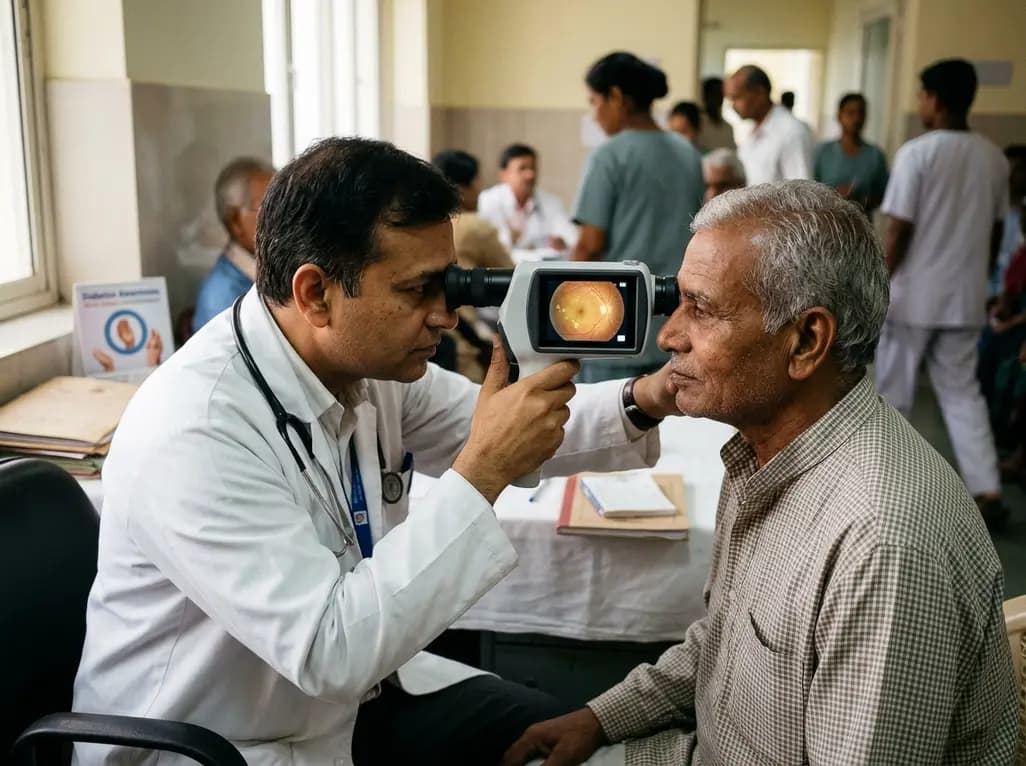
Diabetic retinopathy remains a leading cause of preventable visual impairment. This review outlines key strategies for screening, systemic risk factor control, advanced diagnostic imaging, and timely specialist referrals within primary and multidisciplinary care models.
Today
