.webp&w=384&q=75)

Loading, please wait...
Loading, please wait...
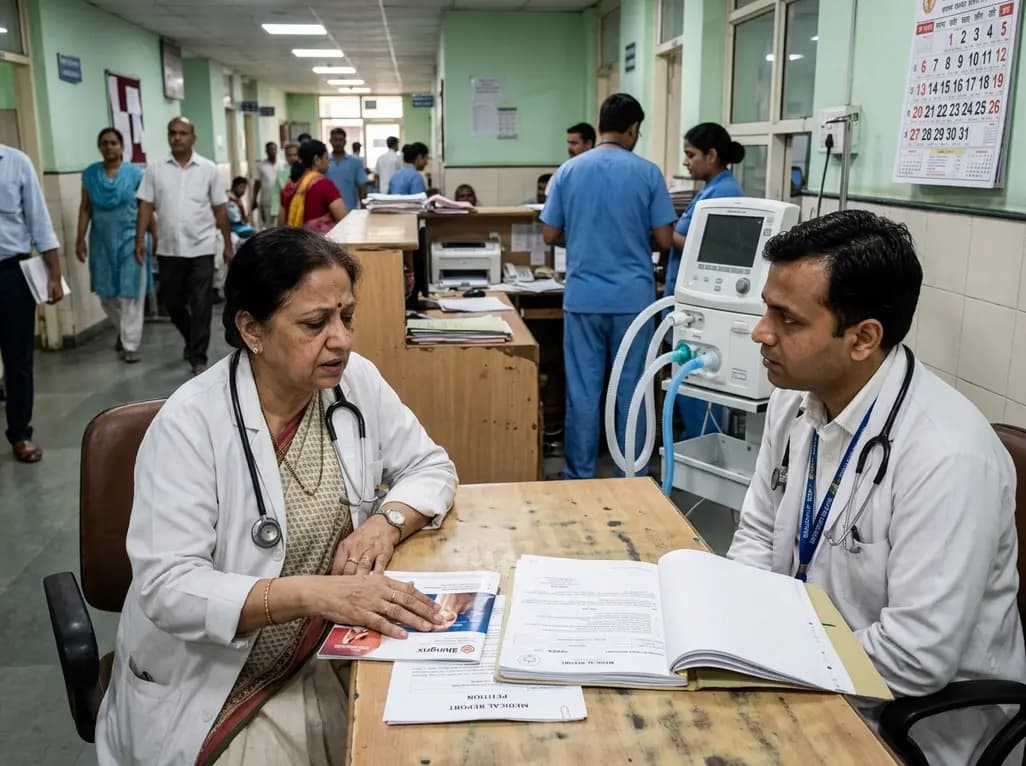
The Rouse Avenue Court recently refused to extend interim medical bail to former DGHS Dr. Vatsala Aggarwal. Specifically, the Anti-Corruption Branch arrested her regarding an alleged Rs 700 crore medical procurement scam. On August 18, the trial court initially granted four weeks of relief on clinical grounds. However, Special Judge Vidya Prakash dismissed the recent extension plea on September 14. The court ruled that correctional dispensaries can adequately supply all prescribed medications and injections. Consequently, the judge directed the accused to surrender directly before the prison authorities.
Indian courts evaluate interim medical bail by balancing individual rights under Article 21 against societal interests in ongoing criminal prosecutions. Consequently, judicial officers rarely grant prolonged medical bail when prison authorities can provide adequate treatment. In this proceeding, the defense argued that the accused suffered from complex chronic ailments that required specialized outpatient management. However, the special public prosecutor strongly opposed the extension plea. The prosecution asserted that the medical reports did not disclose life-threatening emergencies or critical instability requiring community-based release. Furthermore, the court emphasized that statutory custody does not automatically cease because an undertrial needs continuous medication. Instead, the legal benchmark requires proof that prison medical staff cannot manage the documented illness. Therefore, the presiding judge examined whether the Tihar jail dispensary could execute the discharge instructions issued by treating specialists. After reviewing medical submissions from treating hospitals, the court determined that the correctional facility could supply all prescribed medicines. Thus, the court dismissed the application and directed the accused to surrender immediately. In addition, judicial precedents confirm that state-funded prison health systems bear the primary duty to furnish essential medical therapy.
The legal action stems from an extensive anti-corruption probe into the Directorate General of Health Services and the Central Procurement Agency. Specifically, the Directorate of Vigilance forwarded a formal complaint in June 2026 alleging widespread irregularities. Investigators promptly registered a case under Section 7A of the Prevention of Corruption Act and Bharatiya Nyaya Sanhita provisions. According to investigators, senior departmental administrators engaged in corrupt bidding practices and manipulated institutional procurement frameworks. Furthermore, the agency discovered that officials procured surgical consumables, essential drugs, and medical equipment at severely inflated rates. These transactions reportedly caused wrongful financial losses exceeding Rs 700 crores to the public exchequer. Consequently, the Anti-Corruption Branch arrested both Dr. Vatsala Aggarwal and Dr. Vinod Kumar Ranga, who headed the procurement agency. This case underscores the strict regulatory oversight governing administrative clinicians in India. When medical officers transition into administrative and procurement positions, they carry fiduciary responsibilities under financial rules and criminal law. Therefore, courts demand rigorous legal accountability whenever allegations of systemic procurement fraud arise in the public healthcare sector. In addition, administrative vigilance plays a crucial role in safeguarding public healthcare resources from systemic exploitation.
During bail hearings, defense counsel presented detailed clinical summaries to demonstrate health vulnerabilities. Specifically, counsel highlighted that treating physicians designated the accused as an immunocompromised patient in a recent discharge summary. Counsel argued that crowded prison barracks increase infection risks for vulnerable individuals. In addition, the defense stressed the timing of scheduled prophylactic care. The accused required a second dose of the recombinant zoster vaccine, Shingrix, in late September. Because interrupted vaccine schedules can compromise immune memory, advocates urged the court to prolong interim freedom. Shingrix is a non-live recombinant subunit vaccine administered in a two-dose series to prevent herpes zoster and postherpetic neuralgia. In immunocompromised individuals, adherence to the dosing interval between two and six months optimizes humoral and cellular immunity. However, the trial court determined that custodial facilities can safely oversee immunizations. The judge explicitly permitted the undertrial to bring prescribed medications and injections into the prison. Nevertheless, jail staff must scrutinize and catalog all pharmaceuticals in accordance with statutory jail manual guidelines. Thus, the court resolved the immunization challenge without needing to grant bail. Moreover, correctional health staff regularly administer approved injectable therapies under established clinical protocols.
The defense also focused heavily on the requirement for complex respiratory support. Specifically, the patient required nocturnal oxygen therapy coupled with Adaptive Servo-Ventilation (ASV). Counsel argued that ASV is an advanced, machine-dependent therapy requiring continuous electrical power that basic jail dispensaries cannot guarantee. From a clinical perspective, ASV represents a non-invasive positive airway pressure modality engineered for complex sleep-disordered breathing. Clinicians primarily prescribe ASV for central sleep apnea and Cheyne-Stokes respiration. The device tracks minute ventilation in real time and rapidly modulates inspiratory pressure support to stabilize irregular respiratory patterns. In addition, supplemental nocturnal oxygen corrects arterial desaturation during sleep. Although managing electronic respiratory devices in prison barracks presents logistical hurdles, the court refused to view this as grounds for release. Instead, the judge ordered the Jail Superintendent to establish necessary arrangements for ASV and nocturnal oxygen within jail walls. Furthermore, if the dispensary cannot maintain this equipment, authorities must promptly transfer the patient to a designated government hospital. Consequently, the judiciary placed the operational burden directly on correctional administrators rather than releasing the accused. Therefore, custodial patients with chronic respiratory failure retain continuous access to life-sustaining medical technology.
Under Indian constitutional jurisprudence, undertrials retain the fundamental right to health and dignity under Article 21. However, this constitutional entitlement does not give an accused an unrestricted choice of private treatment. Supreme Court precedents affirm that the state bears a non-negotiable duty to furnish comprehensive healthcare inside correctional facilities. When specialized modalities exceed internal prison capacities, superintendents must utilize government super-specialty institutions. In the present ruling, Special Judge Vidya Prakash reaffirmed these operational parameters. The court directed that prison medical officers must administer all treatments prescribed by tertiary hospitals without obstruction. In addition, the jail administration must facilitate immediate hospitalization if acute health complications arise. This framework ensures that an accused individual receives necessary clinical care without undermining the administration of criminal justice. Moreover, it prevents litigants from utilizing non-fatal, manageable chronic diseases as a mechanism to avoid judicial detention. Medical professionals who prepare clinical reports for undertrials must remain objective and clear. Specifically, physicians must distinguish between conditions requiring tertiary ICU admission and chronic disorders manageable through custodial medical dispensaries. Consequently, transparent medical evaluations assist trial courts in balancing humanitarian health needs against statutory accountability.
Q1: What clinical threshold must an accused satisfy to secure interim medical bail in India?
To obtain interim medical bail in India, an accused must prove that their condition is severe or life-threatening. Furthermore, the defense must show that custodial facilities cannot manage the illness. Courts closely evaluate official prison medical records and specialist recommendations. If correctional dispensaries or public hospitals can administer the prescribed therapy, judges deny temporary release while mandating strict custodial care.
Q2: What is Adaptive Servo-Ventilation, and can correctional facilities accommodate this therapy?
Adaptive Servo-Ventilation is an advanced positive airway pressure mode designed to treat central sleep apnea and complex breathing disorders. The machine dynamically adjusts pressure support to maintain regular ventilation throughout the night. Although the equipment requires uninterrupted electricity, correctional facilities can accommodate it in infirmary wards with backup power. Alternatively, jail superintendents must transfer patients to government hospitals providing nocturnal respiratory support.
Q3: How does the court address adult vaccination schedules for incarcerated individuals?
Courts recognize that essential immunizations, such as the two-dose recombinant zoster vaccine Shingrix, must proceed without therapeutic disruption. However, judges typically do not grant bail solely for routine injections. Instead, judicial magistrates direct jail authorities to permit detainees to bring approved vaccines inside. The prison medical team stores and administers the biological agents under clinical supervision pursuant to standard jail manual protocols.
Disclaimer: This content is for informational and educational purposes only. It does not constitute medical advice or replace professional judgment. Refer to the latest local and national guidelines for clinical practice.
References

Read summarized clinical updates, watch expert medical content, and earn CME certifications right from your smartphone.
Open your smartphone camera to scan and install.





A special Delhi court has directed former DGHS Dr. Vatsala Aggarwal to surrender after refusing her relief plea. Despite clinical submissions citing immunocompromised status, scheduled Shingrix immunization, and adaptive servo-ventilation needs, the court held that jail authorities can manage these medical requirements.
Today

Hormonal shifts throughout puberty, menstruation, fertility treatments, pregnancy, and menopause cause profound glucose excursions in women with diabetes. Understanding these endocrine transitions and utilizing advanced continuous glucose monitoring enables clinicians to optimize personalized diabetes care.
Today
New evidence links chronic troponin elevation in ATTR-CM to coronary microvascular dysfunction, reduced capillary density, and elevated filling pressures rather than histological amyloid burden alone, redefining our understanding of persistent myocardial injury.
Today
Cervi-AI achieves expert-level agreement in evaluating cervical spinal stenosis and spinal cord compression on MRI, while its automated imaging metrics reliably predict anterior versus posterior surgical approaches in multilevel degenerative cervical myelopathy.
Today
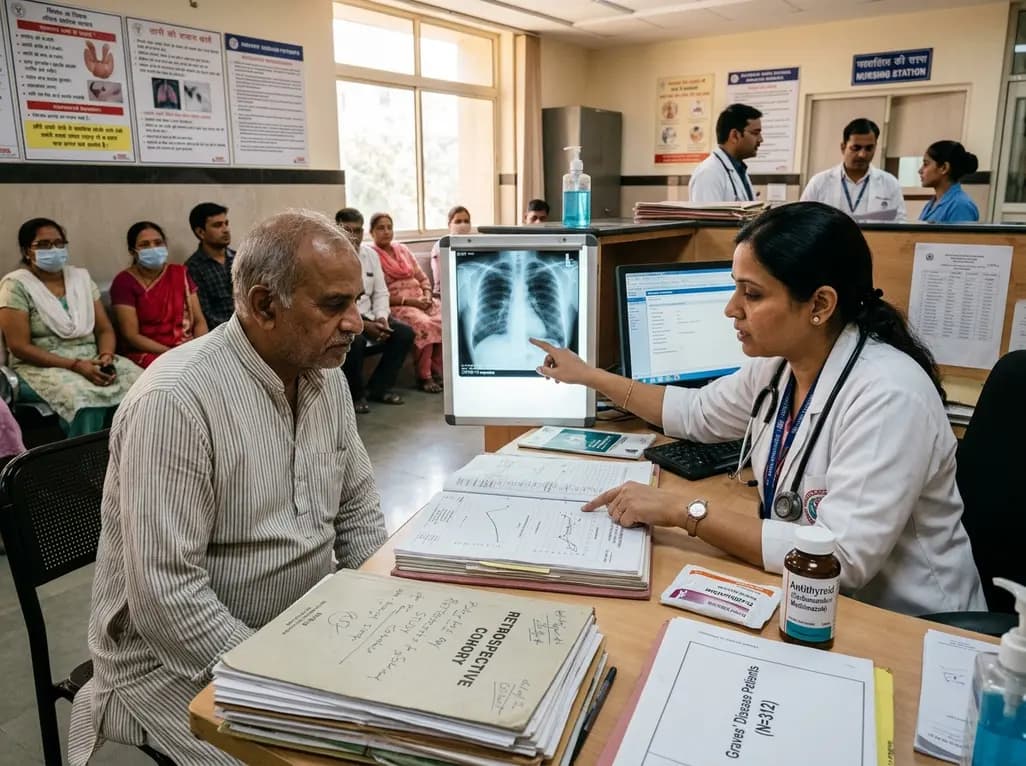
A retrospective cohort study evaluates the short- and long-term impacts of SARS-CoV-2 infection on patients with Graves' disease receiving antithyroid drug therapy, highlighting thyroid status destabilization, clinical symptom exacerbations, and post-viral sequelae.
Yesterday
