.webp&w=384&q=75)

Loading, please wait...
Loading, please wait...

Thoracic endovascular aortic repair has transformed the management of complex aortic pathologies. However, securing an adequate distal sealing zone remains a significant technical challenge in anatomically constrained patients. When dealing with infective native aortic aneurysms, clinicians face compromised host physiology alongside unfavorable aortic morphology. In such urgent clinical scenarios, intentional celiac artery coverage TEVAR offers a practical endovascular strategy to achieve complete aneurysm exclusion. Although covering the celiac axis traditionally raises serious concerns regarding visceral organ ischemia, careful pre-procedural planning can mitigate these clinical risks. Vascular specialists increasingly evaluate collateral mesenteric pathways to determine whether intentional vessel occlusion is safe. Angiographic assessment using selective superior mesenteric artery catheterization and temporary balloon occlusion provides vital data regarding foregut perfusion. By confirming robust collateral flow through the gastroduodenal artery and pancreaticoduodenal pathways, interventionists can proceed with planned endovascular deployment. This approach minimizes the need for high-risk open surgical revascularization in patients with active aortic infection. Consequently, intentional vessel coverage represents a valuable therapeutic option when conventional visceral preservation strategies are unfeasible.
Infective native aortic aneurysms represent a highly lethal cardiovascular condition requiring rapid diagnostic identification and decisive therapeutic intervention. Bacterial infection destroys the structural integrity of the aortic wall, creating unstable pseudoaneurysms that carry an extreme risk of catastrophic rupture. Traditional open surgical reconstruction in an infected field carries formidable perioperative mortality and substantial morbidity. Therefore, clinicians frequently favor endovascular stent-graft deployment to achieve rapid hemodynamic stabilization. However, obtaining a durable seal often requires extending the distal stent-graft landing zone across the celiac artery origin. Depriving the foregut of direct blood flow increases the threat of severe abdominal complications. Splanchnic tissue necrosis, gastric infarction, hepatic failure, and splenic infarction represent devastating consequences of unexpected visceral ischemia. Furthermore, active infection heightens systemic metabolic stress, making the organ systems highly vulnerable to hypoxia. To prevent ischemic disaster, operators must meticulously verify that the superior mesenteric artery can independently supply sufficient collateral blood flow to the celiac territory before deploying permanent endovascular prostheses.
Ensuring patient safety prior to celiac artery coverage TEVAR relies on systematic intraoperative collateral evaluation protocols. Interventional radiologists and vascular surgeons utilize selective catheter angiography to map the mesenteric circulation in exquisite detail. First, clinicians perform selective angiography of the superior mesenteric artery to visualize retrograde filling through the pancreaticoduodenal arcades toward the celiac branches. Next, operators conduct balloon occlusion testing of the main celiac axis. While inflating a compliant balloon within the celiac trunk, clinicians inject radiopaque contrast into the superior mesenteric artery to observe real-time collateral filling kinetics. Demonstrating rapid, unhindered perfusion of the hepatic, left gastric, and splenic arteries provides convincing objective evidence of functional physiological compensation. Following successful occlusion testing, clinicians execute therapeutic embolization of the proximal celiac trunk using metallic coils or vascular plugs. Prophylactic coil embolization prevents retrograde type II endoleaks after stent-graft deployment across the vessel origin. This comprehensive evaluation protocol ensures that only patients with confirmed collateral capacity undergo intentional vessel coverage.
Recent clinical evaluations highlight the feasibility and relative safety of planned celiac occlusion when supported by thorough collateral testing. In a reported clinical case series of infective aortic aneurysms, carefully selected patients underwent successful endovascular repair with intentional celiac coverage. Postoperative clinical monitoring revealed no instances of hepatic, gastric, or splenic ischemia. Furthermore, major organ failure and ischemic bowel complications did not occur during extended patient follow-up. Surveillance computed tomography angiography identified one isolated type Ib endoleak without accompanying sac enlargement, which clinicians managed conservatively with close imaging protocols. These findings align with broader clinical literature indicating that collateral mesenteric pathways effectively maintain foregut viability. However, clinicians must maintain rigorous post-procedure surveillance to detect potential late endoleaks or delayed ischemic complications. Long-term cross-sectional imaging remains essential to monitor stent-graft stability, confirm complete aneurysm exclusion, and assess ongoing aortic remodelling in previously infected arterial segments.
Implementing intentional celiac coverage during endovascular repair requires careful consideration of alternative revascularization options. Open visceral bypass, chimney techniques, and custom fenestrated or branched endografts represent established methods for preserving celiac blood flow. However, custom fenestrated devices require lengthy manufacturing times, rendering them unsuitable for emergency interventions involving infected aortic aneurysms. Chimney and snorkel configurations increase the operational complexity and risk parallel gutter endoleaks. Additionally, open surgical bypass through infected retroperitoneal spaces carries prohibitive surgical risk in critically ill individuals. Consequently, intentional coverage guided by angiographic testing provides a pragmatic, immediate solution for life-threatening emergencies. Vascular teams must weigh the immediate risks of aortic rupture against potential visceral ischemic complications. When angiographic occlusion testing confirms robust collateral reserve, proceeding with vessel coverage simplifies the endovascular procedure and minimizes operating duration. This strategic balance optimizes clinical survival while effectively treating complex aortic pathology.
Integrating these advanced endovascular strategies into routine clinical practice requires standardized protocols and multidisciplinary collaboration. Vascular surgeons, interventional radiologists, and infectious disease specialists must collaborate closely to optimize patient management. Preoperative administration of targeted intravenous antimicrobial therapy remains mandatory to suppress active infection prior to device deployment. Furthermore, interventional specialists must refine their technical proficiency in balloon occlusion testing and coil embolization techniques. Careful interpretation of splanchnic angiograms ensures accurate identification of anatomical variations, such as celiac stenosis or absent collateral arcades. When physiological testing reveals inadequate collateral reserve, operators must pursue alternative revascularization strategies to prevent catastrophic visceral organ loss. Continuous clinical audit and participation in multi-center registries will further clarify long-term durability and refine candidate selection criteria. By combining rigorous diagnostic evaluation with precision endovascular techniques, clinical teams can safely extend life-saving therapies to complex patients facing critical aortic emergencies.
Clinicians utilize celiac artery coverage TEVAR when an aortic aneurysm lacks an adequate distal landing zone above the celiac axis. Covering the celiac origin extends the sealing zone, ensuring secure graft fixation and preventing aneurysm rupture, especially in urgent clinical scenarios involving infective native aortic aneurysms.
Surgeons evaluate collateral circulation using selective superior mesenteric artery angiography combined with temporary balloon occlusion testing of the celiac trunk. This diagnostic procedure confirms whether blood flows effectively through the pancreaticoduodenal arcades to nourish the liver, stomach, and spleen without direct celiac artery perfusion.
Potential complications include visceral organ ischemia affecting the stomach, liver, or spleen, as well as spinal cord ischemia and endoleaks. However, meticulous preoperative collateral assessment significantly lowers visceral ischemic risks, while post-procedure imaging surveillance helps identify and manage potential type Ib or type II endoleaks early.
Disclaimer: This content is for informational and educational purposes only and does not constitute formal medical advice, diagnosis, or treatment. Healthcare professionals must exercise independent clinical judgment when applying this information. Refer to the latest local and national guidelines for clinical practice.
References
1. Ismail MAT et al. Outcomes of Intentional Celiac Artery Coverage During Thoracic Endovascular Aortic Repair for Infective Native Aortic Aneurysms: A Case Series. Vasc Specialist Int. 2026 Aug 13. doi: 10.5758/vsi.260030. PMID: 42591046.
2. Tanious A et al. Celiac Artery Coverage During TEVAR for Dissection and Acute Aortic Injury is Not Associated with Worse Outcomes. Ann Vasc Surg. 2023;89:120-128.
3. Spanos K et al. Safety and Efficacy of Intentional Celiac Artery Coverage in Endovascular Management of Thoracoabdominal Aortic Diseases: A Systematic Review and Meta-analysis. J Endovasc Ther. 2022;29(4):550-558.
4. Butt SH et al. Coverage of the coeliac artery during thoracic endovascular aortic repair: A systematic review and meta-analysis. Eur J Vasc Endovasc Surg. 2021;61(3):410-419.

Read summarized clinical updates, watch expert medical content, and earn CME certifications right from your smartphone.
Open your smartphone camera to scan and install.





A case series evaluates intentional celiac artery coverage during TEVAR for infective native aortic aneurysms, demonstrating safety when guided by robust angiographic collateral assessment.
last month

High-dose anakinra provides rapid, life-saving remission in refractory SLE-associated haemophagocytic lymphohistiocytosis. Escalating interleukin-1 blockade halts hyperinflammation without cytotoxic marrow suppression, marking a key paradigm shift in managing secondary macrophage activation.
Today

Prenatal evaluation of fetal growth restriction requires an integrated diagnostic approach. While chromosomal microarray remains fundamental, exome sequencing offers significant diagnostic yield in isolated and syndromic cases, especially when ultrasound shows skeletal anomalies or normal placental function.
Today

Evaluating disagreement among Friedewald, Martin-Hopkins, and Sampson LDL-C equations reveals diagnostic uncertainty at statin cutoffs. An interpretable regime-aware calibration model rescues patient misclassifications without extra testing costs.
Today
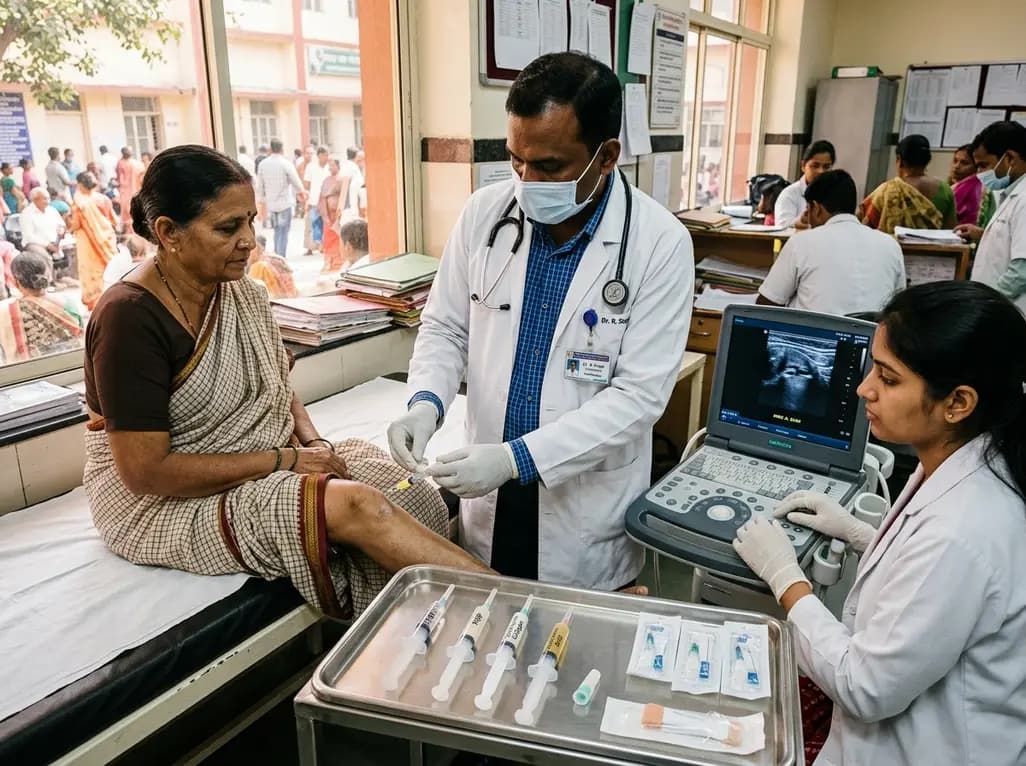
A randomized controlled trial compared ultrasound-guided intra-articular injections of PRP, hydrolyzed type I collagen, and hyaluronic acid in knee osteoarthritis. All therapies demonstrated significant improvements in WOMAC and pain scores at six months, supporting hydrolyzed collagen as a viable biological option.
Today

A study reveals that salivary cortisone correlates more strongly with serum cortisol than salivary cortisol during dynamic adrenal testing, while salivary dexamethasone accurately confirms compliance. This provides a non-invasive, precise alternative to venipuncture for diagnosing adrenal disorders.
Today
