.webp&w=384&q=75)

Loading, please wait...
Loading, please wait...
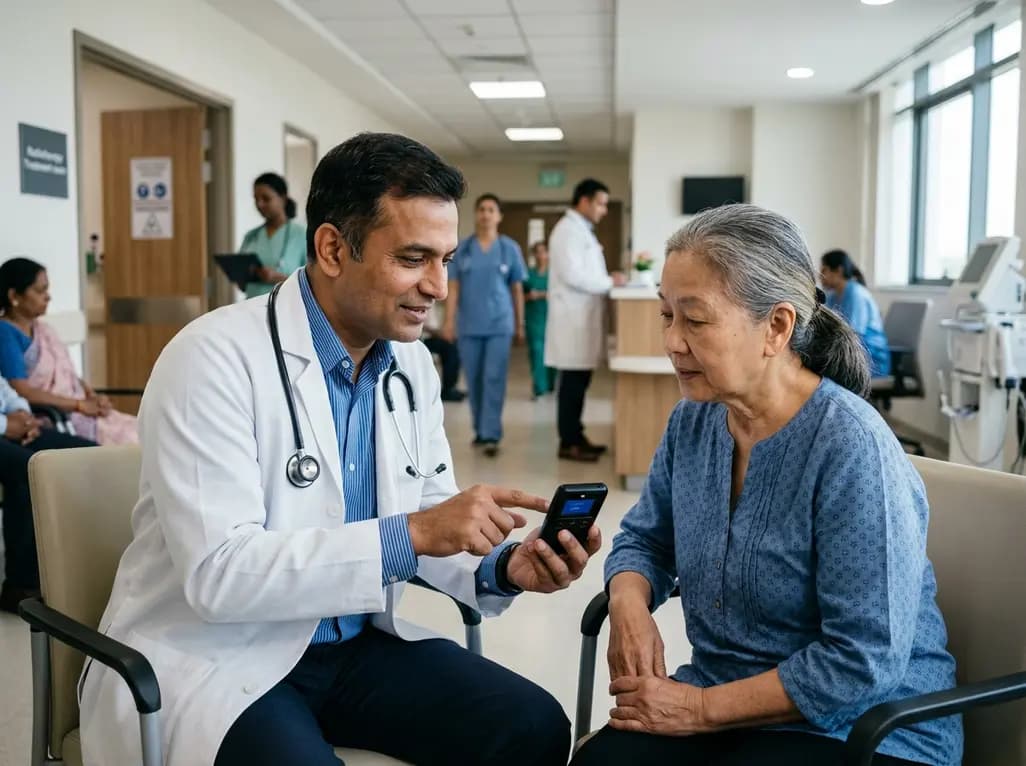
Effective clinical communication remains the cornerstone of safe, dignified, and high-quality oncological care. In modern oncology, utilizing an instant language translation device bridges critical linguistic divides between healthcare providers and patients. Radiation therapy demands precise physical positioning, consistent physiological breath-holding, and strict compliance with daily schedules. However, language barriers frequently disrupt this essential therapeutic relationship. When patients cannot comprehend procedural instructions, emotional distress and non-compliance escalate rapidly. Consequently, health disparities widen among culturally and linguistically diverse populations presenting for cancer treatment.
Professional medical interpreters provide gold-standard support during extensive clinical consultations. Nevertheless, coordinating in-person or telephone interpreters for rapid daily radiation sessions poses immense logistical hurdles. Radiation therapists treat patients in brief, ten-minute increments across several weeks. Therefore, departments require accessible point-of-care communication solutions. Handheld digital devices provide immediate speech-to-speech translation, allowing staff to relay routine technical guidance without causing scheduling delays. By assessing patient perceptions directly, clinicians can determine whether digital tools maintain procedural safety and patient comfort during active radiation delivery.
To evaluate these practical dynamics, researchers initiated a comprehensive multisite prospective study across three Australian public hospitals. This investigation spanned two continuous years, capturing clinical experiences within high-volume radiation oncology departments. The research team recruited an adult cohort of Mandarin-speaking oncology patients undergoing curative or palliative radiation therapy. Furthermore, investigators excluded patients who had received prior radiotherapy to eliminate historical treatment bias and ensure baseline procedural unfamiliarity.
The investigators implemented rigorous data collection frameworks to assess patient satisfaction and user experience. Participants completed anonymous standardized surveys incorporating validated Likert scales and qualitative free-text response sections. Additionally, the research team documented participant demographics, baseline health literacy scores, and daily communication logs. These logs tracked specific conversational interactions between patients and radiation therapists during treatment setups. The authors subsequently applied robust descriptive statistics alongside non-parametric comparative tests. Specifically, Kruskal-Wallis analyses and Fisher's exact tests evaluated correlations between technical difficulties and satisfaction ratings, ensuring an objective appraisal of digital communication efficacy.
The trial enrolled forty-four eligible participants, with forty individuals successfully completing the full evaluative protocol. Overall, the findings revealed overwhelmingly favorable sentiments toward the translation technology. Mandarin-speaking participants reported notable satisfaction with the translation device during their daily radiotherapy appointments. Furthermore, patients expressed a strong willingness to recommend the tool to other non-English speaking individuals navigating similar therapeutic pathways. Many participants emphasized that clear translation transformed an intimidating clinical environment into a predictable, supportive space.
Crucially, participants perceived that the digital device directly enhanced the overall quality of their radiotherapy experience. Rather than feeling isolated during technical alignment on the treatment couch, patients felt informed and respected by therapists. Additionally, patients noted that immediate auditory translations reduced procedural confusion regarding breath-holding requirements. Even when participants encountered intermittent technical glitches, Kruskal-Wallis testing demonstrated a statistically significant correlation with positive recommendations for daily device utilization. Similarly, these individuals reported significant perceptions of an enhanced radiotherapy experience despite minor disruptions. Consequently, patients valued prompt, dedicated communication attempts far more than technical perfection.
Although patient feedback remained decidedly positive, implementing digital translation hardware introduces distinct practical challenges. Participants and clinical staff occasionally encountered translation latency, audio distortion, and vocabulary errors with specialized oncological terminology. In a linear accelerator bunker, acoustic interference and machine noise can compromise automated voice recognition. However, the study demonstrated that patients maintained positive attitudes toward the technology despite these technical imperfections. Statistical analysis confirmed that minor operational issues did not undermine patient trust or treatment compliance.
Moreover, these findings emphasize that patients appreciate proactive communication efforts from radiation therapists. Even partial translation markedly improves the patient experience compared to complete verbal silence or improvised gestures. Nevertheless, clinical departments must establish safeguards to prevent misinterpretation of vital clinical directives. For example, therapists must verify that patients accurately understand immobilization instructions and radiation safety precautions. Healthcare teams should train radiation therapists to speak in concise sentences to maximize translation accuracy. Furthermore, clinics must maintain reliable network infrastructure to prevent signal loss during critical treatment sequences.
The outcomes of this multicenter study hold profound relevance for modern healthcare systems serving linguistically diverse populations. In many clinical environments, linguistic barriers lead to suboptimal patient adherence, heightened anxiety, and compromised treatment outcomes. Radiation therapy centers frequently struggle with the availability and cost of continuous interpreter coverage for daily setups. Therefore, incorporating portable translation hardware offers a scalable, pragmatic strategy to advance healthcare equity. While digital translators cannot replace accredited human interpreters for complex clinical consent discussions, they effectively bridge daily operational communication gaps.
Looking ahead, advancing natural language processing and artificial intelligence algorithms will substantially elevate translation accuracy and dialectal nuance. Future devices will likely process specialized medical nomenclature with greater precision, minimizing the vocabulary errors identified in earlier device generations. However, future investigations must examine the objective clinical impacts of digital translation devices on treatment accuracy. For instance, researchers should analyze whether translation devices reduce treatment delivery times, minimize positioning discrepancies, or enhance organ-at-risk sparing during breath-hold maneuvers. Ultimately, adopting validated digital communication tools represents an indispensable step toward equitable, patient-centered oncological care.
An instant translation device enhances treatment delivery by facilitating immediate, clear communication between radiation therapists and linguistically diverse patients. Consequently, patients comprehend complex positioning instructions, immobilization requirements, and real-time breathing commands more accurately. Moreover, reducing communication friction alleviates procedure-related anxiety and fosters greater patient cooperation. Ultimately, this bidirectional understanding minimizes treatment delays, reduces positional errors, and bolsters overall treatment fidelity throughout the radiation course.
Digital translation tools serve as practical adjuncts rather than outright replacements for certified healthcare interpreters. Professional interpreters remain essential for comprehensive consultations, complex treatment planning, informed consent discussions, and toxicity management. However, digital translation devices offer unmatched value during brief, routine daily treatment sessions where scheduling a live interpreter is impractical. Therefore, clinicians should view machine translation as an immediate operational support tool within a broader multilingual care framework.
Radiation therapy teams should establish standardized protocols to manage occasional software errors or connectivity lapses. First, staff must verify patient identity and treatment site using non-verbal identifiers before initiating procedures. Additionally, therapists should utilize concise, pre-validated phrasing to prevent mistranslation of technical clinical commands. When digital translation fails, teams should promptly deploy visual instructional aids, bilingual pictograms, or on-demand telephonic interpreters to preserve patient safety and ensure continuous treatment quality.
Disclaimer: This content is for informational and educational purposes only... Refer to the latest local and national guidelines for clinical practice.
References

Read summarized clinical updates, watch expert medical content, and earn CME certifications right from your smartphone.
Open your smartphone camera to scan and install.





A multisite study highlights how an instant language translation device improves radiation therapy communication and satisfaction for Mandarin-speaking patients, overcoming linguistic barriers to enhance care.
last month

Explore vital recurrent stroke predictors in lacunar stroke patients managed with intensive blood pressure lowering. This analysis examines trial findings from SPS3 to uncover residual vascular risks, metabolic factors, and targeted secondary prevention strategies for high-risk neurological patients.
Today

Odisha has established India's first state-level clinical protocol specifically tailored for pregnant women with sickle cell disease. Developed with NHM and UNICEF, the framework provides structured antenatal screening, crisis mitigation, standardized referral pathways, and specialized interdisciplinary care.
Today

India is advancing preventive healthcare by integrating genomics, artificial intelligence, and quantum technologies. With the SANGAM programme sequencing one million Indian genomes, clinicians can unlock personalized therapies, detect cardiometabolic risks early, and curb the burden of diabetes and heart disease.
Today

A randomized controlled trial demonstrates that an eight-week dual-task training intervention significantly improves static and dynamic postural control over standard balance exercises in individuals with chronic ankle instability, addressing critical neurocognitive deficits during athletic and daily activities.
Today

A retrospective cohort study of 7,716 ICU patients from the MIMIC-IV database demonstrates that Gradient Boosting Decision Trees significantly outperform traditional SOFA scores in predicting in-hospital mortality among patients with sepsis and diabetes, with SHAP analysis providing clinical interpretability.
Today
