.webp&w=384&q=75)

Loading, please wait...
Loading, please wait...

Epidemiological clinical observations have long revealed stark disparities in oncogenesis among individuals exposed to identical carcinogens. Specifically, understanding inherited genetic cancer risk helps explain why certain heavy smokers never manifest pulmonary malignancies while non-smokers occasionally do. Environmental toxins initiate cellular damage, yet host background factors govern final tissue responses. A landmark study published in Nature provides direct evidence regarding how host genetics dictates somatic mutation trajectories and overall tumor development. Researchers at Cambridge demonstrated that inherited background alters both mutational processes and oncogenic evolution. Consequently, these breakthroughs reshape our understanding of carcinogenesis across diverse human populations and offer promising avenues for personalized prevention strategies.
Clinical practitioners frequently observe variable susceptibility among patients exposed to recognized mutagens such as tobacco smoke or solar radiation. Consequently, establishing definitive causal mechanisms in human cohorts has remained challenging due to extensive confounding factors. Human populations exhibit vast variations in lifestyle, environmental co-exposures, occupational hazards, and dietary habits. Therefore, isolating the specific influence of inherited genetics from environmental noise requires highly controlled experimental models. Although epidemiological data strongly suggested inherited modifiers, direct molecular proof remained elusive for decades due to these population complexities.
In this landmark study, researchers effectively circumvented human cohort limitations through controlled mammalian models. Specifically, they evaluated four genetically distinct mouse strains displaying diverse genetic backgrounds comparable to human population diversity. Furthermore, each animal received an identical single dose of diethylnitrosamine at exactly fifteen days of age under standardized laboratory conditions. Diethylnitrosamine is a potent carcinogen present in tobacco smoke and processed foods. By maintaining uniform environmental conditions, investigators isolated the pure impact of background genetics on tumor formation.
To explore inherited genetic cancer risk with clarity, researchers sequenced genomes from nearly six hundred developing tumors. Additionally, they systematically analyzed gene expression activity in both treated animals and untreated controls to track biological changes. Consequently, this detailed genomic profiling allowed scientists to reconstruct the exact evolutionary trajectory of each emerging neoplasm from its initiating lesion. Surprisingly, the study revealed that initial carcinogen exposure interacts dynamically with germline genetic architecture. Therefore, the host genome acts as an active template that shapes mutational accumulation rather than a passive recipient.
Moreover, the research demonstrated that genetic background dictates the specific mutational spectra generated by chemical carcinogens. Although the chemical agent damages DNA uniformly across all strains, the resulting mutational landscape varies significantly based on inherited genetic background. Furthermore, untreated control groups showed distinct rates of spontaneous tumor initiation across different strains. Consequently, these findings confirm that germline background influences both baseline tissue vulnerability and somatic mutation pathways following external genotoxic insult.
Despite diverse genetic backgrounds, virtually all analyzed tumors converged upon a single core oncogenic pathway. Specifically, neoplasms across all four strains acquired driver mutations that activated the mitogen-activated protein kinase signaling cascade. The MAPK pathway serves as a fundamental multi-step molecular cascade governing cell proliferation, differentiation, and survival across tissue types. Therefore, activation of MAPK signaling represents a mandatory biological bottleneck for tumor initiation and growth in this model.
However, the specific mutational routes chosen to activate this pathway differed dramatically among the genetic strains. For instance, certain strains predominantly selected specific point mutations in primary oncogenes, whereas other strains utilized alternative driver alterations to achieve identical signaling activation. Additionally, host genetic background selectively favored specific secondary pathway alterations that modified overall cellular behavior. Consequently, while the biological endpoint of MAPK activation remained constant, germline genetics strictly dictated the exact molecular path taken to achieve neoplastic transformation.
Beyond primary driver selection, inherited genetic variation dramatically influenced large-scale genomic instability and chromosomal architecture. Notably, certain mouse strains exhibited a striking predisposition toward whole-genome duplication during early tumor progression. Whole-genome duplication provides cancerous cells with extra copies of every chromosome. Consequently, these duplicated genes are free to mutate rapidly without compromising essential cellular functions. Thus, whole-genome duplication accelerates evolutionary adaptation within developing tumors, allowing rapid acquisition of aggressive traits.
Furthermore, host genetics governed how secondary somatic mutations interacted with existing germline variants during disease progression. Indeed, epistatic interactions between background genes and acquired somatic mutations directed subclonal selection dynamics and clonal expansion rates. In contrast, strains lacking predisposition to genome duplication evolved through distinct, slow-accumulating point mutations. Therefore, an individual's inherited genetic architecture establishes the pace, mechanism, and overall complexity of somatic genome evolution during carcinogenesis.
These revolutionary insights carry profound implications for clinical oncology, early detection, and individualized risk stratification. Currently, clinical screening paradigms rely primarily on environmental risk exposure and age to determine screening intervals. However, incorporating comprehensive background genomic profiling will allow clinicians to identify high-risk individuals despite low environmental exposure. Similarly, identifying inherently resistant genetic profiles explains why some heavily exposed individuals avoid malignancy entirely. Therefore, future cancer screening guidelines must integrate germline genetic architectures alongside traditional lifestyle risk factors.
Additionally, background genetics heavily influences therapeutic responsiveness and resistance mechanisms in clinical settings. Because genetic architecture dictates tumor evolutionary pathways, patients with distinct germline backgrounds may develop tumors with unique therapeutic vulnerabilities. Consequently, precision medicine strategies must evaluate both somatic tumor mutations and host germline genetics to predict clinical responses accurately. Ultimately, tailoring therapeutic regimens to an individual's inherited background will optimize treatment efficacy and reduce adverse treatment outcomes.
Q1: How does inherited genetic background affect an individual's risk of developing cancer from environmental exposures?
Inherited genetic background actively dictates how cellular DNA repairs carcinogen damage and accumulates somatic mutations. Although environmental toxins initiate cellular injury, germline genes determine whether those injuries progress into oncogenic mutations or trigger cell death. Consequently, individuals with protective genetic backgrounds effectively manage DNA damage, whereas susceptible individuals accumulate high mutational burdens leading to neoplastic transformation.
Q2: Why do some heavy smokers avoid lung cancer while non-smokers sometimes develop the disease?
This clinical paradox arises because carcinogen exposure interacts directly with host germline genetics. Heavy smokers who avoid cancer often possess robust inherited DNA repair pathways and protective genomic architecture that prevent malignant transformation. Conversely, non-smokers who develop lung cancer may inherit genetic variants that promote mutational accumulation, whole-genome duplication, or aberrant signaling activation even with minimal environmental damage.
Q3: What are the clinical implications of these genetic findings for future cancer screening and treatment?
These findings emphasize that clinical risk assessment must move beyond environmental exposures to include germline genomic profiling. By understanding background genetic risk, clinicians can design personalized screening schedules for high-risk individuals before tumors develop. Furthermore, because germline genetics influences tumor evolutionary pathways and resistance mechanisms, targeted therapies can be optimized based on a patient's complete genetic landscape.
Disclaimer: This content is for informational and educational purposes only. It does not constitute medical advice or replace professional judgment. Refer to the latest local and national guidelines for clinical practice.
References

Read summarized clinical updates, watch expert medical content, and earn CME certifications right from your smartphone.
Open your smartphone camera to scan and install.





A breakthrough Nature study demonstrates how an individual's inherited genetic background dictates DNA damage response, mutational accumulation, and tumor evolution trajectories, explaining why carcinogen exposures lead to distinct outcomes.
last month

The Food Safety and Standards Authority of India has issued draft regulations prohibiting the sale and manufacture of non-dairy imitation substitutes as paneer. This nationwide regulatory action aims to eliminate consumer deception, protect dietary protein quality, and curtail lipid-related metabolic risks.
Today
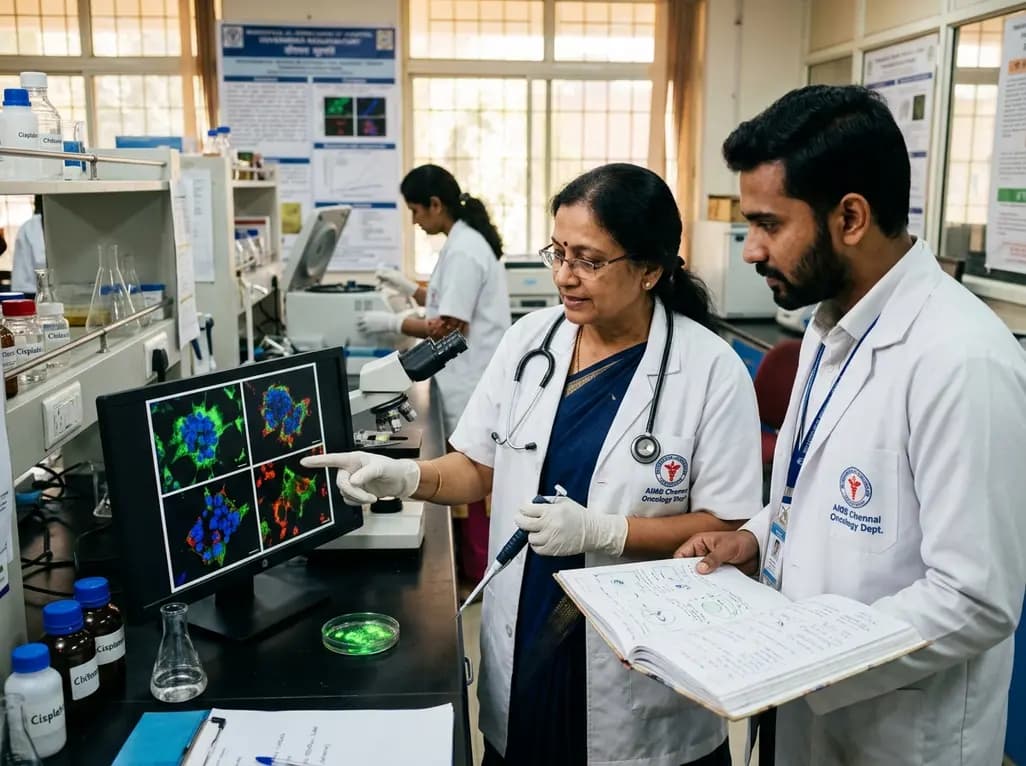
A novel green-synthesized nanocarrier uses ellagic acid to crosslink chitosan for localized cisplatin delivery in cervical cancer. Preclinical results demonstrate extended vaginal retention, potent cytotoxicity, ROS-driven apoptosis, and superior tumor regression compared with traditional crosslinkers.
Today

Managing refractory hypoxemia after cardiothoracic surgery becomes perilous when prolonged air leak limits positive-pressure ventilation. This case-based review details how high-flow nasal cannula, paired with awake rehabilitation, enabled successful extubation and avoided invasive re-intubation.
Today

A longitudinal study reveals that patients undergoing staged bilateral hip arthroscopy experience progressive contralateral labral deterioration during surgical intervals. However, structural degradation does not compromise 2-year postoperative clinical outcomes or patient-reported satisfaction scores.
Today

SWEDEPAD-1 trial insights show paclitaxel-coated devices do not improve long-term limb salvage in patients with chronic limb-threatening ischemia and tissue loss. While one-year reinterventions decreased, the devices were linked to a higher risk of major amputation at three months.
Today
