.webp&w=384&q=75)

Loading, please wait...
Loading, please wait...
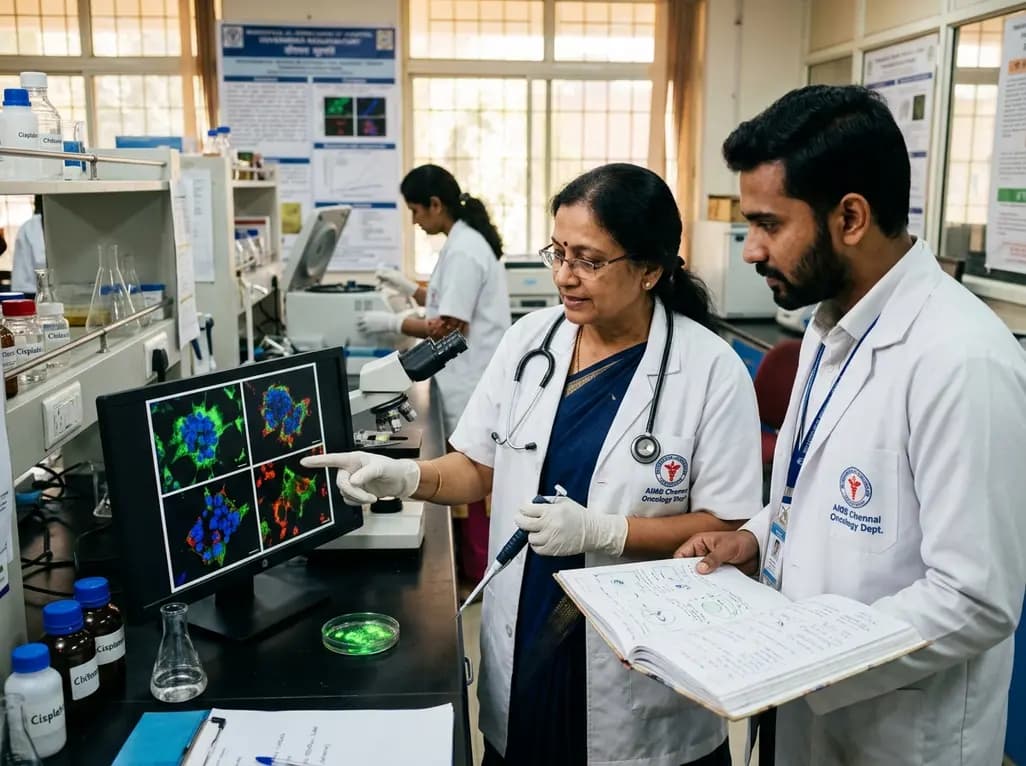
Cervical cancer remains a significant oncological challenge globally and across India, where late-stage presentation and recurrence demand aggressive interventions. Systemic cisplatin constitutes the backbone of chemoradiation regimens for locally advanced disease. However, dose-limiting nephrotoxicity, neurotoxicity, and systemic adverse effects often restrict clinical efficacy and compromise patient compliance. Consequently, researchers actively seek localized drug delivery systems that concentrate cytotoxic agents directly within the cervical microenvironment. A landmark preclinical investigation highlights the potential of green-synthesized mucoadhesive cisplatin nanoparticles to overcome these systemic challenges. By employing ellagic acid as a functional polyphenolic crosslinker rather than conventional synthetic reagents, the team fabricated an innovative nanoformulation designated as CisEANP. This delivery system achieves prolonged mucosal retention, controlled drug release, and potent antitumor activity. Therefore, this translational breakthrough offers an attractive paradigm for localized gynecologic oncology therapies, potentially shielding healthy tissues from toxic systemic exposure while maximizing local therapeutic intensity.
Traditional ionic gelation methods for chitosan nanoparticles typically depend on synthetic crosslinkers like sodium tripolyphosphate (TPP). Although TPP forms stable nanocarriers, it offers no intrinsic therapeutic biological activity. In contrast, this study replaced TPP with ellagic acid (EA), an active dietary polyphenol known for potent antioxidant, antiproliferative, and pro-apoptotic actions. Investigators synthesized cisplatin-loaded, EA-crosslinked chitosan nanoparticles (CisEANP) and systematically compared them with traditional TPP-crosslinked counterparts (CisTPPNP). The resulting CisEANP formulation showed a spherical morphology with an average particle size of 260.9 ± 4.40 nm. Furthermore, the nanoparticles exhibited a high positive surface charge, with a zeta potential measuring +35 ± 1.30 mV. This pronounced positive charge arises from the abundant cationic amine groups on the chitosan backbone. Consequently, the nanocarrier establishes robust electrostatic interactions with negatively charged sialic acid residues in cervical mucus. This green synthesis technique completely avoids toxic organic solvents, creating an eco-friendly, biocompatible carrier optimized for direct mucosal application.
Effective localized treatment of cervical malignancies requires dependable mucosal persistence to prevent premature clearance by physiological secretions. Because vaginal fluid turnover continuously removes unanchored formulations, mucoadhesion plays a critical role in sustained therapeutic outcomes. In vitro mucoadhesive evaluations confirmed that CisEANP binds tightly to mucosal surfaces. In addition, real-time X-ray imaging in experimental models demonstrated that the nanoparticles remained anchored within the vaginal vault for up to 8 hours. Both CisEANP and CisTPPNP provided continuous, sustained release of cisplatin over extended intervals. However, CisEANP generated a significantly higher cumulative drug release profile compared with the TPP formulation. The natural phenolic architecture of ellagic acid allows stable encapsulation while promoting favorable diffusion dynamics under physiological conditions. As a result, the sustained release behavior ensures a steady therapeutic concentration directly at the cervical lesion site. Thus, the system minimizes systemic leakage while reducing the required frequency of administration.
The therapeutic superiority of CisEANP relies heavily on the synergistic biological activity between cisplatin and ellagic acid. In cell viability assays using human cervical carcinoma (HeLa) cells, CisEANP induced markedly greater cytotoxicity than CisTPPNP. The investigators traced this cytotoxic boost to intensified intracellular oxidative stress and programmed cell death pathways. Specifically, CisEANP triggered robust reactive oxygen species (ROS) generation within malignant cells, overwhelming cellular antioxidant defenses. Consequently, this oxidative surge induced downstream mitochondrial membrane collapse and activated key executioner caspases. Beyond triggering apoptosis, the researchers evaluated the antiangiogenic capacity of the formulation using the chorioallantoic membrane (CAM) assay. Tumors rely on rapid capillary sprouting to maintain continuous oxygenation and metastatic dissemination. Importantly, CisEANP strongly inhibited neovascularization in the CAM model, cutting off vital nutrient pathways. Therefore, combining the DNA-damaging capabilities of cisplatin with the pro-oxidant and antiangiogenic effects of ellagic acid creates a dual-action therapeutic delivery vehicle.
To evaluate preclinical therapeutic performance in living tissue, researchers tested the nanoformulations in an Ehrlich ascites carcinoma (EAC)-induced cervical cancer mouse model. Animals received localized intravaginal treatments to directly replicate intended clinical routes. Following the treatment protocol, both CisEANP and CisTPPNP produced marked reductions in tumor burden compared with untreated control cohorts. Specifically, CisEANP reduced tumor volume by 1.23-fold, whereas CisTPPNP reduced it by 1.49-fold relative to baseline disease controls. Notably, CisEANP stimulated deeper and more consistent overall tumor regression throughout the observation period. Comprehensive histopathological evaluations of resected cervical tissues corroborated these volumetric measurements. Untreated specimens displayed high mitotic indices, cellular pleomorphism, and invasive margins. Conversely, tissues treated with CisEANP showed widespread necrotic areas, fragmented nuclei, and diminished cellular cellularity. Furthermore, the surrounding vaginal mucosal lining exhibited minimal epithelial irritation, underscoring the localized biocompatibility of the natural polyphenol carrier.
These findings present compelling opportunities for changing modern clinical management of primary and recurrent cervical intraepithelial neoplasia. Because systemic cisplatin chemotherapy causes severe toxicities, many vulnerable patients struggle to complete prescribed treatment protocols. Developing localized, non-invasive intravaginal nanomedicines could fundamentally redefine standard outpatient interventions. Gynecologic oncologists could potentially deploy such formulations as primary neoadjuvant therapy, localized salvage treatment, or concurrent therapy during radiation sessions. Moreover, localized application concentrates cytotoxic agents precisely at the malignant cervix, vastly lowering systemic peak plasma concentrations. Consequently, patients avoid life-threatening nephrotoxicity, severe nausea, and debilitating peripheral neuropathy. While clinical translation still requires formal pharmacokinetic validation and human safety trials, this green nanotechnology strategy proves that biofunctional polyphenols can transform inert drug delivery systems. Ultimately, localized nanotherapy holds immense clinical promise for reducing systemic morbidity while boosting therapeutic efficacy in women fighting cervical carcinoma.
Ellagic acid replaces traditional, inert crosslinkers like tripolyphosphate by providing intrinsic biological antitumor activity. Beyond stabilizing the chitosan nanoparticles, this natural polyphenol enhances localized reactive oxygen species generation, triggers caspase-mediated apoptotic pathways, and suppresses neovascularization. Consequently, ellagic acid acts as both a structural crosslinker and an active therapeutic adjuvant, significantly amplifying the cytotoxic efficacy of encapsulated cisplatin against cervical cancer cells.
The chitosan polymer backbone contains abundant cationic amine groups that establish strong electrostatic bonds with negatively charged mucin chains lining the vaginal epithelium. This high positive charge, demonstrated by a zeta potential of +35 mV, resists physiological wash-out mechanisms. As verified by X-ray imaging, the particles persist locally for up to 8 hours, ensuring slow, continuous drug release directly at the tumor site.
Yes, localized intravaginal administration concentrates cisplatin directly at the cervical tumor tissue, drastically limiting the amount of active drug entering systemic circulation. By avoiding high peak plasma concentrations, this approach substantially reduces systemic adverse reactions, such as nephrotoxicity, ototoxicity, and bone marrow suppression. As a result, patients achieve targeted antitumor benefits while avoiding debilitating collateral damage commonly seen with standard intravenous regimens.
Disclaimer: This content is for informational and educational purposes only and does not constitute medical advice, diagnosis, or treatment. Qualified healthcare professionals should exercise their independent clinical judgment when evaluating research findings. Refer to the latest local and national guidelines for clinical practice.
References
Saha I et al. Polyphenol-crosslinked green synthesis of mucoadhesive chitosan nanoparticle encapsulated with cisplatin for localized management of cervical cancer. J Drug Target. 2026 Sep 24. doi: 10.1080/1061186X.2026.2735993. PMID: 42786138.
Sun L et al. Localized delivery of cisplatin to cervical cancer improves its therapeutic efficacy and minimizes its side effect profile. Int J Gynecol Cancer. 2021;31(4):576-583. doi: 10.1136/ijgc-2020-002130.
Bhattarai P et al. Chitosan-based nanomedicine for localized drug delivery: Recent developments and clinical prospects in gynecological malignancies. Carbohydr Polym. 2023;305:120562. doi: 10.1016/j.carbpol.2023.120562.

Read summarized clinical updates, watch expert medical content, and earn CME certifications right from your smartphone.
Open your smartphone camera to scan and install.





A novel green-synthesized nanocarrier uses ellagic acid to crosslink chitosan for localized cisplatin delivery in cervical cancer. Preclinical results demonstrate extended vaginal retention, potent cytotoxicity, ROS-driven apoptosis, and superior tumor regression compared with traditional crosslinkers.
Today

The Food Safety and Standards Authority of India has issued draft regulations prohibiting the sale and manufacture of non-dairy imitation substitutes as paneer. This nationwide regulatory action aims to eliminate consumer deception, protect dietary protein quality, and curtail lipid-related metabolic risks.
Today

Managing refractory hypoxemia after cardiothoracic surgery becomes perilous when prolonged air leak limits positive-pressure ventilation. This case-based review details how high-flow nasal cannula, paired with awake rehabilitation, enabled successful extubation and avoided invasive re-intubation.
Today

A longitudinal study reveals that patients undergoing staged bilateral hip arthroscopy experience progressive contralateral labral deterioration during surgical intervals. However, structural degradation does not compromise 2-year postoperative clinical outcomes or patient-reported satisfaction scores.
Today

SWEDEPAD-1 trial insights show paclitaxel-coated devices do not improve long-term limb salvage in patients with chronic limb-threatening ischemia and tissue loss. While one-year reinterventions decreased, the devices were linked to a higher risk of major amputation at three months.
Today
