.webp&w=384&q=75)

Loading, please wait...
Loading, please wait...
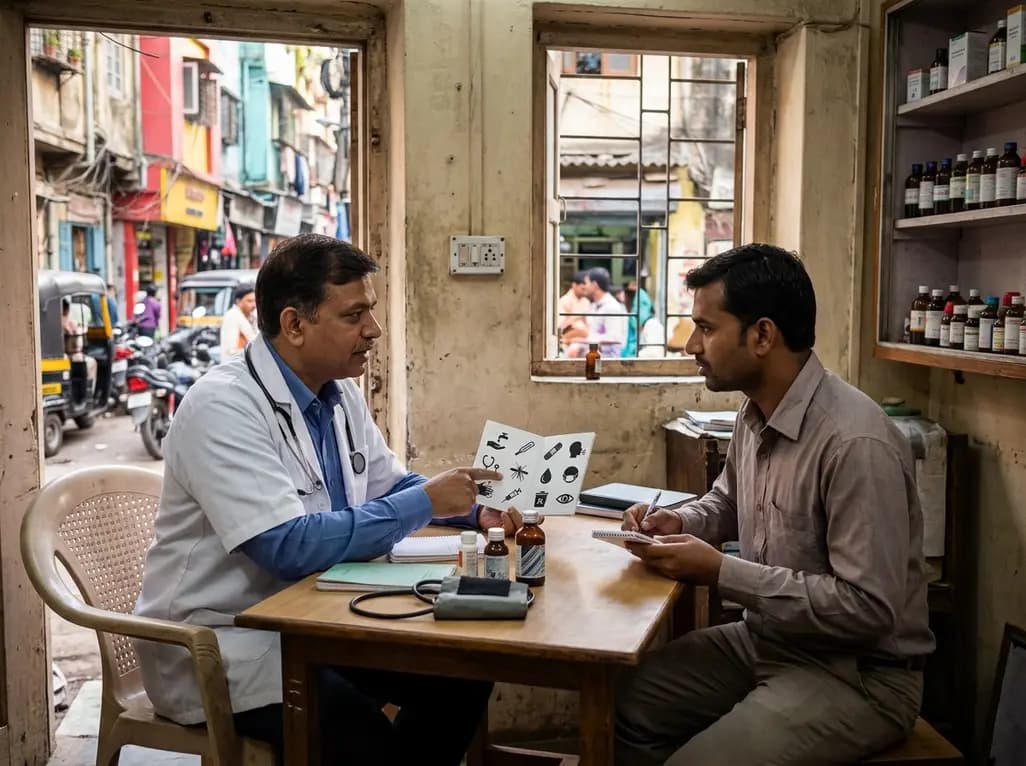
Informal healthcare provider roles are increasingly recognized as a cornerstone of primary health delivery in rapidly urbanizing low- and middle-income countries. These providers, who typically lack formal medical registration or standard accreditation, often serve as the primary link between the healthcare system and the urban poor. In many cities across Bangladesh, Ghana, Nepal, and Nigeria, these individuals are the first point of contact for patients seeking relief from acute and chronic ailments. Consequently, their presence is not merely a byproduct of systemic gaps but a functional necessity for millions. Despite their widespread use, these providers are frequently overlooked in national health planning. However, emerging research indicates that they contribute significantly to bridging the care gap, especially in areas where formal facilities are either physically inaccessible or financially prohibitive. Therefore, understanding the nuances of their practice is essential for developing inclusive health policies. By acknowledging the existence and influence of the informal sector, health authorities can better address the unique challenges of urban health governance. Furthermore, integrating these providers into the formal framework could potentially elevate the overall standard of care within disadvantaged communities.
The urban poor face a complex landscape of health disparities, often characterized by overcrowding, poor sanitation, and limited access to public health services. In this context, the role of informal healthcare providers becomes even more critical. These practitioners offer a range of services, including preventive, curative, and restorative care, often operating within the very neighborhoods they serve. This geographic proximity ensures that care is available at all hours, which is a significant advantage for daily wage earners who cannot afford to wait in long hospital queues. Additionally, the social and cultural alignment between providers and patients fosters a level of trust that is sometimes missing in formal clinical settings. Because they understand the local context, informal providers can offer tailored advice that resonates with their clients. Nevertheless, the lack of formal protocols remains a significant hurdle. While they successfully increase access, the quality of services provided is often inconsistent. Addressing this inconsistency requires a pragmatic approach that goes beyond simple regulation. By focusing on supportive supervision and capacity building, health systems can leverage the reach of these providers while mitigating the risks associated with untrained medical practice.
One of the most persistent challenges in global health is the regulation of informal medical practices. Informal providers often operate in a legal gray area, which makes it difficult for governments to enforce standards or ensure patient safety. In countries like India and Nigeria, where the informal sector is massive, the sheer volume of providers complicates any attempt at comprehensive oversight. Moreover, the lack of standardized training often leads to inappropriate drug use, such as the overprescription of antibiotics. This practice contributes to the global crisis of antimicrobial resistance, making regulation a matter of international concern. However, evidence suggests that aggressive crackdowns on informal providers can backfire. If these practitioners are removed without a viable formal alternative, the most vulnerable populations are left with no care at all. Therefore, many experts advocate for a transitional model. This model involves providing basic medical training to informal providers while establishing clear referral pathways to formal hospitals. Such an approach acknowledges the reality of the healthcare market while striving for gradual quality improvement. Ultimately, the goal is to create a synergy where formal and informal sectors work in tandem to protect public health.
The experience of Bangladesh, Ghana, Nepal, and Nigeria provides valuable insights into how informal healthcare provider roles differ across various legal and social landscapes. In Bangladesh, informal providers are deeply embedded in the rural and urban health ecosystems, often acting as the only accessible resource for basic diagnostics. Similarly, in Nigeria, patent medicine vendors play a pivotal role in delivering maternal and child health services. These case studies highlight that the informal sector is not a monolith; rather, it consists of diverse actors ranging from traditional healers to pharmacy assistants. Despite these differences, the common thread is the high level of utilization by low-income residents. In Nepal, the integration of informal providers into community health programs has shown promise in improving immunization coverage and tuberculosis reporting. Ghana has also explored various methods to link these providers with the formal health insurance scheme. These international examples demonstrate that when informal providers are given the right tools and incentives, they can significantly enhance the effectiveness of the broader health system. Learning from these diverse experiences allows other nations to adopt best practices that are suited to their specific urban challenges.
Integrating the informal sector into formal health systems is a complex but necessary step toward achieving universal health coverage. Successful integration strategies often begin with the mapping and registration of all active providers in a specific urban area. This data allows health authorities to identify gaps and target training programs effectively. For instance, programs that focus on common infectious diseases or basic emergency care can yield immediate benefits for the community. Furthermore, establishing formal referral links ensures that patients with complex conditions are directed to qualified specialists in a timely manner. Technology also plays a vital role in this integration process. Mobile health platforms can be used to provide clinical decision support to informal providers, helping them adhere to evidence-based guidelines. Additionally, financial incentives, such as performance-based payments for successful referrals, can encourage cooperation with formal health institutions. However, it is essential to maintain a balance between oversight and autonomy. If the regulatory burden becomes too high, informal providers may return to operating in the shadows. By fostering a collaborative rather than a punitive environment, governments can harness the potential of the informal sector to create a more resilient and equitable health system for all urban residents.
Professional training remains the most effective tool for improving the quality of care provided by the informal sector. Research has shown that even short-term, focused training programs can lead to significant improvements in clinical knowledge and practice. For example, training informal providers in the correct management of childhood diarrhea or respiratory infections can reduce mortality rates in urban slums. These educational interventions are most successful when they are practical and delivered in a way that respects the provider's existing experience. Furthermore, continuous medical education is necessary to ensure that knowledge is retained and updated as new guidelines emerge. In addition to clinical skills, training should also cover the ethics of medical practice and the importance of patient privacy. When informal providers are empowered with the right knowledge, they transition from being a perceived risk to becoming a valuable asset in the primary care workforce. This transformation is crucial for long-term health system sustainability. As urban populations continue to grow, the formal sector will likely remain under strain, making the quality of informal care a pivotal factor in the overall health of the nation. Consequently, investing in the education of these providers is an investment in the future of urban public health.
Informal healthcare provider roles impact the urban poor by providing essential medical services that are both affordable and geographically accessible. These providers often reside within the community, offering a level of convenience and cultural understanding that formal institutions may lack. For many residents in slums, these practitioners are the only option for immediate care during emergencies or for managing common illnesses without the high cost of hospital fees or travel.
The primary risks include inconsistent quality of care, lack of formal clinical training, and the potential for inappropriate medical treatments, such as the misuse of antibiotics or steroids. Because these providers often operate without professional accreditation or adherence to national protocols, patients may experience diagnostic delays for serious conditions. Addressing these risks requires systematic training and the establishment of formal referral pathways to ensure that complex cases reach qualified medical professionals.
Yes, integration is possible through strategies like registration, targeted training, and the creation of formal referral links. Case studies from various countries show that when informal providers are recognized and supported by the government, they can effectively contribute to public health goals, such as increasing immunization rates and improving maternal health. Integration helps standardize care and brings these providers into a supervised framework, which ultimately enhances safety and quality for the urban population.
Disclaimer: This content is for informational and educational purposes only. It does not constitute medical advice or a formal recommendation for practice. Refer to the latest local and national guidelines for clinical practice.
References
Gadeka DD et al. Exploring the roles of informal healthcare providers in urban settings to improve access and quality of care for the urban poor: experience from Bangladesh, Ghana, Nepal and Nigeria. Health Policy Plan. 2026 Jul 08. doi: undefined. PMID: 42417105.
Sudhinaraset M et al. What is the role of informal healthcare providers in developing countries? A systematic review. PLOS One. 2013 Feb 06. doi: 10.1371/journal.pone.0054971.
Das J et al. The impact of training informal healthcare providers in India: A randomized controlled trial. Science. 2016 Oct 07. doi: 10.1126/science.aaf2468.
"
Read summarized clinical updates, watch expert medical content, and earn CME certifications right from your smartphone.
Open your smartphone camera to scan and install.





Informal healthcare providers are often the primary source of care for the urban poor. This article examines their roles in Bangladesh, Ghana, Nepal, and Nigeria, highlighting the potential for better healthcare access through formal integration and standardisation of their services.
3 months ago

Novel diimide and hydrazone scaffolds, particularly compound #C4, synergistically reactivate latent HIV-1 when combined with JQ1 or PKC activators. Demonstrating donor-matched proviral transcription ex vivo and non-canonical signaling, these findings advance shock and kill strategies toward reservoir eradication.
Today

A cross-sectional study reveals that maternal RSV vaccination coverage reached only 43.7% in Argentina, with maternal vaccine knowledge being the sole independent predictor of uptake. Clinicians play a crucial role in eliminating informational and structural barriers to optimize infant health.
Today

Review how tailored exercise programs benefit frail older patients with heart failure. Explore pathophysiological mechanisms, individualized training prescriptions, and strategies to overcome adherence barriers in clinical practice.
Yesterday

This comparative study evaluates posterior labral tears with and without glenohumeral instability, highlighting distinct demographic patterns, MRI underestimation in stable shoulders, and successful arthroscopic repair outcomes.
Yesterday

A clinical study demonstrates that early intervention with tocilizumab, either as monotherapy or bridged with corticosteroids, achieves significant proptosis reduction and resolves active inflammation in treatment-naive thyroid eye disease.
Yesterday
